Introduction
How Foodborne Outbreaks Are Detected
Epidemiological Investigation and Patient Interviews
Laboratory Testing and Whole-Genome Sequencing
Tracing Contaminated Food Through Supply Chains
Combining Epidemiological, Genomic and Traceability Evidence
Food Recalls and Public Health Responses
Challenges and Future Directions
References
Further Reading
From patients' food histories to genetic clues and shipping records, each outbreak presents a different challenge in tracing contamination through the food supply.
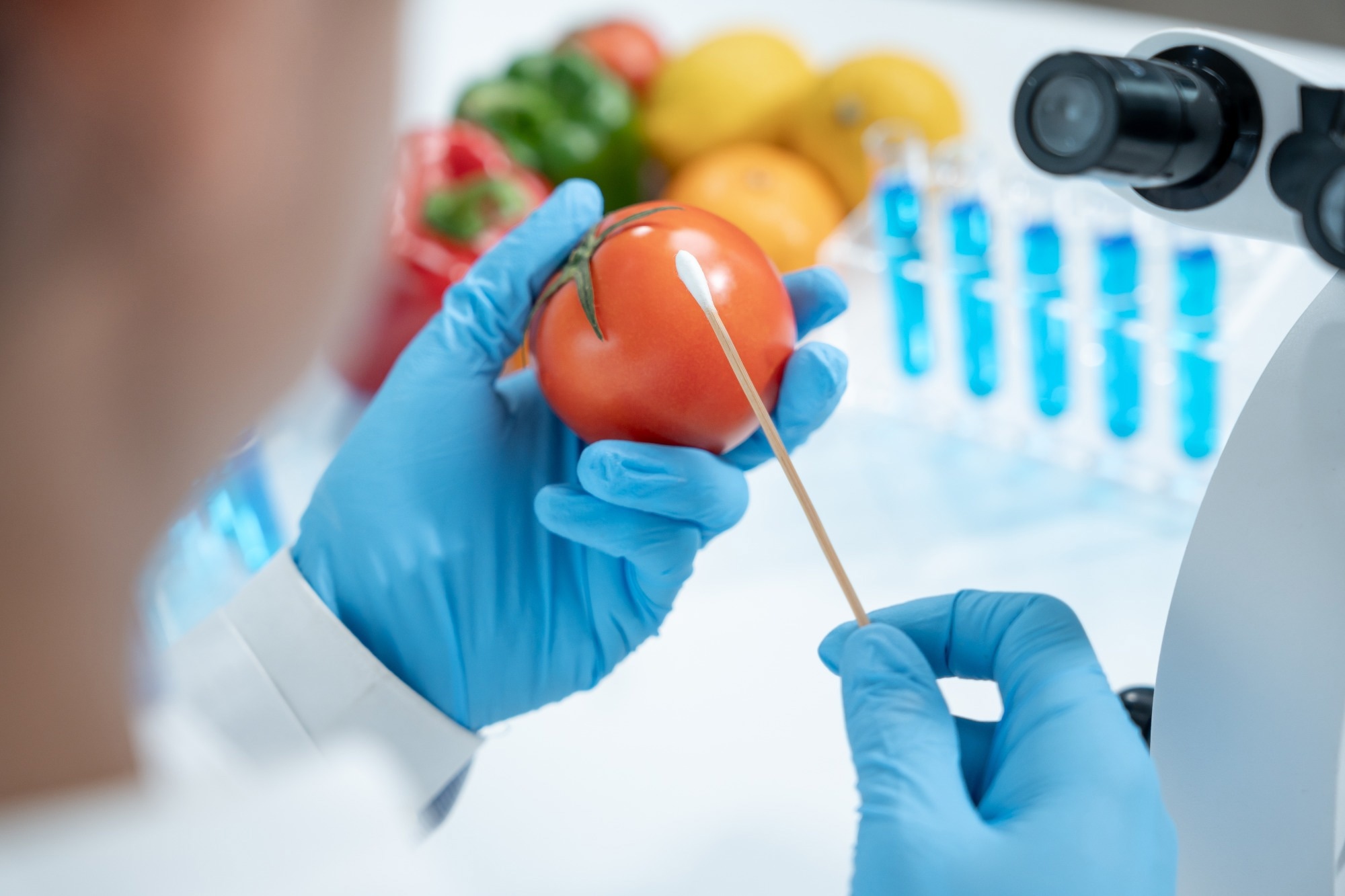 Image Credit: shisu_ka / Shutterstock.com
Introduction
Pathogens such as Salmonella and Listeria can enter food at different stages of production, processing, distribution, or preparation, complicating efforts to locate the source.1,2 As a result, identifying the precise food source behind a disease outbreak requires investigators to connect patient exposures with food testing and distribution records. Specifically, public health investigators combine clinical data with laboratory analyses and supply chain records to identify the responsible vehicle or source.1,3
How Foodborne Outbreaks Are Detected
Clinicians, laboratories, or members of the public may report foodborne outbreaks, or surveillance may identify unusual illness patterns. Whole-genome sequencing (WGS) can also detect clusters of genetically related infections that warrant investigation.1,4
Public health authorities use case definitions incorporating symptoms, time, place, and laboratory findings to count cases consistently. Investigators assess shared exposures and unexpected increases in illness, including possible reporting changes.
A foodborne outbreak generally involves two or more people who become ill after consuming the same contaminated food or drink. In some countries, one case of a rare, severe illness, such as botulism, may qualify.1
Surveillance also uses digital platforms, such as the EpiPulse system operated by the European Center for Disease Prevention and Control (ECDC), to share alerts about cross-border events. ECDC and the European Food Safety Authority (EFSA) combine human surveillance, food testing, and traceability information in joint outbreak assessments.5
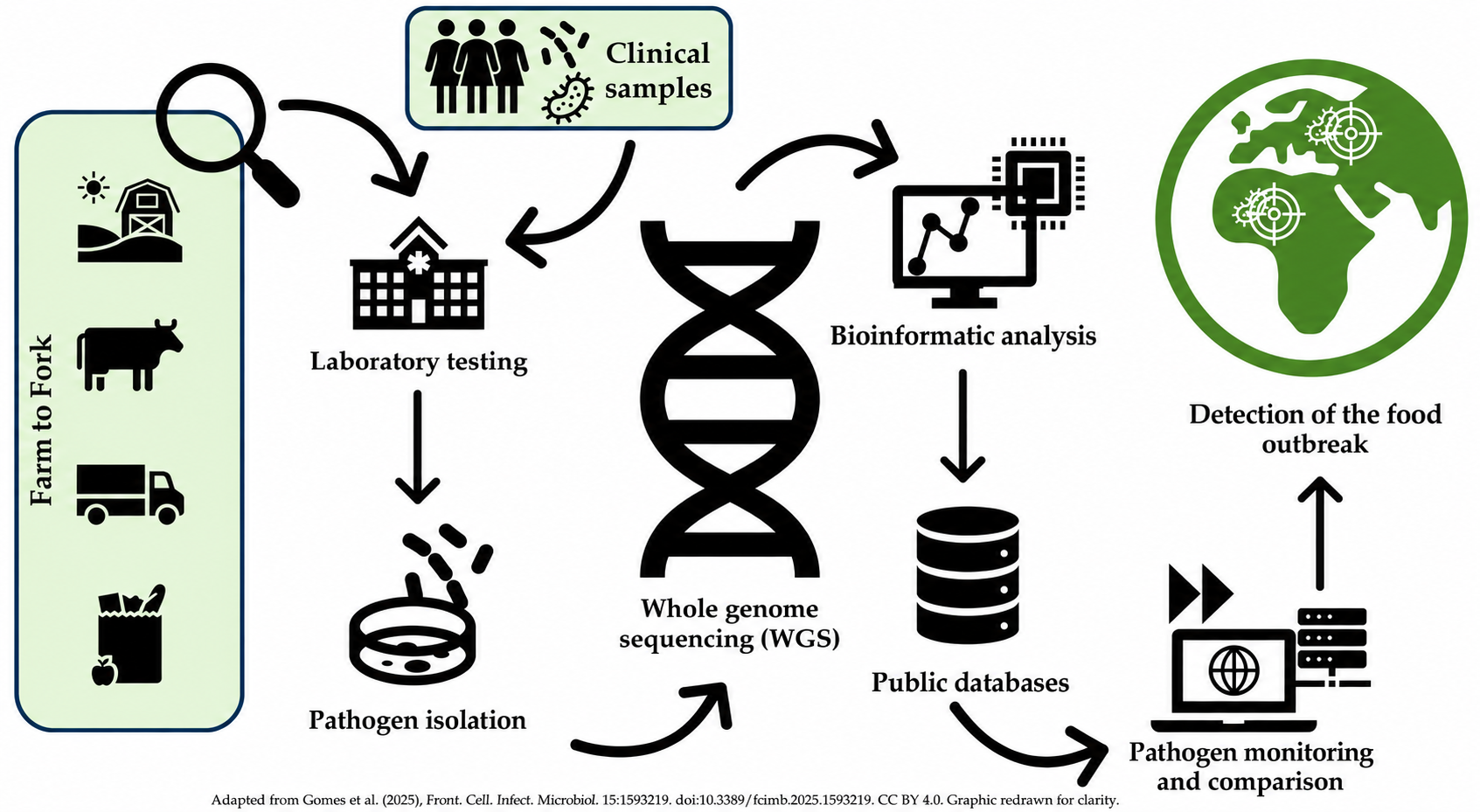 General workflow for foodborne outbreak detection using whole genome sequencing (WGS). The process begins with sample preparation, including the isolation and purification of DNA from food, environmental, or clinical samples. Sequencing is performed using high-throughput platforms to generate raw reads, which undergo quality control and genome assembly. The assembled genomes are annotated to identify genetic features. Integration of genomic and epidemiological data facilitates the identification of outbreak clusters and potential contamination sources, supporting effective public health responses. Reproduced from Figure 1 in Gomes et al. (2025), Frontiers in Cellular and Infection Microbiology, 15:1593219. https://doi.org/10.3389/fcimb.2025.1593219. © 2025 Gomes et al. Licensed under CC BY6.
Epidemiological Investigation and Patient Interviews
Once epidemiologists identify a cluster, they conduct targeted patient interviews to generate hypotheses about the likely food vehicle.1 These investigations often incorporate standardized questionnaires to collect food exposure histories during the relevant period before illness onset. Recall may be incomplete, particularly when interviews occur weeks later.1,2
Epidemiologists test hypotheses through case-control studies that compare exposures among ill people and suitable controls. Cohort studies compare illness risk among exposed and unexposed members of a defined group, such as people who attended the same meal. Describing cases by person, place, and time, including an epidemic curve of illness onset, also helps guide the investigation.1
An example of this process is the investigation of two concurrent, genetically unrelated Listeria monocytogenes outbreaks linked to packaged salads in the United States. In one outbreak, case-case analyses showed that outbreak patients were more likely to consume packaged salad than sporadic listeriosis patients.
Although these findings supported the hypothesis, routine and epidemiologically directed food sampling were needed to identify the implicated producers. Together, these two L. monocytogenes outbreaks caused 30 confirmed illnesses, 27 hospitalizations, and 4 deaths.2
Laboratory Testing and Whole-Genome Sequencing
Laboratory analyses provide evidence that epidemiologists use alongside exposure histories and environmental findings to investigate links between clinical cases and food sources.1,6 These analyses include microbiological investigations of clinical specimens, suspect food leftovers, and environmental swabs.3
WGS provides higher resolution for distinguishing closely related pathogen strains than many traditional typing methods. WGS generates genomic data, allowing investigators to measure genetic distance between isolates and interpret the results alongside temporal and geographic information.6,7 Comparability across laboratories depends on the bioinformatics pipelines, typing schemes, clustering methods, and genetic distance thresholds used.
WGS data also support statistical source attribution. For example, supervised random forest models have used genomic data to estimate the likely food sources of Salmonella enterica infections. These predictions guide prevention priorities but do not confirm individual exposures.8
In one study, overall out-of-bag accuracy was 81%, increasing to 91% when predictions were restricted to those with a probability above 0.50; chicken prediction accuracy in this restricted analysis was 97%. Applied to human isolates, the model attributed 34% to chicken without that threshold, or 46% among isolates retained after applying it. These estimates do not establish direct consumption of contaminated chicken, and the authors identified sampling imbalance and exclusion of nonfood sources from training as limitations.8
Tracing Contaminated Food Through Supply Chains
When epidemiological findings implicate a specific product or food source, regulatory agencies may initiate traceback investigations. Traceback involves reviewing product distribution records, shipping invoices, lot numbers, and supplier networks to map the product's journey backward through processing and production.1
Tracebacks can uncover common suppliers, processors, or growing sites associated with foods patients report. Packaged salad investigations can be complicated by products sold under multiple brands and incomplete purchase records. In one of the two U.S. outbreaks, limited exposure information prevented a formal regulatory traceback.1,2
Environmental health assessments examine food handling, storage conditions, sanitation practices, and potential contamination points. In one U.S. packaged salad outbreak, the producer's internal root-cause investigation identified a common harvest rig used for lettuce processed at different facilities. In the second outbreak, investigators did not establish the contamination source.1,2
This example illustrates how pathogens can persist on agricultural equipment and repeatedly re-enter the supply chain over several years.2
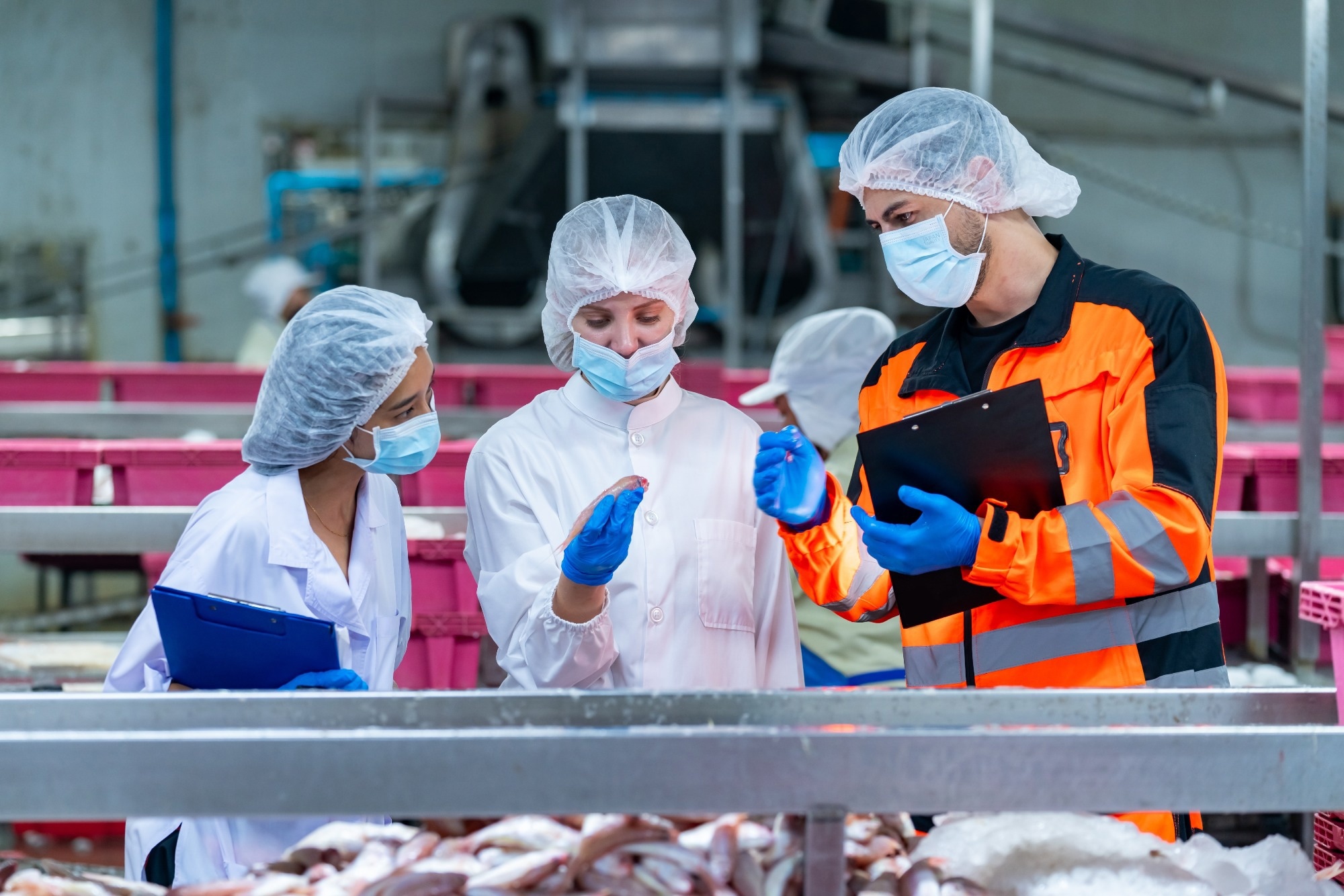 Image Credit: CandyRetriever / Shutterstock.com
Combining Epidemiological, Genomic and Traceability Evidence
WGS comparisons can establish close genetic relatedness between pathogen isolates; however, genomic similarity alone does not establish the food source or route of contamination.6,7
Generally, investigators interpret epidemiological, laboratory, and supply-chain evidence together as it becomes available. Control measures should not be delayed while awaiting confirmation of all investigation results.1
Epidemiological evidence includes patient exposure histories that help identify suspected vehicles, such as flavored noodles. Interview findings generate hypotheses; therefore, an analytical study may be needed to test a statistical association.1,5
Genomic evidence assesses relatedness between clinical and food isolates, while traceability maps distribution records to identify common products or producers. Finding the vehicle and producer does not necessarily reveal the original contamination point.5 The WHO, ECDC, and EFSA assess consistency among exposure histories, microbiological findings, and product distribution, while documenting gaps or conflicting evidence.1,5
During a 2024 Bacillus paranthracis outbreak in Huzhou, China, investigators interviewed patients and tested food from the restaurant where they had eaten. Whole-genome sequencing showed that bacteria found in uncooked rice were closely related to those recovered from patients. Combined with evidence about food preparation practices, this finding implicated the rice as the likely initial source of contamination, which investigators suspected had spread to other foods during preparation.3
Food Recalls and Public Health Responses
Public health interventions should begin when available evidence supports action to prevent further illness. Regulatory authorities and implicated firms initiate product withdrawals and voluntary recalls to remove items from the marketplace, without necessarily waiting for complete source confirmation.1,2
Public health agencies issue warnings advising consumers to discard or return recalled products. Facility inspections and corrective actions may address sanitation, food preparation, storage, or contaminated equipment; the response depends on the identified hazard.1,2,5
Because food distribution crosses national borders, international cooperation is frequently necessary. During the multi-country outbreak of Salmonella Stanley ST2045, shared epidemiological, genomic, and traceability information linked infections to flavored noodles from a producer in Ukraine.
Withdrawals and recalls reduced the risk of further infections, though the July 2026 assessment found the root cause and point of contamination remained unknown. Products stored in homes could still cause illness.5 As of June 27, 2026, this outbreak involved 106 confirmed cases reported between November 2025 and June 2026 across 13 European Union/European Economic Area countries and the United Kingdom, totaling 14 countries. At least 49 patients have been hospitalized.5
Explaining the FDA recall classifications and advice for shoppers
Challenges and Future Directions
Disease underreporting and incomplete exposure histories, including recall difficulties, hinder outbreak investigations. In the packaged salad investigations, severe illness and deaths also limited interview information.1,2 Complex supply chains and incomplete records further obscure traceability.
Expanding WGS requires sequencing capacity, bioinformatics expertise, computing infrastructure, and coordinated data sharing. Because many infected individuals do not seek medical care or submit clinical samples, confirmed case counts may underestimate illness; the extent varies by pathogen and surveillance system.1,4,6
Future improvements include expanding routine WGS surveillance and using probabilistic models to estimate outbreak cluster sizes when only some reported cases are sequenced. Estimating infections beyond registered cases requires additional assumptions about underreporting.4,6
References
- World Health Organization. (2025). Strengthening surveillance of and response to foodborne diseases: stage one manual (part B): investigating foodborne disease outbreaks. Available from: https://www.who.int/publications/i/item/9789240118607
- Palacios, A., Vasser, M., Madad, A., et al. (2025). Two Concurrent Outbreaks of Listeria monocytogenes Infections Linked to Packaged Salads, United States, 2014–2022. Emerging Infectious Diseases, 31(12). DOI: 10.3201/eid3112.250989. https://wwwnc.cdc.gov/eid/article/31/12/25-0989_article
- Zhang, P., Yao, H., Ji, L., et al. (2025). Epidemiological and genomic characterization of a rare foodborne outbreak caused by Bacillus paranthracis in Huzhou, China, 2024. International Journal of Food Microbiology 439; 111265. DOI: 10.1016/j.ijfoodmicro.2025.111265. https://www.sciencedirect.com/science/article/pii/S0168160525002107
- Benedetti, G., Joensen, K. G., Nielsen, E. M., et al. (2026). Estimating the size of foodborne outbreaks from human genomic surveillance data. Food Control, 181, 111805. DOI: 10.1016/j.foodcont.2025.111805. https://www.sciencedirect.com/science/article/pii/S0956713525006747
- European Center for Disease Prevention and Control, & European Food Safety Authority. (2026). Multi-country outbreak of Salmonella Stanley ST2045 infections linked to consumption of flavored noodle products. EFSA Journal. DOI: 10.2903/j.efsa.2026.10237. https://efsa.onlinelibrary.wiley.com/doi/abs/10.2903/j.efsa.2026.10237
- Gomes, E., Araujo, D., Nogueira, T., et al. (2025). Advances in whole genome sequencing for foodborne pathogens: implications for clinical infectious disease surveillance and public health. Frontiers in Cellular and Infection Microbiology, 15, 1593219. DOI: 10.3389/fcimb.2025.1593219. https://www.frontiersin.org/journals/cellular-and-infection-microbiology/articles/10.3389/fcimb.2025.1593219/full
- Mixão, V., Pinto, M., Brendebach, H., et al. (2025). Multi-country and intersectoral assessment of cluster congruence between pipelines for genomics surveillance of foodborne pathogens. Nature Communications, 16, 3961. DOI: 10.1038/s41467-025-59246-8. https://www.nature.com/articles/s41467-025-59246-8
- Rose, E. B., Steele, M. K., Tolar, B., et al. (2025). Attribution of Salmonella enterica to Food Sources by Using Whole-Genome Sequencing Data. Emerging Infectious Diseases, 31(4). DOI: 10.3201/eid3104.241172. https://wwwnc.cdc.gov/eid/article/31/4/24-1172_article
Further Reading
Last Updated: Oct 25, 2026
 Stuffed toys can release short-chain PFAS into saliva, study finds