A saliva-based test shows how plush toys may add to young children’s PFAS exposure, while revealing why a simple rinse is not a guaranteed solution.
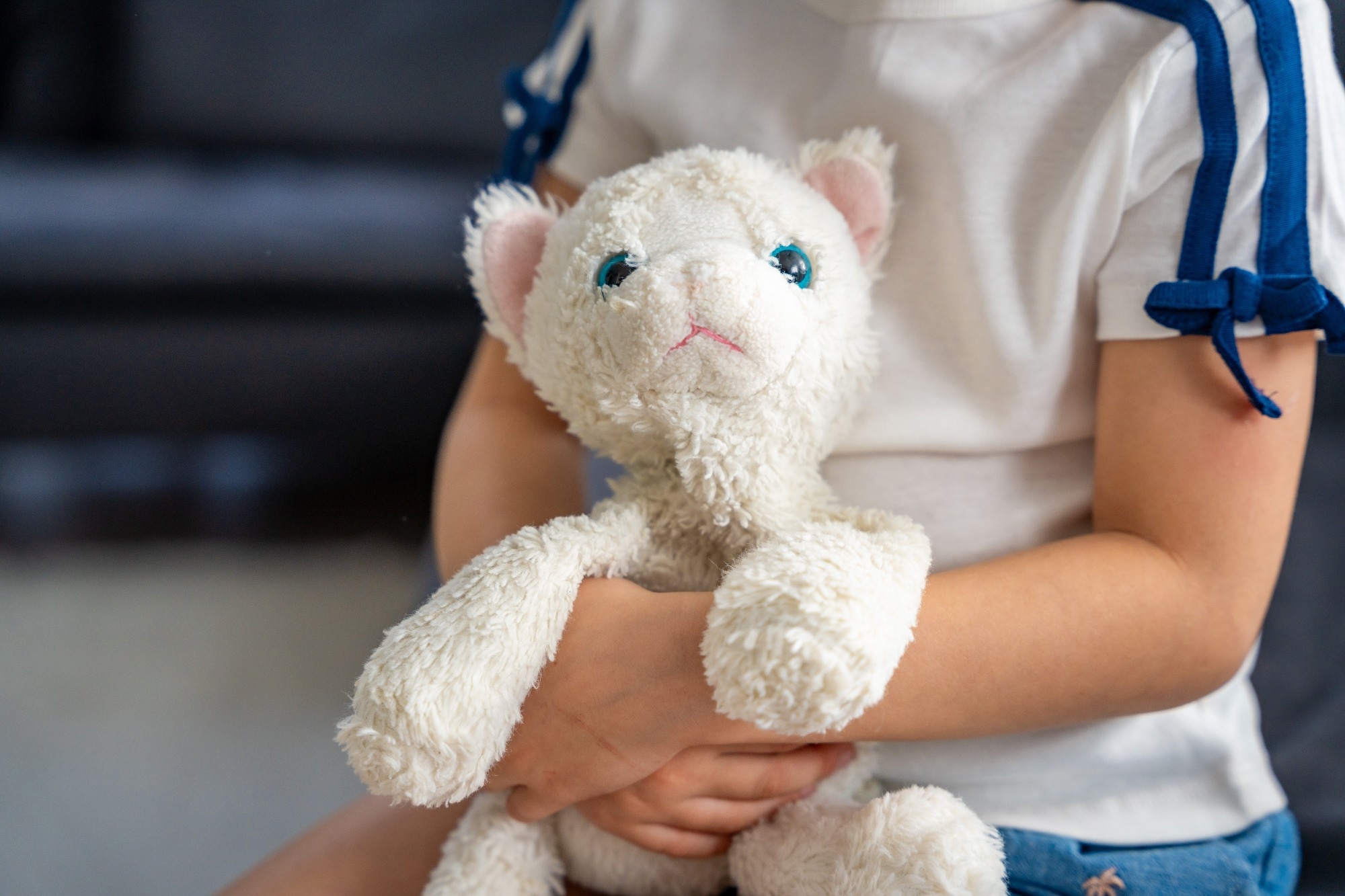
Study: Stuffed toys as a source of oral PFAS exposure: Migration into artificial saliva and exposure assessment. Image Credit: Tatiana Diuvbanova / Shutterstock
A recent study in the Journal of Exposure Science & Environmental Epidemiology quantified saliva-mediated PFAS migration from stuffed toys and evaluated a standardized water-rinsing step as a potential exposure-mitigation measure.
PFAS Ubiquity and Its Impact on Vulnerable Populations
PFAS are a diverse group of synthetic fluorinated compounds that have been widely used since the 1950s for their hydrophobic and lipophobic properties. Their chemical, thermal, and biological persistence is attributed to the strong carbon–fluorine bond, leading to their classification as “forever chemicals.”
The Organization for Economic Co-operation and Development and United Nations Environment Program (OECD/UNEP) list over 4,700 PFAS, with broader definitions encompassing tens of thousands, complicating environmental fate and toxicological assessment. Extensive use has led to global distribution across environmental matrices and remote regions.
Human exposure is ubiquitous via water, food, air, dust, and consumer goods. Many legacy PFAS bind serum proteins and undergo renal reabsorption, leading to multi-year half-lives. Immune suppression is the most sensitive adverse outcome associated with PFAS exposure, with additional associations including dyslipidemia, altered liver enzymes, reduced birthweight, and increased risks of renal and testicular cancers at higher exposure levels.
PFAS are detectable in over 96% of U.S. adolescents and adults, with early-life accumulation via maternal transfer. However, data on early-life exposure and health effects remain poorly understood. Infants and young children are particularly vulnerable due to higher intake, immature elimination, and frequent mouthing behaviors.
While textiles and children’s products are recognized PFAS sources, data on migration and bioaccessibility from infant-specific items, for example, toys and comforters, are sparse. The extent to which these products contribute to internal exposure through saliva mobilization during mouthing is not well defined, representing a significant research gap.
Accurately quantifying early-life PFAS exposure requires migration studies that reflect real-world infant mouthing. The application of saliva-based migration protocols to infant products is rare, underscoring the need for new data to inform risk assessment.
Assessing PFAS Migration from Toys to Children
Eighteen stuffed toys for infants and toddlers aged 0–3 years, representing a range of products on the European market, were selected. Sampling focused on toy areas most likely to be mouthed by children, such as ears, wings, and extremities, to assess oral exposure. To prevent contamination, all toys were handled with PFAS-free gloves, wrapped in clean foil, and kept isolated until analysis.
To simulate infant mouthing, 10 cm2 sections of toy fabric were incubated in 10 ml of artificial saliva at pH 6.5, stored at 4°C before use, and incubated at 37°C for 30 minutes with orbital agitation. Following incubation, the saliva was extracted and prepared for liquid chromatography–tandem mass spectrometry (LC–MS/MS) analysis.
To evaluate washing as an exposure-mitigation strategy, fabric samples were shaken in bottled water for one hour at 30°C without detergent, air-dried, and then processed using the same migration and extraction protocol as the unwashed controls.
PFAS analysis was conducted using LC–MS/MS with a binary gradient and electrospray ionization in negative mode. Quantification relied on multiple reaction monitoring (MRM).
PFAS Detected in Stuffed Toys, but Washing Has Mixed Effects on Chemical Release
PFAS were detected in all stuffed toy samples, though types and concentrations varied widely. Short-chain carboxylic acids, especially perfluorobutanoic acid (PFBA), perfluoropentanoic acid (PFPeA), and perfluorohexanoic acid (PFHxA), were most prevalent, with PFHxA found in every sample and showing the greatest variation.
Perfluoroheptanesulfonic acid (PFHpS) was also consistently identified, often at higher levels than other sulfonates. Some PFAS, such as perfluoroheptanoic acid (PFHpA) and perfluorooctanoic acid (PFOA), were frequently detected but contributed minimally to the total PFAS burden. Others, like perfluorononanoic acid (PFNA) and perfluorodecanoic acid (PFDA), appeared often but at low concentrations. In contrast, perfluorobutanesulfonic acid (PFBS) was detected less frequently, while perfluorododecanoic acid (PFDoDA) was detected in more than half of samples; both occurred at low concentrations. Most toys had low to moderate PFAS levels, with a few exhibiting much higher concentrations, primarily due to PFHxA.
Estimated PFAS intake for children mouthing stuffed toys depended on both the compound and the specific toy. PFHxA contributed most to weekly intake, especially in toys with elevated PFAS content. PFHpS was a significant contributor in some toys, occasionally exceeding 1.0 ng per kilogram of body weight per week, while PFBA and PFPeA typically resulted in lower intake levels.
Longer-chain PFAS, including PFNA, PFDA, and PFDoDA, were frequently detected, but their low concentrations meant little impact on total intake. Occasionally, total weekly PFAS intake exceeded 10 ng/kg body weight. However, for the four PFAS covered by the European Food Safety Authority’s group tolerable weekly intake, perfluorooctanesulfonic acid (PFOS), PFOA, perfluorohexanesulfonic acid (PFHxS), and PFNA, combined estimated intake remained below the 4.4 ng/kg body weight per week threshold.
For most toys and PFAS, the margin of exposure (MOE) exceeded the screening reference value of 100, indicating no appreciable health concern under the study’s modeled exposure assumptions. A few toys with elevated PFHxA had MOEs below 100, indicating a smaller safety margin, chiefly attributable to PFHxA migration and, for combined exposure, to PFHpS to a lesser extent. Overall, most toys had modeled MOEs above the reference value, though those with substantial PFHxA migration may require closer monitoring. Reverse-dosimetry estimates also suggested that toys could make a non-negligible relative contribution to exposure for some compounds, but these results were not measures of actual cumulative exposure.
Washing generally reduced PFAS migration from stuffed toys and could reduce PFHxA to below quantification in many toys and PFOS in all toys. The extent of reduction varied according to both PFAS type and toy. Most toys showed a marked decrease in PFAS levels after washing, though a few displayed little change or even increased migration for certain compounds, notably PFBA and PFPeA. Despite these exceptions, no post-washing MOEs fell below 100, although this screening-level finding does not establish actual health risk or product safety.
Stuffed Toys May Contribute to Early-Life PFAS Exposure With Mixed Results From Washing
The current study demonstrates that commercial stuffed toys can release PFAS under conditions relevant to children’s mouthing behavior, with short-chain PFAS, particularly PFHxA, dominating migration profiles. While estimated intakes for the four PFAS assessed by the European Food Safety Authority (EFSA) remained below the EFSA group tolerable weekly intake, exposure to emerging short-chain PFAS is less certain and requires further study.
Washing reduced the release of most target PFAS for most toys but was not uniformly effective, emphasizing the need for compound-specific risk assessment. These results highlight the importance of saliva-simulant migration testing and exposure modeling for identifying priority chemicals and products in early-life risk management. The findings were based on artificial saliva, 18 products, and one detergent-free water-rinsing condition; the study did not measure polymeric PFAS, total fluorine, or children’s actual PFAS exposure.
Journal reference:
- Nowak, L., Beaud, J., Sartori, L., Onidi, A., Cretegny, L., Rime, C., Staedler, D., & Lucarini, F. (2026). Stuffed toys as a source of oral PFAS exposure: Migration into artificial saliva and exposure assessment. Journal of Exposure Science & Environmental Epidemiology, 1-13. DOI: 10.1038/s41370-026-00946-8, https://www.nature.com/articles/s41370-026-00946-8
 CHOP researchers link MAP2K4 variants to a neurodevelopmental disorder