In this interview, News-Medical speaks with Maria Jazmin Silvero Compagnucci from the University of Ottawa about how microplastics and bacteria interact. She discusses why the literature has been mixed so far, what her group has observed when bacteria grow with common plastics over time, and why using more realistic microplastic particles matters for lab studies.
Pittcon puts a lot of focus on supporting early-career researchers. What first drew you to science, and when did you realize you wanted to pursue it as a career?
I recently remembered this memory from the back of my mind. My mom is a doctor, a pediatrician, and she had this poster in her consulting room with cartoons of bacteria and parasites. She called them bugs, little bugs, and that I had to be aware of them and wash my hands. I think I was probably four, and I was surprised that these tiny things could have such an effect on us.
I think that caught my attention very early in my life. I was always curious. I’m prone to science.
However, I didn’t even hear the word “research” until, I think, my second year of undergrad school, and it was thanks to this professor who invited me to join his research group. I discovered this world where you not only study knowledge from books, but you also get to write new paragraphs in them and discover new things you didn’t know existed.
I think I was very excited about the opportunity of discovering new secrets about these microorganisms, for example. I started in physical chemistry, but soon I made my way to microbiology and this nano work.
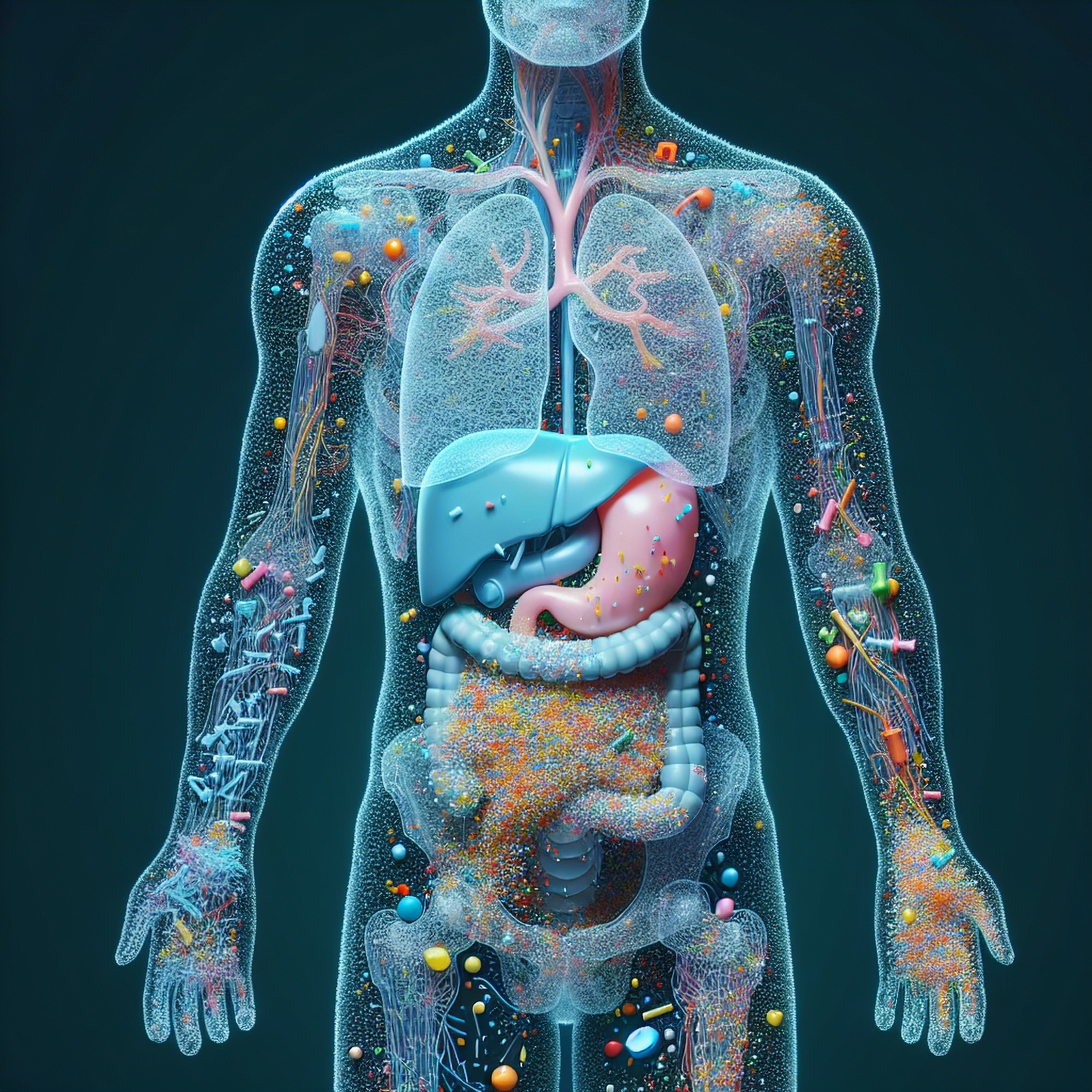 Image Credit: Shutterstock.com
Before your current work on microplastics, you also worked on antimicrobial materials. What were you focusing on there?
Yeah. That earlier work was on polymers with silver nanoparticles. As you can see, I always go back to my roots.
The reason I got into research is that I didn’t want to be a doctor who just uses whatever is there; I often listen to my mom say, “In this case, there’s nothing to do.” I wanted to create new things that will work as antimicrobials against these superbugs that are getting more resistant every day.
My work developing silver and gold nanoparticles, especially the gold ones, which are activated with light, was focused on alternatives to antibiotics. That light activation is an extra resource to fight the superbug.
I’ve done all kinds of things: coatings for prosthetics, gels you can apply to your skin, and some oral formulations. The versatility of nanomaterials is incredible. There are still a lot of studies, so it’s not something you can go and buy over the counter yet, but they’re very promising.
I like to think of it this way: they’re on the same level, so they can fight the battle better than we do.
Turning to microplastics, what does the scientific literature currently say about how microplastics and bacteria interact?
It’s a good starting point, and it’s what triggered my current research: the reading, the literature.
For every paper I’ve found saying that microplastics are promoting bacteria and biofilm, that these communities of microorganisms are promoting their growth, I’ve found one or two papers saying, no, microplastics are actually toxic for the bacteria, so they’re killing it, and I’ve found just a couple saying maybe they’re getting resistant.
So that’s what’s currently out there.
In your Pittcon work, which plastics did you focus on, and what did you observe when bacteria grew with them over time?
I presented about 10 to 20% of our current research from the group. I have several students working along with me, and I shared just a little bit, focusing on two main plastics that are polluting our water, air, and environment: polypropylene and PET
Is your water bottle plastic? Is your bag plastic? Do you have a food container labeled "recyclable," but it isn't really? Those plastics. Even if one of them ends up, let’s say, floating on the water, like I saw walking through this river walk, for one bottle that you see, there are millions of those plastics that you cannot see: the microplastics.
So I’m focusing on the interaction of those microplastics with bacteria. Microplastics are anything below five millimeters; I’m focusing on bacteria-sized and smaller. That’s below one micron, and most of them are below 100 nanometers, really small populations, because they are about the same size. They see each other: sometimes they like each other, sometimes they hate each other. Sometimes they will work together, and that can affect us.
I was showing a very interesting, and I think surprising - even for us as a research group - part of the research where we found a dual effect these microplastics are having on the bacteria. Yes, it’s true: they will promote the growth of the biofilm in the first phase, seven or eight days. That’s equivalent to probably our teenage years.
But bacteria are the same as humans: with time, you suffer consequences. After those seven or eight days, the bacteria grow, but we started to notice some mutations that were reflected as antibiotic resistance. Even bacteria that are completely susceptible to antibiotics, that I work with in the lab to begin with, decided to switch on this gene and say, “I have to be stronger.”
It turned out, according to our measurements, that they were stressed. The ROS (reactive oxygen species) levels were really high since the very beginning. We discovered that, even though they were growing, they were doing so under stress, which turns out to be reflected in high antibiotic resistance.
That is dangerous for us because it means that, in nearshore waters, for example, or in closed environments close to human populations, we don’t just have this plastic and its consequences. We don’t only have the microorganisms and possible pathogens. Now we have more resistant and more dangerous pathogens because they are living together with these microplastics. So the public health implications have been magnified, and it happened so fast.
It happens so fast, like an overnight culture can change the growth of the bacteria. It’s not like it’s going to take long. It’s not like this is going to happen in 50 years. It’s already happening. Definitely.
A major focus of your work is making microplastics in the lab that look more like what is found in the environment. What methods did you use, and why did that matter?
That’s a really good point, because we started the first experiment buying what is available commercially, which are usually these perfect spheres. You can pick the size and the perfect shape for a homogeneous distribution. We were getting results, but there was nothing new in them: they were the same as the literature.
When I tried to collect real-world samples for both the bacteria and the microplastics, I discovered in TEM images that the microplastics there looked nothing like the ones I had in the lab. They’re all kinds of shapes, colors, and additives, because not every water bottle is the same. So I was trying to mimic that to get more realistic results.
In terms of the technique we used: I’m from Argentina, and even though I work in Canada, I tend to be very resourceful. Before I got a grant for this, I thought, OK, let’s try a low-budget approach. Tito, who I’m closely working with, agreed.
We bought a cotton candy machine because it produces fibers - sugar fibers - but we thought, why not use it with plastic pellets? I was actually at a playgroup with my kid when I thought about this. It could work: the machine will not know if I’m putting sugar or plastic.
So we put some pieces of plastic there, and after struggling a bit with the students, we were able to make this 'plastic cotton candy'. Now we have thin plastic fibers, like the ones in clothes, the ones formed in our drying machines.
We tried to further reproduce what was happening. So then we broke them, faster than in real life, I would say. We used cryo-grinding with a bit of liquid nitrogen and mechanical forces, and we ended up with a plastic very similar to that collected from real-world samples: a very diverse population in both size and shape.
We can still divide them to study the effects of the larger ones, the smaller ones, the fibers, and the beads. We can still divide them, but to begin with, we have a very diverse population.
Based on what you’ve found so far, what do you see as the next steps for your research and for the wider field?
I think trying to mimic the real world on the lab bench is the way to go. Not only for my lab, I think research is going to go that way because it will save time. Otherwise, after 10 years of research with this perfect plastic, you’re going to find that those aren’t the real results, so I think that’s the direction to go. The bio-nano interface needs to be studied more deeply.
For my own future interests, I’m particularly focused on going further with studies of the mechanism. Only by understanding, “Okay, so they get more resistance,” but why and how, can we do something about it?
And that brings me back to my roots. The reason I’m doing this is that I don’t want to only understand or study. I want my research to be useful for people. So how can we help them?
You presented this work at Pittcon. How did you first get involved with the conference?
I believe it was through a colleague or an industry connection. As part of our collaboration project, I got to work with really nice scientists from LGC. One of them was organizing the symposium yesterday, and he invited me because he also believed microplastics are going to be, in his words, “the next phase”, the pollutant of concern right now, and for the future. Unfortunately, the accumulation levels are already so high.
Even if we come up with a remediation, it’s going to take a lot of work. We both believe it’s going to take combined work.
Even though this conference is a bit outside my usual biological background, I said yes because I believed it was a great opportunity. I was right: it was a great opportunity to meet scientists doing more materials-related research.
The number of companies that are here in the big hall is amazing. I get to see equipment that, otherwise - because you’re so focused on research - you don’t really realize: "OK, this could make my work easier". So it’s not only the scientists; it’s also networking with the companies. Seeing what’s out there right now is almost like going shopping at a conference.
That mixture is a great opportunity. I would definitely recommend it to my students next year.
Mentorship and training students is clearly important to you. What does being a mentor mean to you, and what do you hope for your students?
I had a mentor teacher who brought me to Canada, and that's why I’m here. So I want to do that for someone else: I think I’ve succeeded sometimes.
I want to share this passion and the feeling of fulfillment you get from doing something useful. There are so many smart students out there. I want to show them that they can use that knowledge and those skills to do something productive, and that it can also be fun, because I’m having a lot of fun. I have to tell you.
So I want to share that with them, and especially with minority groups, because I have to recognize that I have these great mentors, but not everyone in science is so open and inclusive. As part of the LGBT group, I have to say opportunities are few, because you have some limitations: time limitations, extra family limitations, whatever it is dealing with that adds on.
So I want to reach out to them and show them that it is possible. You need to find the right people to open the door for you. I got those people, and I want to be that person for them.
Microplastics, Bacteria & Antibiotic Resistance with María Jazmín Silvero
About Maria Jazmin Silvero Compagnucci
Dr. Maria Jazmin Silvero Compagnucci comes from CONICET (Argentina) and recently joined as a Research Associate in Scaiano's group at the University of Ottawa, Canada. Her work focuses on photochemistry and nanomaterials, including antimicrobial and photocatalytic applications. She has coauthored research on silver nanoparticle disinfectants, reusable antimicrobial surfaces, and flow-based water remediation strategies. She has also been recognized with the Cilento Prize from the InterAmerican Photochemical Society, reflecting her outstanding contributions to photochemical research.
About Pittcon
Pittcon is North America’s largest conference and exposition in laboratory science, attracting thousands of industry, academia, and government attendees and exhibitors from around the world in. Pittcon goes beyond the typical conference; it's a global community dedicated to advancing science through education, collaboration, and philanthropy. By bringing together scientists, researchers, educators, students, and industry leaders, Pittcon creates opportunities to learn, connect, and inspire innovation. Beyond the event itself, more than 90% of Pittcon's net proceeds support science education and outreach initiatives locally and globally, funding scholarships, grants, STEM programs, laboratory improvements, and other efforts that strengthen communities and expand access to science.
Pittcon delivers world-class educational and professional development opportunities through its Technical Program, Short Courses, and Networking Workshops and Roundtables. Attendees can explore the latest scientific research through symposia, oral and poster presentations, enhance their skills with expert-led deep-dive courses, and connect with peers through interactive workshops and networking experiences designed to foster collaboration and career growth.
The Pittcon Expo brings the scientific community together in an immersive environment where attendees can discover the latest laboratory technologies, meet with leading instrument and service providers, and experience science in action. Beyond the exhibit booths, the Expo Floor features engaging attractions, educational experiences, demonstrations, and networking spaces, while receptions, parties, and social events create opportunities to build lasting connections with colleagues from around the world.
 Pittcon to make historic first appearance in Boston’s world-leading scientific hub