Introduction
Understanding epigenetics and aging
How the epigenome changes with age
Epigenetic clocks: Measuring biological aging
Why do epigenetic changes occur during aging?
How epigenetic changes affect health and disease
Can epigenetic aging be reversed or slowed?
Future directions: The role of epigenetics in healthy aging
Conclusion: How gene regulation shapes aging
References
Further reading
From shifting DNA methylation patterns to experimental cellular reprogramming, researchers are investigating why gene regulation changes with age and what those changes reveal about growing older.
 Image Credit: Shutterstock AI / Shutterstock.com
Introduction
Across many tissues, aging cells change epigenetic regulation, including DNA methylation, histone modifications, chromatin organization, and regulatory RNA activity. Studies in experimental models suggest that some of these changes can contribute to aging, though their causal roles in normal human aging remain incompletely understood.1,2,6
Understanding epigenetics and aging
Most nucleated cells in an individual share largely the same DNA sequence, yet a neuron behaves very differently from a skin or liver cell. This distinction arises partly from epigenetics, a set of molecular mechanisms that determine gene activity.
Histones are proteins around which DNA is packaged; together, DNA and its associated proteins form chromatin. Through epigenetic mechanisms, genes can be switched ‘on’ or ‘off’, or expressed at different levels, without altering the underlying DNA sequence.1
As organisms grow older, this regulatory system undergoes widespread reorganization. Epigenetic alterations are recognized as a hallmark of aging, alongside processes such as cellular senescence and telomere shortening, and interact with oxidative stress and other forms of cellular damage. Cellular senescence is a state in which cells stop dividing and change function, often releasing inflammatory signals.1,2
Altered gene regulation can reduce tissue repair capacity, disrupt cellular identity, and contribute to disease. Understanding these mechanisms may help researchers identify ways to slow or partially reverse particular molecular and functional features of aging.1,2
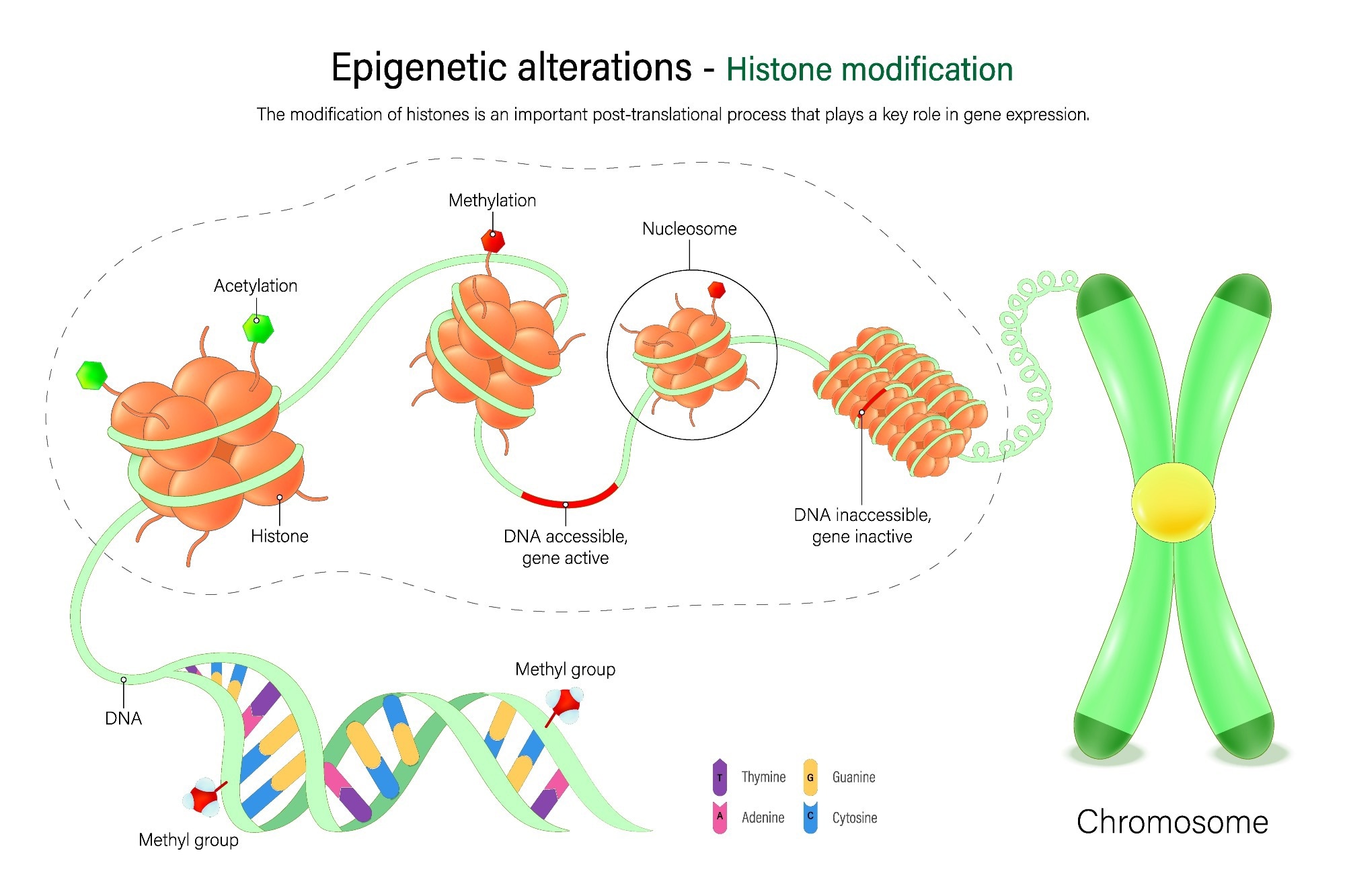 Image Credit: Dee-sign / Shutterstock.com
How the epigenome changes with age
Aging involves progressive shifts across several interconnected epigenetic mechanisms. DNA methylation, the addition of methyl groups to cytosine bases, often shows widespread losses alongside gains at selected sites, with patterns varying between tissues and genomic regions. Some CpG islands, which are DNA regions containing a high density of cytosine-phosphate-guanine dinucleotides, also appear to undergo hypermethylation.1,2,4
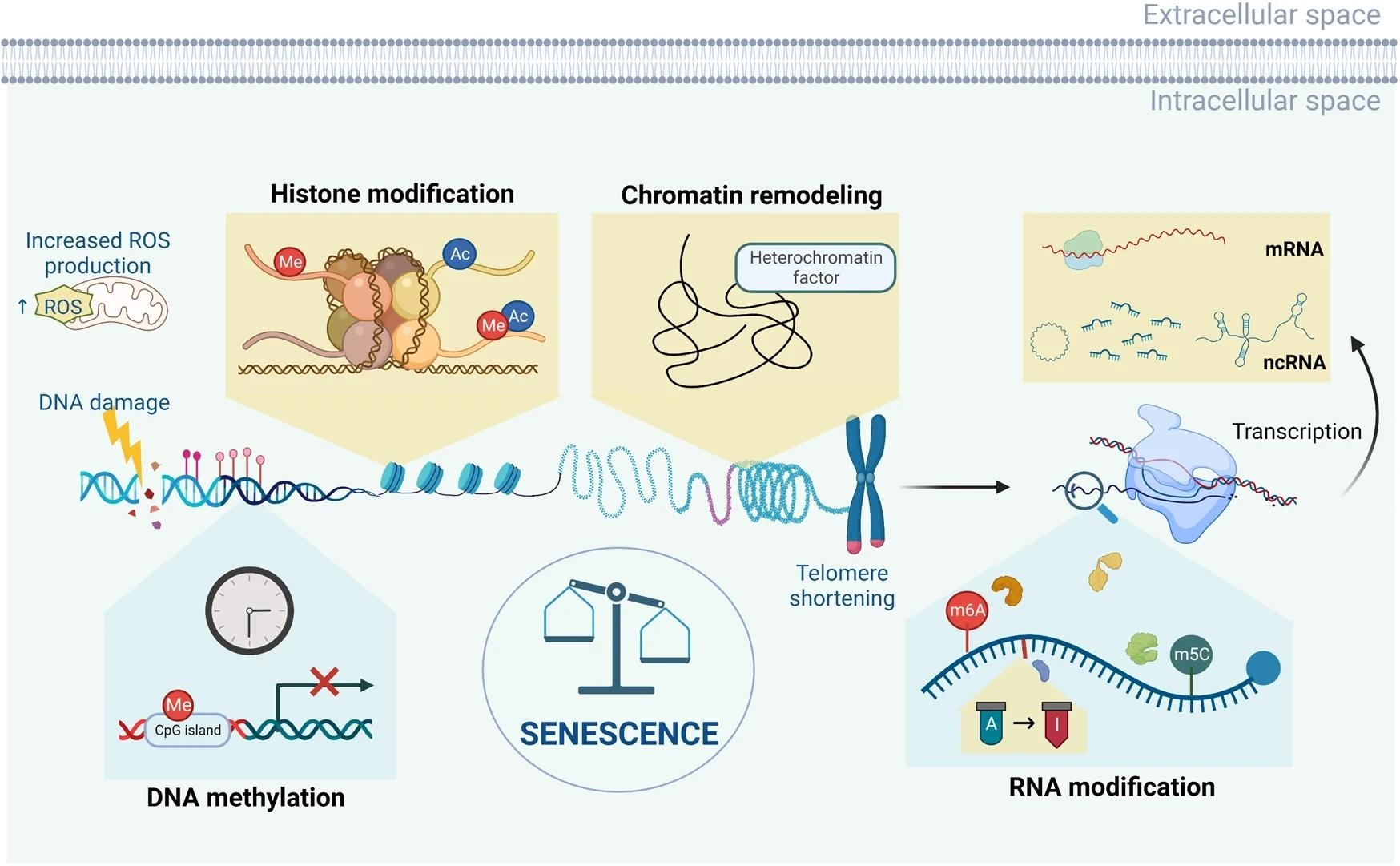
An overview of the aging epigenome. During aging and the emergence of cellular senescence, cells undergo a series of epigenetic changes, including alterations in DNA methylation, chromatin remodeling, histone modification, RNA modification, and ncRNA regulation.2
Histone proteins change in parallel, including reduced abundance in some aging models and redistribution of acetylation and methylation marks. These changes can weaken normally compact, gene-silencing chromatin and alter accessibility at other regions. Changes in nuclear architecture further disrupt the organization of gene activity and silencing.1,2
Non-coding RNAs, such as microRNAs, circular RNAs, and long non-coding RNAs, also regulate gene expression by affecting chromatin, transcription, and post-transcriptional processes. Whereas some microRNAs are upregulated during aging, others are downregulated. Circular RNAs are linked to age-related disorders such as cardiovascular and neurodegenerative diseases.2
Together, these changes can disrupt gene regulation and increase variation in gene expression between cells. Epigenetic drift describes age-related divergence in epigenetic patterns, while transcriptional drift describes changes in gene expression; the two are related but distinct. Epigenetic differences can accumulate over an individual’s lifetime through intrinsic processes and external influences, including diet and environment.1
Epigenetic clocks: Measuring biological aging
Epigenetic clocks use DNA methylation patterns to estimate chronological age or aging-related outcomes, depending on how they were trained. Methylation changes at selected sites occur reproducibly across individuals. Researchers have used this pattern to build statistical models that predict age from sets of methylation measurements.4,5,7
Mouse methylation clocks have been used to assess longevity interventions, including calorie restriction and altered growth hormone signaling. A lower clock estimate after an intervention indicates a change in the measured methylation pattern; it does not by itself establish whole-body rejuvenation.2,7
Separately, a human epigenome-wide association study identified numerous age-associated CpG sites across nine tissue types, with most detected associations confined to individual tissues. This study examined methylation correlates of age, rather than developing a new clock.4
Epigenetic clocks let researchers compare aging-related methylation patterns across individuals or experimental groups and evaluate candidate anti-aging interventions in preclinical models. Importantly, the selected clock, tissue sampled, and sample-processing methods affect interpretation.5
Epigenetics and Aging: The effects of DNA breakage and repair
Why do epigenetic changes occur during aging?
The origins of age-related epigenetic drift remain poorly understood. Several processes may contribute, including DNA damage and the cellular response to its repair.
Oxidative stress and chronic low-grade inflammation interact with epigenetic regulation during aging, including pathways that maintain chromatin structure and DNA methylation patterns.2 Environmental factors, including diet, pollutant exposure, and psychosocial stress, can also alter epigenetic marks, with some of these changes persisting beyond the initial exposure.3
Exposure history may also extend into early development and previous generations. Certain epigenetic modifications may escape the extensive resetting of epigenetic marks during germ-cell formation and early development.
Experimental studies support transmission of some exposure-associated effects across generations; however, evidence for direct epigenetic inheritance in humans remains limited. Effects in children or grandchildren can also reflect direct exposure during pregnancy, shared environments, or genetic factors, which must be distinguished from inheritance through unexposed generations.3
How epigenetic changes affect health and disease
As gene regulation becomes less precise, cells may lose aspects of their specialized identity. In the nervous system, epigenetic alterations have been linked to functional decline, and experimental studies support causal roles for specific changes.
Neurons rely on tightly maintained, cell type-specific epigenetic patterns to sustain long-term gene expression programs that support memory and synaptic plasticity. Aging disrupts several layers of this regulation simultaneously, including chromatin structure within the nucleus, with consequences linked to cognitive decline in aged mice.7
Epigenome-wide studies spanning multiple human tissue types have also identified age-associated methylation changes enriched near genes involved in cancer-related and cell-signaling pathways, including Wnt and mitogen-activated protein kinase (MAPK) signaling.4 The expression of the cyclin-dependent kinase inhibitor 2A (CDKN2A) gene, for example, rises with age alongside increased methylation at selected sites near and within the gene. Researchers have also observed this pattern in lung, colon, and prostate tissues.4
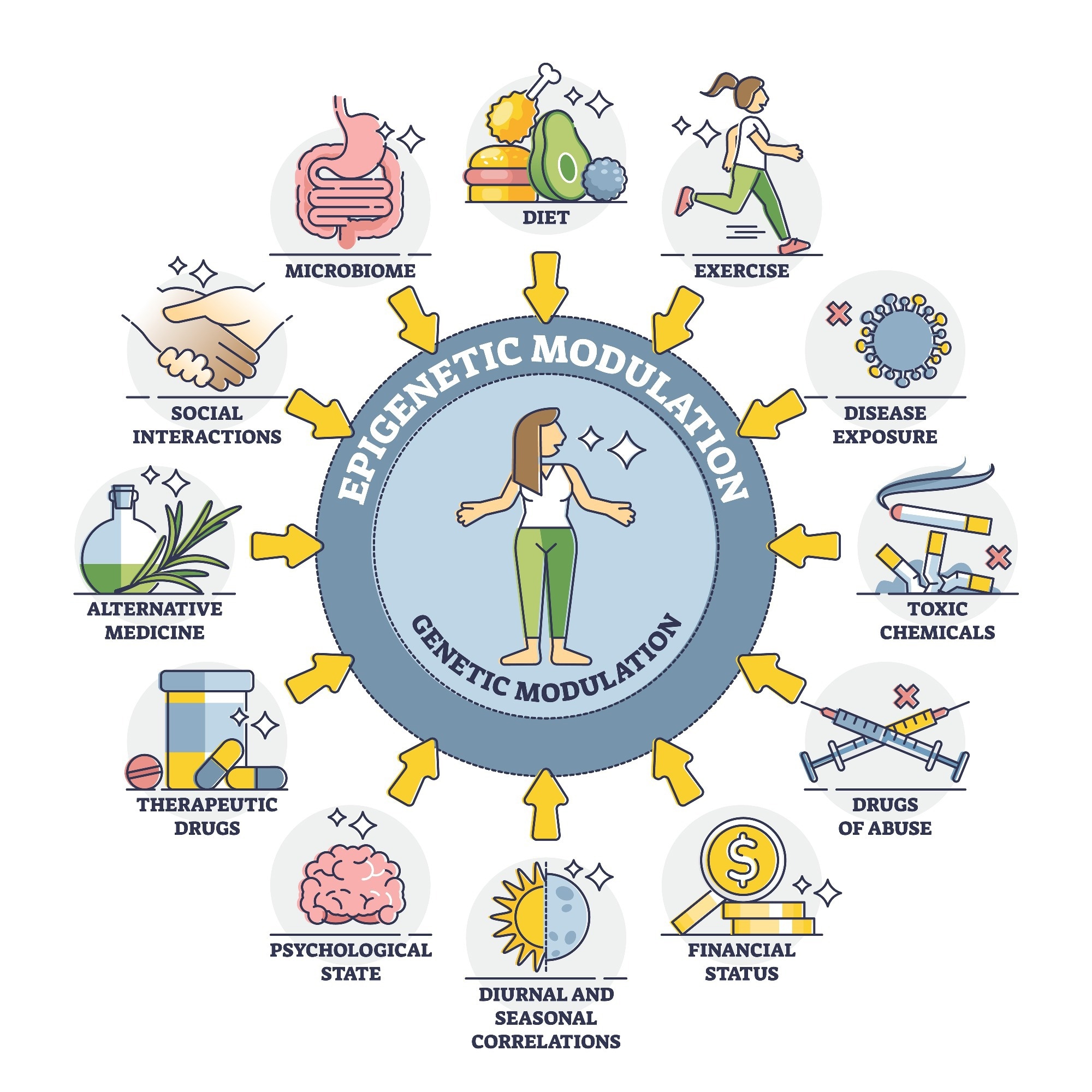 Image Credit: VectorMine / Shutterstock.com
Can epigenetic aging be reversed or slowed?
Recent research has focused on whether modifying epigenetic signatures can slow or reverse age-related changes. Studies in animal models show that lifestyle interventions, including environmental enrichment, exercise, and caloric restriction, may counteract some aspects of neuronal epigenetic aging. In mice, environmental enrichment appears to restore methylation states resembling those in younger animals at many age-sensitive sites in the hippocampal dentate gyrus, even when initiated later in life.7
Partial cellular reprogramming involves temporarily activating factors that reset some features while attempting to preserve cell identity. Experiments using the Yamanaka factors Oct4, Sox2, Myc, and Klf4 have been shown to reverse some age-associated molecular changes in experimental models.
In retinal experiments using the three-factor combination Oct4, Sox2, and Klf4 (OSK), excluding Myc, aged mice showed improved visual function, along with methylation and gene-expression patterns that more closely resembled those of younger mice.2,6,7 Locus-specific epigenome editing tools, which use catalytically inactive Cas9 linked to enzymes that modify epigenetic marks, have altered gene expression and improved function in neurological disease models. Nevertheless, these findings do not yet demonstrate correction of normal brain aging or age-related cognitive decline.7
Further validation is needed before human use to confirm delivery to the intended cells, editing specificity, and the durability of induced changes. Researchers are also concerned that broad epigenetic resetting could erase cellular identity alongside age markers or promote uncontrolled cell growth. These risks require safety testing alongside measurements of lasting functional benefit.2,7
Future directions: The role of epigenetics in healthy aging
The continued mapping of the aging epigenome may identify biomarkers that capture aspects of aging beyond chronological age; however, their predictive accuracy and clinical usefulness require validation. A related research goal is to identify which enzymes and regulatory processes can be targeted to preserve cellular function without disrupting normal gene activity.2,4,5
Because epigenetic alterations reflect cumulative environmental and physiological exposures, they may help researchers study how individuals age differently, even among people with similar genetic backgrounds. Distinguishing exposure-related modifications from those arising through intrinsic cellular processes could help explain why people of similar chronological age develop different molecular profiles.1,3
Incorporating epigenetic profiling into personalized medicine is a research goal, with possible applications in disease classification and treatment selection.8 Its proposed use for tailoring preventive care according to an individual's biological age remains unproven.5
Conclusion: How gene regulation shapes aging
Aging involves a gradual, cumulative reorganization of epigenetic mechanisms that regulate gene expression, including DNA methylation, histone modification, chromatin architecture, and regulatory RNA activity. Over time, these changes can disrupt cellular identity and function, contributing to the broader physiological decline associated with aging.1,2
Epigenetic changes are potentially modifiable components of the interconnected biology of aging. Research into epigenetic clocks, damage-driven aging models, and reprogramming-based interventions has already begun to clarify their value as aging measures and their possible roles as treatment targets.2,6,7
Continued research into the aging epigenome must distinguish methylation changes that track age from changes that cause functional decline, and establish whether modifying them produces lasting health benefits in humans.4,5,7
References
- Pal, S., & Tyler, J. K. (2016). Epigenetics and aging. Science Advances, 2(7), e1600584. DOI: 10.1126/sciadv.1600584. https://www.science.org/doi/10.1126/sciadv.1600584.
- Wang, K., Liu, H., Hu, Q., et al. (2022). Epigenetic regulation of aging: implications for interventions of aging and diseases. Signal Transduction and Targeted Therapy 7(1), 374. DOI: 10.1038/s41392-022-01211-8. https://www.nature.com/articles/s41392-022-01211-8
- Klibaner-Schiff, E., Simonin, E. M., Akdis, C. A., et al. (2024). Environmental exposures influence multigenerational epigenetic transmission. Clinical Epigenetics 16(1); 145. DOI: 10.1186/s13148-024-01762-3. https://link.springer.com/article/10.1186/s13148-024-01762-3
- Jain, N., Li, J. L., Tong, L., et al. (2024). DNA methylation correlates of chronological age in diverse human tissue types. Epigenetics & Chromatin 17(1); 25. DOI: 10.1186/s13072-024-00546-6. https://link.springer.com/article/10.1186/s13072-024-00546-6
- Apsley, A. T., Etzel, L., Ye, Q., & Shalev, I. (2025). From population science to the clinic? Limits of epigenetic clocks as personal biomarkers. Epigenomics 17(18), 1447- 1461. DOI: 10.1080/17501911.2025.2603880. https://www.tandfonline.com/doi/full/10.1080/17501911.2025.2603880?scroll=top&needAccess=true
- Yang, J. H., Hayano, M., Griffin, P. T., et al. (2023). Loss of epigenetic information as a cause of mammalian aging. Cell 186(2, 305- 3266. DOI: 10.1016/j.cell.2022.12.027. https://www.cell.com/cell/fulltext/S0092-8674(22)01570-7?_returnURL=https%3A%2F%2Flinkinghub.elsevier.com%2Fretrieve%2Fpii%2FS0092867422015707%3Fshowall%3Dtrue
- Zocher S. (2024). Targeting neuronal epigenomes for brain rejuvenation. The EMBO Journal 43(1, 3312- 332626. DOI: 10.1038/s44318-024-00148-8. https://link.springer.com/article/10.1038/s44318-024-00148-8
- Rasool, M., Malik, A., Naseer, M. I., et al. (2015). The role of epigenetics in personalized medicine: challenges and opportunities. BMC Medical Genomics. DOI: 10.1186/1755-8794-8-S1-S5. https://link.springer.com/article/10.1186/1755-8794-8-S1-S5
Further Reading
Last Updated: Oct 28, 2026
 Novel 'speech clock' can estimate a person's chronological age