This article and associated images are based on a poster originally authored by Amberene Qayyum, Karsai, N., Platt, S., and Hill, S.J., and presented at ELRIG Drug Discovery 2026 in affiliation with the University of Nottingham and the Centre of Membrane Proteins and Receptors (COMPARE).
This poster is being hosted on this website in its raw form, without modifications. It has not undergone peer review but has been reviewed to meet AZoNetwork's editorial quality standards. The information contained is for informational purposes only and should not be considered validated by independent peer assessment.

A) Target
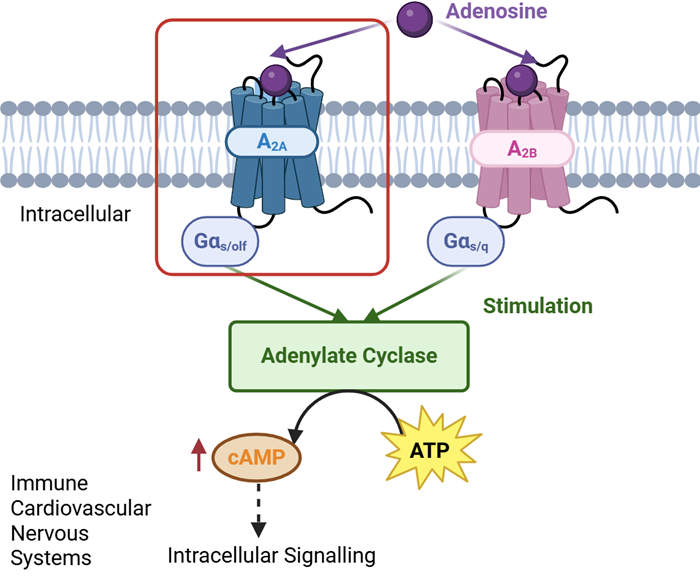
Image Credit: Image courtesy of Amberene Qayyum et al., in partnership with ELRIG (UK) Ltd.
B) Tool
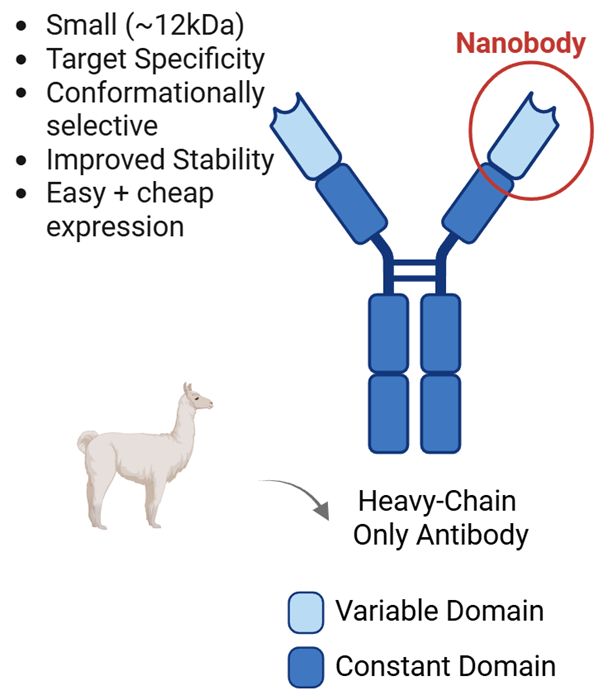
Image Credit: Image courtesy of Amberene Qayyum et al., in partnership with ELRIG (UK) Ltd.
C) AD101 nanobody (McMahon, 2018)1
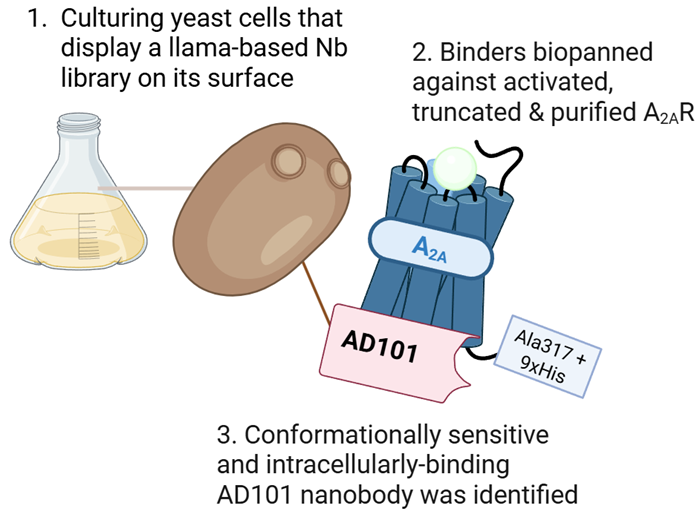
Image Credit: Image courtesy of Amberene Qayyum et al., in partnership with ELRIG (UK) Ltd.
Methods:
Step 1: Transfection of pcDNA constructs
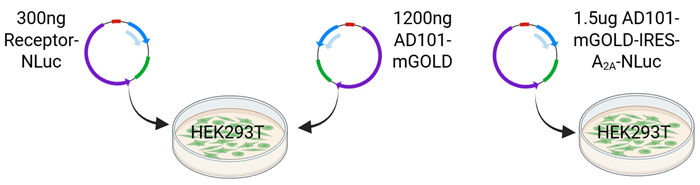
Image Credit: Image courtesy of Amberene Qayyum et al., in partnership with ELRIG (UK) Ltd.
Step 2: BRET assay
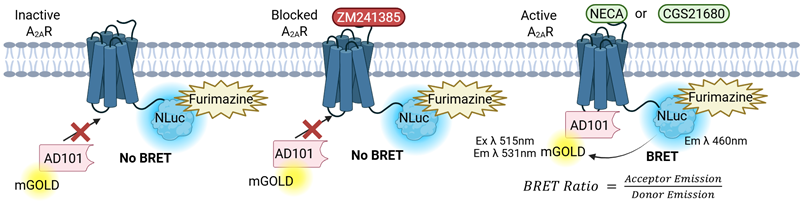
Image Credit: Image courtesy of Amberene Qayyum et al., in partnership with ELRIG (UK) Ltd.
1. Testing AD101-mGold recruitment to ligand activated A2AR in with A2A-NLuc:AD101-mGOLD transfected HEK293
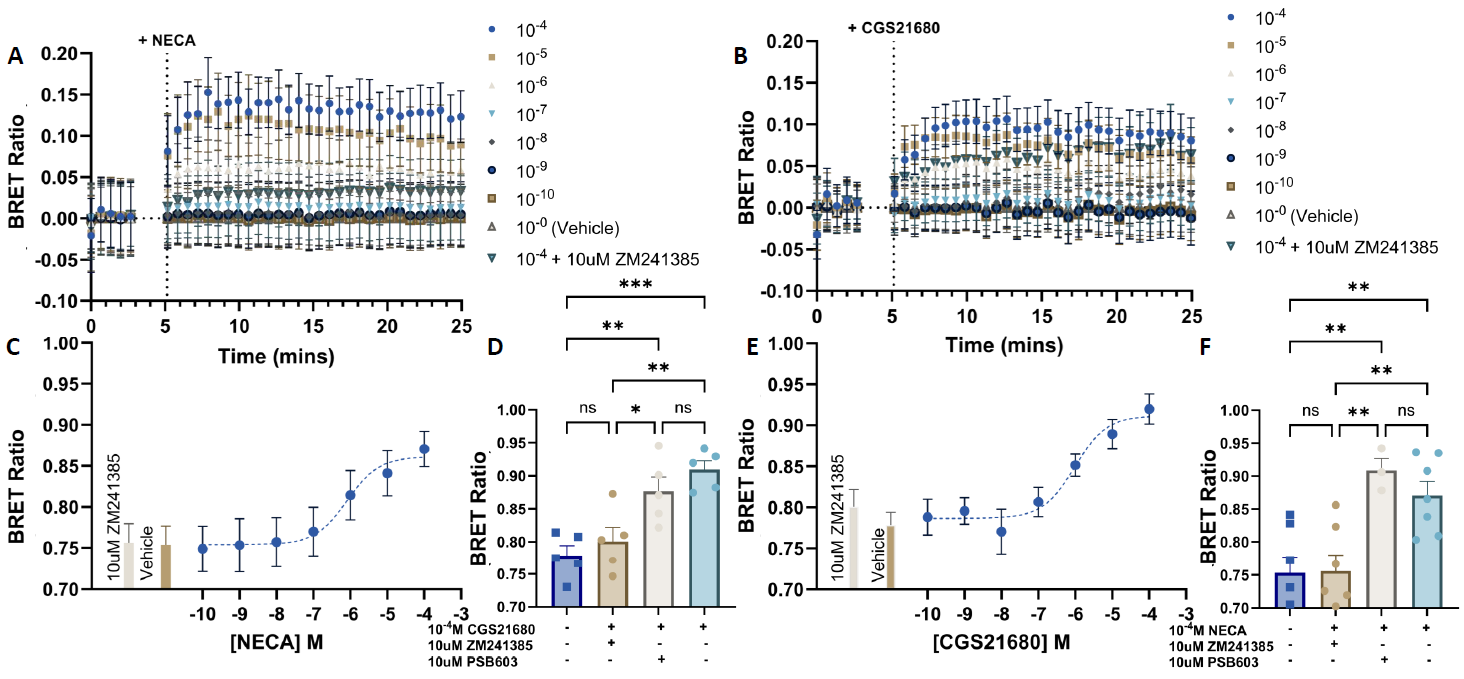
Figure 1. HEK293 (T variant) cells were transiently transfected to express C-terminal NLuc-tagged (NanoLuciferase) A2AR and C-terminal mGOLD-tagged AD101. (A/B). BRET (bioluminescent resonant energy transfer) measurements were taken over 35 minutes using the BRET1 filter (535 ±40 nm fluorescence, 460–480 nm band-pass luminescence) and normalized to the first five cycles (baseline).
Cells were then treated with increasing concentrations of NECA or CGS21680 agonists to activate the A2AR and promote AD101 binding. Control cells received only vehicle or 10 µM ZM241385/PSB603 antagonist 30 minutes prior to 10-4 M agonist addition. BRET ratios were plotted at 20 minutes against increasing (C) NECA or (E) CGS21680 treatments.
(D/F) Responses to 10-4 M agonist were compared against the antagonist- and vehicle-treated controls (one-way ANOVA: ns = P >0.05, * = P ≤0.05, ** = P ≤0.01, *** = P ≤0.001, **** = P ≤0.0001). Data represents the mean of n = 7 with NECA or n = 5 with CGS21680, with ±SEM bars. Image Credit: Image courtesy of Amberene Qayyum et al., in partnership with ELRIG (UK) Ltd.
2. Is AD101-mGold binding selective?
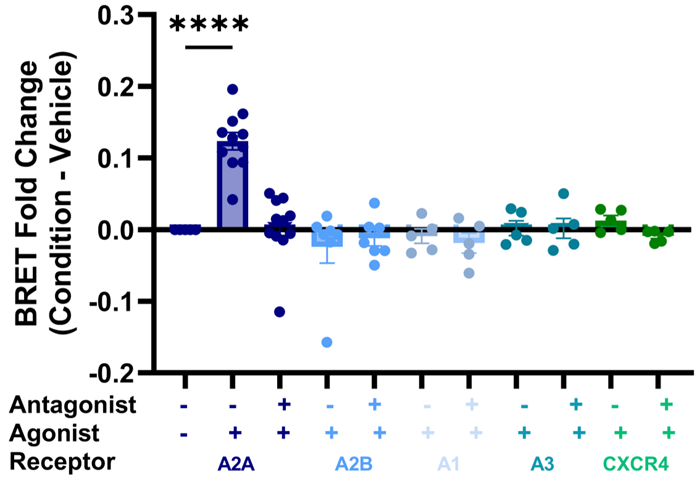
Figure 2. HEK293 cells were transfected and measured in the same manner as in Figure 1 but were transfected with different NLuc-tagged receptors (A2B, A1, A3, and CXCR4) and AD101-mGOLD. The AR-expressing cells were treated with 10-4 M NECA and the CXCR4-expressing cells with 10-7 M CXCL12. Control cells were treated with 10 µM of a specific antagonist (A2A:ZM241385, A2B:PSB603, A1:DPCPX, A3:MRS1177, CXCR4:IT1t) 30 minutes prior to agonist treatment. BRET ratios were normalized to the vehicle-only treated A2AR-expressing cells. Data represents mean of n = 5 ±SEM bars, one-way ANOVA, **** = P <0.000. Image Credit: Image courtesy of Amberene Qayyum et al., in partnership with ELRIG (UK) Ltd.
3. Testing AD101-mGold recruitment to active-state A2AR in HEK293s stably expressing AD101-mGOLD-IRES-A2A-NLuc
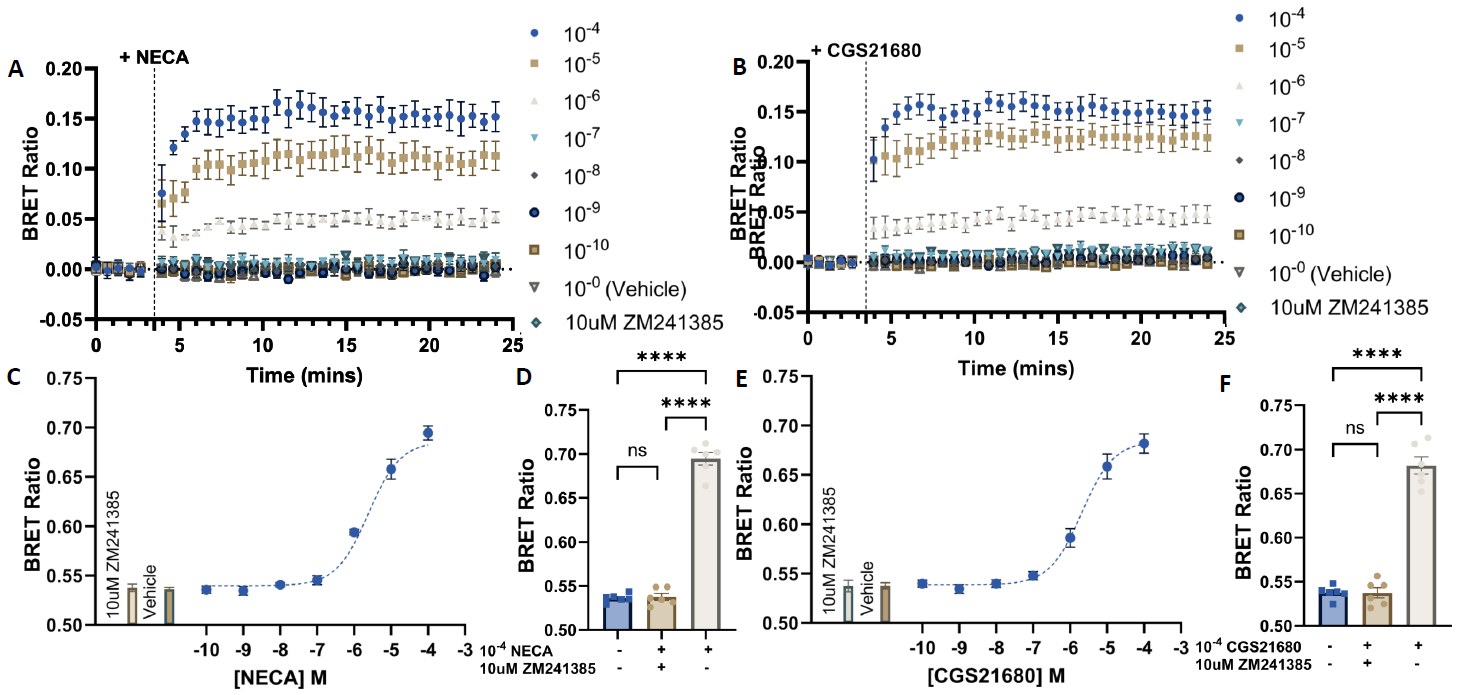
Figure 3. HEK293 cells that stably express AD101-mGOLD_IRES_A2AR-Nluc and GloSensor were treated with NECA or CGS21680 after five initial cycles. (A/B) BRET measurements were taken over 25 minutes using the BRET1 filter (535 ±40 nm fluorescence, 460–480 nm band-pass luminescence) and normalized to baseline cycles. Control cells received only vehicle or 10 µM ZM241385 30 minutes prior to 10-4 M agonist addition.
BRET ratios at 20 minutes were plotted against increasing (C) NECA or (E) CGS21680 treatments. Responses to 10-4 M agonist were compared against the antagonist- and vehicle-treated controls in (D/F) bar plots with one-way ANOVA (ns = P >0.05, * = P ≤0.05, ** = P ≤0.01, *** = P ≤0.001, **** = P ≤0.0001). Data represents mean of n = 6 ±SEM bars. Image Credit: Image courtesy of Amberene Qayyum et al., in partnership with ELRIG (UK) Ltd.
4. Is AD101-mGOLD binding reversible?
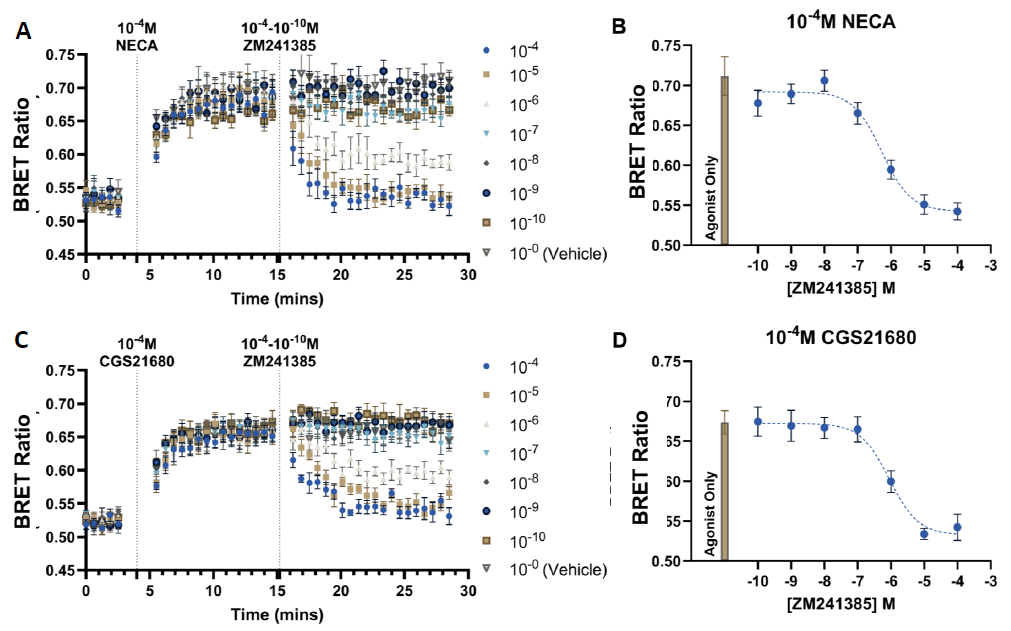
Figure 4. The AD101-mGOLD_IRES_A2AR-NLuc-HEK293 cell line was treated with 10-4 M (A) NECA or (C) CGS21680 after five initial cycles and then increasing concentrations (10-4-10-10 M) of ZM241385 antagonist or vehicle after 20 cycles. BRET measurements were taken over 30 minutes using the BRET1 filter (535 ±40 nm fluorescence, 460–480 nm band-pass luminescence) and normalized to five baseline cycles. BRET ratios at 20 minutes were plotted to show dose-dependent ZM241385 displacement of (B) NECA or (D) CGS21680. Data represents mean of n = 5 ±SEM bars. Image Credit: Image courtesy of Amberene Qayyum et al., in partnership with ELRIG (UK) Ltd.
Table 1. Summary of the pEC50 values for agonist-dependent AD101-mGOLD recruitment and pIC50 values for displacement of 10-4M agonist with ZM241385. Data is the averaged values of independent experiments (N) performed in triplicate with ± SEM bars. Source: University of Nottingham
| Cell Line |
Value |
NECA |
CGS21680 |
| Transfected A2A-NLuc: AD101-mGOLD (Fig 1) |
pEC50 |
-6.07 ±0.13 (n=7) |
-6.07 ±0.13 (n=5) |
| Stable AD101-mGOLD-IRES-A2A-NLuc (Fig 3, 4) |
pEC50 |
-5.69 ±0.12 (n=6) |
-5.63 ±0.12 (n=6) |
| pIC50 of ZM241385 |
-6.37 ±0.15 (n=5) |
-6.15 ±0.22 (n=5) |
Discussion
- BRET data suggests that AD101 nanobody can be recruited to full-length A2AR when activated with the full, non-selective agonist NECA and with the partial, A2A-selective agonist CGS21680 in live HEK293 cells.
- The max response with the 10-4 M agonist was significantly higher than vehicle or 10 µM ZM241385 treatment (A2A-specific antagonist), but not to 10 µM PSB603 treatment (A2B-specific antagonist), when analyzed with one-way ANOVA, suggesting selectivity for A2A over A2B.
- No recruitment has been detected to A2B, A1, A3, and CXCR4 receptors, suggesting A2A selectivity.
- Using the bicistronic IRES sequence improves assay performance, with a wider response window and smaller SEM bars, indicating more consistent expression.
- The AD101 nanobody can be fully reversible.
- Future plans are to test downstream signaling via cAMP readout assays with GloSensor technology to identify a functional effect and to use the stable AD101-containing cell line as a tool for screening extracellular A2A-specific ligands.
References and further reading
- McMahon, C., et al. (2018). Yeast surface display platform for rapid discovery of conformationally selective nanobodies. Nature Structural & Molecular Biology, 25(3), pp.289–296. DOI:10.1038/s41594-018-0028-6. https://www.nature.com/articles/s41594-018-0028-6.
- Ohta, A. and Sitkovsky, M. (2001). Role of G-protein-coupled adenosine receptors in downregulation of inflammation and protection from tissue damage. Nature, 414(6866), pp.916–20. DOI:10.1038/414916a. https://www.nature.com/articles/414916a.
- Bao, G., et al. (2021). Nanobody: A promising toolkit for molecular imaging and disease therapy. EJNMMI Research, 11(1). DOI:10.1186/s13550-021-00750-5. https://link.springer.com/article/10.1186/s13550-021-00750-5.
Acknowledgments
This research was supported by the Wellcome Trust Foundation and by members of the ICS Lab Group, COMPARE. The primary researcher would also like to thank the British Pharmacological Society and the GPCR-UK network for their travel award, which supported their attendance at the 2026 GPCR-UK meeting in Glasgow.
About University of Nottingham
The University of Nottingham is a pioneering university that transforms the lives of our 45,000 students at our campuses in the UK, China and Malaysia.
Ranked among the world's top 100 universities (QS World University Rankings 2027), the University of Nottingham delivers an exceptional research-led education and an outstanding student experience. The strength of the research places University of Nottingham among the UK's leading universities, ranked 7th for research power in REF 2021. The discovery of MRI and ibuprofen was just the beginning. Today, world-leading research is developing breakthrough ideas that shape the future of healthcare, technology and society. It is also recognized as the UK's third most targeted university by leading employers (The Graduate Market in 2026, High Fliers Research).
About ELRIG (UK) Ltd.
The European Laboratory Research & Innovation Group (ELRIG) is a leading European not-for-profit organization that exists to provide outstanding scientific content to the life science community. The foundation of the organization is based on the use and application of automation, robotics and instrumentation in life science laboratories, but over time, we have evolved to respond to the needs of biopharma by developing scientific programmes that focus on cutting-edge research areas that have the potential to revolutionize drug discovery.
Comprised of a global community of over 12,000 life science professionals, participating in our events, whether it be at one of our scientific conferences or one of our networking meetings, will enable any of our community to exchange information, within disciplines and across academic and biopharmaceutical organizations, on an open access basis, as all our events are free-of-charge to attend!
Our values
Our values are to always ensure the highest quality of content and that content will be made readily accessible to all, and that we will always be an inclusive organization, serving a diverse scientific network. In addition, ELRIG will always be a volunteer led organization, run by and for the life sciences community, on a not-for-profit basis.
Our purpose
ELRIG is a company whose purpose is to bring the life science and drug discovery communities together to learn, share, connect, innovate and collaborate, on an open access basis. We achieve this through the provision of world class conferences, networking events, webinars and digital content.
Sponsored Content Policy: News-Medical.net publishes articles and related content that may be derived from sources where we have existing commercial relationships, provided such content adds value to the core editorial ethos of News-Medical.net, which is to educate and inform site visitors interested in medical research, science, medical devices and treatments.
Last Updated: Oct 30, 2026