This article and associated images are based on a poster originally authored by Michelangelo Trucchi, Laura Giuseppina Di Pasqua, Michela Gemme, Sara Baraiolo, Sofia Lotti, Mariapia Vairetti, Ferdinando Nicoletti, Ilaria Canobbio, Arabela Ritchie, Bart Spee, and Andrea Ferrigno and presented at ELRIG Drug Discovery 2026 in affiliation with University of Pavia, Centro 3R, Sapienza University of Rome, IRCCS Neuromed, and Utrecht University.
This poster is being hosted on this website in its raw form, without modifications. It has not undergone peer review but has been reviewed to meet AZoNetwork's editorial quality standards. The information contained is for informational purposes only and should not be considered validated by independent peer assessment.

Background
Metabolic dysfunction-associated steatotic liver disease (MASLD) is characterized by excessive hepatic lipid accumulation and may progress to more severe liver damage. Previous studies have shown that the mGluR5 negative allosteric modulator MPEP reduces lipid deposition in steatotic hepatocytes and depletes ATP, suggesting the involvement of both a direct receptor-dependent pathway and an additional indirect energy-metabolic mechanism.
Aim
This study aimed to investigate the anti-steatotic effects of the mGluR5 negative allosteric modulators MPEP, Fenobam, and CPG, and to determine whether the stronger effect of MPEP is associated with an additional energy-metabolic mechanism involving ATP depletion and AMPK activation beyond the receptor-dependent pathway.
The effects were evaluated in two-dimensional (2D) hepatocyte models, HepG2 and Huh7.5 cells, both of which are hepatocellular carcinoma-derived cell lines, and human ICO organoids using 24- and 48-hour steatotic treatments, respectively.
Representative merged Nile Red/Hoechst images illustrate lipid accumulation under control conditions (A), steatotic conditions induced by 2 mM FFA (B), and 2 mM FFA + MPEP treatment (C).
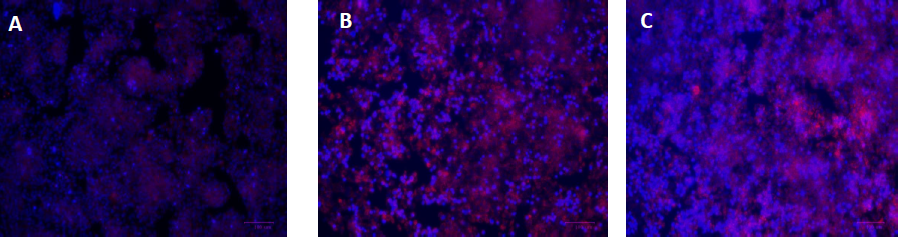
Figure 1. Representative merged Nile Red/Hoechst fluorescence images of hepatocytes under control conditions (A), following 24-hour steatotic treatment with 2 mM FFA (B), and following 24-hour co-treatment with 2 mM FFA and MPEP 30 μM (C). Nile Red staining indicates intracellular lipid accumulation, while Hoechst staining identifies cell nuclei. Image Credit: Image courtesy of Michelangelo Trucchi et al., in partnership with ELRIG (UK) Ltd.
2D hepatocyte models: Rationale
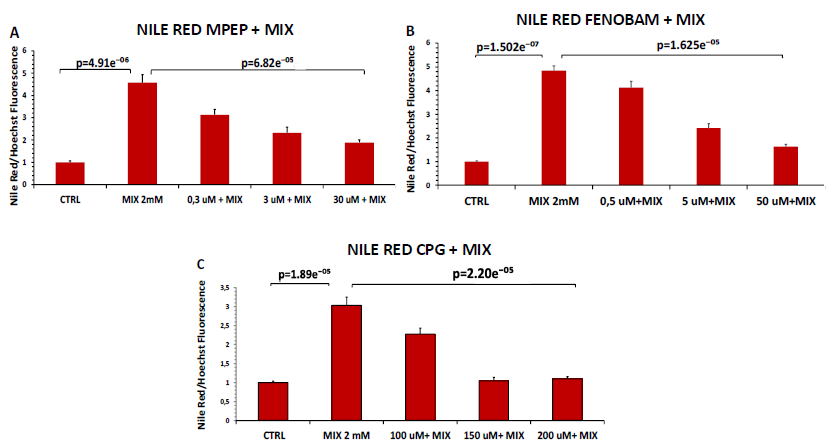
Figure 2. Effects of mGluR5 negative allosteric modulators on lipid accumulation in steatotic hepatocytes after 24-hour co-treatment. Dose-dependent effects of MPEP (A), Fenobam (B), and CPG (C). Lipid accumulation was assessed by Nile Red fluorescence and normalized to Hoechst nuclear staining. Image Credit: Image courtesy of Michelangelo Trucchi et al., in partnership with ELRIG (UK) Ltd.
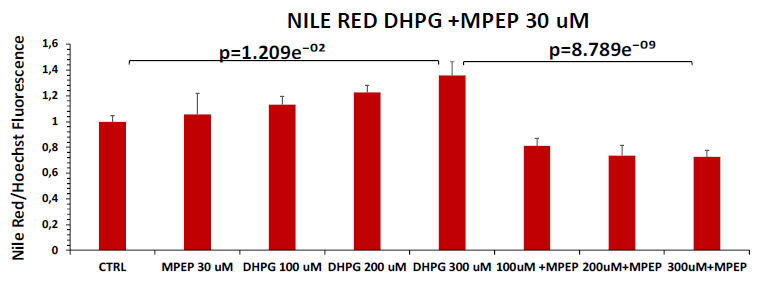
Figure 3. Effect of mGluR5 activation and MPEP co-treatment on lipid accumulation in steatotic hepatocytes after 24-hour treatment. DHPG increased lipid accumulation, whereas co-treatment with MPEP reduced the DHPG-induced effect. Nile Red fluorescence was normalized to Hoechst nuclear staining. Image Credit: Image courtesy of Michelangelo Trucchi et al., in partnership with ELRIG (UK) Ltd.
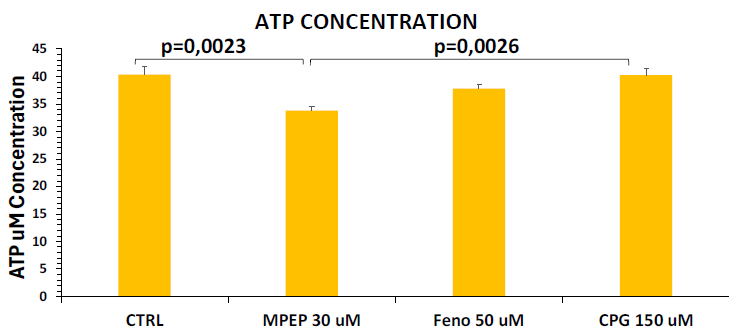
Figure 4. Effect of mGluR5 negative allosteric modulators on ATP levels in HepG2 cells. ATP concentration was measured after 24-hour treatment with MPEP (30 μM), Fenobam (50 μM), or CPG (150 μM). MPEP significantly reduced ATP levels, whereas Fenobam and CPG did not reproduce this effect. Image Credit: Image courtesy of Michelangelo Trucchi et al., in partnership with ELRIG (UK) Ltd.
Receptor-dependent pathway (PKC-mediated)
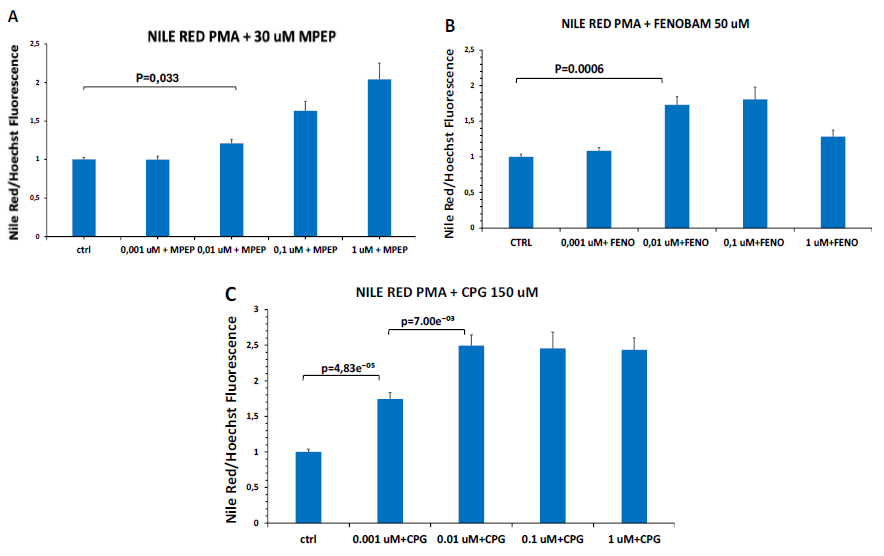
Figure 5. PMA (PKC activator/DAG analog) bypasses mGluR5 receptor blockade. Increasing PMA concentrations dose-dependently reduced the anti-steatotic effects of MPEP (A), Fenobam (B), and CPG (C). Image Credit: Image courtesy of Michelangelo Trucchi et al., in partnership with ELRIG (UK) Ltd.
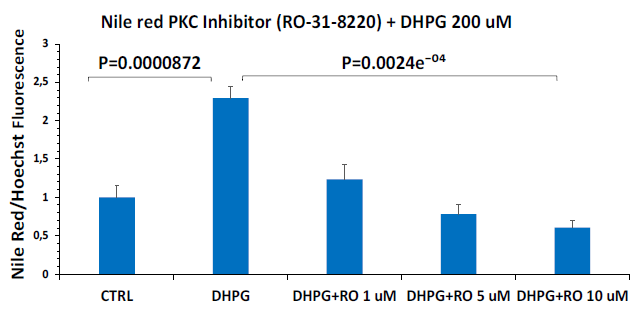
Figure 6. PKC inhibition reduces DHPG-induced lipid accumulation. RO-31-8220 (a PKC inhibitor) attenuated the effect of DHPG, supporting a PKC-dependent, receptor-mediated pathway. Image Credit: Image courtesy of Michelangelo Trucchi et al., in partnership with ELRIG (UK) Ltd.
Receptor-independent energy-metabolic pathway (AMPK)
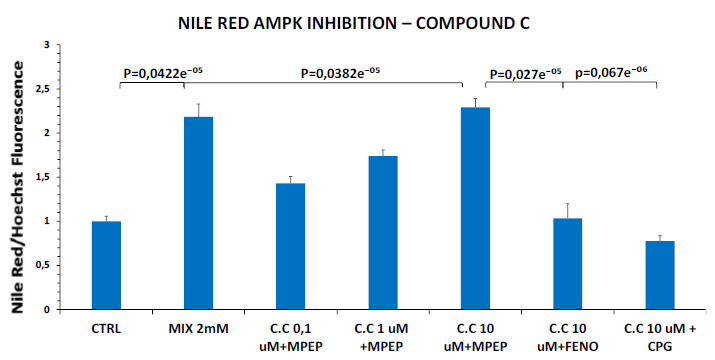
Figure 7. Pharmacological AMPK inhibition selectively attenuates the anti-steatotic effect of MPEP. Increasing compound C concentrations progressively reversed the effect of MPEP, whereas Fenobam and CPG were minimally affected at the selected inhibitor concentration. Image Credit: Image courtesy of Michelangelo Trucchi et al., in partnership with ELRIG (UK) Ltd.
AMPK pathway: Western blot validation
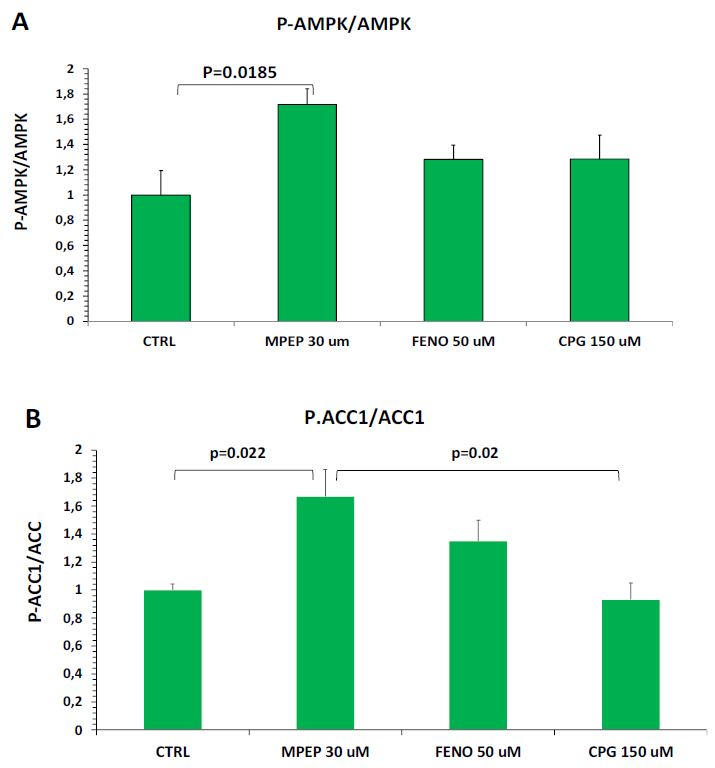
Figure 8. MPEP activates the AMPK signaling pathway. MPEP increased AMPK (A) and ACC1 (B) phosphorylation, whereas Fenobam and CPG did not show a comparable effect, supporting an additional AMPK-dependent mechanism of MPEP. Image Credit: Image courtesy of Michelangelo Trucchi et al., in partnership with ELRIG (UK) Ltd.
Cell viability
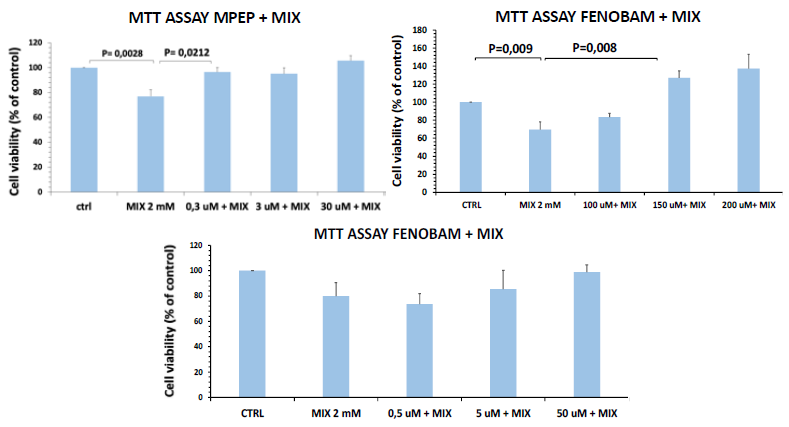
Figure 9. Cell viability of steatotic Huh7 cells following 24-hour treatment with increasing concentrations of MPEP (A), Fenobam (B), and CPG (C), assessed by MTT assay. Data is expressed as a percentage of the untreated control. Image Credit: Image courtesy of Michelangelo Trucchi et al., in partnership with ELRIG (UK) Ltd.
From 2D hepatocyte models to 3D human organoids (Intrahepatic cholangiocyte organoids, ICOs)
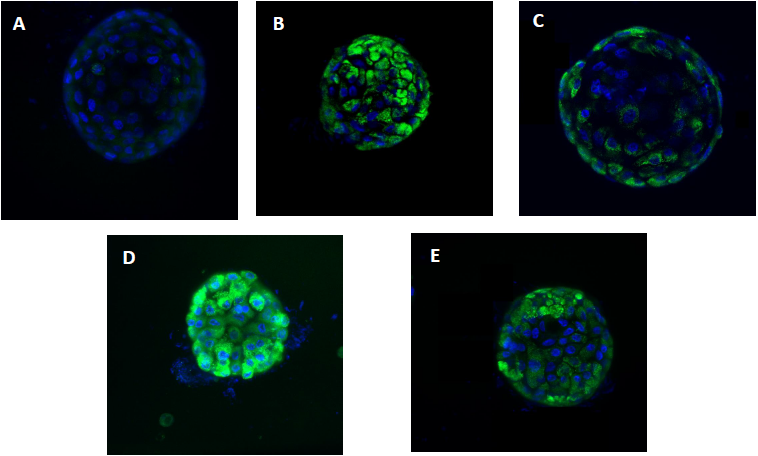
Figure 10. Fluorescence images of human-derived ICOs. Merged BODIPY/Hoechst images showing control conditions (A), FFA-induced steatosis (B), and treatment with MPEP (C), Fenobam (D), or CPG (E) in the presence of FFA. Image Credit: Image courtesy of Michelangelo Trucchi et al., in partnership with ELRIG (UK) Ltd.
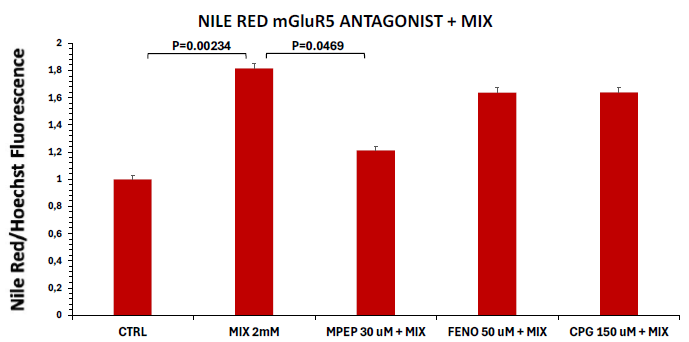
Figure 11. Lipid accumulation in human-derived ICOs. FFA increased lipid accumulation, which was reduced by MPEP, while Fenobam and CPG showed limited effects. Image Credit: Image courtesy of Michelangelo Trucchi et al., in partnership with ELRIG (UK) Ltd.
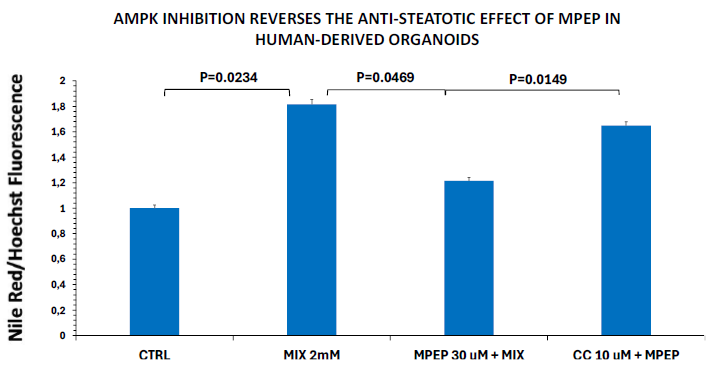
Figure 12. AMPK inhibition attenuates the effect of MPEP in human-derived ICOs. Compound C partially restored lipid accumulation reduced by MPEP. Image Credit: Image courtesy of Michelangelo Trucchi et al., in partnership with ELRIG (UK) Ltd.
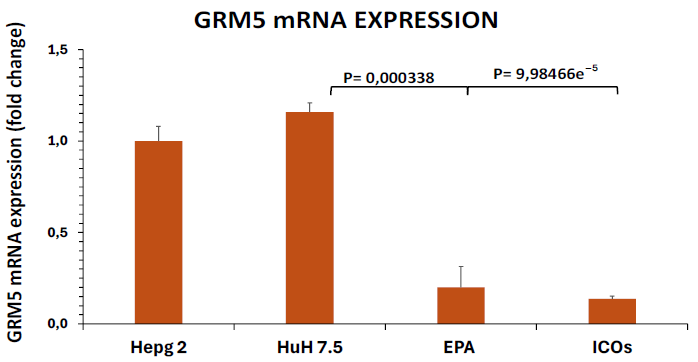
Figure 13. GRM5 expression across hepatic models. qPCR analysis showed markedly lower GRM5 expression in human ICOs compared with HepG2, Huh7.5, and primary hepatocytes (EPA). Image Credit: Image courtesy of Michelangelo Trucchi et al., in partnership with ELRIG (UK) Ltd.
Conclusion
MPEP reduced lipid accumulation in both 2D hepatocyte models and human-derived ICOs. Unlike Fenobam and CPG, MPEP was associated with ATP depletion and AMPK/ACC activation. In ICOs, the effect persisted despite very low GRM5 expression and was attenuated by Compound C. These findings support the hypothesis that AMPK contributes to the receptor-independent anti-steatotic effect of MPEP.
About the University of Pavia
Since 1361, it has educated young people from all over Italy and beyond. Its teachers include such illustrious names as Alessandro Volta, Ugo Foscolo, Nobel Prize winners Camillo Golgi, Giulio Natta, and Carlo Rubbia. The University of Pavia is a student-friendly campus, with over 27,000 students, 18 colleges where boys and girls live and grow together, exchange ideas and projects, and best prepare for their futures. 2 campuses: Pavia and Cremona; 99 degree programs, 24 of which are taught in English; a wide range of courses covering the following areas: Economics; Law; Political Sciences; Engineering and Architecture; Humanities, Languages, and Philosophy; Psychology; Musicology; Mathematical, Physical, and Natural Sciences; Medicine and Surgery; Health Professions; Pharmacy; Chemistry; Biological Sciences; Biotechnology; Geology; Communication Sciences; Sports Sciences
Students benefit from numerous collaboration agreements with foreign universities and Erasmus scholarships (for study and internships), 23 PhD programs based in Pavia organized into 3 macro-areas and 12 in agreement with other universities, 42 medical specialization schools, 6 non-medical schools, and 1 specialization school for the Legal Professions, 67 Master's programs and 16 advanced training courses, and a wide range of internships, with an increased offering of Erasmus Placement programs. The University of Pavia is a Research University, promoting interdisciplinary research–including through double degrees and joint degrees–and participating in international projects. It engages with businesses and is part of working networks with leading colleges around the world.
About ELRIG (UK) Ltd.
The European Laboratory Research & Innovation Group (ELRIG) is a leading European not-for-profit organization that exists to provide outstanding scientific content to the life science community. The foundation of the organization is based on the use and application of automation, robotics and instrumentation in life science laboratories, but over time, we have evolved to respond to the needs of biopharma by developing scientific programmes that focus on cutting-edge research areas that have the potential to revolutionize drug discovery.
Comprised of a global community of over 12,000 life science professionals, participating in our events, whether it be at one of our scientific conferences or one of our networking meetings, will enable any of our community to exchange information, within disciplines and across academic and biopharmaceutical organizations, on an open access basis, as all our events are free-of-charge to attend!
Our values
Our values are to always ensure the highest quality of content and that content will be made readily accessible to all, and that we will always be an inclusive organization, serving a diverse scientific network. In addition, ELRIG will always be a volunteer led organization, run by and for the life sciences community, on a not-for-profit basis.
Our purpose
ELRIG is a company whose purpose is to bring the life science and drug discovery communities together to learn, share, connect, innovate and collaborate, on an open access basis. We achieve this through the provision of world class conferences, networking events, webinars and digital content.
Sponsored Content Policy: News-Medical.net publishes articles and related content that may be derived from sources where we have existing commercial relationships, provided such content adds value to the core editorial ethos of News-Medical.net, which is to educate and inform site visitors interested in medical research, science, medical devices and treatments.
Last Updated: Oct 28, 2026