This article is based on a poster originally authored by Rania Gaspo, Alexandra Jean, Renaud Burrer, Jérôme Sallette, Amanda Finan-Marchi, and Marie Gérus-Durand.
Early, first-contact targeted therapies are now guided by actionable mutations in non-small cell lung cancer (NSCLC), but long-term effectiveness is often met with resistance. Immune checkpoint inhibitors (ICIs) have shown promise for some patients, and new evidence indicates potential synergy between targeted agents and immunotherapy. This is particularly prevalent in tumors harboring rare biomarkers.
This study aims to address future combination treatment strategies by investigating how actionable molecular alterations relate to the tumor immune contexture.
Method and workflow
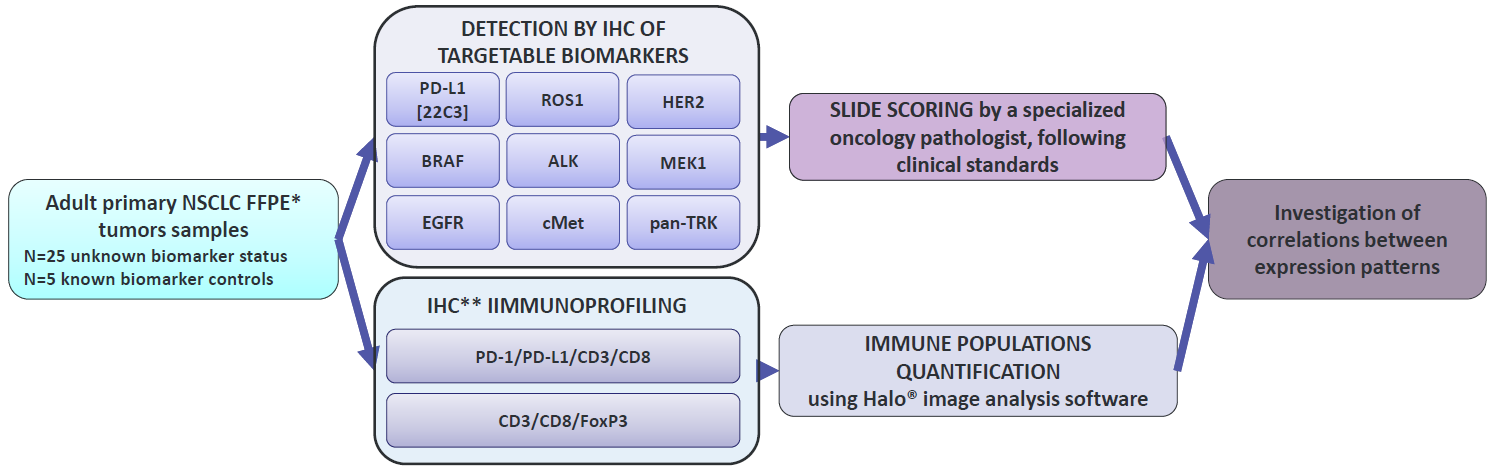
Image Credit: Cerba Research
*FFPE: Formalin Fixed Paraffin Embedded
**IHC: Immunohistochemistry
Results
Staining of targetable biomarkers along with ICI and T-reg panels
Table 1. Druggable and exploratory targets with pre-identified antibodies to be tested through simplex IHC on NSCLC formalin-fixed, paraffin-embedded (FFPE). Source: Cerba Research
| Target |
Select Rx* |
Antibody Clone |
| PD-L1 |
Atezolizumab, Pembrolizumab, Cemiplimab |
22C3 |
| ICI** |
CD3 |
/ |
2GV6 |
| CD8 |
/ |
4B11 |
| PD-1 |
Nivolumab, Pembrolizumab |
EPR4877(2) |
| PD-L1 |
Atezolizumab, Pembrolizumab, Cemiplimab |
E1L3N |
| Treg*** |
CD3 |
/ |
2GV6 |
| CD8 |
/ |
AMC908 |
| FoxP3 |
/ |
236A/E7 |
| ALK |
Crizotinib, Ceritinib, Alectinib, Brigatinib, Lorlatinib |
D5F3 |
| ROS1 (+/- FISH) |
Crizotinib, Lorlatinib, Entrectinib |
SP364 |
| HER2 |
Trastuzumab, Pertuzumab |
DG44 |
| EGFR |
Erlotinib, Gefitinib, Dacomitinib, Osimertinib |
3C6 |
| Pan-TRK |
Larotrectinib, Entrectinib |
EPR17341 |
| BRAF |
Vemurafenib, Dabrafenib |
VE1 |
| cMET |
Crizotinib, Tivantinib, Onartuzumab |
SP44 |
| MEK1 |
Trametinib, Binimetinib, Selumetinib |
H-8 |
*Select treatments that target the specific biomarker;
**ICI: immune checkpoint inhibition;
***Treg: regulatory T cells
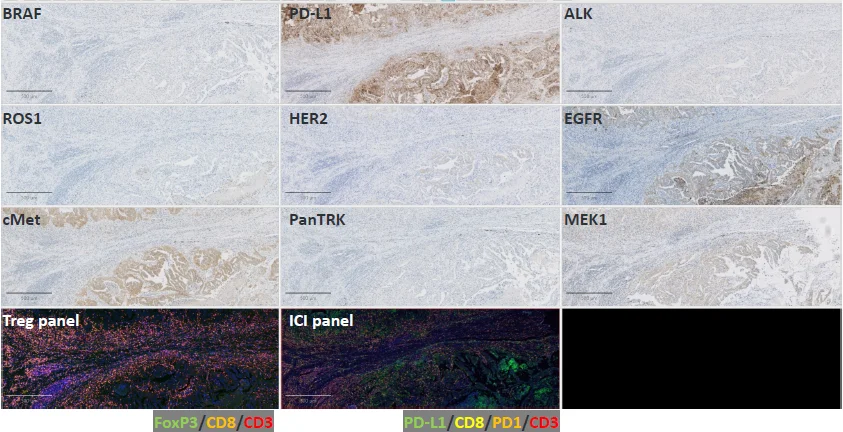
Figure 1. Example of IHC staining observed for one screened NSCLC sample of unknown target status. Image Credit: Cerba Research
IHC screening of NSCLC samples offers rapid insight into potential targeted treatment options. When further clarification is required, reflex testing can refine therapy selection further. Integrating immune profiling through multiplex panels can provide detailed information on the tumor immune contexture, which can improve predictive modeling of patient response to facilitate informed treatment decisions.
Results
Sample-specific biomarker signature
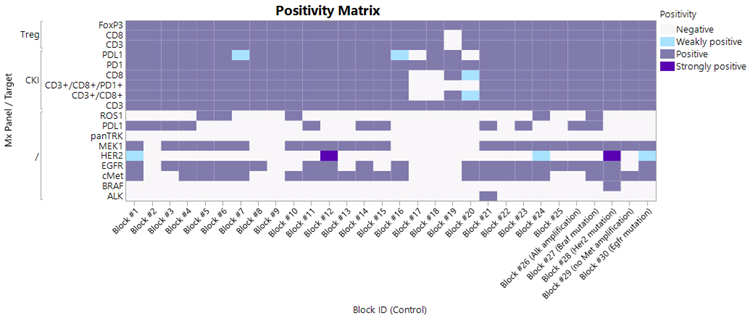
Figure 2. Positivity matrix showing biomarker positivity for each tested sample. Image Credit: Cerba Research
Across the entire cohort of 30 NSCLC samples taken from the Cerba Research biobank, IHC exhibited heterogeneous biomarker expression. Pan-TRK, BRAF, and ROS1 demonstrated extremely low staining levels, hindering any reliable interpretation.
Although some focal staining was seen in around 50% of cases, none could be considered true positivity according to the international pathologist, who determined that no diffuse 2+/3+ ROS1-like patterns could be observed.
The figure displays the distribution of detectable biomarkers, underscoring the low prevalence of rare targets, and reveals how IHC-based biomarker matrices are appropriate for precise treatment assignment.
Results: Evaluating biomarker relationships
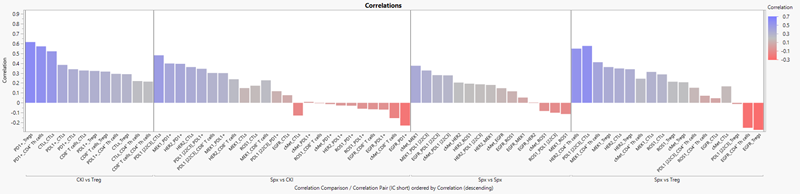
Figure 3. Correlation between the tested biomarkers by comparison type. Image Credit: Cerba Research
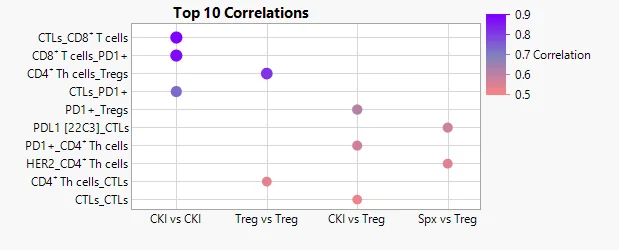
Figure 4. Top 10 correlations. Image Credit: Cerba Research
MEK1 and cMet exhibited a notable correlation (43%) between expression, as well as between MEK1 and PD-L1 [22C3] (30%). This suggests significant associations among phenotypes with coincidental signaling pathways.
Stable relationships were also seen between PD-1+ cells and both CD3+/CD8−/FoxP3+ and CD3+/CD8− T-cell populations. Conversely, PD-1+ cells demonstrated a reduced correlation with CD3+/CD8+ T-cells in the Treg panel, while a clear association emerged when evaluating the corresponding subsets within the ICI panel.
Conclusion
Targetable protein expression in the cohort mostly corresponded with published findings. PD-L1 exhibited strong associations with cMET, MEK1, and EGFR, but weaker correlation with HER2.
HER2 expression could be associated with greater densities of helper and cytotoxic T-cells, consistent with the literature reporting a limited response to PD-1/PD-L1 blockade in HER2-positive NSCLC and indicating the need for alternative immunomodulatory strategies.
MEK1+ tumor cells exhibited strong correlations with infiltrating immune populations and PD-1 expression, strengthening the evidence for MEK1 inhibition as a likely strategy to counter immune escape.
PD-L1 and PD-1+ cytotoxic T-cells did not produce any significant relationship, highlighting the need to assess both markers independently when performing ICI-based therapy. IHC remains a crucial, cost-effective first-line method for NSCLC biomarker screening, with reflex testing boosting accuracy when necessary.
Adding multiplex immune profiling offers a more comprehensive overview of the tumor microenvironment, supplementing actionable target testing and guiding more informed ICI-based combination strategies.
References and further reading
- NCCN (2025). National Comprehensive Cancer Network - Home. Available at: https://www.nccn.org/home.
About Cerba Research

Cerba Research is a leading specialty laboratory services provider with the capacity and breadth of a global central laboratory network. Their highly qualified scientists provide insight on the latest biomarkers, assays and testing approaches and develop innovative solutions for unique challenges across all research phases, to pharmaceutical, biotechnology, medical device, government, public health, and CRO organizations.
Cerba Research’s extensive capability in laboratory testing and global logistics including Bioanalysis, Flow Cytometry, Histopathology, and Next-Generation Sequencing, enables them to drive operational agility at scale in a wide range of therapeutic areas, with recognized expertise in Virology, Immunology, Oncology and Cell & Gene Therapy.
Cerba Research is part of the Cerba HealthCare Group with 15,000 employees on five continents, driven to advance diagnosis and health.
For more information about Cerba Research, please visit cerbaresearch.com.
Sponsored Content Policy: News-Medical.net publishes articles and related content that may be derived from sources where we have existing commercial relationships, provided such content adds value to the core editorial ethos of News-Medical.net, which is to educate and inform site visitors interested in medical research, science, medical devices and treatments.
Last Updated: Jul 16, 2026
 The potential to optimize laboratory testing and operations with automation and AI