This article and associated images are based on a poster originally authored by Jonathan Sheard, Amie Lovell, Imogen Ahlquist, Nayani Pramanik, Richard Daveny, Carla Owen, and Ross Dobie and presented at ELRIG Drug Discovery 2026 in affiliation with the Centre for Human Specific Research.
This poster is being hosted on this website in its raw form, without modifications. It has not undergone peer review but has been reviewed to meet AZoNetwork's editorial quality standards. The information contained is for informational purposes only and should not be considered validated by independent peer assessment.

Adoption requires more than technology: making progress depends on connections, shared expertise, and practical support across our community.
Why do regional communities matter?
To make the transition to human-specific research, researchers need opportunities to connect, share knowledge, and access the expertise, resources, and funding that will drive change.
Across the UK, Regional Communities are being built through collaboration between the Centre for Human Specific Research and colleagues in academia and industry. Through these communities, this collaborative project shares experience, develops partnerships, and strengthens access to the expertise, resources, and funding needed to advance research.
How the collaboration works together
Connect: In-person and virtual events bring teams together across institutions, disciplines, and sectors, helping build relationships that continue between meetings.
Share: The community forum provides a space to exchange knowledge and resources, including practical experience that may otherwise remain unpublished
Support: Funding opportunities embedded within the Regional Communities help turn ideas and connections into action. The Impact Factor grant funds focused human-specific research projects, while the Match-Maker grant funds collaborations emerging through networking.
A growing UK network
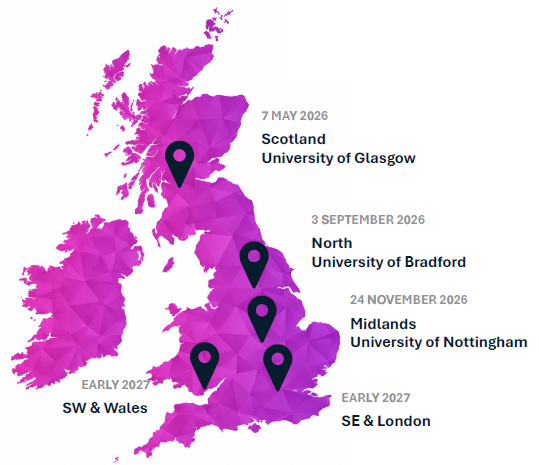
Image Credit: Image courtesy of Jonathan Sheard et al., in partnership with ELRIG (UK) Ltd.
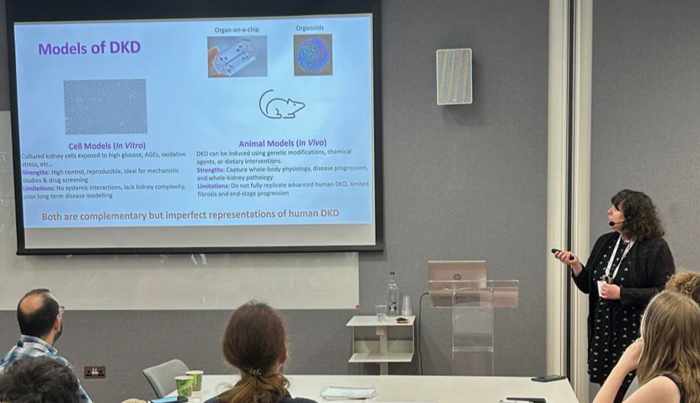
Image Credit: Image courtesy of Jonathan Sheard et al., in partnership with ELRIG (UK) Ltd.
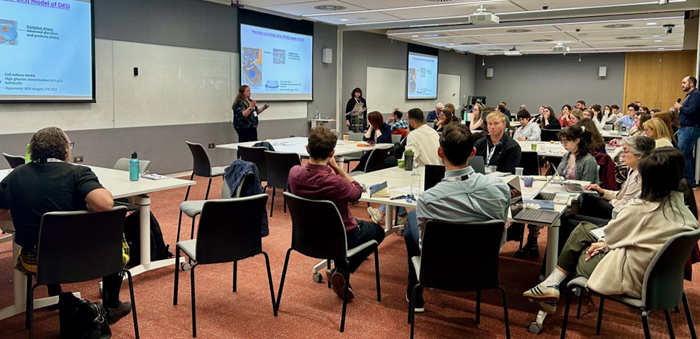
Image Credit: Image courtesy of Jonathan Sheard et al., in partnership with ELRIG (UK) Ltd.
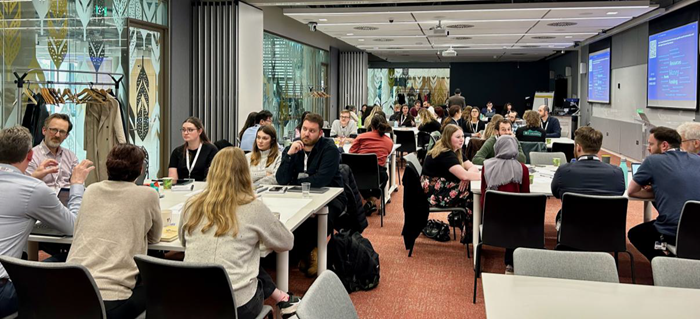
Image Credit: Image courtesy of Jonathan Sheard et al., in partnership with ELRIG (UK) Ltd.
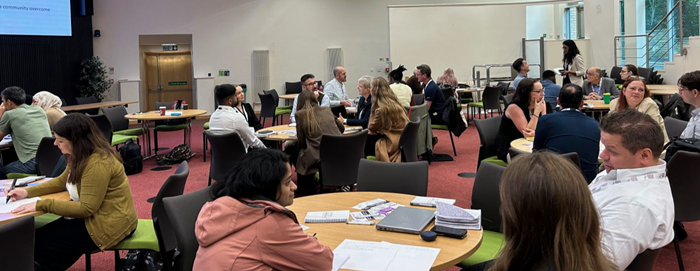
Image Credit: Image courtesy of Jonathan Sheard et al., in partnership with ELRIG (UK) Ltd.
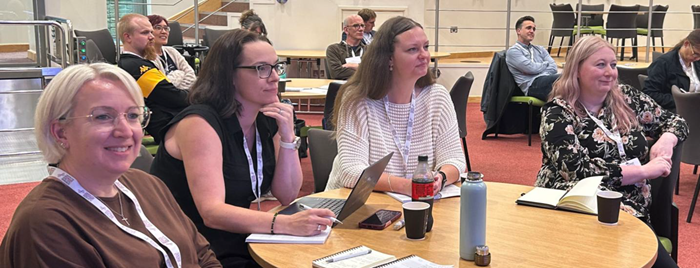
Image Credit: Image courtesy of Jonathan Sheard et al., in partnership with ELRIG (UK) Ltd.
Identifying shared challenges
At our first two regional community events, the group explored the challenges involved in transitioning towards human-specific and animal-free research, drawing on experience across institutions, disciplines, and sectors. Together, they considered what would help address these challenges. The discussions highlighted the following barriers and enablers:
Barriers
- Cost and limited funding
- Time and capacity for optimization and validation
- Gaps in training and expertise
- Publication and regulatory pressures
- Restricted access to human tissues, models, and reagents
- Reliance on established animal-based methods
- Limited cross-sector collaboration
Enablers
- Targeted funding for impacting scientific research and collaborative projects
- Shared protocols, resources, and practical experience
- Training provision and access to specialist knowledge
- Greater engagement with regulators
- Networking and resource sharing
- Open sharing of successful and unsuccessful products and methods
- Stronger partnerships between academia and industry
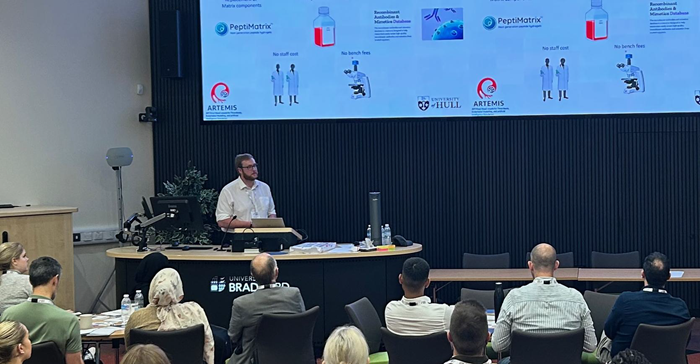
Image Credit: Image courtesy of Jonathan Sheard et al., in partnership with ELRIG (UK) Ltd.
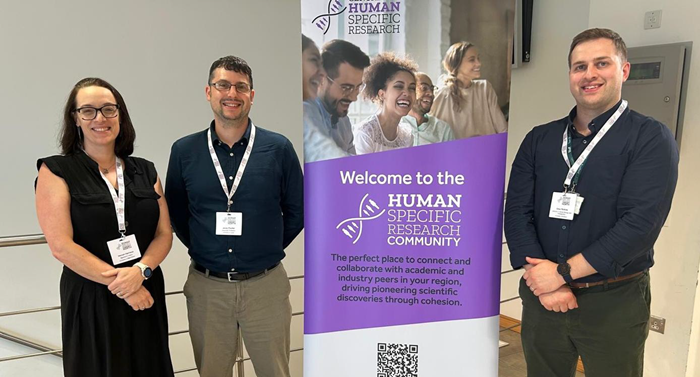
Image Credit: Image courtesy of Jonathan Sheard et al., in partnership with ELRIG (UK) Ltd.
Regional community grants
Scotland: Impact Factor grant
£12,000 awarded to Dr Chloe Rodgers, University of Glasgow, for her work, 'MEDUSA: Modeling the Endometrium Dynamically Using Silicon-based Alternatives'.
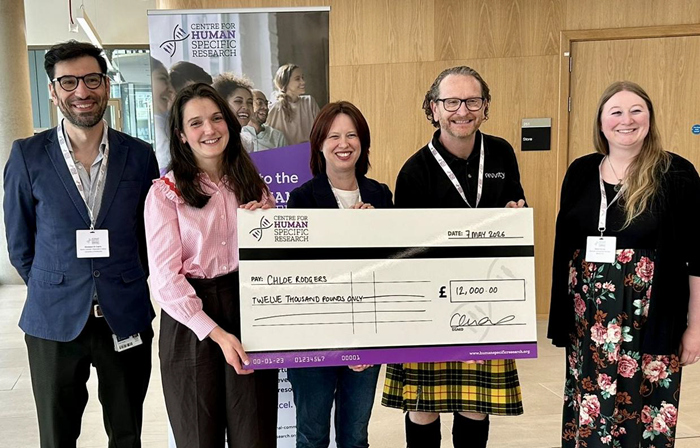
Image Credit: Image courtesy of Jonathan Sheard et al., in partnership with ELRIG (UK) Ltd.
North: Impact Factor grant
£6000 funding offered to Dr Anke Brüning-Richardson, University of Huddersfield, for her work 'Developing blood testing for earlier detection of recurrence in high-grade brain tumors'.
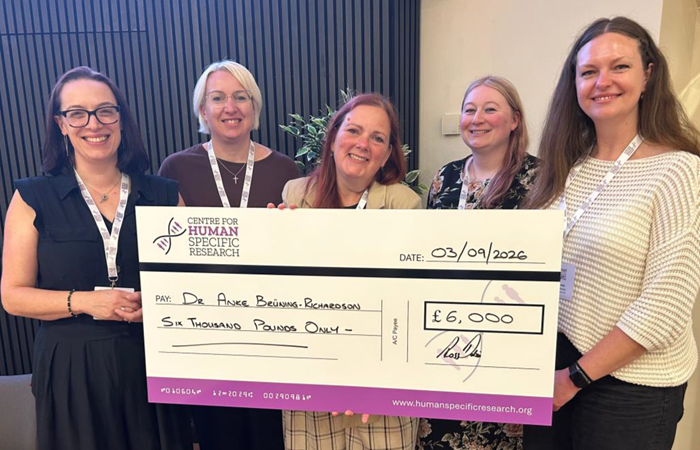
Image Credit: Image courtesy of Jonathan Sheard et al., in partnership with ELRIG (UK) Ltd.
North: Match-Maker grant
The Match-Maker grant makes £6000 available to attendees of the North Regional event.
Conclusion and next steps
Early findings from the Scotland and North communities suggest that adopting human-specific and animal-free research requires coordinated support alongside technological development.
Through the group's discussions, interconnected challenges involving cost, expertise, access to materials, and capacity for optimization and validation were identified. Regional Communities provide a platform to explore these challenges together and share the knowledge and resources needed to address them.
Early community activity has strengthened connections and helped initiate new collaborations. The collaboration's next steps are to build on these relationships, develop activities around shared priorities, sustain knowledge exchange between events, and evaluate how this work contributes to changes in research practice.
About the Centre for Human Specific Research
The Centre for Human Specific Research supports the acceleration of new treatments for human disease through the adoption of human-specific research.
We provide practical support to the medical research community. By facilitating the transition to human-specific technologies, we are accelerating the development of safe and effective treatments for human diseases. Together, we are driving innovation and improving health outcomes.
About ELRIG (UK) Ltd.
The European Laboratory Research & Innovation Group (ELRIG) is a leading European not-for-profit organization that exists to provide outstanding scientific content to the life science community. The foundation of the organization is based on the use and application of automation, robotics and instrumentation in life science laboratories, but over time, we have evolved to respond to the needs of biopharma by developing scientific programs that focus on cutting-edge research areas that have the potential to revolutionize drug discovery.
Comprised of a global community of over 12,000 life science professionals, participating in our events, whether it be at one of our scientific conferences or one of our networking meetings, will enable any of our community to exchange information, within disciplines and across academic and biopharmaceutical organizations, on an open access basis, as all our events are free-of-charge to attend!
Our values
Our values are to always ensure the highest quality of content and that content will be made readily accessible to all, and that we will always be an inclusive organization, serving a diverse scientific network. In addition, ELRIG will always be a volunteer led organization, run by and for the life sciences community, on a not-for-profit basis.
Our purpose
ELRIG is a company whose purpose is to bring the life science and drug discovery communities together to learn, share, connect, innovate and collaborate, on an open access basis. We achieve this through the provision of world class conferences, networking events, webinars and digital content.
Sponsored Content Policy: News-Medical.net publishes articles and related content that may be derived from sources where we have existing commercial relationships, provided such content adds value to the core editorial ethos of News-Medical.net, which is to educate and inform site visitors interested in medical research, science, medical devices and treatments.
Last Updated: Nov 6, 2026