This article and associated images are based on a poster originally authored by Jasmine Abdy and Lisa O’Fee and presented at ELRIG Drug Discovery 2025 in affiliation with Institute for Cancer Research and Royal Society of Chemistry.
This poster is being hosted on this website in its raw form, without modifications. It has not undergone peer review but has been reviewed to meet AZoNetwork's editorial quality standards. The information contained is for informational purposes only and should not be considered validated by independent peer assessment.

Over 1 million gloves per year are used at the ICR
The Institute of Cancer Research (ICR) uses more energy per head than any other UK university. This massive energy expenditure is due to the large laboratory footprint and the resource-inclusive nature of its work, in its mission to defeat Cancer. Over a million gloves are used each year at the ICR. That's around 5.3 tonnes of gloves equal to the weight of four small cars, or an elephant!
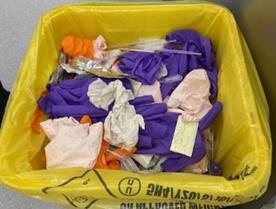
Image Credit: Image courtesy of Jasmine Abdy et al., in partnership with ELRIG (UK) Ltd.
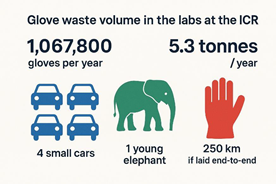
Image Credit: Image courtesy of Jasmine Abdy et al., in partnership with ELRIG (UK) Ltd.
Lab sustainability
As part of the ICR’s Sustainability action plan ‘Sustainable discoveries’, a road map of how the organization responds to, and mitigates against, the global challenges we face, such as Climate change, Biodiversity loss, and pollution, and its commitment to net-zero by 2040, several lab-based sustainability initiatives have already been initiated. These include:
- Taking part in the Freezer challenge,
- Lab sustainability certification,
- Take back schemes - tip boxes/polystyrene boxes and ice packs/winchesters,
- Replacing aging ULT freezers with more energy-efficient models
But what about gloves?
Nitrile gloves are the single most-used plastic item in research labs, yet are rarely recycled.
Glove recycling, hearts, minds, and carbon reduction
Our research aim:
- To explore staff attitudes towards glove recycling, identify barriers and enablers, and assess the feasibility of introducing a glove recycling scheme at the ICR.
As part of our research, we visited the MyGroup Refactory recycling facility in Hull to observe their recycling process.
The recycling process
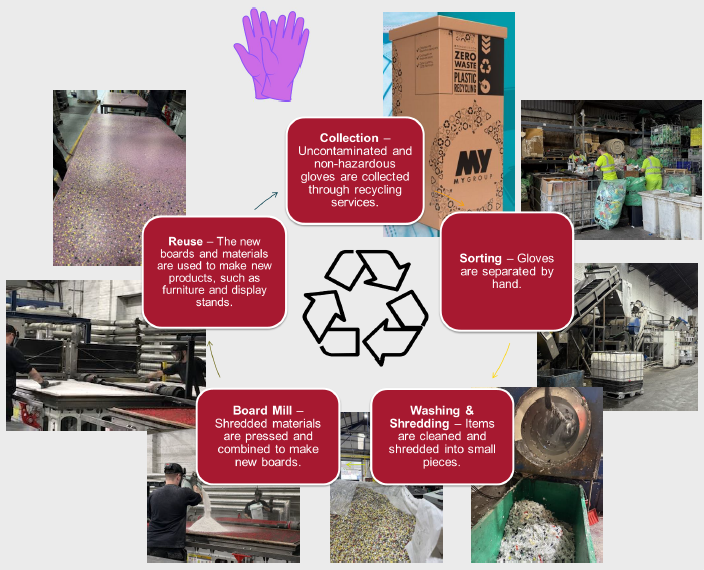
Image Credit: Image courtesy of Jasmine Abdy et al., in partnership with ELRIG (UK) Ltd.
Focus group discussions
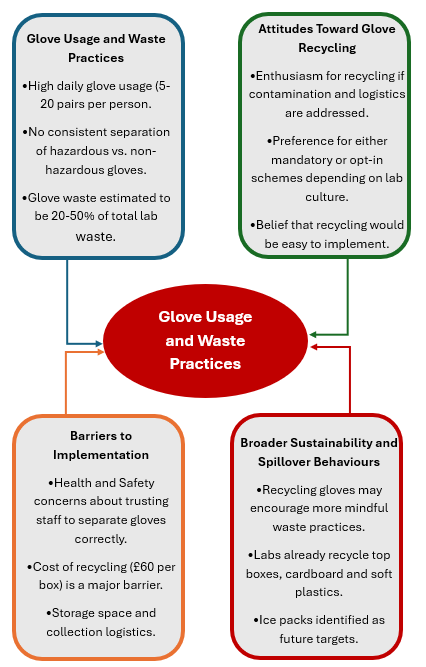
Image Credit: Image courtesy of Jasmine Abdy et al., in partnership with ELRIG (UK) Ltd.
Methods
Participants
- Two focus groups - a total of ten participants across both ICR sites at Chelsea and Sutton.
- Researchers and lab managers from multiple ICR and Royal Marsden laboratories.
Procedure
- Semi-structured focus groups exploring attitudes, experiences, and recommendations toward glove recycling
- Sessions were recorded and transcribed.
Analysis
- Focus group discussion transcripts were combined and analyzed by theme
Gate-to-grave life cycle assessment
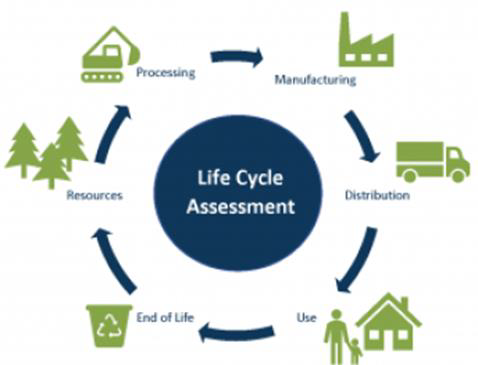
LCA is a holistic, powerful, and robust systems analysis tool with methodologies carried out in accordance with the ISO14040 series of standards. Image Credit: Image courtesy of Jasmine Abdy et al., in partnership with ELRIG (UK) Ltd.
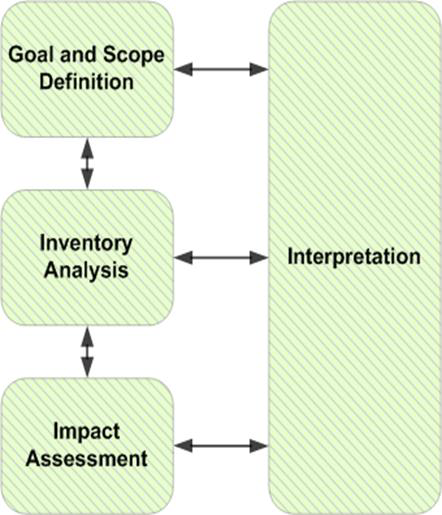
System boundary for LCA to compare end-of-life options for Nitrile gloves used in scientific research. Image Credit: Image courtesy of Jasmine Abdy et al., in partnership with ELRIG (UK) Ltd.
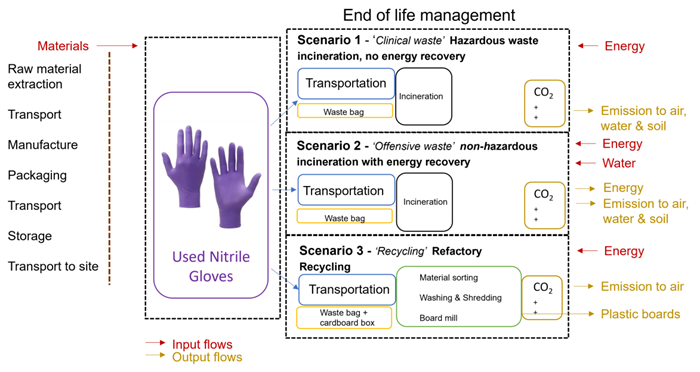
Functional unit: Gloves for one year's academic research at the ICR. Image Credit: Image courtesy of Jasmine Abdy et al., in partnership with ELRIG (UK) Ltd.
Cost and carbon reduction
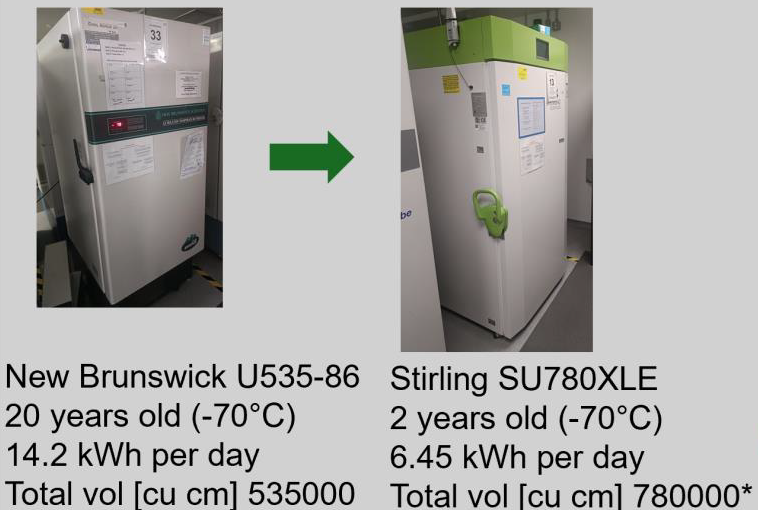
Image Credit: Image courtesy of Jasmine Abdy et al., in partnership with ELRIG (UK) Ltd.
Cost approximately £15,000 including racking, kWh savings 7.75 per day
ICR pays 25p for grid electricity; therefore, annual saving = £707.2
UK grid electricity per kWh = 0.177 Kg CO2 e**
Carbon savings = 500 Kg CO2e per year
Carbon savings per £ = 1.71 Kg CO2e per year, over 15 years
*Increase in cubic capacity not factored into the calculation
**DEFRA, 2025
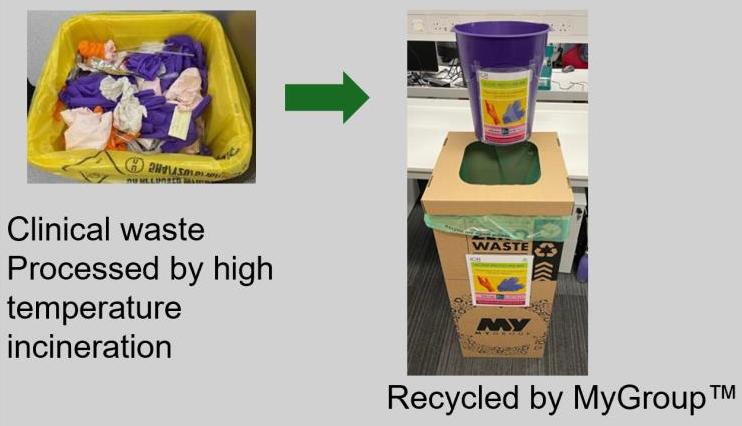
Image Credit: Image courtesy of Jasmine Abdy et al., in partnership with ELRIG (UK) Ltd.
Clinical waste - Cost per Kg = £1.25
Emissions factor for high-temp incineration (no energy recovery)
2.57 Kg CO2e per Kg*
Refactory recycling box cost per Kg = ~£4
Draft emission factor for the refractory recycling process
0.4 Kg CO2e per Kg**
Carbon savings per £= 0.78 Kg CO2e
*Ragazzi et al, 2023
**MSc LCA project, University of Surrey
Summary and future work
- Glove recycling is a feasible option at the ICR, but its success will depend on carefully addressing health and safety concerns, particularly around contamination and handling of waste streams.
- Preliminary estimates indicate that recycling could contribute to a measurable reduction in carbon emissions and material consumption, complementing existing sustainability efforts.
- To realize these benefits, glove recycling must not be viewed in isolation but integrated into a systemic approach to laboratory sustainability that includes energy efficiency, equipment sharing, and other waste reduction strategies
- The next step is to undertake a detailed analysis of carbon consumption and costs to quantify potential savings and ensure alignment with the ICR’s net-zero 2040 commitment.
About The Institute of Cancer Research (ICR) 
The Institute of Cancer Research (ICR) is led by Chief Executive Professor Kristian Helin, a renowned scientist recognized for his pioneering work in cancer epigenetics.
The ICR is a global leader in identifying cancer genes, discovering innovative cancer drugs, and advancing precision radiotherapy. In addition to being a world-class research institute, it is also a higher education institution and a member of the University of London. In the most recent Research Excellence Framework (REF 2021), the ICR ranked second overall in research quality, impact, and environment.
About ELRIG (UK) Ltd.
The European Laboratory Research & Innovation Group (ELRIG) is a leading European not-for-profit organization that exists to provide outstanding scientific content to the life science community. The foundation of the organization is based on the use and application of automation, robotics, and instrumentation in life science laboratories, but over time, we have evolved to respond to the needs of biopharma by developing scientific programmes that focus on cutting-edge research areas that have the potential to revolutionize drug discovery.
Comprised of a global community of over 12,000 life science professionals, participating in our events, whether it be at one of our scientific conferences or one of our networking meetings, will enable any of our community to exchange information, within disciplines and across academic and biopharmaceutical organizations, on an open access basis, as all our events are free of charge to attend!
Our values
Our values are to always ensure the highest quality of content, that content will be made readily accessible to all, and that we will always be an inclusive organization, serving a diverse scientific network. In addition, ELRIG will always be a volunteer-led organization, run by and for the life sciences community, on a not-for-profit basis.
Our purpose
ELRIG is a company whose purpose is to bring the life science and drug discovery communities together to learn, share, connect, innovate, and collaborate on an open-access basis. We achieve this through the provision of world-class conferences, networking events, webinars, and digital content.
Sponsored Content Policy: News-Medical.net publishes articles and related content that may be derived from sources where we have existing commercial relationships, provided such content adds value to the core editorial ethos of News-Medical.net, which is to educate and inform site visitors interested in medical research, science, medical devices, and treatments.
Last Updated: Nov 26, 2025