This article and associated images are based on a poster originally authored by Maftunakhon Nigmatova, Willian da Silveira, Trust Diya, and Grace Adeola Atobatele and presented at ELRIG Drug Discovery 2026 in affiliation with the University of Staffordshire, the University of Salford, and Istinye University.
This poster is being hosted on this website in its raw form, without modifications. It has not undergone peer review but has been reviewed to meet AZoNetwork's editorial quality standards. The information contained is for informational purposes only and should not be considered validated by independent peer assessment.

Prostate cancer is a biologically heterogeneous disease influenced by cell proliferation, metabolism, oxidative stress, and the tumor microenvironment. Alterations in TP53, RB1, PTEN, and MYC are associated with disease progression and aggressive phenotypes (Kaur et al., 2022).1,2
Metabolic dysfunction, including insulin resistance and hyperinsulinemia, may influence prostate cancer through PI3K–AKT–mTOR and RAS–MAPK signaling, which regulate cell survival, proliferation, and metabolism.3,4
Metformin, a first-line treatment for type 2 diabetes, has attracted interest in its potential anticancer effects. Its actions include modulation of insulin signaling, mitochondrial metabolism, and AMPK activity (Khan et al., 2025).
However, the transcriptional response to metformin may vary with cell type and environmental conditions. Its effects on prostate cancer cells under hypoxic stress and different treatment sequences remain incompletely understood.
In light of this, this study investigated the transcriptional effects of metformin under hypoxia in androgen-independent PC3 and androgen-sensitive LNCaP prostate cancer cells, focusing on differentially expressed genes and enriched biological pathways. By comparing each treatment with untreated control in both cell lines, the researchers aimed to identify the responses shared by the two cell lines, which may be independent of androgen receptor status.
Methodology
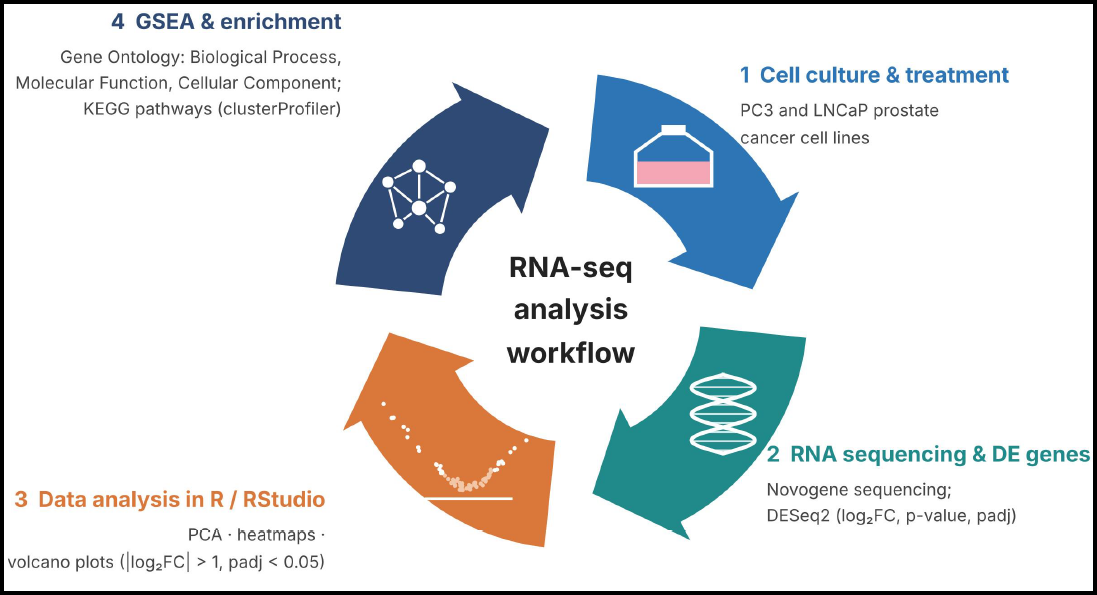
Figure 1. Schematic representation of the RNA-seq analytical pipeline. Prostate cancer cell lines (PC3 and LNCaP) were subjected to experimental treatment and RNA sequencing. Differentially expressed genes (DEGs) were identified using DESeq2 (log2FC >1, adjusted p <0.05), visualized through PCA, heatmaps, and volcano plots, and subsequently analyzed for Gene Ontology and KEGG pathway enrichment using the clusterProfiler package in R. Image Credit: Image courtesy of Maftunakhon Nigmatova et al., in partnership with ELRIG (UK) Ltd.
Results
Metformin preserves HIF-1 signaling while suppressing mitochondrial bioenergetics in hypoxic PC3 cells
KEGG pathway analysis demonstrated persistent activation of HIF-1 signaling, accompanied by suppression of oxidative phosphorylation and aminoacyl-tRNA biosynthesis. This indicates a shift away from mitochondrial metabolism towards a hypoxia-adapted phenotype.
At the gene level, metformin-treated hypoxic PC3 cells exhibited marked upregulation of several hypoxia- and stress-responsive genes, including ANGPTL4, ADM, and SNORD14E, together with strong downregulation of the immediate-early response gene EGR1.
Top differentially expressed genes in PC3 cells, Log2 Fold Change (Hypoxic metformin treated vs CTRL): ANGPTL4 (log2FC +6.03, p-adj 2.0 x 10⁻²⁷), ADM (+5.42, p-adj 2.0 x 10⁻²³), SNORD14E (+8.14, p-adj 1.0 x 10⁻³¹), AC063976.2 (+6.21, p-adj 6.6 x 10⁻²³), EGR1 (-7.75, p-adj 6.6 x 10⁻²³) (Figure 2 and 3).
These transcriptional changes support the pathway-level findings, suggesting that metformin treatment under hypoxic conditions reinforces a hypoxia-adapted state while suppressing mitochondrial activity and biosynthetic processes.
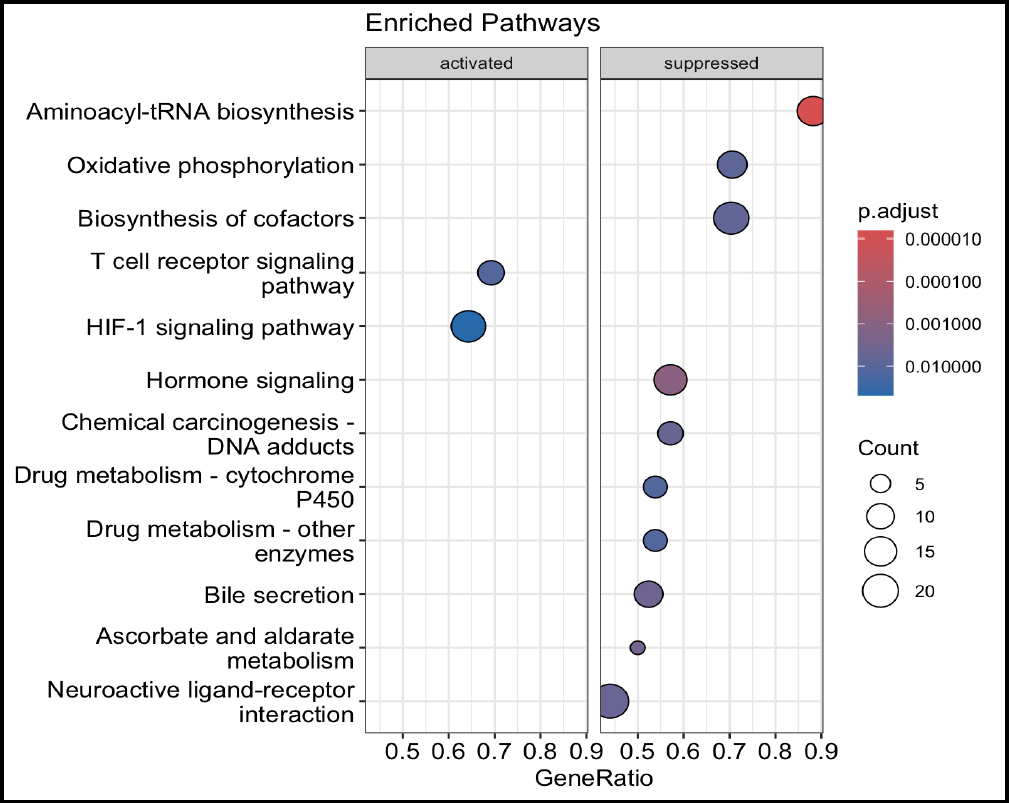
Figure 2. KEGG analysis shows suppression of mitochondrial bioenergetics and protein synthesis, along with activation of stress-responsive signaling, in PC3 cells. Image Credit: Image courtesy of Maftunakhon Nigmatova et al., in partnership with ELRIG (UK) Ltd.
Results
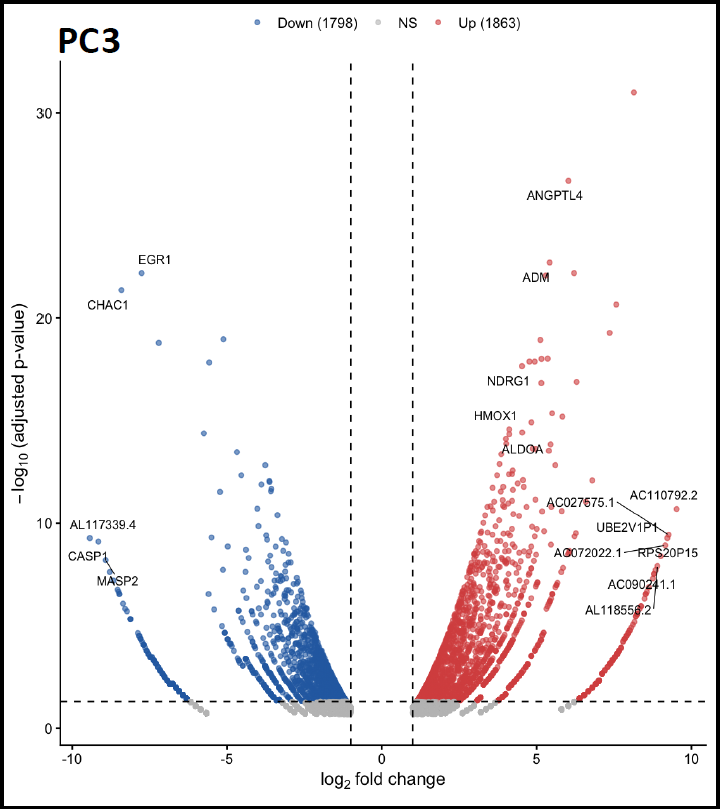
Figure 3. Volcano plot showing differential gene expression in metformin-treated hypoxic PC3 cells relative to untreated controls. Image Credit: Image courtesy of Maftunakhon Nigmatova et al., in partnership with ELRIG (UK) Ltd.
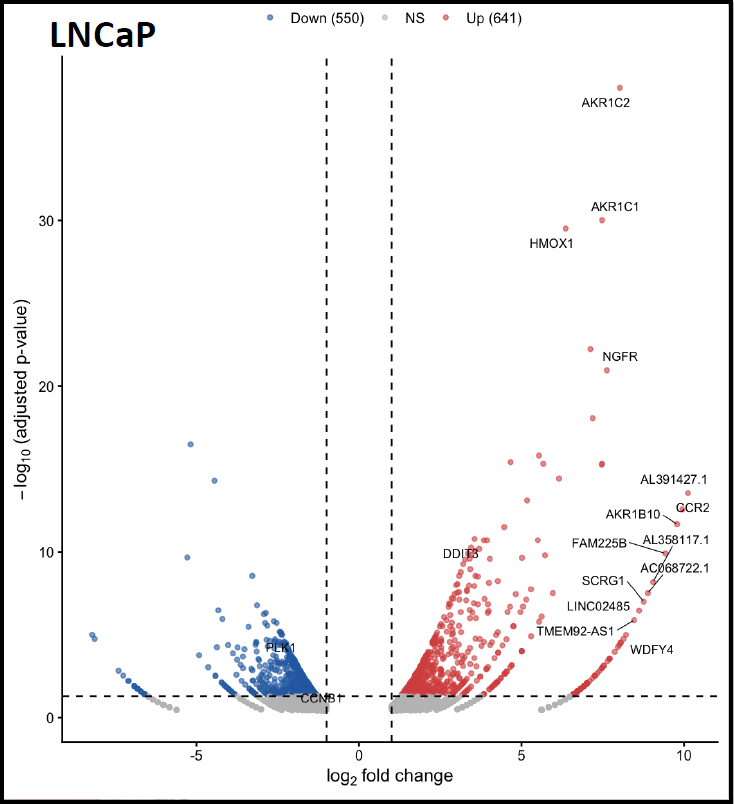
Figure 4. Volcano plot showing differential gene expression in metformin-treated hypoxic LNCaP cells relative to untreated controls. Image Credit: Image courtesy of Maftunakhon Nigmatova et al., in partnership with ELRIG (UK) Ltd.
Metformin suppresses DNA replication and cell-cycle progression in hypoxia-primed LNCaP cells
In LNCaP cells, significant suppression of DNA replication, cell cycle progression, DNA repair, and aminoacyl-tRNA biosynthesis pathways indicates a profound anti-proliferative response to metformin following hypoxic preconditioning.
At the gene level, hypoxia-pretreated cells treated with metformin demonstrated robust induction of oxidative stress-related genes, including AKR1C1, AKR1C2, and HMOX1, alongside increased expression of NGFR and GPR1 (Figure 4 and 5).
Top differentially expressed genes in LNCaP cells with Log2 Fold Change (Hypoxic metformin treated vs CTRL): AKR1C2 (+8.02, p-adj 9.8 x 10-39), AKR1C1 (+7.48, p-adj 9.8 x 10⁻³¹), HMOX1 (+6.35, p-adj 3.0 x 10⁻³⁰), GPR1 (+7.12, p-adj 5.7 x 10⁻²³), NGFR (+7.63, p-adj 1.1 x 10⁻²¹).
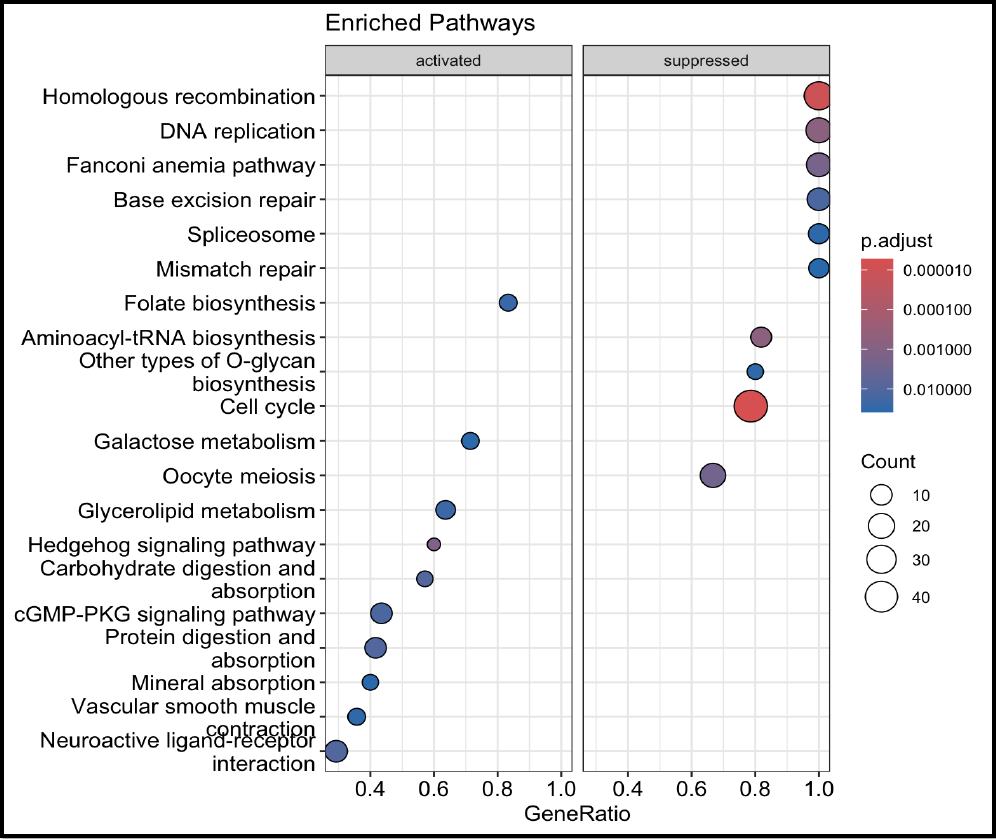
Figure 5. KEGG pathway enrichment analysis reveals suppression of DNA repair and proliferative signaling with concurrent activation of metabolic and signaling pathways in LNCaP cells. Image Credit: Image courtesy of Maftunakhon Nigmatova et al., in partnership with ELRIG (UK) Ltd.
Discussion and conclusion
Metformin elicited distinct responses in hypoxia-conditioned prostate cancer cells, highlighting differences in metabolic adaptation between cell lines. In PC3 cells, sustained HIF-1 signaling alongside suppression of oxidative phosphorylation suggests reinforcement of a hypoxia-adapted metabolic phenotype.
This observation is consistent with evidence that hypoxia promotes HIF-1-driven metabolic reprogramming, while metformin inhibits mitochondrial respiration and electron transport chain activity in prostate cancer cells.7
In contrast, LNCaP cells demonstrated marked suppression of DNA replication and cell-cycle pathways, accompanied by upregulation of oxidative stress-associated genes including AKR1C1, AKR1C2, and HMOX1. These findings align with reports that metformin induces oxidative stress, cell-cycle arrest, and growth inhibition in androgen-responsive prostate cancer models.6
Collectively, the data suggests that under hypoxic conditions, metformin primarily targets mitochondrial metabolism in PC3 cells but exerts a more pronounced anti-proliferative effect in LNCaP cells, supporting cell line-specific mechanisms of action.8
Funding and acknowledgment
This research was funded by the University of Staffordshire. The authors gratefully acknowledge Mrs Saima Hanif for her contributions to cell culture experiments and thank the technical team for their invaluable assistance and support throughout the project.
References and further reading
- Zhu, L., et al. (2024). Metformin as anticancer agent and adjuvant in cancer combination therapy: Current progress and future prospect. Translational oncology, 44, pp.101945–101945. DOI:10.1016/j.tranon.2024.101945. https://www.sciencedirect.com/science/article/pii/S193652332400072X?via%3Dihub.
- De Sarkar, N., et al. (2021). Genomic attributes of homology-directed DNA repair deficiency in metastatic prostate cancer. JCI insight, 6(23), p.e152789. DOI:10.1172/jci.insight.152789. https://insight.jci.org/articles/view/152789.
- Chomanicova, N., et al. (2021). The role of AMPK/mTOR signaling pathway in anticancer activity of metformin. Physiological Research, pp.501–508. DOI:10.33549/physiolres.934618. https://www.biomed.cas.cz/physiolres/pdf/2021/70_501.pdf.
- Kounatidis, D., et al. (2024). Anti-diabetic therapies and cancer: From bench to bedside. Biomolecules, 14(11), pp.1479–1479. DOI:10.3390/biom14111479. https://www.mdpi.com/2218-273X/14/11/1479.
- Jacobo-Tovar, E., et al. (2025). Insulin resistance in cancer risk and prognosis. Seminars in cancer biology, 114, pp.73–87. DOI:10.1016/j.semcancer.2025.06.006. https://www.sciencedirect.com/science/article/abs/pii/S1044579X25000872?via%3Dihub.
- Dixon, S., et al. (2024). Metformin-induced oxidative stress inhibits LNCaP prostate cancer cell survival. Molecular biology reports, 51(1), p.729. DOI:10.1007/s11033-024-09662-8. https://link.springer.com/article/10.1007/s11033-024-09662-8.
- Mohamed, O.A.A., et al. (2023). The role of hypoxia on prostate cancer progression and metastasis. Molecular biology reports, 50(4), pp.3873–3884. DOI:10.1007/s11033-023-08251-5. https://link.springer.com/article/10.1007/s11033-023-08251-5.
- Gallez, B., Mathieu, B. and Sonveaux, P. (2024). About metformin and its action on the mitochondrial respiratory chain in prostate cancer. Translational andrology and urology, 13(5), pp.909–914. DOI:10.21037/tau-23-602. https://tau.amegroups.org/article/view/124472/html.
About University of Staffordshire
University of Staffordshire is the place of possibility - connecting talent with opportunity across our campuses in Stoke-on-Trent, Stafford and London. Our hands-on, immersive learning environment equips students with real-world skills and the confidence to succeed. It’s why our students ranked us as third in the UK for career prospects (What Uni Student Choice Awards 2025).
As the leading university in games education, and pioneers in computing, games and esports, we continue to lead in emerging industries. Working with employers, we drive innovation and growth through research, training and consultancy, transforming people, places and society through education and enterprise.
About ELRIG (UK) Ltd.
The European Laboratory Research & Innovation Group (ELRIG) is a leading European not-for-profit organization that exists to provide outstanding scientific content to the life science community. The foundation of the organization is based on the use and application of automation, robotics and instrumentation in life science laboratories, but over time, we have evolved to respond to the needs of biopharma by developing scientific programmes that focus on cutting-edge research areas that have the potential to revolutionize drug discovery.
Comprised of a global community of over 12,000 life science professionals, participating in our events, whether it be at one of our scientific conferences or one of our networking meetings, will enable any of our community to exchange information, within disciplines and across academic and biopharmaceutical organizations, on an open access basis, as all our events are free-of-charge to attend!
Our values
Our values are to always ensure the highest quality of content and that content will be made readily accessible to all, and that we will always be an inclusive organization, serving a diverse scientific network. In addition, ELRIG will always be a volunteer led organization, run by and for the life sciences community, on a not-for-profit basis.
Our purpose
ELRIG is a company whose purpose is to bring the life science and drug discovery communities together to learn, share, connect, innovate and collaborate, on an open access basis. We achieve this through the provision of world class conferences, networking events, webinars and digital content.
Sponsored Content Policy: News-Medical.net publishes articles and related content that may be derived from sources where we have existing commercial relationships, provided such content adds value to the core editorial ethos of News-Medical.net, which is to educate and inform site visitors interested in medical research, science, medical devices and treatments.
Last Updated: Oct 28, 2026