This article and associated images are based on a poster originally authored by Fazel Gorjipour, Mehdi Kazemzadeh-Narbat, Hesam Ghiasvand, and Şerif Şentürk and presented at ELRIG Drug Discovery 2026 in affiliation with İzmir Biomedicine and Genome Center, MCRA LLC, Coventry University, and Dokuz Eylül University.
This poster is being hosted on this website in its raw form, without modifications. It has not undergone peer review but has been reviewed to meet AZoNetwork's editorial quality standards. The information contained is for informational purposes only and should not be considered validated by independent peer assessment.

KEY FINDING: Evidence maturity belongs to a specific CLAIM × CONTEXT OF USE × DECISION, not to the organoid platform itself.
1. The evidence gap: Biological sophistication ≠ decision readiness
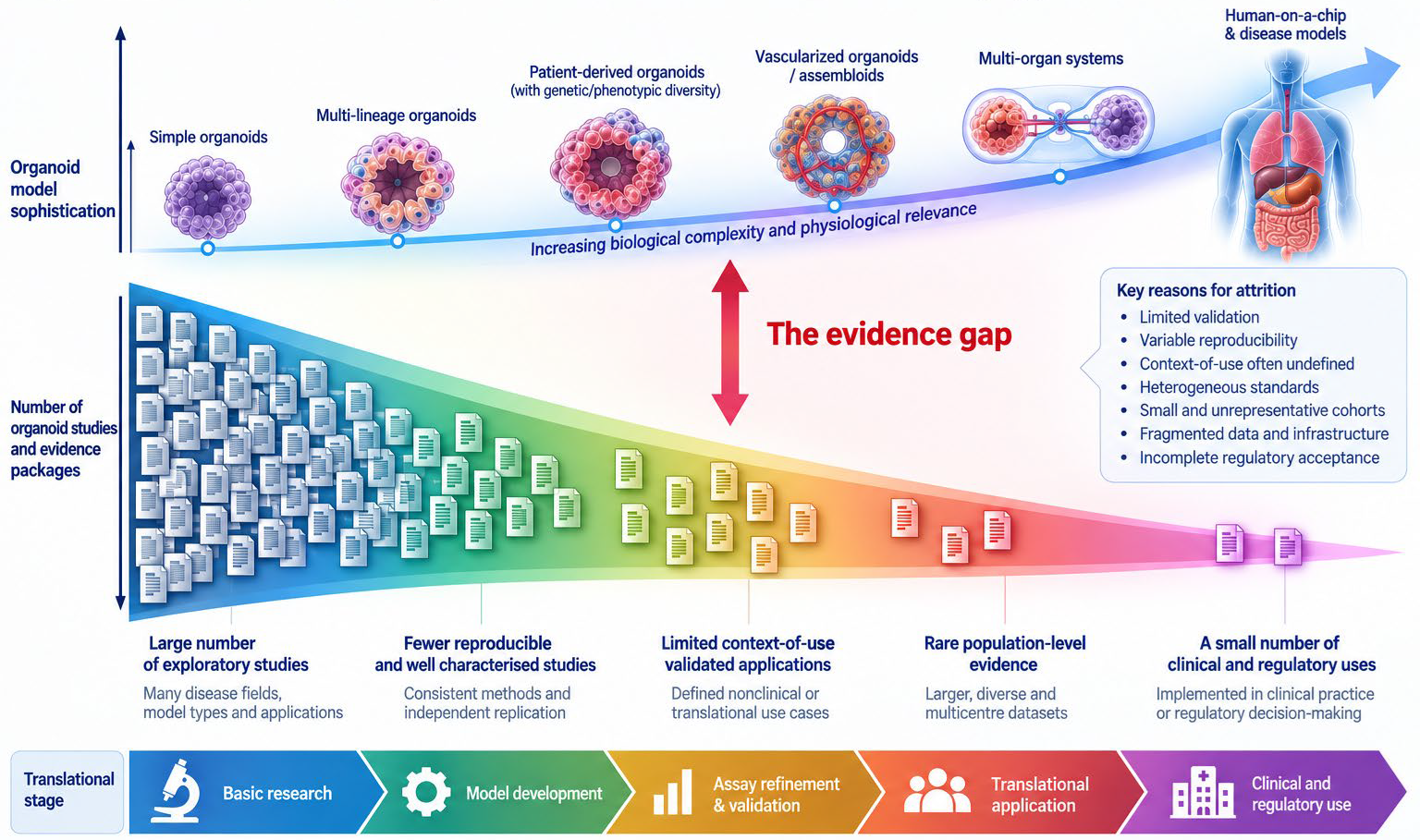
Figure 1. There is a large body of organoid research but only a few decision-ready applications. Image Credit: Image courtesy of Fazel Gorjipour et al., in partnership with ELRIG (UK) Ltd.
2. Why ORGANOLE?
- Organoids now support target validation, compound screening, efficacy and safety studies, and precision medicine.
- Reporting and model-quality initiatives are necessary, but they do not tell us when a specific finding is mature enough for a consequential decision.
- Reliability, biological adequacy, validity, generalizability, and utility are related but not interchangeable.
- ORGANOLE provides a shared evidence-maturation language without imposing a fixed score or regulatory pathway.
Core question: What additional evidence is needed before this organoid-derived claim can legitimately support its intended decision?
3. ORGANOLE v1.1: Six evidence levels
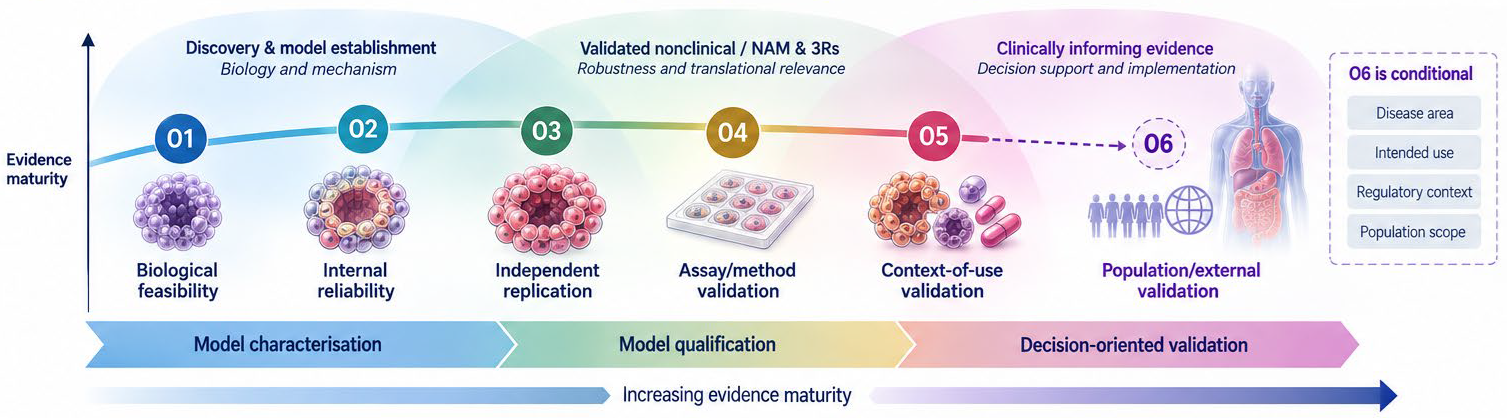
Figure 2. The ORGANOLE framework: a structured pathway from organoid findings to decision-ready evidence. Image Credit: Image courtesy of Fazel Gorjipour et al., in partnership with ELRIG (UK) Ltd.
4. Apply ORGANOLE in five steps
- Define the claim
- Define the context of use
- Specify the intended decision and decision owner
- Define the unit and breadth of inference
- Assign the highest level whose required evidence is adequately supported
'Decision-ready' is the level required by the predefined context of use that has been reached.
5. What changes across levels?
Reliability
Can I trust the measurement?
Precision → repeatability → independent reproducibility → transferability
Validity
Does it support the intended inference?
Biological/construct → analytical → predictive → external validity
Utility
Is the evidence sufficient for this decision?
Requirements scale with breadth of inference and consequences of error
6. Stress test: CFTR intestinal organoids
- Patient-derived CFTR organoids show how functional evidence can complement genotype and support treatment selection in rare variants.
- The translational trajectory depended on assay reproducibility, clinical correlation, standardization, and later interlaboratory validation, not model complexity alone.
- Key lesson: The questions “Does the method travel?” and “Does the claim generalize across people?” resolve different uncertainties.
- A bounded individualized use may become decision-ready at O5; broader population claims can activate conditional O6.
7. Context of use determines the pathway
Precision medicine
- Functional predictive/companion-diagnostic-like use
- Unit of inference may be the individual patient or rare variant
Drug development
- Organoid cohorts can function as experimental patient populations; broader claims require representative diversity and external validation.
Safety/toxicology
- Safety is a parallel evidence stream: early hazard identification can mature toward population susceptibility and predictive validity.
8. From evidence generation to responsible use
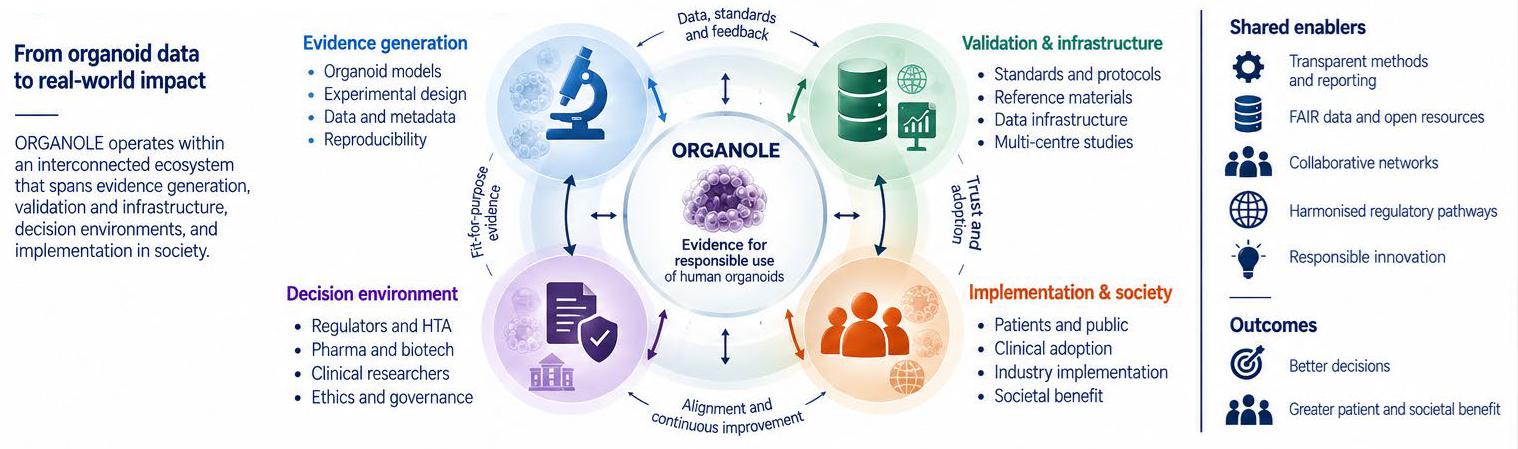
Figure 3. The ORGANOLE evidence ecosystem. Image Credit: Image courtesy of Fazel Gorjipour et al., in partnership with ELRIG (UK) Ltd.
9. ORGANOLE 2.0
- Community-informed operational criteria
- Inter-rater reliability and discrimination testing
- Application to real evidence packages
- CoU-specific modules without universal numerical thresholds
Acknowledgment:
NANOBIO4CAN - Horizon Europe MSCA COFUND (EU project 101126492) and TÜBİTAK 2236-B (project 123C460). ORGANOLE v1.1 is a working conceptual revision; empirical validation is planned for ORGANOLE 2.0.
About İzmir Biomedicine and Genome Center
The Izmir Biomedical and Genome Center (IBG) officially commenced operations in January 2018 as Turkey's first Thematic Research Center under Law No. 6550. IBG's aim is to develop innovative technologies and products for the prevention, diagnosis, and treatment of diseases, using fundamental research in the life sciences as a driving force. Located on the Dokuz Eylül University (DEÜ) health campus, IBG houses laboratories where research in biomedicine and genomics is conducted, including IBG-NEVCELL and the IBG Drug Analysis and Control Lab. Furthermore, the center has a total of 9 service units, 6 of which are open to all public and private sector organizations in Turkey.
Established within Dokuz Eylül University (DEÜ) with a concept dating back 15 years, and operational since 2014 as an Application and Research Center and in 2015 as a Research Institute, İBG is a "Research Infrastructure" with public legal personality. The İBG Board of Directors consists of DEÜ faculty members, valuable scientists and experienced senior executives from other higher education institutions, the private sector, relevant public institutions and organizations, and non-governmental organizations.
IBG has approximately 26,650 m2 of indoor space, comprising the Responsible Researcher laboratories and offices, cell culture laboratories, well-equipped common areas, the Aziz Sancar Auditorium, and seminar, meeting, and rooms. 6,600 m2 of the total area is allocated to service units.
About ELRIG (UK) Ltd.
The European Laboratory Research & Innovation Group (ELRIG) is a leading European not-for-profit organization that exists to provide outstanding scientific content to the life science community. The foundation of the organization is based on the use and application of automation, robotics and instrumentation in life science laboratories, but over time, we have evolved to respond to the needs of biopharma by developing scientific programs that focus on cutting-edge research areas that have the potential to revolutionize drug discovery.
Comprised of a global community of over 12,000 life science professionals, participating in our events, whether it be at one of our scientific conferences or one of our networking meetings, will enable any of our community to exchange information, within disciplines and across academic and biopharmaceutical organizations, on an open access basis, as all our events are free-of-charge to attend!
Our values
Our values are to always ensure the highest quality of content and that content will be made readily accessible to all, and that we will always be an inclusive organization, serving a diverse scientific network. In addition, ELRIG will always be a volunteer led organization, run by and for the life sciences community, on a not-for-profit basis.
Our purpose
ELRIG is a company whose purpose is to bring the life science and drug discovery communities together to learn, share, connect, innovate and collaborate, on an open access basis. We achieve this through the provision of world class conferences, networking events, webinars and digital content.
Sponsored Content Policy: News-Medical.net publishes articles and related content that may be derived from sources where we have existing commercial relationships, provided such content adds value to the core editorial ethos of News-Medical.net, which is to educate and inform site visitors interested in medical research, science, medical devices and treatments.
Last Updated: Oct 12, 2026