Submicron IR map of the human cell: Label free cellular imaging with O-PTIR, FTIR and Raman

What if you could map the chemistry inside a human cell - without fluorescent labels or stains?
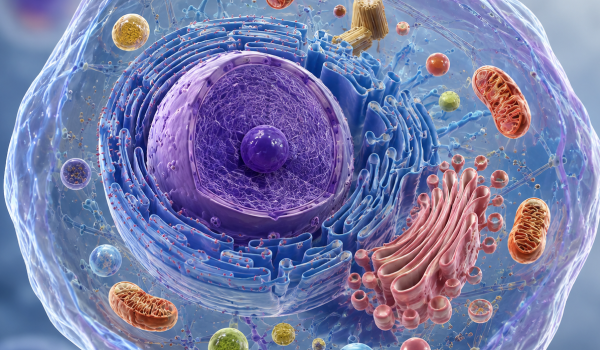
Cells are chemically crowded, spatially complex and notoriously difficult to interpret using conventional infrared microscopy alone. Professor Kamilla Malek and her colleagues are developing a clearer view by combining FTIR spectroscopy, submicron O-PTIR microscopy, Raman imaging and advanced chemometrics to transform overlapping vibrational spectra into meaningful maps of cellular composition.

Click here to register

Drawing on the team’s recent Analytical Chemistry publication, “"IR Map of the Human Cell"”, and its broader research across 2D and 3D cellular models, Professor Malek will demonstrate how label-free vibrational imaging can distinguish nuclei, cytoplasm, lipid-rich and glycogen-rich regions - and reveal biochemical changes associated with differentiation, metabolism, disease and cell-cell interactions.

What you will learn

  • How FTIR, submicron O-PTIR and Raman imaging provide complementary views of cellular chemistry
  • How spectral “barcodes” differentiate nuclei, cytoplasm and lipid- or glycogen-rich cellular regions
  • How chemometrics and biomolecular reference modelling help unravel heavily overlapping biological spectra
  • How these approaches can phenotype bladder-cancer cells, monitor stem-cell differentiation and investigate neuronal spheroids and blood-brain-barrier models
  • What changes when vibrational imaging moves from isolated cells to complex 2D and 3D biological systems

Who should attend?

This webinar will be particularly valuable for researchers working in:

  • FTIR, O-PTIR and Raman microscopy
  • Single-cell and subcellular chemical imaging
  • Cell biology, cancer research and regenerative medicine
  • Neuroscience and blood-brain-barrier research
  • 2D and 3D in vitro models
  • Chemometrics and label-free biological analysis

Register now to discover how label-free molecular imaging can turn complex spectra into biological insight–from chemical detail inside a single cell to phenotyping sophisticated 3D models.

Can’t attend live? Register anyway to receive access to the recording.

See you there on Thursday, September 17, 2026

Guest speaker

Professor Kamilla Malek, Jagiellonian University

Host

Dr. Mustafa Kansiz, Photothermal Spectroscopy Corp

Register now

Citations

Please use one of the following formats to cite this article in your essay, paper or report:

  • APA

    Photothermal Spectroscopy Corp. (2026, September 04). Submicron IR map of the human cell: Label free cellular imaging with O-PTIR, FTIR and Raman. News-Medical. Retrieved on September 04, 2026 from https://www.news-medical.net/news/20260904/Submicron-IR-map-of-the-human-cell-Label-free-cellular-imaging-with-O-PTIR-FTIR-and-Raman.aspx.

  • MLA

    Photothermal Spectroscopy Corp. "Submicron IR map of the human cell: Label free cellular imaging with O-PTIR, FTIR and Raman". News-Medical. 04 September 2026. <https://www.news-medical.net/news/20260904/Submicron-IR-map-of-the-human-cell-Label-free-cellular-imaging-with-O-PTIR-FTIR-and-Raman.aspx>.

  • Chicago

    Photothermal Spectroscopy Corp. "Submicron IR map of the human cell: Label free cellular imaging with O-PTIR, FTIR and Raman". News-Medical. https://www.news-medical.net/news/20260904/Submicron-IR-map-of-the-human-cell-Label-free-cellular-imaging-with-O-PTIR-FTIR-and-Raman.aspx. (accessed September 04, 2026).

  • Harvard

    Photothermal Spectroscopy Corp. 2026. Submicron IR map of the human cell: Label free cellular imaging with O-PTIR, FTIR and Raman. News-Medical, viewed 04 September 2026, https://www.news-medical.net/news/20260904/Submicron-IR-map-of-the-human-cell-Label-free-cellular-imaging-with-O-PTIR-FTIR-and-Raman.aspx.

Comments

The opinions expressed here are the views of the writer and do not necessarily reflect the views and opinions of News Medical.
Post a new comment
Post

While we only use edited and approved content for Azthena answers, it may on occasions provide incorrect responses. Please confirm any data provided with the related suppliers or authors. We do not provide medical advice, if you search for medical information you must always consult a medical professional before acting on any information provided.

Your questions, but not your email details will be shared with OpenAI and retained for 30 days in accordance with their privacy principles.

Please do not ask questions that use sensitive or confidential information.

Read the full Terms & Conditions.