Sponsored Content by PittconJan 21 2020
A growing number of states and jurisdictions have legalized cannabis in some form over recent years and each year seems to bring new milestones in this phenomenon. In the USA, Illinois became the first state to legalize cannabis sales without a ballot[1] and, on January 1st, customers lined the blocks outside dispensaries to be among the first to legally purchase the drug.
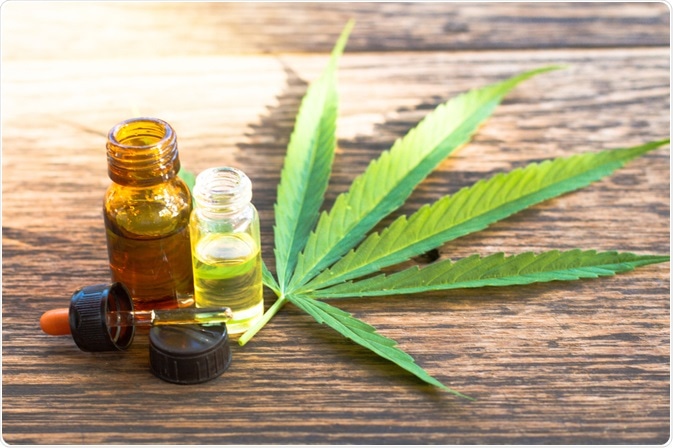
Image Credit:Shutterstock/MissNuchwaraTongrit
Meanwhile, the Farming Act, which was past toward the end of 2018, legalized hemp and CBD, resulting in an explosion of CBD and hemp-containing products coming to the market in 2019.
To date, fourteen US states and territories have legalized recreational cannabis sales for adults[2], and many states now make medical cannabis available.
This burgeoning new industry brings with it many challenges, not least those simply of its speed of development. How can we ensure that cannabis products reaching consumers are safe? Most cannabis products receive no oversight from the US Food and Drug Administration, regulation is a patchwork, varying from state-to-state, and consensus on testing standards is not yet achieved.
At this year’s Pittcon, which took place in Chicago, Illinois, 1-5 March, Cannabis was a key theme. The analytical chemistry industry is working alongside the emerging cannabis industry to help address the challenges it faces, and at the conference, you were able to hear directly from those working toward the solutions.
The Importance of Testing
There are several components of cannabis that require analysis to ensure product efficacy and consumer safety. Potency is particularly important because it is linked to the therapeutic effects of the drug. Of special interest is the ratio of tetrahydrocannabinol (THC) – the main psychoactive component of cannabis - to cannabidiol (CBD), which is not psychoactive. The ideal ratio in medical cannabis depends on the condition it is intended for, with THC being beneficial for some while better avoided in others. In recreational cannabis, THC is associated with a greater “high”, but high-THC varieties are also linked to an increased risk of psychosis.
Another important dimension to testing is to measure and exclude contaminants. These include pesticides, residual solvents from extraction processes, mycotoxins, and heavy metals[3]. Such contaminants can be harmful to health if consumed and could be particularly dangerous to immunocompromized patients in a medical setting.
Could Cannabis Ease the Opioid Crisis?
The opioid crisis is one of the United States’ most pressing public health issues. In 2017, it was declared a national emergency by the President and has now overtaken road traffic accidents as a cause of death[4].
Medical opioids for acute or chronic pain are the initial source of opioid exposure for many those who develop opioid use disorder. Pain is also the primary indication for medical cannabis use. So, could medical cannabis help to decrease reliance on opioids for pain relief and fight the opioid crisis? There is anecdotal evidence to suggest that this is true.
At this year’s Pittcon, the Plenary Lecture was presented by Ziva Cooper, a researcher trying to find out more definitive answers through randomized controlled trials. Dr. Cooper is an associate professor at the University of California, Los Angeles where she is also the Research Director for the university's Cannabis Research Initiative. Her talk looked at the potential role cannabis constituents could play in dealing with the opioid epidemic.
A rapidly changing industry
The cannabis industry is expected to grow to $22 billion by 2022[3], an extremely fast turnaround from illegal substance to major commodity. However, this carries the challenge of ensuring the safety of products when they are coming to market faster than they can be assessed. To complicate matters, this is coupled to a lack of standardized testing and regulations.
At Pittcon, speakers Christopher Hudalla and James Roush of ProVerde Laboratories, and Marian Twohig of Waters Corporation, discussed these issues and asked the question: how is it possible to keep up with all these developments?
They will discuss the growth of the cannabis market, the impact on consumers, risks from “derivative” products such as vapes, and strategies for analytical labs to cope with increasingly demanding methodologies in this area.
The cannabis program at Pittcon
The symposia's featured talks from industry leaders on established and emerging techniques in cannabis analysis. Dennis Polite from Axion Analytical Labs presented an approach harnessing HPLC and diode array detection for the rapid analysis of cannabinoid constituents.
Hui Guo from Shimadzu Scientific Instruments also explained how an LC-MS setup could help improve the accuracy of quantitative cannabinoid determination.
In addition to the talks mentioned above, the Pittcon expo was attended by major companies in analytical chemistry. These included Waters, Restek, CEM Corporation, Shimadzu, and Spex, who between them can offer analytical cannabis solutions from sample prep to spectroscopy.
Register now to join us there!
References
- Berke J & Gould S (2020) Legal marijuana just went on sale in Illinois. Here are all the states where cannabis is legal. Available at: https://www.businessinsider.com/legal-marijuana-states-2018-1?r=US&IR=T#illinois-4 Accessed: January 2020.
- National Conference of State Legislatures (2019) State Medical Marijuana Laws. Available at: https://www.ncsl.org/research/health/state-medical-marijuana-laws.aspx Accessed: January 2020.
- Nie, B., Henion, J. & Ryona, I. The Role of Mass Spectrometry in the Cannabis Industry. J Am Soc Mass Spectrom. 2019; 30: 719. https://doi.org/10.1007/s13361-019-02164-z.
- Mazzei, P (2019) Opioids, Car Crashes and Falling: The Odds of Dying in the U.S. Available at: https://www.nytimes.com/2019/01/14/us/opioids-car-crash-guns.html Accessed: January 2020.
About Pittcon
Pittcon is North America’s largest conference and exposition in laboratory science, attracting thousands of industry, academia, and government attendees and exhibitors from around the world in. Pittcon goes beyond the typical conference; it's a global community dedicated to advancing science through education, collaboration, and philanthropy. By bringing together scientists, researchers, educators, students, and industry leaders, Pittcon creates opportunities to learn, connect, and inspire innovation. Beyond the event itself, more than 90% of Pittcon's net proceeds support science education and outreach initiatives locally and globally, funding scholarships, grants, STEM programs, laboratory improvements, and other efforts that strengthen communities and expand access to science.
Pittcon delivers world-class educational and professional development opportunities through its Technical Program, Short Courses, and Networking Workshops and Roundtables. Attendees can explore the latest scientific research through symposia, oral and poster presentations, enhance their skills with expert-led deep-dive courses, and connect with peers through interactive workshops and networking experiences designed to foster collaboration and career growth.
The Pittcon Expo brings the scientific community together in an immersive environment where attendees can discover the latest laboratory technologies, meet with leading instrument and service providers, and experience science in action. Beyond the exhibit booths, the Expo Floor features engaging attractions, educational experiences, demonstrations, and networking spaces, while receptions, parties, and social events create opportunities to build lasting connections with colleagues from around the world.
Sponsored Content Policy: News-Medical.net publishes articles and related content that may be derived from sources where we have existing commercial relationships, provided such content adds value to the core editorial ethos of News-Medical.net, which is to educate and inform site visitors interested in medical research, science, medical devices and treatments.