Sponsored Content by PittconFeb 21 2018
Bioanalytical imaging technology holds important utility in clinical research, drug development and monitoring, as well as food safety. Over time, these tools have become more sophisticated in their approach to obtaining qualitative and quantitative data for a wide variety of biomedical applications.
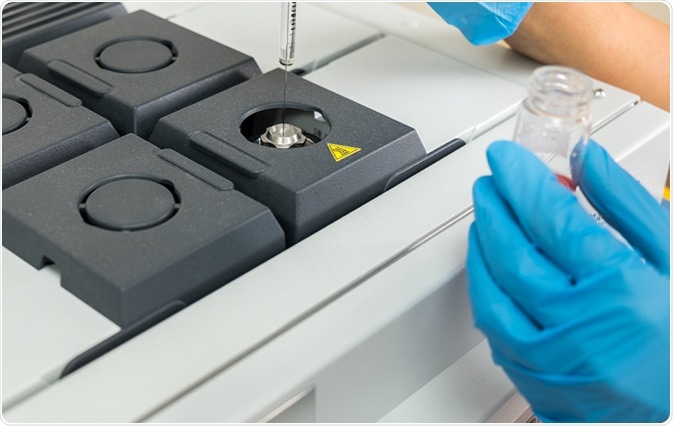
© Lerner Vadim/Shutterstock.com
Bioanalytical Imaging: Techniques, Technology, and Research
At Pittcon 2018, held this year in Orlando, Fl, Feb 26 - March 1, attendees will be able to learn more about bioanalytical imaging platforms and techniques from experts in the field, as well as from exhibiting companies who will be demonstrating their advanced analytical technologies.
Dr Hell will be explaining the science and bioanalytical technology behind breaking the diffraction barrier in fluorescence microscopy.This includes one of this years keynote speakers, Dr Stefan Hell, presenting the Plenary Lecture.
Additionally, Pittcon 2018 will also hear from speakers discussing ambient ionization techniques for simplifying mass spectrometry (MS) analyses, and using bioanalytical methods, such as liquid chromatography MS (LC-MS), in the cannabis testing industry. During this talk, it will be discussed how these techniques can aid in testing cannabis for potency, pesticides, residual solvents, heavy metals, mycotoxins, and moisture.
Additionally, Amanda Hummon of the University of Notre Dame will provide a talk to attendees on matrix-assisted laser desorption/ionization (MALDI) imaging MS (IMS) for assessing therapy activity in 3D cell cultures. Another speaker, Amemiya Shigeru of the University of Pittsburgh, will be offering a session on scanning electrochemical microscopy (SECM) for high-resolution imaging of single biological nanopores.
Pharmaceutical Applications
Advancing bioanalytical techniques and platforms have enabled researchers to improve their ability to identify diagnostic biomarkers and detect the effect of certain therapies in living systems. Techniques such as electroparamagnetic resonance (EPR) spectroscopy have been widely applied in the pharmaceutical industry, helping researchers determine the presence of free radicals and transition metals in pharmaceutical products.
Using EPR to detect these species can help identify the stability of the product (eg, shelf life). Bruker, the manufacturer of the EMXnano benchtop EPR spectrometer, will be present at Pittcon 2018 to demonstrate this technology. Also, ThermoFisher Scientific will be demonstrating their workflow solutions for streamlining biopharmaceutical analyses, particularly for protein characterization.
Another presenter at Pittcon, Amir Liba from Agilent, will be discussing the use of inorganic MS for assessing new biopharmaceutical applications and how laser capture microdissection MS can be used for evaluating the bioavailability of metal-containing drugs.
Bioanalytical Imaging in Cancer Research and Diagnostics
Oncology will be a hot topic at Pittcon this year as many bioanalytical techniques are used in the field of cancer research, diagnosis, and treatment. Current advancements in bioanalytical techniques have provided researchers greater insight into the cellular and molecular activity of living systems. Additionally, these techniques have facilitated rapid disease identification, particularly in its early stages, thereby reducing morbidity and mortality and improving the chances of remission.
ThermoFisher Scientific will be presenting their product line of MS solutions for detecting carcinoma biomarkers for early detection, which may improve outcomes among cancer patients.
Ion mobility-MS for prostate cancer detection and diagnosis will be discussed by Facundo Fernandez of the Georgia Institute of Technology at this year’s Pittcon. During his talk, Dr. Fernandez will present the benefit of using this technology over prostate-specific antigen screening, which can sometimes result in overdiagnosis and overtreatment.
Also, Matthew Lockett of the University of North Carolina will provide a talk on the use of fluorescence microscopy for monitoring cellular activity in tumor-like environments. During this Pittcon event, researcher Frederique Deiss of Indiana University will present a new bioanalytical mechanism that may be used with elastomeric microfluidic devices, which aid proteomic analyses, for identifying single bacterium without culture.
Combining electrochemical detection and paper-based microfluidics, Dr. Henry will describe how this portable, economic solution improves point-of-care testing in the clinical space. In addition, Ametek Scientific Instruments will be presenting their single channel and multichannel potentiostats for current control during electroanalytical studies.Portable and handheld bioanalytical devices for biomedical diagnostics have been in demand in recent years, thanks to advancements in smartphone technology. At Pittcon, Charles Henry of Colorado State University will be offering a presentation on disease diagnosis using paper-based analytical devices.
Nanomaterials Research
The development of nanomaterials in biosensors have also benefited from innovative advancements in bioanalytical techniques. At Pittcon 2018, Bruker and Shimadzu will be presenting their MALDI technologies for identifying low molecular weight molecules in nanometer-scale samples isolated from single cells.
Also, Dr. Shigeru will be discussing the utility of scanning electrochemical microscopy (SECM) for imaging single biological nanopores, which has become a fairly heavily researched field. During the event, attendees can see these types of technologies in action as Hitachi and Zeiss will be demonstrating their compact, tabletop, high-quality imaging scanning electron imaging microscopes for high-resolution surface imaging of nanoparticles.
The use of nanobiotechnologies for cancer treatment will also be discussed by Jian-Hui Jiang of Hunan University. During his talk, Dr. Jiang will present the topic of nanoscale assemblies of peptides and nucleic acids for effective DNA or peptide probe delivery into tumor cells.
Food Industry
In addition to the pharmaceutical space, the food industry has been actively involved with using bioanalytical techniques and imaging technologies for identifying potential foodborne pathogens. Biosensor technologies have facilitated rapid detection of these pathogens and are commonly used to analyze food packaging and various stages of the agricultural process.
Attend Pittcon 2018
At this year’s Pittcon event, experts in the field of bioanalytical technology and techniques will gather to discuss and learn about new innovations in the field as well as those projected for the future.
Attendees will learn about and see product demonstrations on chromatography, MS, mass spectroscopy, micro- and nanofluidic devices, microscopy, and electroanalytical systems. Individuals in academia, industry, or research are welcome to attend this informative event.
References
- Ouyang Z, et al. Paper spray ionization devices for direct, biomedical analysis using mass spectrometry. Int J Mass Spectrom. 2012; 312: 201−207.
- Horiba Scientific. Surface Plasmon Resonance Imaging. http://www.horiba.com/scientific/products/surface-plasmon-resonance-imaging-spri/
- Bruker. Pharmaceutical Applications of EPR. https://www.bruker.com/fileadmin/user_upload/8-PDF-Docs/MagneticResonance/EPR_brochures/emxnana-detecting-and-evaluating-degradation.pdf
- Bankert W, et al. A Closer Look at Cannabis Testing. Shimadzu. 2016. https://cdn.technologynetworks.com/tn/Resources/pdf/a-closer-look-at-cannabis-testing.pdf
- Hummon A, et al. Evaluation of Therapeutics in Three-Dimensional Cell Culture Systems by MALDI Imaging Mass Spectrometry. Annal Chem. 2013; 85(13): 6295−6302.
- University of Pittsburgh. Department of Chemistry. Research Overview. http://www.chem.pitt.edu/person/shigeru-amemiya
- Bruker. Pharmaceutical Applications of EPR. https://www.bruker.com/fileadmin/user_upload/8-PDF-Docs/MagneticResonance/EPR_brochures/emxnana-detecting-and-evaluating-degradation.pdf
- Thermo Fisher Scientific. Cancer Protein Biomarkers. https://www.thermofisher.com/uk/en/home/clinical/clinical-translational-research/protein-analysis/protein-biomarker-discovery-validation/cancer-protein-biomarkers.html
- Waters. Food Safety http://www.waters.com/waters/en_GB/Food-Safety/nav.htm?cid=514887&locale=en_GB
- Teledyne Tekmar. Forensics and Toxicology Solutions. http://www.teledynetekmar.com/Industry-Applications/forensics
- Pittcon Conference & Expo. Cannabis Testing: An Industry Guide https://pittcon.org/
- Bankert W, et al. A Closer Look at Cannabis Testing. Shimadzu. 2016. https://cdn.technologynetworks.com/tn/Resources/pdf/a-closer-look-at-cannabis-testing.pdf
- Whitesides G, et al. Integration of paper-based microfluidic devices with commercial electrochemical readers. Lab Chip, 2010, 10. DOI: 10.1039/c0lc00237b
- Thermo Fisher Scientific. Microfluidics and Mass Spectrometry-based Proteomics. https://www.thermofisher.com/blog/proteomics/microfluidics-and-mass-spectrometry-based-proteomics/
- Hsing M, et al. MDPI.org. Biosensors for Point-of-Care Applications. Sensors journal. 2004. http://www.mdpi.org/sensors/Biosensors-for-Point-of-Care-Applications.htm
- Henry C, et al. Electrochemical Detection for Paper-Based Microfluidics. Anal. Chem. 2009, 81, 5821–5826.
- Ametek. Potentiostats. http://www.ameteksi.com/products/potentiostats
- Gomez-Rios G. Can LC-MS be Replaced by Direct Coupling of SPME to MS in Clinical Applications?
- MSACL 2018 US Abstract. https://www.msacl.org/view_abstract/MSACL_2018_US.php?id=176
- Thermo Fisher Scientific. iCAP TQ ICP-MS. http://info1.thermoscientific.com/iCAPTQ?gclid=EAIaIQobChMIi7bKmqab2AIVjpTtCh38bwB6EAAYASAAEgJpiPD_BwE&ce=E.17CMD.TE101.07493.01&cid=E.17CMD.TE101.07493.01&s_kwcid=AL!3652!3!226218193871!e!!g!!triple%20quadrupole%20mass%20spectrometer&ef_id=WD1DVwAAAHofudeq:20171221141934:s#&page=overview
- Waters. Tandem Quadrupole (Triple Quadrupole ) Mass Spectrometry. http://www.waters.com/waters/en_GB/Tandem-Quadrupole-%28-Triple-Quadrupole-%29-Mass-Spectrometry/nav.htm?cid=134656172&xcid=ext4981&gclid=EAIaIQobChMIi7bKmqab2AIVjpTtCh38bwB6EAAYAyAAEgJVdPD_BwE&locale=en_GB
- Waters. SYNAPT G2-Si High Definition Mass Spectrometry. https://www.waters.com/nextgen/en.html
- Hummon A, et al. Evaluation of Therapeutics in Three-Dimensional Cell Culture Systems by MALDI Imaging Mass Spectrometry. Annal Chem. 2013; 85(13): 6295−6302.
- Bruker. High-Performance MALDI-TOF Systems. https://www.bruker.com/en/products-and-solutions/mass-spectrometry/maldi-tof.html
- Jones L, et al. Fast Photochemical Oxidation of Proteins Coupled to Multidimensional Protein Identification Technology (MudPIT): Expanding Footprinting Strategies to Complex Systems. 2015; 26(4): 540−546.
- Gross M, et al. “Fast Photochemical Oxidation of Proteins” (FPOP) and Mass Spectrometry Follow Sub-millisecond Protein Folding at the Amino-Acid Level. J Am Chem Soc. 2012; 134(45): 18724−18731.
- Thermo Fisher Scientific. LTQ Orbitrap XL™ Hybrid Ion Trap-Orbitrap Mass Spectrometer. https://www.thermofisher.com/order/catalog/product/IQLAAEGAAPFADBMAOK
- ZEISS. LSM 700 Light Pathways. https://zeiss-campus.magnet.fsu.edu/tutorials/spectralimaging/lsm700/indexflash.html
- Bruker. EPR in a nutshell. https://www.bruker.com/products/mr/epr/epr-in-a-nutshell.html
- Höfler H, et al. MALDI imaging mass spectrometry for direct tissue analysis: a new frontier for molecular histology. 2008; 130(3): 421−434.
- Heeron R. MALDI Techniques in Mass Spectrometry Imaging. Encyclopedia of Spectroscopy and Spectrometry (Second Edition) 2010: 1443–1451.
- Hoffman P, et al. MALDI Imaging Mass Spectrometry (MALDI-IMS)―Application of Spatial Proteomics for Ovarian Cancer Classification and Diagnosis. Int. J. Mol. Sci 2011; 12(1): 773−794.
- Cui D, et al. Recent Advances in Nanotechnology Applied to Biosensors. PMC. 2009; 9(2): 1033−1053
- Chiu D. Micro- and nano-scale chemical analysis of individual sub-cellular compartments. Trends in Analytical Chemistry. 2003; 22(9): 528−536
- Shimadzu. Principles of MALDI-TOF Mass Spectrometry. https://www.shimadzu.com/an/lifescience/maldi/princpl1.html
- Shimadzu. MALDI-TOF Mass Spectrometry. https://www.shimadzu.com/
- Bruker. MALDI-TOF and TOF/TOF MS. https://www.bruker.com/products/mass-spectrometry-and-separations/maldi-toftof.html
- Cho B, et al. Biosensors and their Applications in Food Safety: A Review. Journal of Biosystems Engineering 2016; 41(3): 240−254.
- Robinson C, et al. Probing the Lipid Annular Belt by Gas-Phase Dissociation of Membrane Proteins in Nanodiscs. Angewandte Chemie 2015; 55(2) 550−554.
- Wasatch Photonics. Why Wasatch for Spectroscopy. https://wasatchphotonics.com/product-category/spectrometers/why-wasatch-spectroscopy/
- University of Pittsburgh. Shigeru Amemiya. http://www.chem.pitt.edu/person/shigeru-amemiya
- Amemiya S, et al. Scanning Electrochemical Microscopy of Individual Single-Walled Carbon Nanotube. Anal Chem 2010; 82(5): 1605−1607.
- Hitachi. Tabletop Microscopes TM4000/TM4000Plus. https://www.hitachi-hightech.com/global/tm/products/tm4000/
- Zeiss. SEM. https://www.zeiss.com/microscopy/en/products/sem-fib-sem/sem.html
- Martin C, et al. Biosensing with conically shaped nanopores and nanotubes. Phys. Chem. Chem. Phys 2006, 8, 4976-4988.
- Baker L. Measuring Ions with Scanning Ion Conductance Microscopy. The Electrochemical Society Interface 2014: 47−52.
- Iaeac. Home. http://www.iaeac.com/
- Jian J, et al. Electrostatic Nucleic Acid Nanoassembly Enables Hybridization Chain Reaction in Living Cells for Ultrasensitive mRNA Imaging. J. Am. Chem. Soc. 2015; 137(21): 6829–6836
- Jiang J, et al. Surface-Enhanced Raman Spectroscopy-Based, Homogeneous, Multiplexed Immunoassay with Antibody-Fragments-Decorated Gold Nanoparticles. Analytical Chemistry 2013; 85: 9213−9220
- Hamamatsu. SERS substrate. https://www.hamamatsu.com/jp/en.html
- Wasatch Photonics. Why Wasatch for Raman. http://wasatchphotonics.com/product-category/spectrometers/why-wasatch-spectroscopy/http:/wasatchphotonics.com/product-category/spectrometers/why-wasatch-raman/?gclid=EAIaIQobChMIzK26xZmZ2AIVQrHtCh2SAgahEAAYAiAAEgI1hvD_BwE
- Sweedler J, et al. Capillary electrophoresis with wavelength-resolved laser-induced fluorescence detection. Anal Bioanal Chem 2002;373:332–343
- Mauzeroll J, et al. Scanning Electrochemical Microscopy: A Comprehensive Review of Experimental Parameters from 1989 to 2015. Chem. Rev 2016; 116(22): 13234–13278
About Pittcon
Pittcon is North America’s largest conference and exposition in laboratory science, attracting thousands of industry, academia, and government attendees and exhibitors from around the world in. Pittcon goes beyond the typical conference; it's a global community dedicated to advancing science through education, collaboration, and philanthropy. By bringing together scientists, researchers, educators, students, and industry leaders, Pittcon creates opportunities to learn, connect, and inspire innovation. Beyond the event itself, more than 90% of Pittcon's net proceeds support science education and outreach initiatives locally and globally, funding scholarships, grants, STEM programs, laboratory improvements, and other efforts that strengthen communities and expand access to science.
Pittcon delivers world-class educational and professional development opportunities through its Technical Program, Short Courses, and Networking Workshops and Roundtables. Attendees can explore the latest scientific research through symposia, oral and poster presentations, enhance their skills with expert-led deep-dive courses, and connect with peers through interactive workshops and networking experiences designed to foster collaboration and career growth.
The Pittcon Expo brings the scientific community together in an immersive environment where attendees can discover the latest laboratory technologies, meet with leading instrument and service providers, and experience science in action. Beyond the exhibit booths, the Expo Floor features engaging attractions, educational experiences, demonstrations, and networking spaces, while receptions, parties, and social events create opportunities to build lasting connections with colleagues from around the world.
Sponsored Content Policy: News-Medical.net publishes articles and related content that may be derived from sources where we have existing commercial relationships, provided such content adds value to the core editorial ethos of News-Medical.net, which is to educate and inform site visitors interested in medical research, science, medical devices and treatments.