Sponsored Content by LittelfuseReviewed by Olivia FrostFeb 26 2026
Continuous glucose monitors (CGMs) have transformed diabetes management by delivering real-time insight into glucose trends without the need for frequent finger-stick testing. As these devices continue to shrink and become more integrated with the body, designers face increasing pressure to extend battery life, eliminate mechanical failure points, and ensure reliable operation throughout the wear cycle.
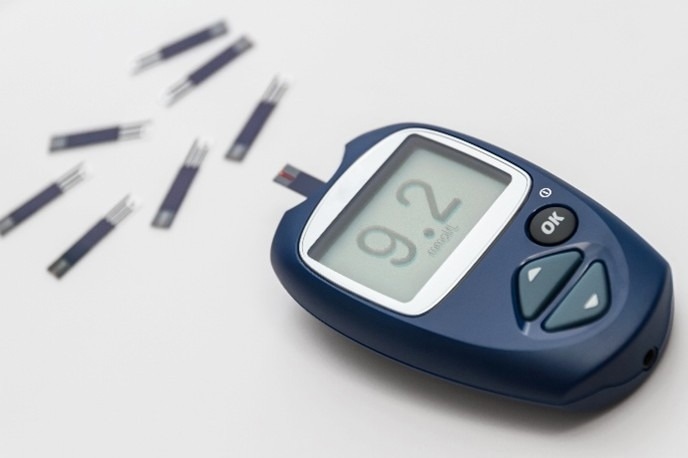
Image Credit: Littelfuse, Inc.
One of the most critical and power-sensitive functions in a CGM is device activation. The system must transition from storage or transport to an active monitoring state at precisely the right moment, without relying on mechanical buttons or openings that could compromise sealing or long-term reliability. To meet this challenge, many CGM designs are turning to ultra-low-power magnetic switches based on tunnel magnetoresistance (TMR) technology.
By enabling sealed, contactless activation with nanoamp-level standby current, TMR switches allow CGMs to remain energy-efficient, compact, and robust in real-world, on-body conditions. This article focuses on how TMR-based magnetic switches are used today to support reliable CGM activation, and why their unique combination of sensitivity, efficiency, and small form factor makes them well-suited for next-generation continuous glucose monitoring systems.
Anatomy of a CGM system
A modern CGM consists of three main components:
- Sensor: A thin filament inserted beneath the skin that measures glucose levels in interstitial fluid.
- Transmitter module: Mounted on the skin, it powers and communicates data wirelessly to a smartphone or insulin pump.
- Adhesive patch: Secures the sensor/transmitter assembly to the body for a typical wear period of 7–14 days.
Together, these modules interface with cloud analytics and mobile applications that track glucose levels, trends, and alerts. To maintain clinical reliability, the device must operate continuously under changing temperatures, humidity, and mechanical stress – conditions that place extreme demands on every electronic component.
Where magnetic sensing fits in CGM design
Magnetic sensing plays a focused but increasingly important role in the design of continuous glucose monitors. Rather than replacing core sensing or motion-detection functions, magnetic switches are typically used to support device-state management, enabling reliable, low-power detection of specific events throughout the CGM lifecycle.
In today’s CGM architectures, magnetic sensing is most commonly associated with device activation or arming. A small magnet integrated into packaging, an applicator, or an adhesive carrier can trigger a magnetic switch when the device is removed from its tray or applied to the body. This approach enables a contactless, sealed activation mechanism that eliminates mechanical buttons and their associated reliability risks.
Beyond activation, magnetic sensing is sometimes considered, depending on the OEM’s mechanical and electrical architecture, for additional binary state-detection functions, such as confirming that subassemblies are properly mated or detecting gross changes in device position relative to a known reference. In these cases, magnetic switches are not used as precision measurement devices but as low-power digital indicators that confirm whether a predefined physical condition has been met.
Because CGMs already rely on multiple redundant indicators, including applicator mechanics, adhesive systems, and electrical diagnostics, magnetic sensing is typically deployed where it adds value without increasing system complexity or power consumption. Ultra-low-power technologies such as tunnel magnetoresistance (TMR) are particularly well-suited to this role, as they allow designers to add event-based detection without materially impacting battery life.
Disclaimer: Design approaches for continuous glucose monitors vary by manufacturer and device generation. The sensing and activation methods described in this article represent commonly deployed techniques as well as architecturally viable options, depending on mechanical design, regulatory strategy, and system-level tradeoffs. Adoption of magnetic-sensing functions beyond basic activation, such as alignment confirmation or auxiliary-state detection, depends on individual OEM requirements, validation methodologies, and risk-management considerations.
Engineering challenges in CGM devices
Design engineers must navigate a complex set of tradeoffs to achieve compact, always-on performance:
- Power efficiency: Devices operate for days on microamp-hour batteries. Every nanoamp of leakage current matters.
- Miniaturization: Components must fit within millimeter-scale PCB footprints and often conform to flexible substrates.
- Reliability: Continuous exposure to sweat, temperature cycling, and motion demands non-contact, solid-state operation.
- Regulatory compliance: All components must support IEC 60601, ISO 13485, and FDA 21 CFR 820 requirements for safety and reliability.
These challenges make low-power solid-state magnetic switches an attractive alternative to legacy mechanical or Hall-effect solutions.
Introduction to tunnel magnetoresistance (TMR) technology
TMR sensors detect magnetic fields by measuring changes in resistance in magnetic tunnel junctions (MTJs) – ultra-thin structures in which electron tunneling occurs between two magnetic layers separated by an insulating barrier. When exposed to a magnetic field, the resistance across the junction changes predictably, allowing the device to sense even very weak fields.
Compared to Hall-effect sensors, TMR offers several advantages:
- Higher sensitivity: Detecting flux densities as low as 9 Gauss
- Ultra-low current draw: Down to 160 nA typical operating current
- Superior thermal stability: Maintaining precision across the CGM’s operational range
- Wider voltage range: Operating reliably from 1.8 V to 5.5 V
- Compact geometry: Enabling placement directly beneath conformal patches or micro housings
- Higher bandwidth: Enabling faster response to magnetic events
As shown in the Littelfuse TMR Switches Product Brief, TMR technology effectively replaces Hall-effect sensors, delivering greater sensitivity, a wider voltage range, and higher efficiency in applications such as wearables, drug-delivery devices, and IoT medical systems.
TMR in CGM devices: Function, features, and benefits
Activation and user interaction
Activation is the most established and widely accepted use of magnetic sensing in continuous glucose monitors. Because CGMs are worn continuously and must operate reliably in close contact with the body, designers generally avoid mechanical buttons that can introduce openings in the enclosure, increase susceptibility to moisture ingress, or degrade over time due to wear and contamination.
TMR switches enable contactless activation by detecting the presence or removal of a small magnet through a sealed housing. This approach allows the device to transition between defined operating states, such as storage, transport, and active use, without requiring any physical user interface on the transmitter module itself. As a result, enclosure design is simplified, sealing is improved, and long-term mechanical reliability is enhanced.
In many CGM architectures, a magnet integrated into the packaging, applicator, or adhesive ring interacts with a TMR switch on the PCB. When the device is removed from its tray or applied to the body, the resulting change in magnetic field triggers the switch, initiating a controlled power-up sequence. This event can be used to start sensor warm-up, begin calibration routines, or enable wireless communication, ensuring that the CGM becomes active only when it is correctly deployed.
Because TMR switches operate with nanoamp-level standby current, they allow this activation function to remain continuously available without materially impacting battery life. Their solid-state construction also eliminates contact bounce and mechanical variability, enabling repeatable, deterministic activation behavior across manufacturing lots and throughout the device lifecycle.
From a system perspective, magnetic activation with TMR switches provides a robust, energy-efficient method for managing user interaction in CGMs – supporting sealed designs, reducing failure modes, and aligning with the reliability and hygiene requirements of wearable medical devices.
Activation is the primary, proven application of magnetic sensing in CGMs today. In select on-body medical devices, similar magnetic principles may also support additional state-confirmation functions, although these are best viewed as potential extensions rather than established CGM use cases.
Potential other applications
Beyond activation, ultra-low-power TMR switches may support additional event-based state confirmation functions in future generations of on-body medical devices, including insulin pumps, wearable drug-delivery systems, and other body-worn electronics. Examples include confirming correct assembly or alignment between reusable and disposable modules, or detecting gross placement states using simple magnetic thresholds. These applications are not specific to CGMs and are not widely deployed today; however, they illustrate how TMR’s nanoamp-level power consumption and sealed, contactless operation could enable additional functionality in tightly constrained wearable platforms as device architectures continue to evolve.
Sidebar / comparison box
Selecting an activation and state-detection method for CGMs
When designing activation and state-detection functions in a continuous glucose monitor, engineers typically evaluate mechanical switches, Hall-effect sensors, and tunnel magnetoresistance (TMR) switches. Each approach presents distinct tradeoffs in power consumption, reliability, and integration complexity.
Mechanical switches are simple and require no standby current, but they introduce openings in the enclosure that can compromise sealing and long-term reliability. Repeated use, exposure to moisture, and particulate contamination can degrade performance over the CGM wear cycle.
Hall-effect sensors offer solid-state operation and continuous magnetic field measurement, making them suitable for applications requiring linear or vector sensing. However, their milliamp-level current consumption and larger package sizes can be prohibitive in always-on, battery-constrained CGM designs.
TMR switches provide a middle ground optimized for event-based detection. They deliver nanoamp-to-microamp current consumption, high magnetic sensitivity, and compact footprints in surface-mount packages such as LGA-4. While TMR switches do not provide continuous position or orientation data, they are well-suited for binary functions such as contactless activation and alignment confirmation – without significantly impacting battery life.
Source: Littelfuse
| Technology |
Standby Power |
Moving Parts |
Typical Role in CGMs |
| Mechanical switch |
0 µA |
Yes |
Manual activation |
| Hall-effect sensor |
mA range |
No |
Continuous field or motion sensing |
| TMR switch |
nA–µA range |
No |
Activation, alignment, event detection |
For CGMs and similar wearable medical devices, TMR switches are most effective when used to complement, rather than replace, electrical diagnostics and mechanical safeguards already present in the system architecture.
Littelfuse TMR switch family and the LGA-4 package
The Littelfuse LF21173TMR and LF21177TMR are flagship omnipolar TMR switches designed specifically for miniature, battery-powered systems like CGMs. These devices integrate TMR and CMOS circuitry within a compact LGA-4 surface-mount package, providing excellent sensitivity and efficiency.
Ultra-Low-Power Omnipolar TMR Switches for Compact Smart Devices
Video Credit: Littelfuse, Inc./YouTube.com
Key features:
- Ultra-low power consumption: 160 nA typical supply current
- High magnetic sensitivity: 9-30 Gauss operating thresholds
- Wide voltage range: 1.8-5.5 V for flexible integration
- Fast response time: Sub-millisecond switching for real-time detection
- Omnipolar operation: Detects both magnetic polarities, simplifying magnet placement
- Compact 1.5 mm × 1.5 mm footprint: An ultra-low package height of approximately 0.4-0.5 mm, supports extremely thin transmitter modules, multilayer flex circuits, and low-profile on-body designs.
- Operating temperature range: −40 °C to +85 °C
According to the Littelfuse TMR Switches Technology Brief, the LGA-4 package achieves a significant reduction in board height and footprint while maintaining push-pull output compatibility with low-power logic circuits.
This combination of a miniature form factor and nanoamp-level efficiency makes the LGA-4 series ideal for medical wearables, where space, thermal load, and patient comfort are critical.
System-level benefits of TMR in CGMs
When integrated into CGMs, TMR technology offers several tangible advantages:
- Extended battery life: Ultra-low standby current helps maximize operating time between replacements.
- Improved hygiene and reliability: Contactless activation eliminates mechanical wear points and contamination risks.
- Compact design freedom: Small package size supports thin, ergonomic housings and flexible PCBs.
- Accurate detection and alignment: High magnetic sensitivity ensures precise detection even with weak magnets or small positional shifts.
- Reduced maintenance: Solid-state operation requires no calibration or adjustment throughout device life.
Together, these benefits simplify manufacturing and improve patient experience – two major priorities in medical wearable design.
Broader role in connected drug-delivery systems
The same TMR sensing principles extend beyond CGMs into auto-injectors, insulin pumps, and wearable drug-delivery systems.
In these applications, TMR switches can detect plunger position, dose dialing, or cartridge engagement, complementing temperature sensors and protection devices within the broader connected healthcare ecosystem.
As connected medical systems expand, integrating cloud connectivity, mobile apps, and real-time analytics, the importance of low-power, reliable, and precise sensing technologies such as TMR will continue to grow.
Conclusion
Continuous Glucose Monitors symbolize the future of personalized healthcare: miniaturized, connected, and patient-centric. Enabling that future requires sensing technologies that are efficient and reliable.
Tunnel magnetoresistance (TMR) sensors, such as the Littelfuse LF21173TMR and LF21177TMR, deliver the low power, high sensitivity, and compact design that modern CGMs demand. Their LGA-4 package supports the smallest possible footprint while enabling activation, orientation, and wear-state monitoring, all without mechanical components. By combining these advantages with proven circuit-protection and temperature-monitoring strategies, engineers can design CGMs that meet regulatory standards and enhance patient comfort and compliance.
As connected healthcare devices become more intelligent and autonomous, TMR sensing will continue to play a defining role, bridging precision engineering with human-centered medical design.
Acknowledgments
This article was produced using materials originally authored by Dr. Marco Doms, Senior Manager, Business Development, New Platforms, Littelfuse, Inc.
Reference literature
- Littelfuse (no date). Drug Delivery Device Ecosystem (presentation). Available at: https://www.littelfuse.com/assetdocs/hcs-drug-delivery-device-ecosystem-spotlight?assetguid=4afdd1ce-3231-4eba-9823-761da393846e
- Littelfuse (no date). Littelfuse TMR Switches Product Brief. Available at: https://www.littelfuse.com/assetdocs/littelfuse-tmr-switches-product-brief?assetguid=30c6a311-5ec5-4c30-bd8a-317fc184c103
- Littelfuse, Inc. (2026). LF21173TMR switch LGA (online). Available at: https://www.littelfuse.com/products/sensors/speed-sensors/tmr-magnetic-ics/tmr-switch/lf21173tmr.
- Littelfuse, Inc. (2026). LF21177TMR switch LGA (online). Available at: https://www.littelfuse.com/products/sensors/speed-sensors/tmr-magnetic-ics/tmr-switch/lf21177tmr
About Littelfuse
Littelfuse is an industrial technology manufacturing company shaping solutions for the safe and efficient transfer of electrical energy. Across more than 20 countries, and with approximately 16,000 global associates, we partner with customers to design and deliver innovative, reliable solutions. Serving over 100,000 end customers, our products are found in a variety of industrial, transportation, and electronics end markets - everywhere, every day. Headquartered in Chicago, Illinois, United States, Littelfuse was founded in 1927.
Sponsored Content Policy: News-Medical.net publishes articles and related content that may be derived from sources where we have existing commercial relationships, provided such content adds value to the core editorial ethos of News-Medical.net, which is to educate and inform site visitors interested in medical research, science, medical devices and treatments.