A critical target has been reached in asthma management, just under a year after the National Institute for Health and Care Excellence (NICE), the British Thoracic Society (BTS), and the Scottish Intercollegiate Guidelines Network (SIGN) published new joint guidelines for asthma management and care.
More than one million people now use combination inhalers instead of blue reliever inhalers, marking a significant shift toward asthma management focused on inflammation.1
The importance of this figure
Before, many people with asthma depended on a blue reliever inhaler to relieve symptoms and quickly feel better. Though this approach helps resolve symptoms, the biggest driver of symptoms - underlying inflammation in the airways - was left untreated. This means symptoms can easily return, which ultimately reduces a patient's quality of life and increases the likelihood of over-reliance on medication.1
The problem with symptom-led asthma care.
Those who rely heavily on Short-Acting Beta-Agonist (SABA) inhalers (rescue inhalers) may report good overall health and believe that their asthma is under control, as regularly using their inhaler prevents symptoms from flaring.1 In reality, however, this reliance simply masks the underlying problem: inflammation of the airways.
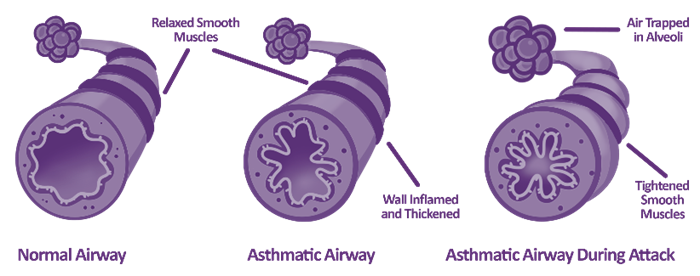
Image Credit: NObreath
Patients do not always feel the effects of their airway inflammation. If left without treatment, such inflammation can develop into further exacerbations, including asthma attacks.
Shifting towards prevention-focused care
The updated guidelines placed greater emphasis on treating the underlying inflammation rather than just the symptoms, signifying a significant shift in asthma care.2 The new guidance reflects:
- Asthma management that is more proactive
- Earlier anti-inflammatory treatment
- Prevention of exacerbations
- Less SABA reliance
The influence of this new guidance is clear: more than a million people now use combination inhalers that relieve symptoms and treat this underlying inflammation, marking considerable progress in asthma care.1
Why objective insight is important
In routine asthma reviews, patients are often asked about their symptoms; their ability to recall their experiences depends on memory. Usually, people with asthma minimize their symptoms, believing that what they experience is normal for their condition.3
While peak flow remains a useful tool in caring for asthma, it fails to provide a complete picture on its own. It assesses airflow obstruction as opposed to the inflammatory activity driving asthma, underscoring the need for objective assessment: superior asthma care begins with superior insight.
The role of FeNO testing
Fractional exhaled Nitric Oxide (FeNO) testing is an objective instrument used to assess inflammation of the airways.2 It is non-invasive and easy to carry out at the point of care. It also supports:
- Inhaled corticosteroid (ICS) decisions
- Evaluation of exacerbation risk
- Adherence assessment
- Monitoring
- Diagnosis
According to the most recent guidance, FeNO supports the shift towards more personalized, biomarker-driven asthma care.
The NObreath® FeNO device
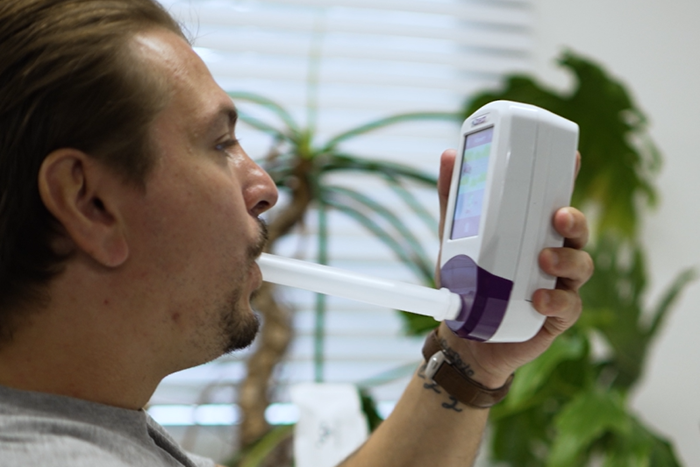
Image Credit: NObreath
The NObreath® is a contemporary FeNO device that is portable and easy to use, making it an ideal companion for primary care applications. With the NObreath®, healthcare professionals can assess a patient’s level of airway inflammation in a short time, allowing it to fit into a standard healthcare appointment.
Such objective insight enables clinicians to make sound decisions on the spot without requiring a follow-up appointment to discuss results. Combined with an extensive clinical history, a FeNO test with the NObreath® can help diagnose asthma and tailor treatments, improving asthma monitoring.
Precision medicine and the future of asthma care
Guidelines receive updates as technology and research progress to enhance patient care.2 The most recent guidelines from NICE/BTS/SIGN signified a shift towards:
- Precision medicine
- Biomarkers
- Personalized pathways
- Earlier intervention
- Better outcomes
The shift toward combination inhalers signifies a greater evolution in how asthma is understood and treated. Objective insight can provide a better understanding of what is happening beneath the surface, with FeNO testing supporting this insight and future asthma care.
As asthma care evolves, understanding airway inflammation will become increasingly critical to helping healthcare professionals deliver a more personalized and proactive approach.
References and further reading
- National Institute for Health and Care Excellence (2026) “I no longer feel asthmatic”: more than a million people now using new style inhalers, NICE. Available at: https://www.nice.org.uk/news/articles/-i-no-longer-feel-asthmatic-more-than-a-million-people-now-using-new-style-inhalers.
- National Institute for Health and Care Excellence (2024) Asthma: diagnosis, monitoring and chronic asthma management (BTS, NICE, SIGN). Available at: https://www.nice.org.uk/guidance/NG245.
- Bidad, N., et al. (2018). Understanding patients’ perceptions of asthma control: a qualitative study. European Respiratory Journal, 51(6), p.1701346. DOI: 10.1183/13993003.01346-2017. https://publications.ersnet.org/content/erj/51/6/1701346.abstract.
About NObreath
The NObreath® is a FeNO device by Bedfont® Scientific Ltd., which can be used to measure airway inflammation for the management and diagnosis of asthma.
Our mission is to help improve asthma diagnosis & management of adults and children worldwide through FeNO measuring. Our purpose is to make FeNO measuring more accessible globally, with the creation of an effective yet cost-efficient FeNO device and equally low cost consumables.
Sponsored Content Policy: News-Medical.net publishes articles and related content that may be derived from sources where we have existing commercial relationships, provided such content adds value to the core editorial ethos of News-Medical.Net which is to educate and inform site visitors interested in medical research, science, medical devices and treatments.