This article and associated images are based on a poster originally authored by Talia Gileadi, Tom Baladi, Jordi Chi, Mickaël El Hachmane, Siavash Kijani, Karl-Johan Leuchowius, Anders Dahlén, Marie Kalm, Anna Backmark, Fredrik Karlson, and Maxim Ivanov and presented at ELRIG Drug Discovery 2026 in affiliation with AstraZeneca.
This poster is being hosted on this website in its raw form, without modifications. It has not undergone peer review but has been reviewed to meet AZoNetwork's editorial quality standards. The information contained is for informational purposes only and should not be considered validated by independent peer assessment.

Abstract
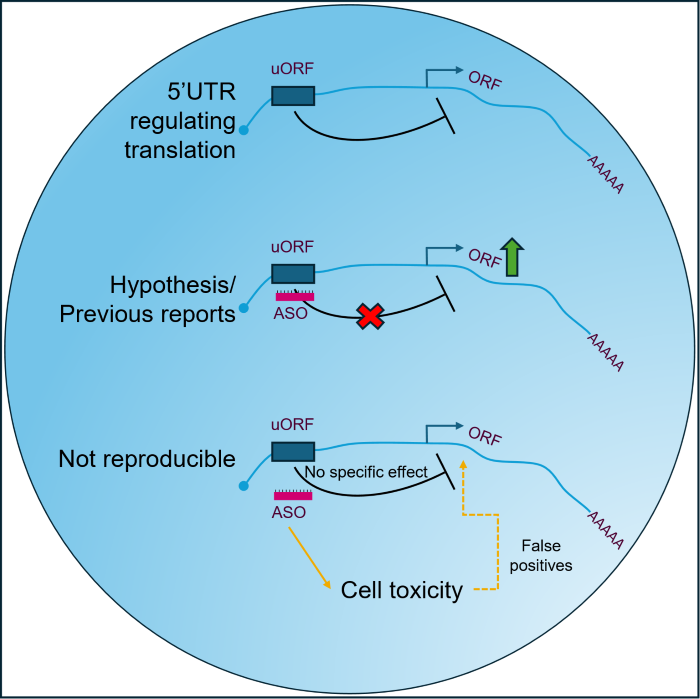
Image Credit: Talia Gileadi et al., in partnership with ELRIG (UK) Ltd.
Introduction
- Translation-enhancing oligonucleotides (TEOs) have been proposed as a novel class of therapeutic oligonucleotides.
- Previous studies have reported that TEOs can increase protein translation by targeting inhibitory uORFs, pORFs, or RNA stem loops within 5′ UTRs.1-4
- Studies of uORF-targeting TEOs have reported variable outcomes, including upregulation, downregulation, or no effect on protein expression, with differing proposed mechanisms.1-5
- This study evaluates published and newly designed TEOs, including a comprehensive library targeting the LMX1B5′ UTR.
Methods
Functional testing of uORFs and TEOs
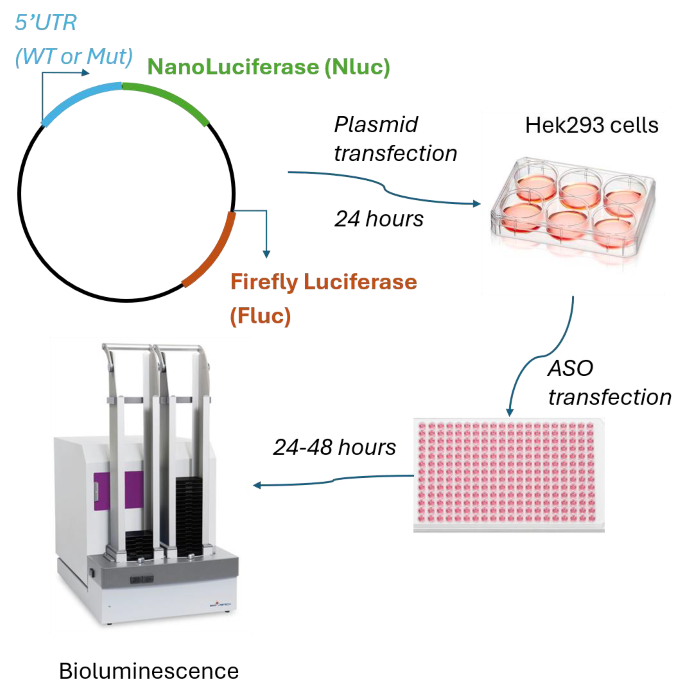
Image Credit: Talia Gileadi et al., in partnership with ELRIG (UK) Ltd.
TEO screen
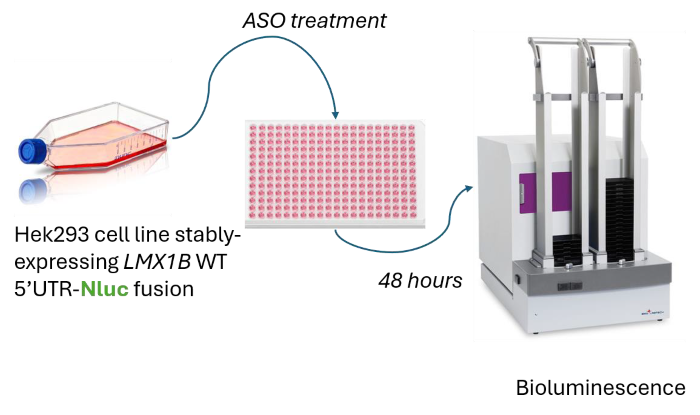
Image Credit: Talia Gileadi et al., in partnership with ELRIG (UK) Ltd.
Results
Testing of previously reported uORFs and translation-enhancing oligonucleotides
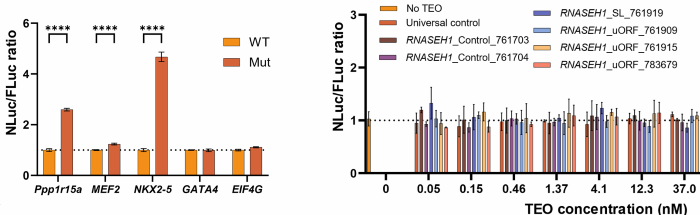
Figure 1. Effects of uORF start codon inactivation on reporter expression in constructs containing 5′ UTRs of genes. n = 6. Image Credit: Talia Gileadi et al., in partnership with ELRIG (UK) Ltd.
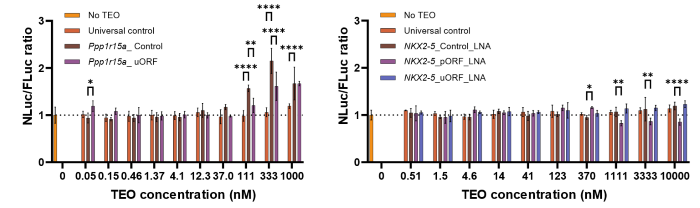
Figure 2. Effects of TEO treatment on reporter expression in constructs containing the WT 5′ UTR of genes. n = 3. Image Credit: Talia Gileadi et al., in partnership with ELRIG (UK) Ltd.
TEOs failed to show previously reported effects, with apparent increases in reporter activity also present in the scramble controls and coinciding with a drop in cell confluency.
Targeting the 5′ UTR of LMX1B with translation-enhancing oligonucleotides
The human LMX1B gene is predicted to contain four uORFs and a stable stem loop (SL).
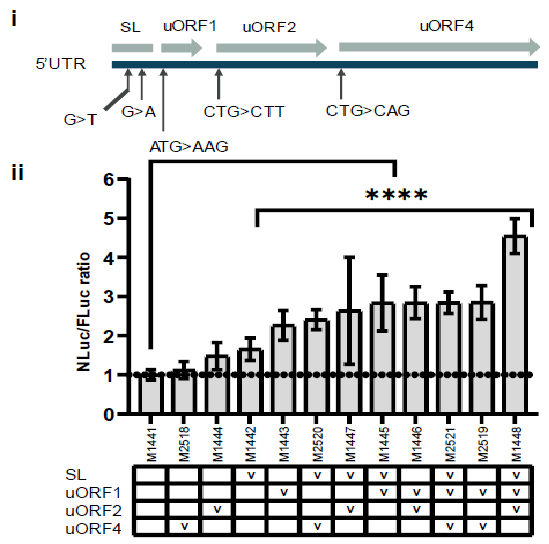
Figure 3. Functional validation of the inhibitory elements in the 5′ UTR of LMX1B. n = 4-8. Image Credit: Talia Gileadi et al., in partnership with ELRIG (UK) Ltd.
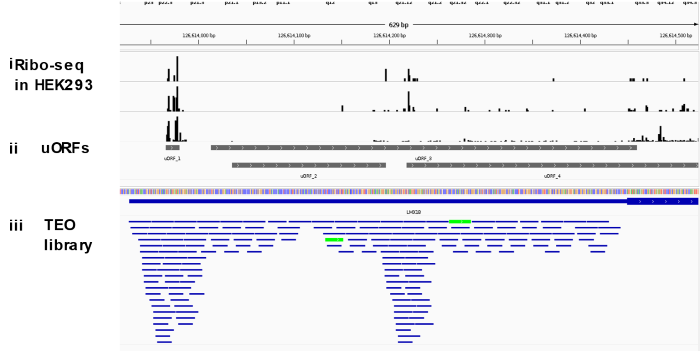
Figure 4. Design of a TE library to explore the entire 5′ UTR. Image Credit: Talia Gileadi et al., in partnership with ELRIG (UK) Ltd.
LMX1B TEOs hits identified but were associated with cell toxicity
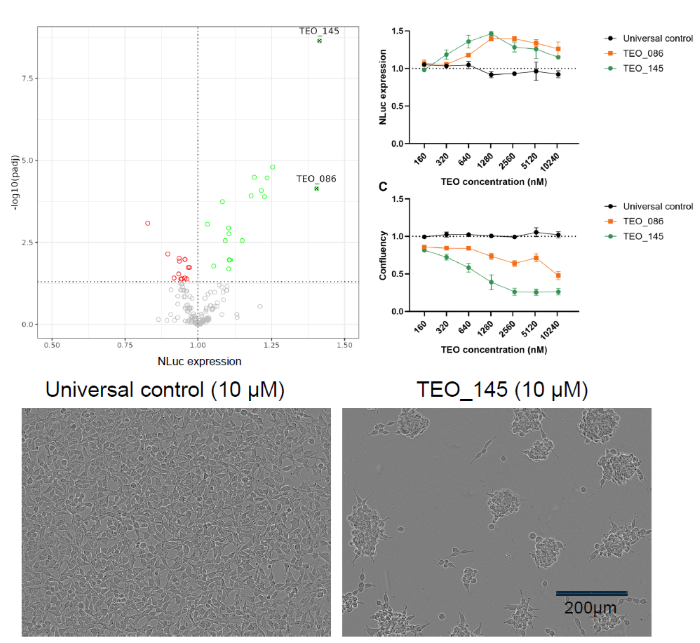
Figure 5. Testing of putative TEOs of LMX1B. n = 2. Image Credit: Talia Gileadi et al., in partnership with ELRIG (UK) Ltd.
Apparent reporter upregulation may be caused by non-canonical oligo interactions
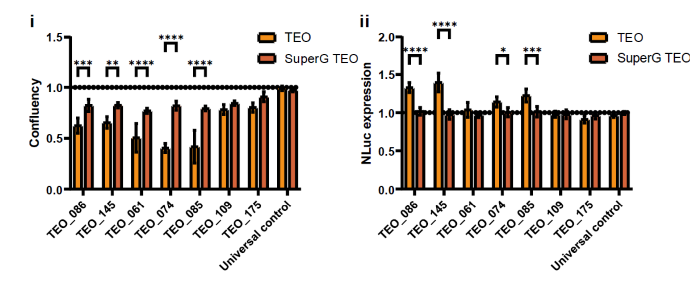
Figure 6. Modulating TEO effects using substitution with Super G modified bases. n = 4. Image Credit: Image courtesy of Talia Gileadi et al., in partnership with ELRIG (UK) Ltd.
Reporter activity and cell confluency strongly correlated with oligo guanine content. Replacing all guanines with “super ” bases, which preserve G–C pairing while preventing non-canonical guanine structures, rescued cell confluency but also abolished reporter upregulation, suggesting a non-specific assay artifact.
Conclusions
- Reported TEO-mediated activation was not reproduced or was nonspecific.
- Apparent LMX1B reporter upregulation correlated with reduced viability and was likely an artifact.
- The TEO approach remains controversial and further research is warranted before using TEOs in the drug development field.
References
- Liang, X.H., et al. (2016) Translation efficiency of mRNAs is increased by antisense oligonucleotides targeting upstream open reading frames, Nature Biotechnology, 34(8), pp. 875–880. DOI:10.1038/nbt.3589. https://www.nature.com/articles/nbt.3589.
- Liang, X.H., et al. (2017) Antisense oligonucleotides targeting translation inhibitory elements in 5′ UTRs can selectively increase protein levels, Nucleic Acids Research, 45(16), pp. 9528–9546. DOI:10.1093/nar/gkx632. https://academic.oup.com/nar/article/45/16/9528/3984484.
- Hedaya, O.M., et al. (2023) Secondary structures that regulate mRNA translation provide insights for ASO-mediated modulation of cardiac hypertrophy, Nature Communications, 14(1), 6166. DOI:10.1038/s41467-023-41799-1. https://www.nature.com/articles/s41467-023-41799-1.
- Kidwell, A., et al. (2023) Translation rescue by targeting Ppp1r15a through its upstream open reading frame in sepsis-induced acute kidney injury in a murine model, Journal of the American Society of Nephrology, 34(2), pp. 220–240. DOI:10.1681/ASN.2022060644. https://www.ovid.com/jnls/jasn/abstract/10.1681/asn.2022060644~translation-rescue-by-targeting-ppp1r15a-through-its?redirectionsource=fulltextview.
- Ahlskog, N., et al. (2025) uORF-targeting steric block antisense oligonucleotides do not reproducibly increase RNASEH1 expression, Molecular Therapy: Nucleic Acids, 36(1), 102406. DOI:10.1016/j.omtn.2024.102406. https://www.cell.com/molecular-therapy-family/nucleic-acids/fulltext/S2162-2531(24)00293-2.
About AstraZeneca
AstraZeneca is a global, science-led patient-focused pharmaceutical company that focuses on transforming the future of healthcare by unlocking the power of what science can do for people, society and the planet.
Science defines who we are. We push the boundaries of science to deliver life-changing medicines. It is why we come to work every day and is part of our DNA. We are committed to operating sustainably, in a way that recognises the interconnection between business growth, the needs of society and the limitations of our planet. We want the way we work to be inclusive, open and collaborative. This approach runs through all that we do.
We focus on three main therapy areas – Oncology, BioPharmaceuticals and Rare Disease.
Everything we do is aimed at enhancing the lives of people with disease and illness. Decisions we make across the patient experience are informed by what people tell us matters most to them. Our teams also work alongside the world's leading academic and biotech research institutions to stimulate innovation and evaluate emerging technologies such as Modified RNA and CRISPR genome editing. AstraZeneca operates in over 100 countries and its innovative medicines are used by millions of patients worldwide.
About ELRIG (UK) Ltd.
The European Laboratory Research & Innovation Group (ELRIG) is a leading European not-for-profit organization that exists to provide outstanding scientific content to the life science community. The foundation of the organization is based on the use and application of automation, robotics and instrumentation in life science laboratories, but over time, we have evolved to respond to the needs of biopharma by developing scientific programmes that focus on cutting-edge research areas that have the potential to revolutionize drug discovery.
Comprised of a global community of over 12,000 life science professionals, participating in our events, whether it be at one of our scientific conferences or one of our networking meetings, will enable any of our community to exchange information, within disciplines and across academic and biopharmaceutical organizations, on an open access basis, as all our events are free-of-charge to attend!
Our values
Our values are to always ensure the highest quality of content and that content will be made readily accessible to all, and that we will always be an inclusive organization, serving a diverse scientific network. In addition, ELRIG will always be a volunteer led organization, run by and for the life sciences community, on a not-for-profit basis.
Our purpose
ELRIG is a company whose purpose is to bring the life science and drug discovery communities together to learn, share, connect, innovate and collaborate, on an open access basis. We achieve this through the provision of world class conferences, networking events, webinars and digital content.
Sponsored Content Policy: News-Medical.net publishes articles and related content that may be derived from sources where we have existing commercial relationships, provided such content adds value to the core editorial ethos of News-Medical.net, which is to educate and inform site visitors interested in medical research, science, medical devices and treatments.
Last Updated: Nov 3, 2026
 Oxford University and AstraZeneca release their COVID-19 vaccine results