This article and associated images are based on a poster originally authored by Gemma Everitt, Monica Patel, Rhys Fox, Ellisha Cookson, Farhan Hussain, Haoran Tang, Navin Rathna Kumar, Jonathan Orme, Poppy Winlow, Lewis Ward, James Robinson, and Ultan McDermott and presented at ELRIG Drug Discovery 2026 in affiliation with Global Cell Bank, Mechanistic Biology and Profiling and Oncology R&D.
This poster is being hosted on this website in its raw form, without modifications. It has not undergone peer review but has been reviewed to meet AZoNetwork's editorial quality standards. The information contained is for informational purposes only and should not be considered validated by independent peer assessment.

Abstract
Patient-derived organoids (PDOs) offer physiologically relevant models that can bridge the translational gap between preclinical research and patient outcomes. To increase the accessibility of these models and enable their routine use across drug discovery programs, the Global Cell Bank has established an integrated organoid capability encompassing model acquisition, in-house derivation, banking, quality control, assay development and high-throughput screening.
This initiative has expanded the availability of organoid models from multiple tissue types, including lung, pancreatic, colorectal, gastric and prostate cancers, while introducing scalable workflows for culture, cryopreservation and distribution.
A key component of this capability has been the development of patient-derived lung tumor organoids through a multi-year collaboration with the Royal Papworth Hospital. Matched normal and tumor tissue samples have been processed under optimized derivation and culture conditions to generate clinically relevant models that represent patient disease biology.
These models have been combined with genomic characterization and banking strategies to improve long-term accessibility for research teams.
In parallel, organoid screening workflows have been established through assay miniaturization, assay-ready cryopreserved formats, automation, and multiparametric profiling approaches. These capabilities support responder-driven compound profiling, combination screening, and drug-resistance investigations.
As an example, pancreatic cancer organoid models have been used to explore conditioning strategies for FOLFIRINOX resistance, while lung cancer organoids are supporting programs focused on mechanisms of acquired therapeutic resistance.
Together, these developments demonstrate how a coordinated organoid capability can provide scalable access to clinically relevant patient-derived models, supporting target discovery, translational biology, drug screening, and the identification of safer and more effective medicines for patients.
Patient-derived organoids (PDOs)
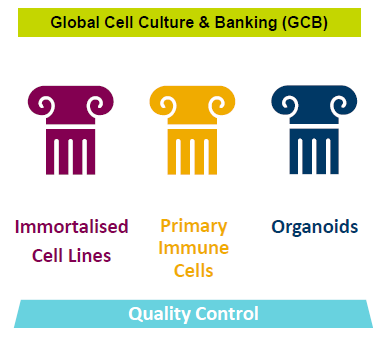
Image Credit: Image courtesy of Gemma Everitt et al., in partnership with ELRIG (UK) Ltd.
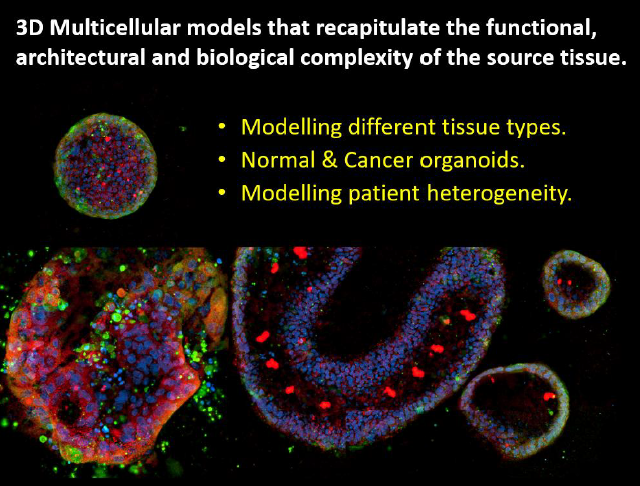
Image Credit: Image courtesy of Gemma Everitt et al., in partnership with ELRIG (UK) Ltd.
Royal Papworth Hospital collaboration and lung tumor organoid project
Workflow 2021–24
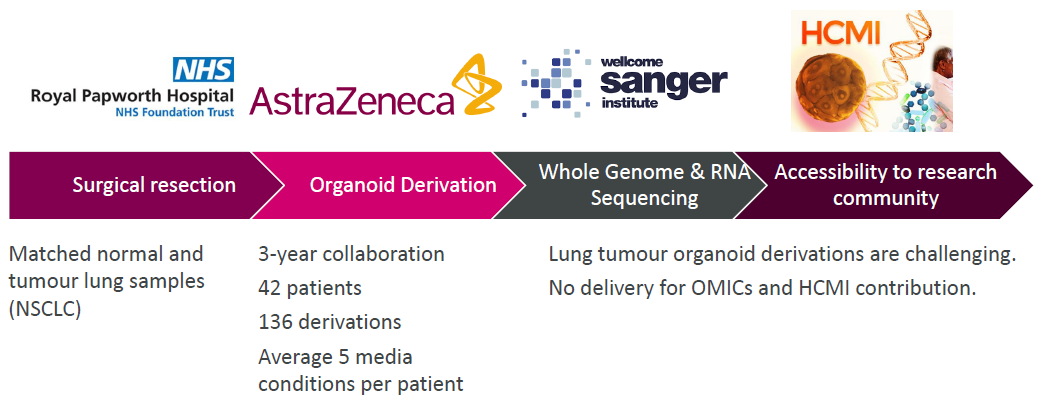
Image Credit: Image courtesy of Gemma Everitt et al., in partnership with ELRIG (UK) Ltd.
Outcomes
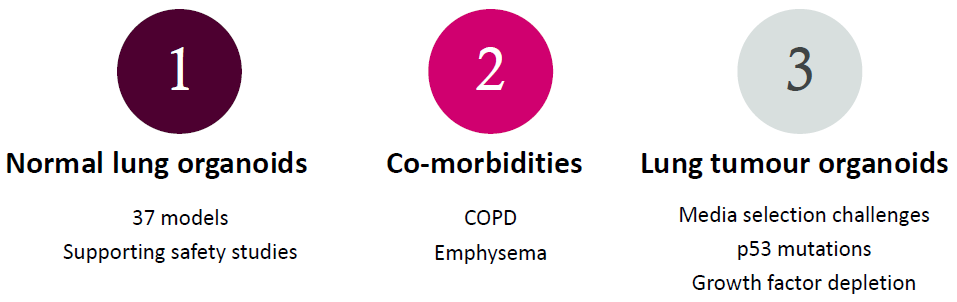
Image Credit: Image courtesy of Gemma Everitt et al., in partnership with ELRIG (UK) Ltd.
PDO applications at AstraZeneca
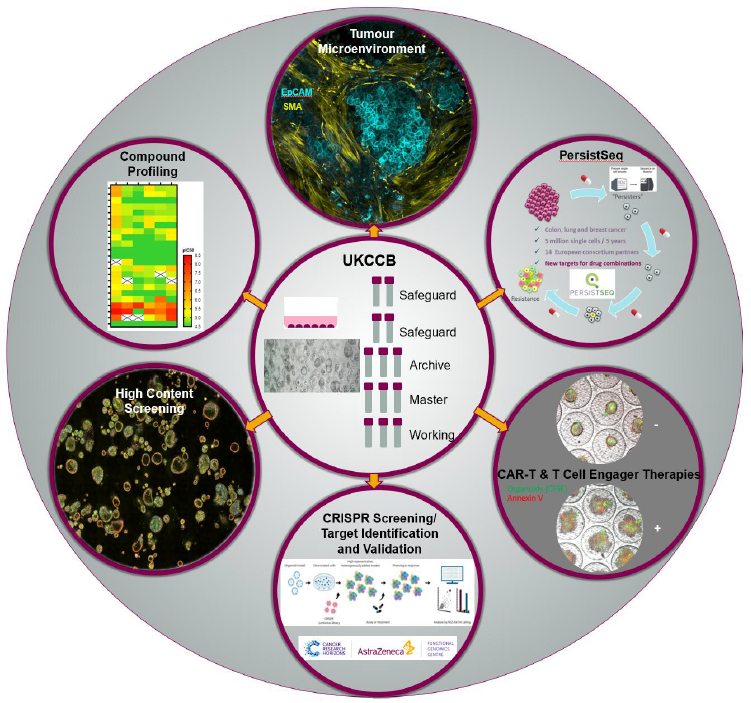
Image Credit: Image courtesy of Gemma Everitt et al., in partnership with ELRIG (UK) Ltd.
Organoid assay-ready plates
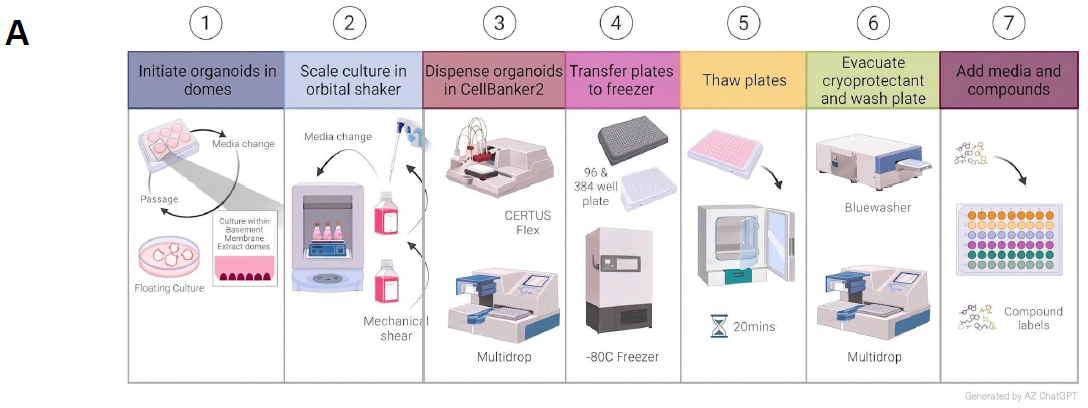
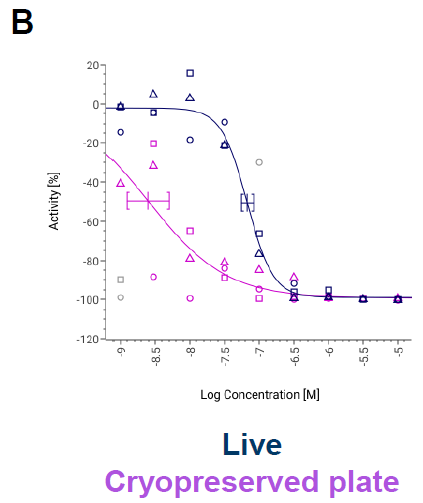
A) Workflow to generate cryopreserved organoid assay-ready plates. B) Live and cryopreserved assay-ready plates of colorectal cancer organoids were treated with a dose range of drug for seven days, and cell viability was measured with a CellTitre-Glo luminescence assay endpoint. Image Credit: Image courtesy of Gemma Everitt et al., in partnership with ELRIG (UK) Ltd.
High-throughput compound profiling
Organoid recovery from assay-ready cryovials and plates has enabled up to 30 organoid plates to be processed per screen. This helps researchers identify the most sensitive models and the strongest synergistic partners, informing line of sight (LOS). This capability has accelerated banking-to-assay end-point reporting times, thereby increasing overall compound profiling delivery.
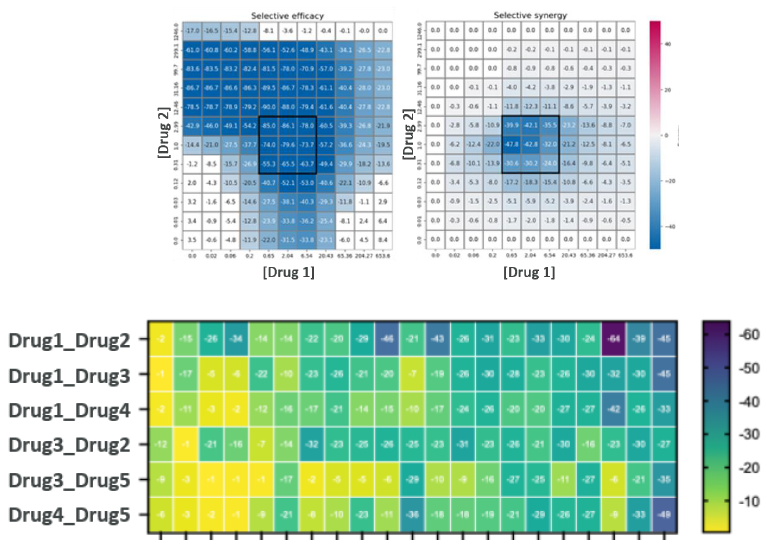
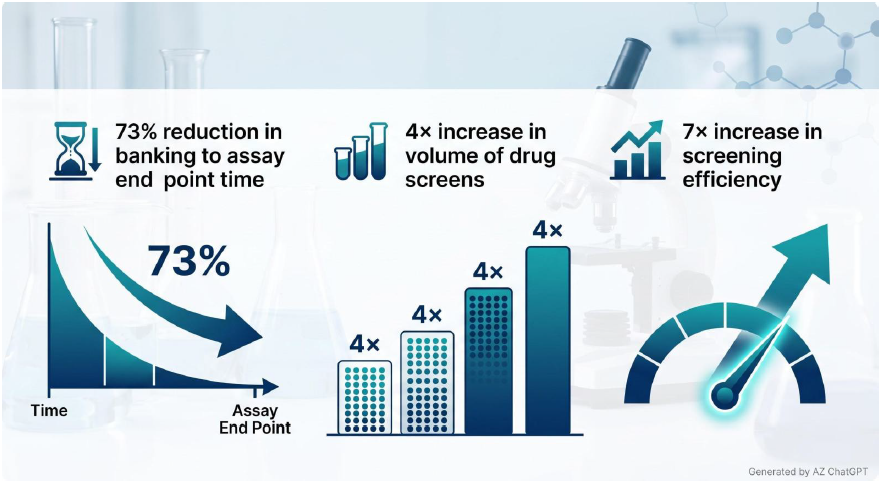
Image Credit: Image courtesy of Gemma Everitt et al., in partnership with ELRIG (UK) Ltd.
Mechanisms of drug resistance in cancer
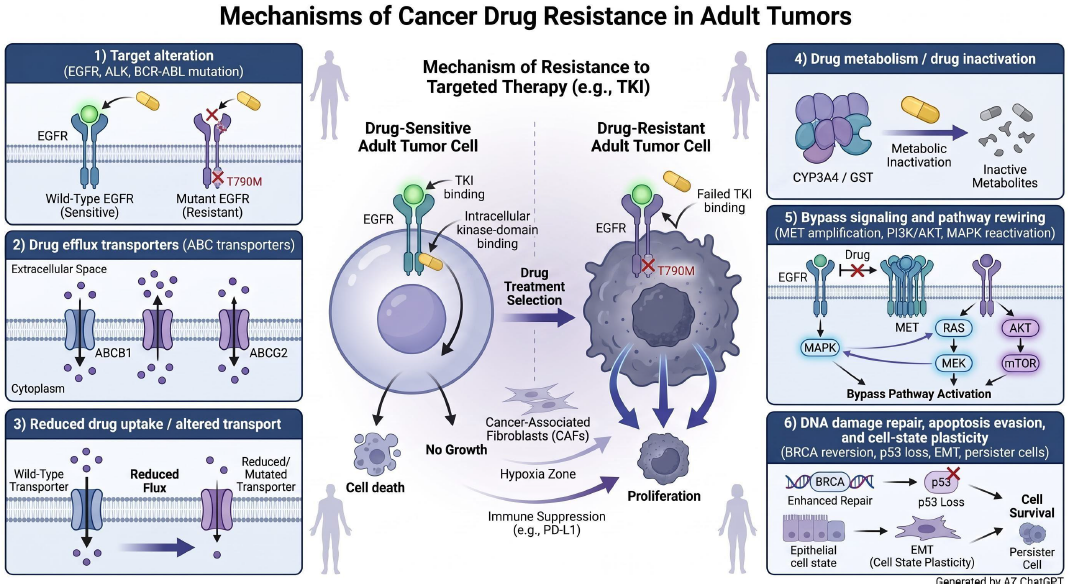
Image Credit: Image courtesy of Gemma Everitt et al., in partnership with ELRIG (UK) Ltd.
FOLFIRINOX treatment in PDAC organoids
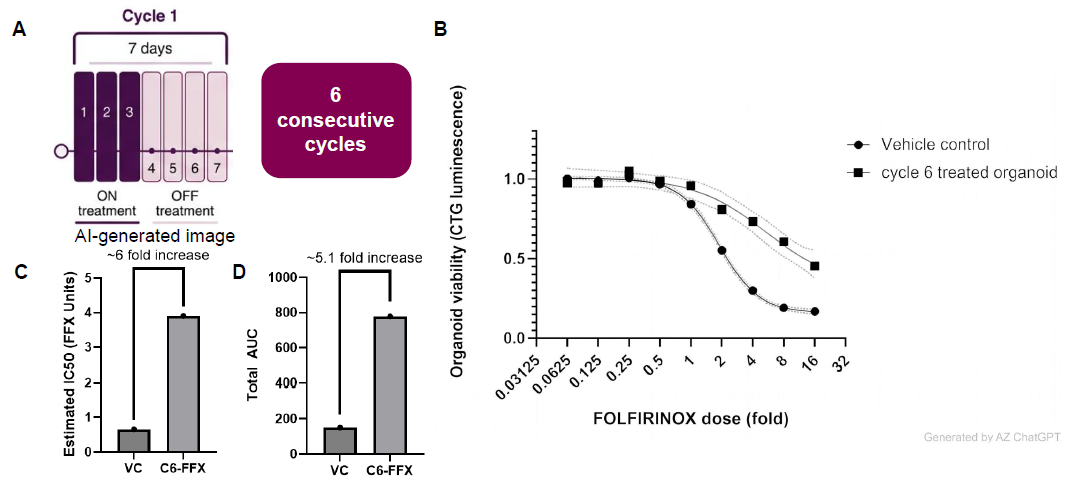
A) Treatment-naïve pancreatic cancer organoids were exposed to a regimen of FOLFIRINOX (FFX) treatment (0.25 uM Oxaliplatin, 2 uM 5-fluorouracil, and 6.25 nM SN-38 = 1x), consisting of six weekly cycles. B) The resulting culture and vehicle control (VC) population were re-challenged to a FOLFIRINOX dose range (nine-point, two-fold dilution series of 1x) for 72 hours, and cell viability was measured with a CellTitre-Glo luminescence (Lum) assay endpoint. Fold-change differences in C) the estimated IC50 values and D) the areas under the curve (AUCs) were determined. Image Credit: Image courtesy of Gemma Everitt et al., in partnership with ELRIG (UK) Ltd.
Conclusions
- The Global Cell Bank is supporting several drug discovery projects at AstraZeneca through the supply of patient-derived organoid models.
- Assay-ready cryopreserved organoids enable higher-throughput screening, although adequate post-thaw recovery is essential.
- Lung tumor organoid derivation remains challenging, particularly where culture conditions favor normal epithelial cells.
- Repeated FOLFIRINOX exposure increases the IC50 in rechallenged pancreatic cancer organoids, potentially providing a clinically relevant drug-conditioned in vitro model.
About AstraZeneca
AstraZeneca is a global, science-led patient-focused pharmaceutical company that focuses on transforming the future of healthcare by unlocking the power of what science can do for people, society and the planet.
Science defines who we are. We push the boundaries of science to deliver life-changing medicines. It is why we come to work every day and is part of our DNA. We are committed to operating sustainably, in a way that recognizes the interconnection between business growth, the needs of society and the limitations of our planet. We want the way we work to be inclusive, open and collaborative. This approach runs through all that we do.
We focus on three main therapy areas – Oncology, BioPharmaceuticals and Rare Disease.
Everything we do is aimed at enhancing the lives of people with disease and illness. Decisions we make across the patient experience are informed by what people tell us matters most to them. Our teams also work alongside the world's leading academic and biotech research institutions to stimulate innovation and evaluate emerging technologies such as Modified RNA and CRISPR genome editing. AstraZeneca operates in over 100 countries and its innovative medicines are used by millions of patients worldwide.
About ELRIG (UK) Ltd.
The European Laboratory Research & Innovation Group (ELRIG) is a leading European not-for-profit organization that exists to provide outstanding scientific content to the life science community. The foundation of the organization is based on the use and application of automation, robotics and instrumentation in life science laboratories, but over time, we have evolved to respond to the needs of biopharma by developing scientific programs that focus on cutting-edge research areas that have the potential to revolutionize drug discovery.
Comprised of a global community of over 12,000 life science professionals, participating in our events, whether it be at one of our scientific conferences or one of our networking meetings, will enable any of our community to exchange information, within disciplines and across academic and biopharmaceutical organizations, on an open access basis, as all our events are free-of-charge to attend!
Our values
Our values are to always ensure the highest quality of content and that content will be made readily accessible to all, and that we will always be an inclusive organization, serving a diverse scientific network. In addition, ELRIG will always be a volunteer led organization, run by and for the life sciences community, on a not-for-profit basis.
Our purpose
ELRIG is a company whose purpose is to bring the life science and drug discovery communities together to learn, share, connect, innovate and collaborate, on an open access basis. We achieve this through the provision of world class conferences, networking events, webinars and digital content.
Sponsored Content Policy: News-Medical.net publishes articles and related content that may be derived from sources where we have existing commercial relationships, provided such content adds value to the core editorial ethos of News-Medical.net, which is to educate and inform site visitors interested in medical research, science, medical devices and treatments.
Last Updated: Nov 12, 2026
 AstraZeneca collaborates with Emulate to integrate Organs-on-Chips technology into drug development labs