Introduction
What are neuropeptides?
How neuropeptides shape emotion, pain, and behavior
Neuropeptides in disease
Conclusions
References
Further reading
From mood and memory to pain and appetite, neuropeptides reveal how tiny chemical signals can have wide-reaching effects on human health.
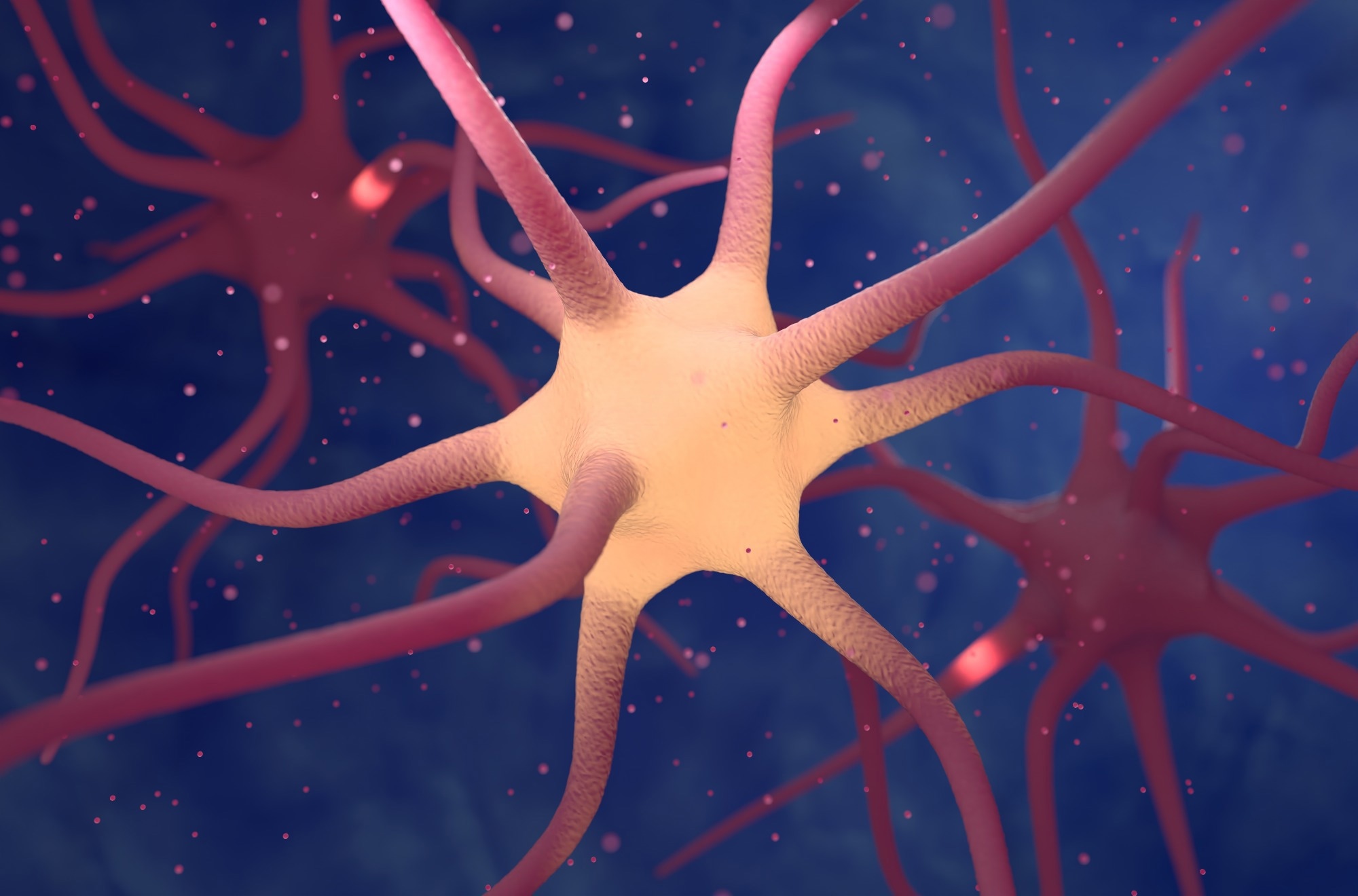 Image Credit: Nemes Laszlo / Shutterstock.com
Introduction
Within the brain, neurons produce neuropeptides to regulate emotion, pain, metabolism, and the immune response. Rather than acting only locally, neuropeptides can signal through synapses, diffuse through extracellular space, or act as circulating hormone-like messengers, producing effects that often last from seconds to minutes.2,3
What are neuropeptides?
Neuropeptides are synthesized within the cell bodies of neurons as large precursor proteins that are transported to the endoplasmic reticulum and the Golgi apparatus, where they are enzymatically cleaved and packaged into large granular vesicles (LGVs).2 As LGVs are transported down the axon to the terminals, further post-translational modifications lead to the production of corresponding active peptides.2
Neuropeptides are involved in a wide range of physiological functions, including mood regulation, stress adaptation, metabolic homeostasis, nociception, and immune system modulation. They are structurally diverse, often present at low endogenous concentrations, and can be difficult to measure because they undergo rapid degradation and multiple post-translational modifications.2 Within the nervous system, neuropeptides control ion channel activity and expression, synaptic scaling, inhibitory synaptic activity, and neurotransmitter release factors to support neurological function.
Mature neuropeptides elicit effects by binding to G-protein-coupled receptors (GPCRs) on target cells to initiate intracellular second-messenger cascades.3 Some neuropeptides can also act through peptide-gated or peptide-sensitive ion channels, although GPCR signaling remains the dominant mechanism described for most mammalian neuropeptides.2,3
Within the central nervous system (CNS), neuropeptides are highly concentrated in the brain’s limbic and hypothalamic regions, wherein they regulate autonomic and endocrine functions.2 In the peripheral nervous system (PNS), neuropeptides are localized within sensory neurons and sympathetic nerve terminals to enable their regulation of vascular tone, immune response, and gastrointestinal motility.2
How neuropeptides shape emotion, pain, and behavior
Functional neuropeptide analyses indicate a strong association between the activity of neuropeptides such as oxytocin and corticotropin-releasing hormone (CRH) and phenotypic emotion and mood responses. The release of oxytocin promotes social bonding, trust, and anxiolytic effects that counterbalance the anxiogenic or stress-inducing properties of vasopressin and CRH.1,4 The interplay between neuropeptide and mood regulation has clinical implications, as demonstrated by greater salivary oxytocin levels in patients with major depressive disorder (MDD) as compared to age- and sex-matched healthy individuals.4
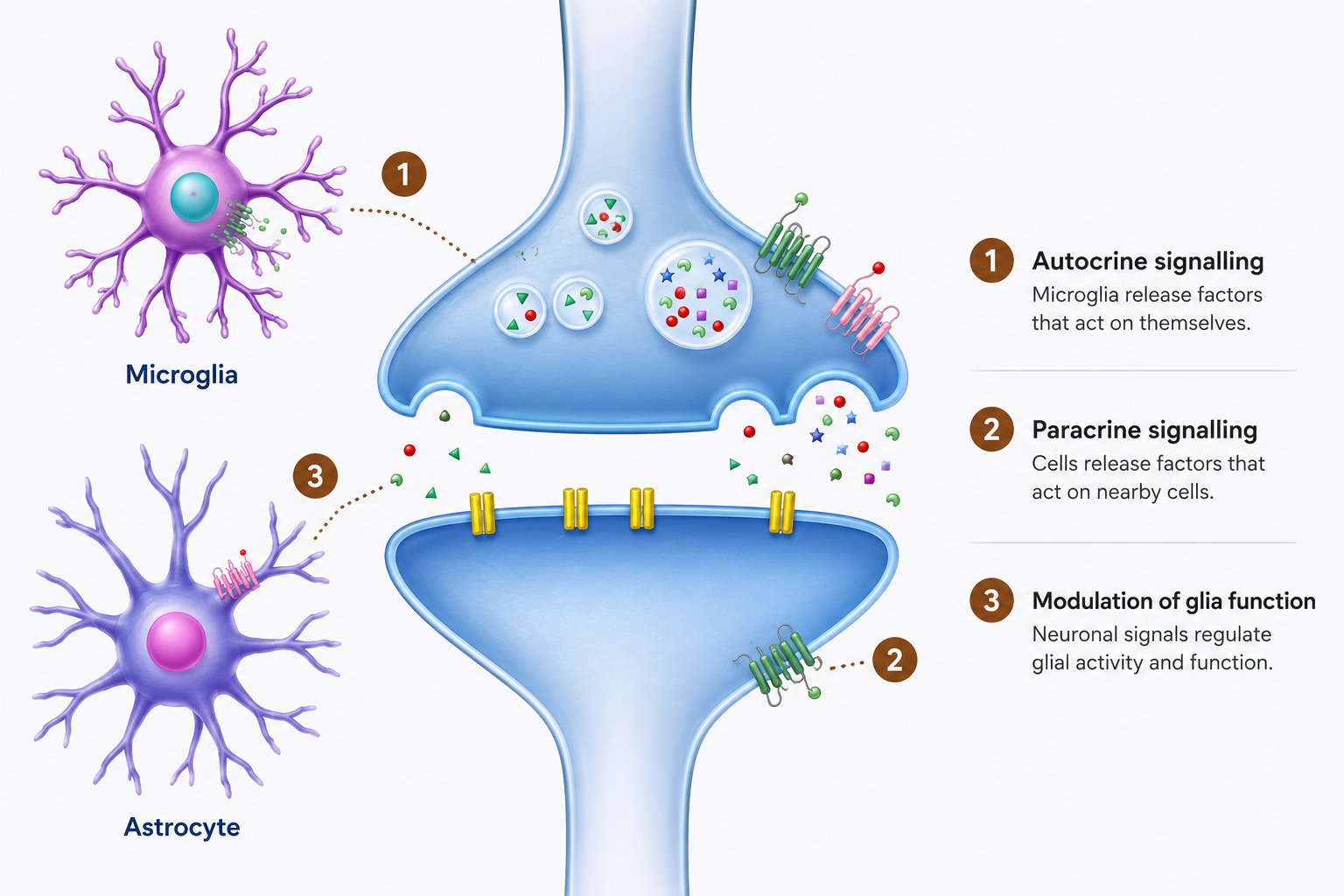
Schematic illustration of neuron-glia communication pathways. Neurons release signaling molecules into the synaptic environment, where they can act through autocrine signaling (1) on the releasing cell, paracrine signaling (2) on nearby cells, and modulation of glial function (3) through interactions with microglia and astrocytes. These bidirectional signaling mechanisms help regulate synaptic activity, neuroinflammation, cellular homeostasis, and neural network function.1
Pro-nociceptive peptides like substance P and calcitonin gene-related peptide (CGRP) are synthesized and released from primary afferent fibers in the spinal cord dorsal horn to modulate neural pain transmission thresholds and induce neurogenic inflammation. Comparatively, endogenous opioids like beta-endorphins and enkephalins bind to mu, delta, and kappa opioid receptors to suppress nociceptive signaling and provide intrinsic analgesia.4
Vasoactive intestinal peptide (VIP) regulates both gastrointestinal function and circadian rhythm, with genetic abnormalities of VIP receptor reported in association with neurological effects like microcephaly and autism spectrum disorder (ASD). Neuropeptide-related genetic variants, including variants in VIPR1, OXTR, CCK, GALR1, and related genes, have also been investigated for suggestive associations with verbal learning and memory in humans.5 Like VIP, neuropeptide Y and substance P also act within the gastrointestinal tract to regulate immune responses and modulate intestinal motility.
Beyond their established roles in neuromodulation, recent evidence suggests that orexigenic neuropeptides, such as neuropeptide Y (NPY) and agouti-related peptide, stimulate appetite and reduce energy expenditure.6 In contrast, anorexigenic signals derived from pro-opiomelanocortin (POMC) bind to melanocortin receptors to induce satiety and reduce subsequent food intake.6
 Image Credit: Ilya Lukichev / Shutterstock.com
Neuropeptides in disease
Abnormal neuropeptide expression contributes to various neurological diseases by directly interfering with the activity of specific neurons. For example, NPY, oxytocin, and endogenous opioid signaling dysfunction are associated with severe depression, generalized anxiety, schizophrenia, and post-traumatic stress disorder (PTSD).1 Neuropeptide systems are also being studied as therapeutic targets for neurological disease, although challenges such as blood-brain barrier delivery, peptide stability, and receptor specificity remain important limitations.1 Opioid neuropeptides are also involved in metabolic processes that regulate insulin, leptin, and glucose responses, which may help explain links between stress, reward signaling, appetite, and obesity-related metabolic dysfunction.
Amyloid β is not a classical signaling neuropeptide, but it illustrates how peptide processing and clearance can influence neurological disease. The amyloid β peptide is continuously produced and cleared throughout an individual’s lifetime. However, altered expression of the apolipoprotein E4 (APOE4) gene can reduce the clearance of amyloid β protein, leading to its accumulation and the manifestation of Alzheimer’s disease.
Neuropeptides like calcitonin gene-related peptide (CGRP), substance P, and vasopressin contribute to pain perception by upregulating excitatory responses in the central amygdala. In contrast, neuropeptide S-, somatostatin-, and oxytocin-expressing neurons downregulate nociceptive tone, thereby reducing pain sensation. In fibromyalgia, a chronic and systemic form of musculoskeletal pain, elevated cerebrospinal fluid levels of substance P and downregulation of the mu-opioid receptor have been implicated in central sensitization, which phenotypically manifests as pervasive allodynia and hyperalgesia in these patients.4
Conclusions
Neuropeptides are critical mediators of both health and disease through their involvement across neurological, metabolic, and immune processes. Emerging strategies targeting these pathways, including engineered peptides, receptor-specific drugs, and targeted delivery systems, are being evaluated as highly specific therapeutic interventions for chronic disease, though clinical translation depends on improving delivery, stability, and target selectivity.
References
- Yeo, X. Y., Cunliffe, G., Ho, R. C., et al. (2022). Potentials of Neuropeptides as Therapeutic Agents for Neurological Diseases. Biomedicines 10(2); 343. DOI: 10.3390/biomedicines10020343. https://pmc.ncbi.nlm.nih.gov/articles/PMC8961788/
- DeLaney, K., Buchberger, A. R., Atkinson, L., et al. (2018). New techniques, applications and perspectives in neuropeptide research. Journal of Experimental Biology 221(3). DOI: 10.1242/jeb.151167. https://pmc.ncbi.nlm.nih.gov/articles/PMC5818036/
- Guillaumin, M. C. C., & Burdakov, D. (2021). Neuropeptides as Primary Mediators of Brain Circuit Connectivity. Frontiers in Neuroscience 15. DOI: 10.3389/fnins.2021.644313. https://www.frontiersin.org/journals/neuroscience/articles/10.3389/fnins.2021.644313/full
- Siracusa, R., Paola, R. D., Cuzzocrea, S., & Impellizzeri, D. (2021). Fibromyalgia: Pathogenesis, Mechanisms, Diagnosis and Treatment Options Update. International Journal of Molecular Sciences, 22(8), 3891. DOI: 10.3390/ijms22083891. https://www.mdpi.com/1422-0067/22/8/3891
- Avgan, N., Sutherland, H. G., Lea, R. A., et al. (2023). Association Study of a Comprehensive Panel of Neuropeptide-Related Polymorphisms Suggest Potential Roles in Verbal Learning and Memory. Genes 15(1); 30. DOI: 10.3390/genes15010030. https://www.mdpi.com/2073-4425/15/1/30
- Theodorakis, N., & Nikolaou, M. (2025). The Human Energy Balance: Uncovering the Hidden Variables of Obesity. Diseases 13(2); 55. DOI: 10.3390/diseases13020055. https://www.mdpi.com/2079-9721/13/2/55
Further Reading
Last Updated: Jun 30, 2026