Introduction
Mitochondrial function in cellular energy production
Mitochondria in disease pathogenesis
Emerging strategies to improve mitochondrial health
Future directions in mitochondrial research
References
Further reading
Mitochondria sustain cellular energy production while coordinating metabolism, redox signaling, quality control, and stress responses that influence aging and healthspan. Age-related disruption of mitochondrial DNA, dynamics, mitophagy, and nutrient sensing contributes to disease, while emerging interventions remain promising but largely unproven for extending human lifespan.
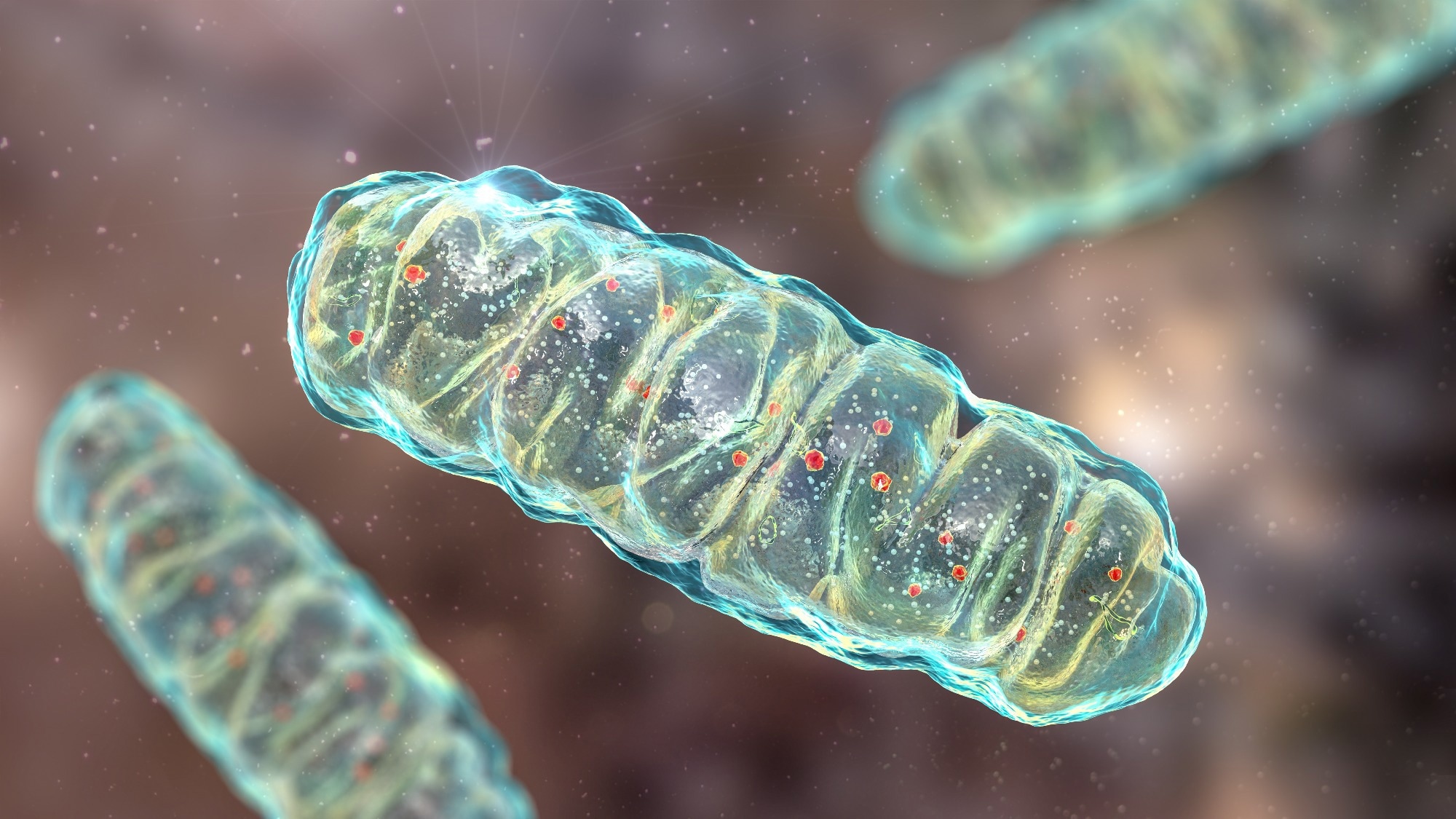 Image Credit: Kateryna Kon / Shutterstock.com
Introduction
This article explores how mitochondrial health influences energy production, aging, and longevity, as well as emerging strategies being investigated to preserve mitochondrial function and support healthy aging. Longevity refers to lifespan, whereas healthspan describes the period of life spent with preserved function and without major age-related disease.3,5 Mitochondria are also dynamic signaling and quality-control hubs whose networks continually undergo fission, fusion, transport, and selective removal.1,3,5 Age-related mitochondrial changes may be drivers, consequences or initially compensatory responses to cellular stress, with their effects varying by tissue, timing and metabolic context.1,4,5
Mitochondrial function in cellular energy production
The best-known function of mitochondria is to generate adenosine triphosphate (ATP), which provides the energy required for essential cellular functions. During oxidative phosphorylation, electrons derived from nutrients pass through the electron transport chain in the inner mitochondrial membrane, creating a proton gradient that ATP synthase uses to produce ATP.3,5 In addition to ATP production, mitochondria also regulate metabolism, redox balance, calcium homeostasis, metabolite production and communication with other organelles, as well as cell signalling and survival.1,3,5
Reactive oxygen species (ROS) are normal byproducts of bioenergetic processes that occur within the mitochondria. At physiological levels, ROS participate in redox signaling - the reversible regulation of cellular processes through changes in oxidation state - and stress adaptation.3,4 When ROS production becomes excessive or antioxidant and repair systems are overwhelmed, prolonged oxidative stress can damage proteins, lipids, and nucleic acids, including mitochondrial DNA (mtDNA).3,4,5 Mild mitochondrial stress can sometimes activate protective responses, a phenomenon known as mitochondrial hormesis, whereas sustained or severe stress is generally harmful.1,3,4
Unlike nuclear DNA, mtDNA is packaged into structures called nucleoids and supported by repair pathways, particularly base-excision repair, but remains located near the electron transport chain, making it particularly vulnerable to mutations and deletions that accumulate over time.3,5 These age-related alterations can, when sufficiently abundant or clonally expanded, affect mitochondrial structure and function, reducing the efficiency of oxidative phosphorylation and ATP production.3,5 Mutated and normal mtDNA can coexist within a cell, and functional impairment may appear only after the proportion of affected mtDNA exceeds a tissue-specific threshold.5 Aging is also associated with disruptions in mitochondrial quality control processes, including mitochondrial biogenesis, dynamics, cristae remodeling, and the removal of damaged organelles through mitophagy.1,3,5
Dynamin-related protein 1 (DRP1) promotes mitochondrial fission, while mitofusins 1 and 2 (MFN1 and MFN2) mediate outer-membrane fusion and optic atrophy 1 (OPA1) regulates inner-membrane fusion and cristae organisation.1,5 Fusion can support content mixing and adaptation to stress, whereas fission enables mitochondrial transport and the segregation of damaged material for removal. Neither a fused nor a fragmented network is universally beneficial because the outcome depends on cellular context.1
Mitochondria in disease pathogenesis
Mitochondria are crucial for sustained energy production, metabolic regulation, and cellular signaling. Impairments in mitochondrial quality control, defects in mitophagy, increased oxidative stress, and mutations that disrupt mitochondrial function are associated with, and in some settings contribute to, the development of neurodegenerative diseases like Alzheimer's and Parkinson's disease, as well as cardiovascular disease, metabolic syndrome, insulin resistance, and type 2 diabetes.3,4,5 These relationships are influenced by the affected tissue, the severity and duration of dysfunction, and the cell's remaining capacity to compensate.3,5
Mitophagy normally helps prevent this damage by selectively removing impaired mitochondria. Loss of membrane potential can stabilize PINK1 on the mitochondrial surface and recruit the Parkin protein, while receptors such as BNIP3, NIX, and FUNDC1 provide alternative routes for directing mitochondria to the autophagy system.3,5 Inherited defects involving PINK1 or Parkin are linked to familial forms of Parkinson's disease, although most Parkinson's disease is not caused by these mutations.3,5
In the heart, reduced mitochondrial efficiency limits ATP production required for continuous contraction, while disturbed redox and calcium regulation can further impair cardiac function, contributing to cardiac aging and cardiovascular disease.4,5 Similarly, reduced mitochondrial function in metabolic tissues can directly affect glucose and lipid metabolism, thereby contributing to insulin resistance, metabolic syndrome, and type 2 diabetes.3,4,5
Beyond specific diseases, dysfunctional mitochondria contribute to chronic inflammation and cellular senescence, both of which are characteristic features of aging. Damaged mitochondria activate inflammatory pathways and further contribute to the persistence of chronic, low-grade inflammation that occurs during aging. These interconnected processes create a cycle of inflammation, tissue dysfunction, and worsened mitochondrial decline, linking mitochondrial health to the progression of numerous age-related diseases. These relationships are reciprocal, as inflammation and senescence can also impair mitochondrial function and turnover - the balanced production and removal of organelles.5
What are mitochondria?
Emerging strategies to improve mitochondrial health
Lifestyle and metabolic signaling
Various approaches have been investigated for their potential to preserve or restore mitochondrial function, including lifestyle changes such as regular physical activity, caloric restriction, and dietary changes. Exercise can enhance mitochondrial biogenesis - the production of new mitochondria - and turnover, improve oxidative capacity, and increase the ability of cells to adjust or adapt to the changing demand of their energy needs.3,5 In animal and cellular models, caloric restriction and dietary restriction similarly activate longevity-associated nutrient-sensing pathways that improve the efficiency of the mitochondria and increase their resistance to stress.1,3,5 Whether these responses extend human lifespan has not been established.3,5
AMP-activated protein kinase (AMPK) responds to low cellular energy, while NAD+-dependent sirtuins and PGC-1α help coordinate mitochondrial biogenesis and metabolic adaptation. Reduced mTOR activity can favor autophagy, and these pathways interact with insulin and insulin-like growth factor-1 signaling.3,5 Mild, persistent mitochondrial impairments can sometimes extend lifespan in model organisms through compensatory stress responses, as observed in long-lived Caenorhabditis elegans clk-1 and isp-1 mutants; this does not mean that severe mitochondrial dysfunction is beneficial.2,3
Investigational compounds
Pharmacological and nutraceutical approaches have emerged as additional tools for targeting mitochondrial dysfunction. Mitoquinone (MitoQ) and 10-(6′-plastoquinonyl) decyltriphenylphosphonium (SkQ1) are designed to accumulate within mitochondria and limit oxidative stress. Szeto-Schiller peptide 31 (SS-31), or elamipretide, is mechanistically different: it interacts with the inner-membrane phospholipid cardiolipin and is intended to support membrane and respiratory-chain function. Evidence is strongest in preclinical or disease-focused studies, and these compounds have not been shown to slow human aging or extend human lifespan.4,5
Pharmacological and nutraceutical agents that enhance mitophagy, including urolithin A, have also been studied for their ability to remove dysfunctional and damaged mitochondria. Human findings remain limited and vary across populations, tissues, and measured outcomes. NAD+ precursors such as nicotinamide riboside and nicotinamide mononucleotide can influence mitochondrial and sirtuin pathways, but clinical trials have so far yielded mixed, generally modest effects, limited to specific biological or functional endpoints.5
Recent findings suggest that restoring phosphatidylcholine levels may improve mitochondrial integrity and metabolic resilience, meaning the ability to maintain or restore energy metabolism under stress. A 2026 study found that age-associated reductions in phosphatidylcholine synthesis disrupted mitochondrial networks in C. elegans; increasing phosphatidylcholine restored network integrity in aged nematodes and improved metabolic resilience in cultured human cells. The human component included transcriptomic and metabolomic associations rather than a dietary supplementation trial, and the findings do not establish improved longevity in humans.2
 Image Credit: Shutterstock AI / Shutterstock.com
Future directions in mitochondrial research
Research on mitochondrial biology has greatly advanced, creating opportunities to test whether targeted strategies can preserve healthspan or reduce the burden of diseases associated with aging. Most mitochondria-targeted drugs, supplements and gene-based interventions remain experimental, and none has been demonstrated to extend human lifespan.3,5 Precision medicine techniques may eventually help prioritise targeted interventions based on patient-specific genetic, enzymatic, and mitochondrial data, but this will require validated, tissue-specific and longitudinal measurements.5
To achieve these objectives, there remains an urgent need for reliable biomarkers that can accurately assess mitochondrial health, including indicators of mtDNA integrity, oxidative stress, metabolic flexibility, and organelle quality control. Such biomarkers must distinguish adaptive stress responses from irreversible dysfunction and account for differences between tissues and life stages.1,4,5 Future controlled human studies must also establish clinically meaningful outcomes, improve targeted delivery and assess the long-term safety of combining interventions that affect mitochondrial clearance, repair and replacement.2,5
References
- Marei, H. E. (2026). Mitochondria at the heart of aging: structure, function, and failure. Journal of Translational Medicine 24. DOI: 10.1186/s12967-026-08047-8. https://link.springer.com/article/10.1186/s12967-026-08047-8
- Dai, D. F., Chiao, Y. A., Marcinek, D. J., et al. (2014). Mitochondrial oxidative stress in aging and healthspan. Longevity & Healthspan 3. DOI: 10.1186/2046-2395-3-6. https://link.springer.com/article/10.1186/2046-2395-3-6
- Akbari, M., Kirkwood, T. B., & Bohr, V. A. (2019). Mitochondria in the signaling pathways that control longevity and health span. Ageing Research Reviews 54. DOI: 10.1016/j.arr.2019.100940. https://www.sciencedirect.com/science/article/pii/S1568163719301564
- Poliezhaieva, T., Li, Y., Chaudhari, P. S., et al. (2026). Aging-associated decline of phosphatidylcholine synthesis is a malleable trigger of natural mitochondrial aging. Nature Communications 17. DOI: 10.1038/s41467-026-71508-7. https://www.nature.com/articles/s41467-026-71508-7
- Sharma, A., Smith, H. J., Yao, P., & Mair, W. B. (2019). Causal roles of mitochondrial dynamics in longevity and healthy aging. The EMBO Reports 20. DOI: 10.15252/embr.201948395. https://link.springer.com/article/10.15252/embr.201948395
Further Reading
Last Updated: Jul 27, 2026
 Mitochondrial stress triggers long-term protection against heart damage