In this interview, News Medical speaks with Agnes Haber, Product Manager for Bruker’s benchtop FT-NMR portfolio, about the Fourier 80 Duo and how it brings NMR directly into the laboratory for routine chemistry, research, quality control, and teaching. Agnes discusses the thinking behind its single configuration, its proton and carbon capabilities, and how Bruker’s software supports everyone from first-time NMR users to experienced spectroscopists.
Could you please introduce yourself and your role at Bruker?
I have been with Bruker for around 10 years now, and I have always been working with benchtop magnetic resonance in one way or another, whether that was TD-NMR, EPR, or now FT-NMR. Today, I am responsible for the Fourier 80 and the Fourier 80 Duo, so essentially our benchtop FT-NMR portfolio.
What I really like about my role is the journey I have had with these systems. During my PhD and postdoc, I was using benchtop systems myself, and then I moved into applications. From there, I went into product management, where you can actually take what you have learned from users and use it to change and improve the product itself. When I started at Bruker, I moved into Application Development.
I think that background is very useful because I know how a user sees the instrument. You understand what works well, what could be improved, and what people need when they work with the system every day.
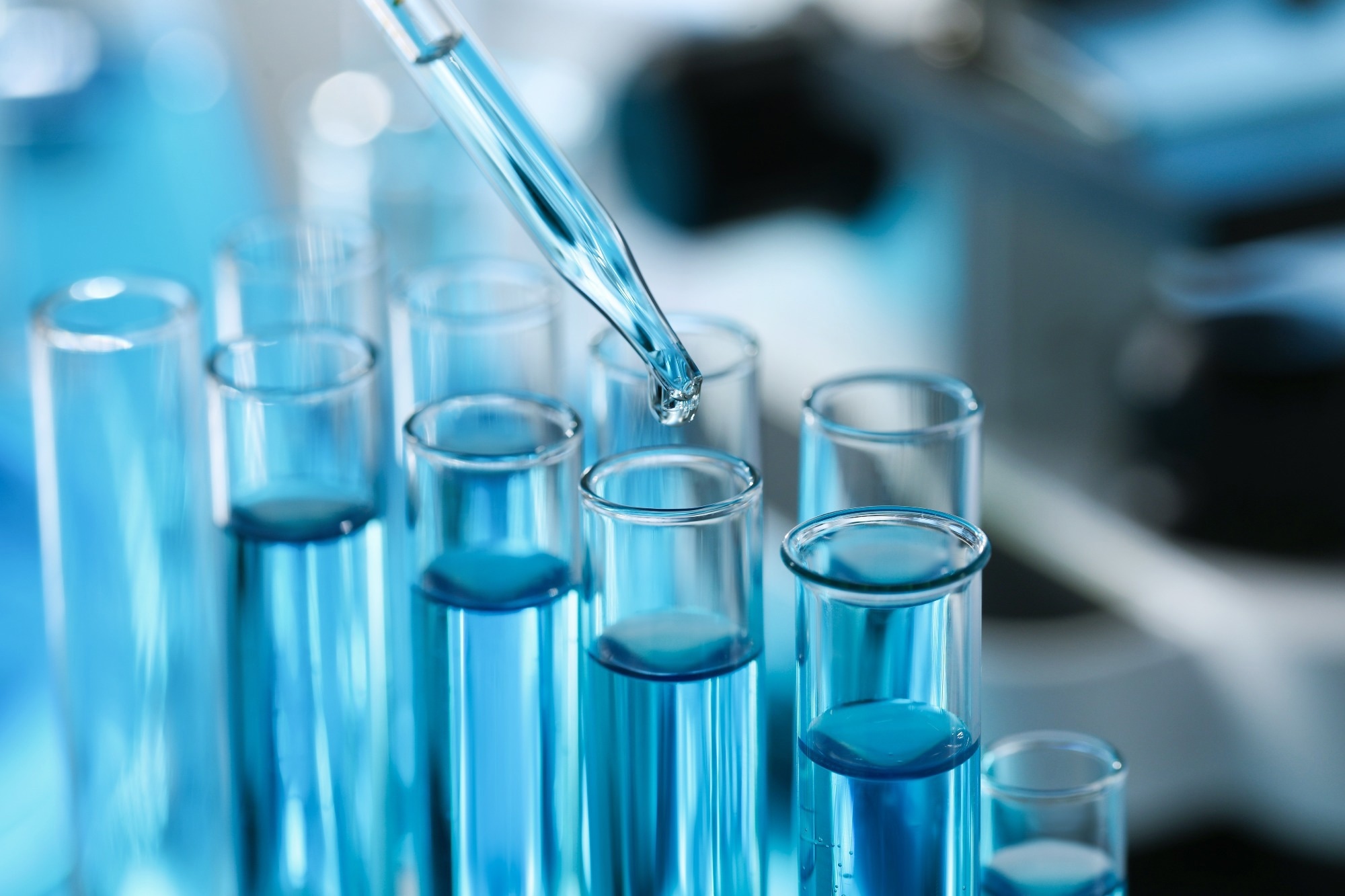
Image Credit: New Africa/Shutterstock.com
What is the Fourier 80 Duo, and what role does it play in routine benchtop NMR?
The Fourier 80 Duo is Bruker’s benchtop NMR spectrometer for powerful routine NMR analysis, all in a compact system.
The idea is really to have one setup and one configuration that addresses most of the questions our customers have in routine NMR. Of course, there are always more specialized applications, but we wanted something routine, easy to use, and essentially ready to go.
It combines proton and carbon measurements, which is why we call it the Duo, and it also includes gradients. Together, this gives you quite a versatile platform for chemistry.
You can use it for something as straightforward as a quick check of a sample or an ID, but you can also go further into analytical applications. The key point for me is that you have high-quality NMR data available directly in your laboratory, right where you do your chemistry.
What are the advantages of the Fourier 80 Duo's focused configuration?
We wanted to minimize setup complexity. The idea was to create one configuration that covers most of the routine NMR applications our customers need every day.
That means users can focus on the chemistry rather than thinking too much about the instrument. They can get started quickly, perform a wide range of experiments, and generate reliable results without having to make additional hardware choices or spend a lot of time on method development.
This is especially useful when several people use the same instrument. You want everyone to be able to approach the system and get consistent results without first becoming an NMR expert.
How do the Fourier 80 Duo’s standard ¹H/¹³C and gradient capabilities expand what users can achieve?
What makes the system versatile is that it brings proton and carbon NMR together with gradients in a single setup. You have routine proton and carbon NMR, and then you also have gradients available.
With proton and carbon together, you can already answer many of the questions that come up in everyday chemistry. With gradients, you also get gradient-based methods, improved solvent suppression, and more options for structural characterization and analytical workflows.
For us, it was important to bring those capabilities together while still keeping the instrument very user-friendly. You can get very good spectral quality and access more information about your sample, but it is still a benchtop system designed around routine use.
What benefits does the Fourier 80 Duo offer for research, analytical, and teaching laboratories?
For research, one of the biggest advantages is having NMR directly in the lab, where the chemistry happens. If you're working on a reaction and want to verify a result, check a product, or monitor progress, you can measure the sample immediately. NMR becomes part of the workflow rather than a separate step.
The same is true in analytical environments or quality control. You can use it for things like sample verification, identity checks, or routine analysis, so you can get the information you need relatively quickly.
Teaching is another area that I really like. It's one thing to talk about NMR in a classroom, but it's very different when students can prepare a sample, put it into the instrument, and collect their own spectrum.
That hands-on experience makes the technique much easier to understand. Students can connect the measurement to the data they are looking at, rather than simply receiving a spectrum and being asked to interpret it.
How does the Fourier 80 Duo make NMR more accessible as a hands-on learning tool for students and educators?
For teaching, I think accessibility is very important. You want students to work with the instrument themselves rather than having NMR happen somewhere else and only receiving the spectrum afterward.
With a benchtop system, you can have the instrument directly in the teaching laboratory. It is compact, cryogen-free, and the software can guide users through the measurement, so students can interact with NMR themselves.
The software also offers a nice progression. If you are completely new to NMR, you can start with GoScan, which guides you through the workflow and makes it quite easy to acquire a spectrum. If you are an experienced NMR user and you want more control, you can work with TopSpin.
For education, I think this combination is particularly useful. Students can begin with the simpler workflow, but they can also become familiar with TopSpin. If they later work with other Bruker NMR systems, they have already seen that environment and already understand something about how it works.
What Benchtop NMR Can Really Do: Real‑World Applications of Benchtop NMR
What kinds of routine chemistry and analytical applications do users typically perform with the Fourier 80 Duo?
It is particularly useful for routine chemistry and smaller molecules. You can do compound identification, quick sample checks, raw material verification, reaction monitoring, product confirmation, purity assessment, and other routine analytical measurements.
That makes it relevant for academic chemistry and chemistry R&D, but also pharmaceutical research and quality control.
For me, the main idea is that the Fourier 80 Duo gives you molecular information when you need it. If you are doing chemistry and have a question about your sample, NMR is on the bench and can become part of your everyday workflow rather than something you use only occasionally.
How do the Fourier 80 Duo’s compact, cryogen-free design and benchtop operation make NMR more accessible for laboratories?
The infrastructure is much simpler, and that is a very practical advantage.
The Fourier 80 Duo is compact and does not require liquid cryogens or the infrastructure that comes with them. This makes installation easier and reduces the ongoing requirements and costs of operating the instrument.
You still have to think about where you place an NMR system and make sure you have a suitable environment for it, but overall it is much easier to bring into a normal laboratory.
That's part of making NMR more accessible. You can put the instrument much closer to the chemistry and use it as an everyday analytical tool.
How do TopSpin, GoScan, and Advanced Chemical Profiling simplify workflows from data acquisition to analysis and reporting?
What I like about this software combination is that it covers different types of users.
If you are not an NMR expert, GoScan gives you a guided workflow. You do not have to know everything about NMR before you can start measuring your samples. It helps you through the process and makes routine measurements much easier.
Then there's TopSpin for NMR experts who want to go deeper and have more control over what they are doing. That is also very useful in an educational environment because you can start with GoScan and then, as your knowledge develops, move into TopSpin.
Advanced Chemical Profiling adds another option for application-focused analysis and helps take the user from measurement to result.
So, I think it is a very good combination because you are not restricted to only one type of user. You can have somebody who is completely new to NMR and somebody who has many years of NMR experience working with the same instrument, but at the level that is right for them.
About Agnes Haber
Agnes Haber is Product Manager for Bruker’s benchtop FT-NMR portfolio, including the Fourier 80 and Fourier 80 Duo. She has been with Bruker for approximately ten years and has extensive experience with benchtop magnetic resonance technologies, including TD-NMR, EPR, and FT-NMR.
Before moving into product management, Agnes worked in applications, giving her direct experience of translating scientific and analytical requirements into practical workflows for users. Her connection with benchtop magnetic resonance began even earlier, having worked with benchtop systems during her PhD and postdoctoral research.
This combination of experience as a researcher, user, applications specialist, and product manager gives her a broad perspective on how NMR instrumentation is used in practice. In her current role, she is responsible for the Fourier 80 and Fourier 80 Duo and works to translate customer requirements and application needs into the continued development of Bruker’s benchtop FT-NMR portfolio.
About Bruker BioSpin Division
The Bruker BioSpin Division designs, manufactures, and distributes advanced scientific instruments based on magnetic resonance, preclinical imaging technologies, and biosensor technologies. These include our industry-leading NMR and EPR spectrometers, imaging systems utilizing MRI, PET, SPECT, CT, Optical and MPI modalities, as well as molecular interaction technologies like SPR, switchSENSE® and single-cell Interaction Cytometry (scIC). The Division also offers integrated software solutions and automation tools to support digital transformation across research and quality control environments.
Our customers in academic, government, industrial, and pharmaceutical sectors rely on these technologies to gain detailed insights into molecular structure, dynamics, and interactions. Our solutions play a key role in structural biology, drug discovery, disease research, metabolomics, and advanced materials analysis. Recent investments in lab automation, optical imaging, and contract research services further strengthen our ability to support evolving customer needs and enable scientific innovation.
 Fourier 80: bringing benchtop NMR systems to the laboratory