Sponsored Content by TrinceReviewed by Maria OsipovaSep 8 2026
In this interview, News-Medical Life Sciences speaks with Kevin Braeckmans, CEO of Trince®, about the company's LumiPore® platform and how its photoporation technology is addressing longstanding challenges in intracellular delivery. He discusses the limitations of conventional transfection methods, the advantages of LumiPore® for sensitive cell types, and the role of gentle, scalable transfection technologies in accelerating drug discovery and cell therapy development.
Could you please introduce yourself and your role at Trince®, and provide an overview of the company's mission?
My name is Kevin Braeckmans, and I am currently the CEO of Trince®, a spin-off company from Ghent University founded in 2021 by myself and two co-founders, Philip Mathuis and Stefaan De Smedt. Philip originally served as CEO and now focuses on long-term strategy and partnerships as Executive Chairman, while Stefaan is our scientific co-founder and leads the scientific advisory efforts.
The name Trince® comes from "transfer into cells," which reflects exactly what we stand for. We believe that current methods for introducing molecules into cells are holding back both research and therapy development. Our mission is to change that by providing technologies that improve intracellular delivery.
Today, our focus is on the drug development and drug screening market, where we help researchers accelerate critical workflows that depend on efficient intracellular delivery, ultimately helping to shorten the lengthy and costly drug development cycle.
What challenges in intracellular delivery and cell transfection led to the development of LumiPore®?
The challenge is well known throughout cell biology and therapeutic development: getting payloads such as messenger RNA or gene-editing complexes into cells without harming them is genuinely difficult.
Viral vectors remain the gold standard for transducing cells, but they are expensive to manufacture and can only accommodate certain types of cargo. As an alternative, many researchers use electroporation, which applies a strong electrical field to open the cell membrane. While efficient, electroporation is often highly toxic to cells.
Not only do many cells die during the process, but surviving cells can experience changes in phenotype and functionality. This can compromise downstream biological analyses and reduce confidence in the results.
LumiPore® was developed to provide a non-viral alternative that remains highly efficient while being significantly gentler on cells. By minimizing damage, we preserve both cell viability and cell health, enabling more reliable biological outcomes.
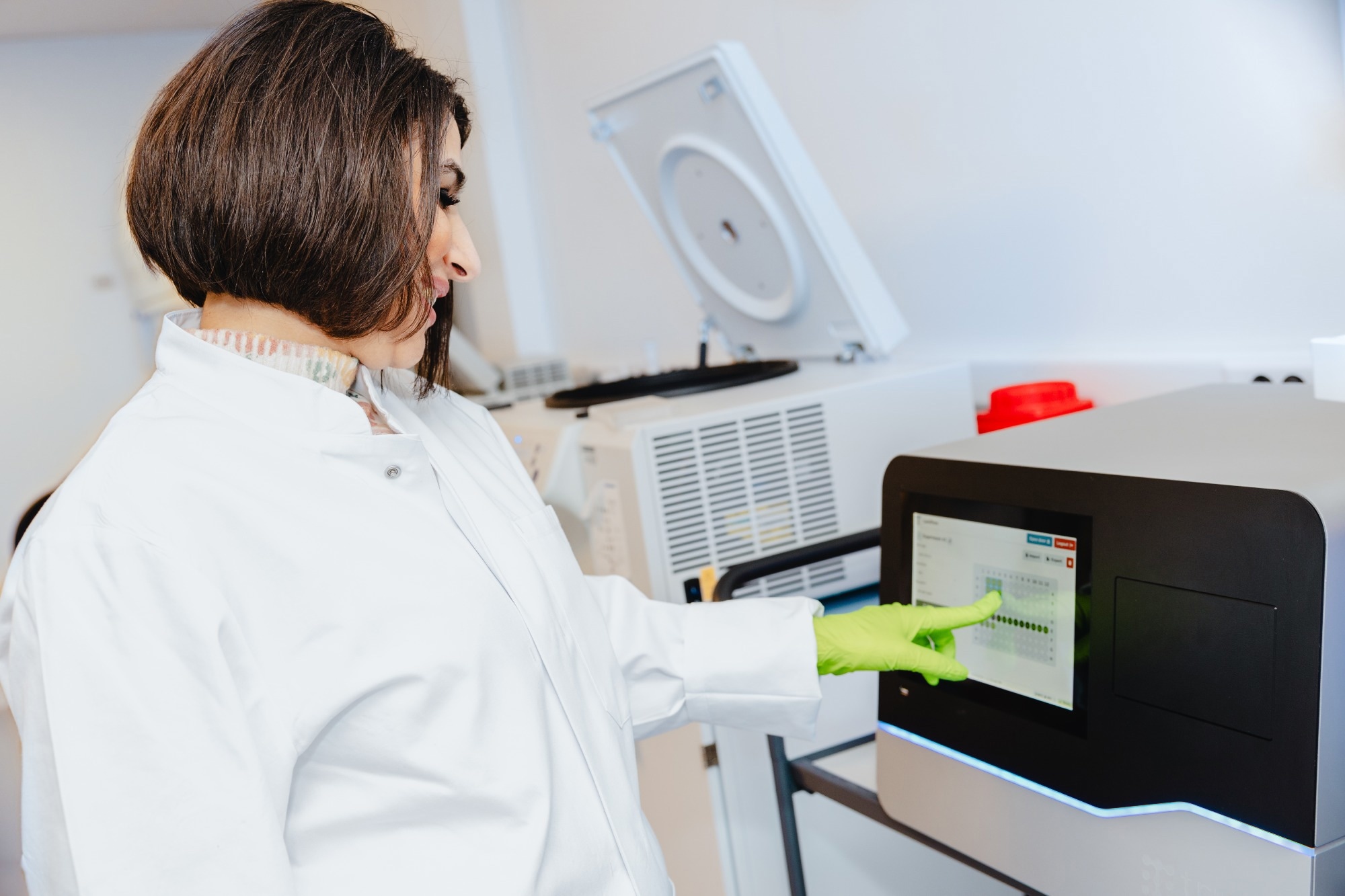
Image Credits: Trince®
How does LumiPore® work, and what makes it different from conventional delivery methods?
LumiPore® is based on a technology we call photoporation. While electroporation uses electrical fields to create pores in cell membranes, photoporation uses light in combination with light-sensitive nanoparticles.
The workflow is straightforward. First, our photothermal nanoparticles are added to cultured cells, where they bind to the cell membrane. When we illuminate them with a laser, they absorb the light and convert it into heat. This localized heating creates tiny pores precisely where the particles are attached to the membrane.
Because pore formation occurs with nanometer precision, the impact on the cell is highly localized. Once the pores are created, external molecules can diffuse into the cell and achieve transfection.
The approach has been validated through more than 50 scientific publications from our academic teams. Because it is a purely physical method, it can be applied across many cell types and payloads while remaining fast, efficient, and gentle on cells.
How does LumiPore® improve transfection of hard-to-transfect cells, such as T-cells and stem cells?
Hard-to-transfect cells are exactly where LumiPore® delivers the greatest value. Cell types such as T-cells and stem cells are particularly sensitive and often do not tolerate harsh treatments like electroporation.
Because pore formation with photoporation is highly localized and transient, these sensitive cells survive in much greater numbers and recover more quickly after treatment. This results in healthier cells and more consistent biological data.
Importantly, published studies have directly compared our approach with conventional technologies and demonstrated improved cell health and reliability following transfection.
Cell viability is often a major concern with traditional transfection methods. What advantages does LumiPore® offer compared to electroporation and viral delivery approaches?
High cell viability is one of our strongest differentiators.
With electroporation, the entire cell is exposed to a strong electrical field, which can cause widespread damage. In contrast, LumiPore® uses nanoparticles to induce highly localized pore formation, limiting damage to a very small region of the membrane.
As a result, more cells survive treatment and remain in excellent condition for downstream analysis.
Compared with viral vectors, LumiPore® avoids several additional concerns. While viral vectors can be relatively gentle on cells, they carry risks such as immunogenic responses and unintended integration into the genome. This can potentially activate harmful genes or disrupt important regulatory pathways. By using a non-viral physical approach, those risks can be avoided.
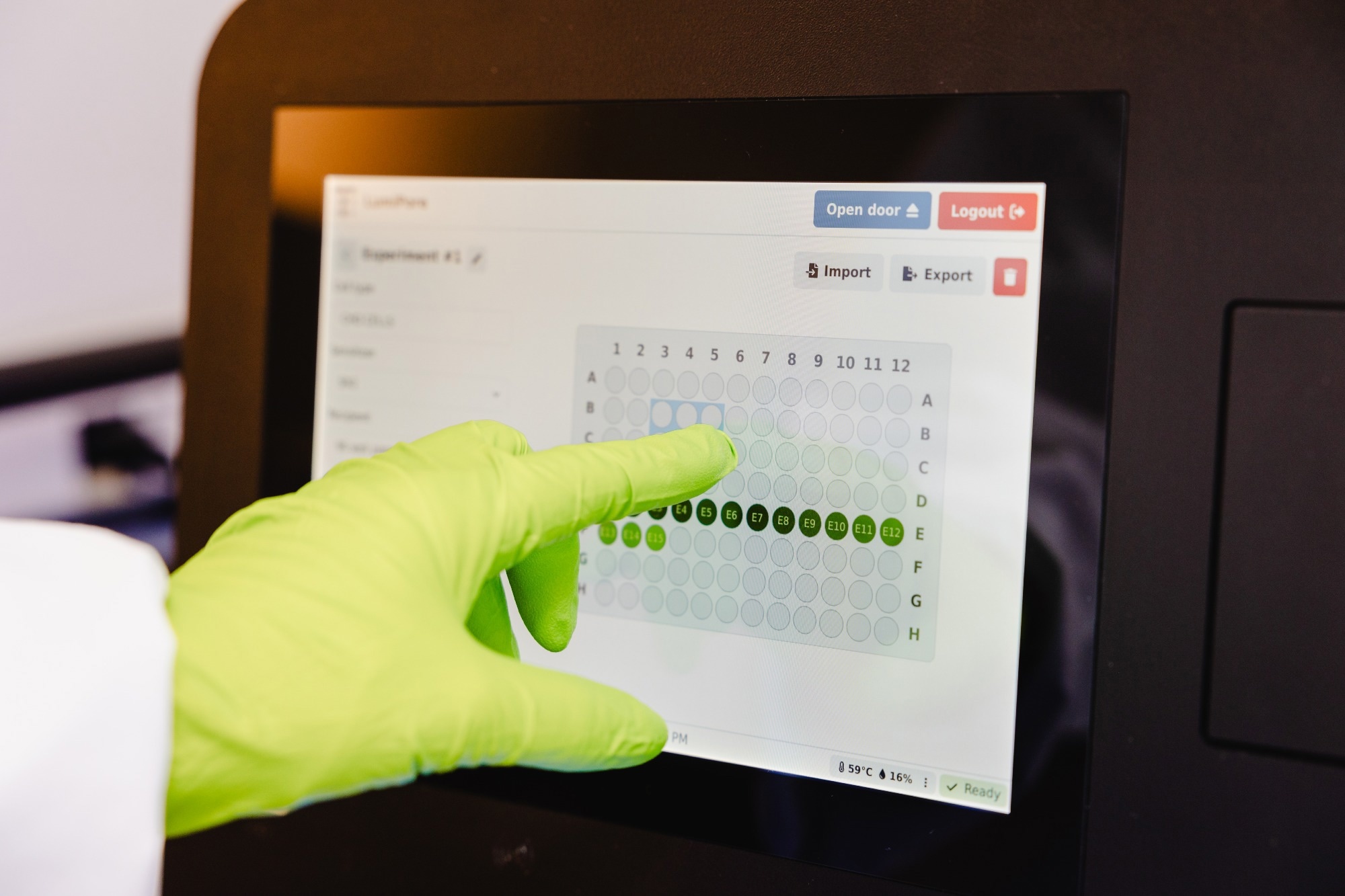
Image Credits: Trince®
Why is preserving cell functionality after transfection so important, particularly for cell therapy applications?
In cell therapy, success is not simply measured by how many cells survive. What truly matters is whether those cells can still perform their intended therapeutic function.
For example, a CAR T-cell exposed to a harsh transfection process may exhibit reduced proliferation, altered cytokine profiles, or signs of exhaustion before it is even returned to the patient. This can directly reduce therapeutic efficacy.
The gentle nature of LumiPore® helps preserve the natural homeostasis and functionality of engineered cells. Cells continue to proliferate without delay, enabling faster manufacturing timelines while maintaining optimal therapeutic quality.
Beyond cell therapy, preserving functionality is equally important in drug discovery and development. Any stress introduced during the delivery process can influence downstream assays and potentially distort experimental results; researchers want to study the biological effects of their drug candidates, not the effects of the transfection technology itself.
How does LumiPore® support scalable and automated workflows in research and industrial settings?
Scalability was a design principle from the beginning, not an afterthought.
LumiPore® can be used directly with standard cell culture vessels, including 96-, 384 and 1536-well plates, Petri dishes, and T-flasks. The only requirement is that the vessel is transparent to light, which is already true for most common laboratory consumables.
There is no need for special media changes or transferring cells to dedicated transfection consumables, making integration into automated workflows straightforward.
The laser illumination process is also extremely fast. Entire well plates can be treated in less than 10 minutes. These features make the platform highly attractive for high-throughput screening and industrial automated workflows.
How flexible is the LumiPore® platform across different research applications?
Flexibility is one of the platform's key strengths.
The same instrument and workflow can support a wide variety of intracellular delivery applications. Researchers can use LumiPore® for CRISPR screens, cell line generation, RNA interference studies, target validation workflows, or screening biologics such as peptides, oligonucleotides, and antibodies for intracellular targets.
Because the platform does not require major workflow changes between applications, scientists can easily adapt it to different research needs within the same laboratory environment.
Can you control the size of the pores created by LumiPore®?
Directly measuring pore size is actually quite challenging because cells begin repairing pores almost immediately after they form. The pores are also too small to be visualized with conventional light microscopy.
What we do know is that the technology can reliably deliver molecules up to hundreds of kilodaltons in size. We also know that cells typically begin repairing the pores within seconds, with most pores closing within about a minute.
This brief but controlled window allows cargo molecules to enter the cell efficiently while enabling the cell to rapidly restore membrane integrity and maintain viability. Very large plasmid constructs remain more challenging, but we are actively developing new approaches to address these larger payloads as well.
Following Trince®'s recent awards and commercial success, what are the company's next milestones?
Receiving the 2024 Nature Spinoff Prize and the 2026 SLAS Ignite Award has been meaningful validation of the work our team has accomplished.
Since LumiPore®'s commercial launch in 2024, the technology has gained strong international traction, including adoption by several major pharmaceutical companies.
Looking ahead, our priorities include accelerating global commercialization, establishing a stronger presence in the United States, and expanding the platform's integration into automated drug discovery workflows, where we see substantial untapped potential.
We are also preparing for a larger funding round in 2027 to support the next stage of growth.
What truly differentiates us, however, is our partnership-based approach. From initial demonstrations through full implementation, we work closely with each customer to optimize the platform for their specific workflows and delivery challenges. Researchers interested in exploring LumiPore® are encouraged to engage directly with our team so that we can understand their application and determine how the technology can best support their goals.
About Kevin Braeckmans
Professor Kevin Braeckmans is Chief Executive Officer and co-founder of Trince® and a professor at Ghent University in Belgium. He is internationally recognized for his work in nanomedicine, intracellular delivery technologies, and advanced biophotonics. Throughout his academic career, he has focused on understanding how therapeutic molecules interact with biological systems and on developing innovative methods to transport nucleic acids, proteins, and other biomolecules into living cells.
At Ghent University, Professor Braeckmans has led extensive research into nanoparticle-based delivery systems and optical technologies for studying cellular processes. Together with long-time collaborator Professor Stefaan De Smedt, he helped pioneer the photoporation technology that ultimately became the foundation of Trince®'s LumiPore® platform.
Under his leadership, Trince® has successfully translated years of academic research into a commercial technology designed to improve intracellular delivery for drug discovery, advanced cell engineering, and emerging therapeutic applications. The company has received significant industry recognition, including the Nature Spinoff Prize and the SLAS Ignite Award.
Professor Braeckmans continues to combine scientific innovation with entrepreneurial leadership, helping bridge the gap between cutting-edge academic research and practical solutions for biotechnology and pharmaceutical development.
About Trince®
Trince® is a spin-off company from Ghent University dedicated to advancing cell-based science and therapeutics by facilitating the delivery of molecules into cells, both in vitro and ex vivo. The company's LumiPore® intracellular delivery platform, which is covered by a portfolio of patents, combines laser exposure with photothermal nanoparticles to convert light energy into heat to transiently permeabilize the cellular plasma membrane. It can be used to deliver a wide variety of effector molecules (e.g. nucleic acids or proteins) into virtually any cell type, including hard-to-transfect cells such as immune cells or stem cells. The technology not only makes it easier to bring genetic material into cells in high-throughput. It also ensures that this is done in a gentle manner, maximizing the reliability of any downstream assays.