Introduction
What are forgotten foods?
Nutritional diversity beyond major staple crops
Bioactive compounds and potential health benefits
Ancient crops and the gut microbiome
Sustainability and climate resilience
Can ancient crops fit into modern diets?
Conclusions: Nutritional potential and evidence gaps
References
Further reading
From calcium-rich finger millet to protein-containing pseudocereals, overlooked crops raise questions about what modern diets may be missing and how science should assess their value.
 Image Credit: Georgie Murray / Shutterstock.com
Introduction
Modern agriculture has become increasingly concentrated around a relatively small group of staple crops. A 2023 review reports that worldwide, over 700 million hectares are devoted to five major cereals, maize, wheat, rice, barley, and sorghum, which collectively provide about half of global caloric intake.1
Neglected and underutilized crops (NUCs) are receiving more attention because they can diversify diets, increase nutrition security, and improve the resilience of agricultural systems. The growing interest in NUCs reflects efforts to reduce global dependence on commodity crops, preserve dietary diversity, and identify crops with nutritional, climatic, local, and economic advantages.1,2,5
Yet evidence remains incomplete, particularly regarding long-term clinical outcomes and environmental effects. Rediscovering these foods represents an opportunity to diversify existing dietary and agricultural systems, rather than replace established staples.1,2,3
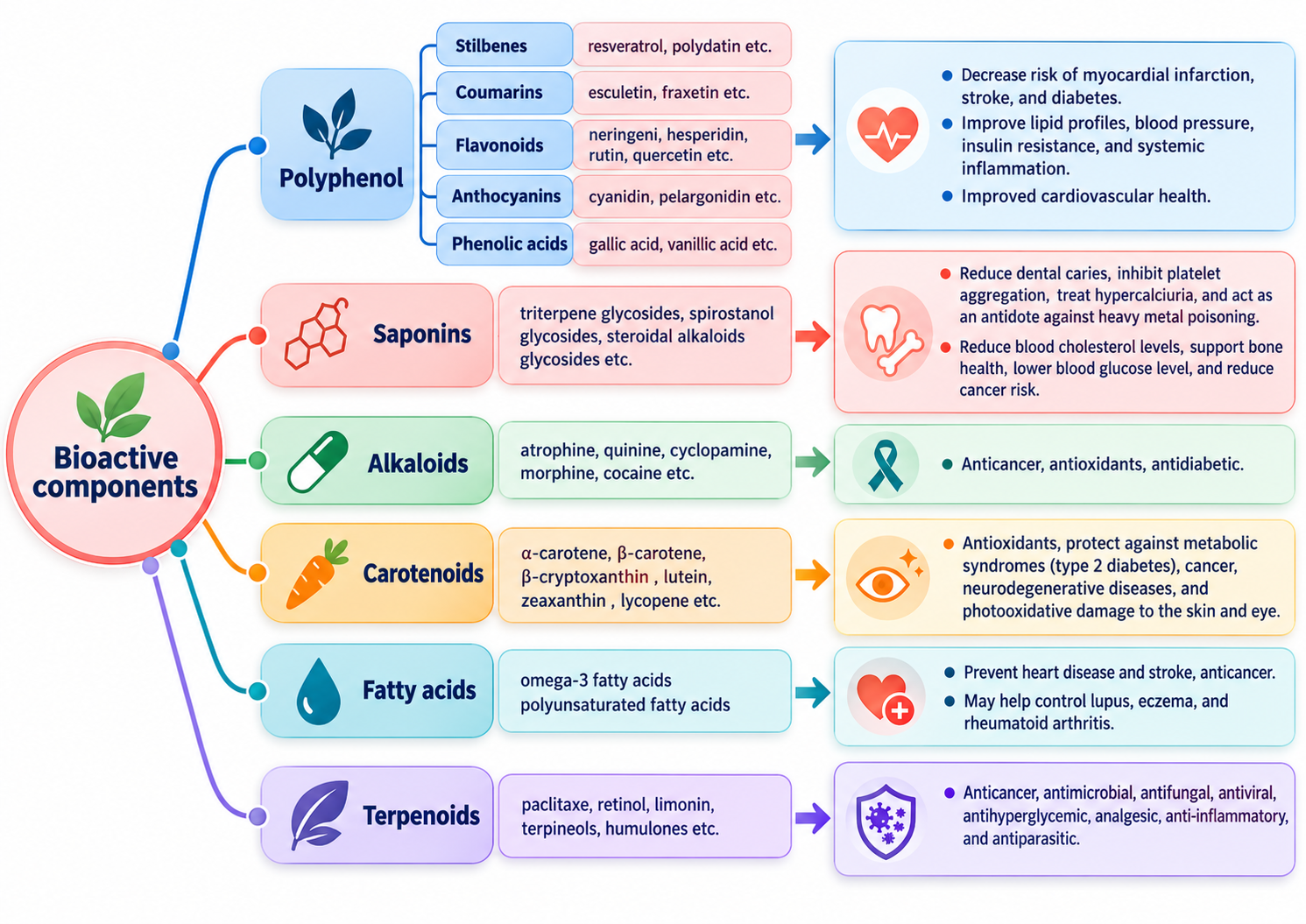
Schematic representation of bioactive components found in neglected and underutilized crop species (NUCS) and their health benefits.1
What are forgotten foods?
Forgotten foods include crops with long cultivation histories and species that receive limited agricultural investment. NUCs generally refer to species that receive little attention from mainstream agricultural research, production, markets, and consumers, while retaining importance in particular regions.
“Orphan crops” is another overlapping term often used for crops that have received limited research and breeding investment. A long cultivation history alone does not establish that a crop is underutilized or nutritionally superior.1,2
Examples of ancient and underutilized foods include millet, sorghum, teff, fonio, amaranth, quinoa, buckwheat, breadfruit, Bambara groundnut, lentils, mung beans, and other indigenous legumes. Underutilized status varies by region: a crop can be widely consumed locally, yet receive limited research or market investment elsewhere. Quinoa, amaranth, and buckwheat are pseudocereals, meaning their seeds are used like cereal grains but come from plants outside the grass family.1,2
The Food and Agriculture Organization of the United Nations (FAO) Future Smart Food initiative identifies crops with potential nutritional, climatic, economic, and local relevance. At the same time, researchers note that many NUCs are still cultivated primarily in their native locations, where they remain important in regional food systems, even when their international markets are small.1,2
Nutritional diversity beyond major staple crops
The nutritional profiles of ancient and underutilized crops can differ substantially from those of refined staple cereals. Different NUCs offer fiber, proteins, amino acids, vitamins, minerals, and phytochemicals.
For example, finger millet contains substantially more calcium than polished rice, whereas quinoa provides fiber, protein, and several vitamins. Buckwheat contains relatively high levels of lysine compared with rice, wheat, or maize.1,2
Nutritional quality varies across crops, as species, varieties, plant parts, cultivation conditions, and processing can influence nutrient composition and bioavailability, the proportion available for absorption and use by the body. Soaking followed by heating, for instance, can improve protein digestibility in some legumes by reducing the effects of antinutritional factors. These include phytate and tannins, which can limit mineral availability or protein digestion.1,3
A 2025 scoping review identified eight studies relating food biodiversity to diet quality and four relating it to health outcomes. Greater food biodiversity was associated with better nutritional adequacy and, in some studies, lower mortality or gastrointestinal cancer risk. Nevertheless, these observational findings cannot establish causation or isolate the effects of ancient or underutilized crops.5
Forgotten Foods to Feed the Future | Sayed Azam-Ali | TEDxThoughtForFood
Bioactive compounds and potential health benefits
Many traditional and underutilized crops contain bioactive compounds, including phenolic acids, flavonoids, carotenoids, phytosterols, betalains, and other phytochemicals. For example, buckwheat contains flavonoids such as rutin and quercetin, while fruits and vegetables provide flavonoids and carotenoids, some of which have shown antioxidant activity in laboratory studies.1,2
Reviews describe antioxidant, anti-inflammatory, antidiabetic, and cardioprotective effects associated with compounds found in some underutilized crops. Yet these findings do not establish that eating these crops produces the same effects in humans. Crop-specific clinical studies are needed to determine whether the amounts consumed and absorbed through ordinary diets produce meaningful health benefits.1,2,4
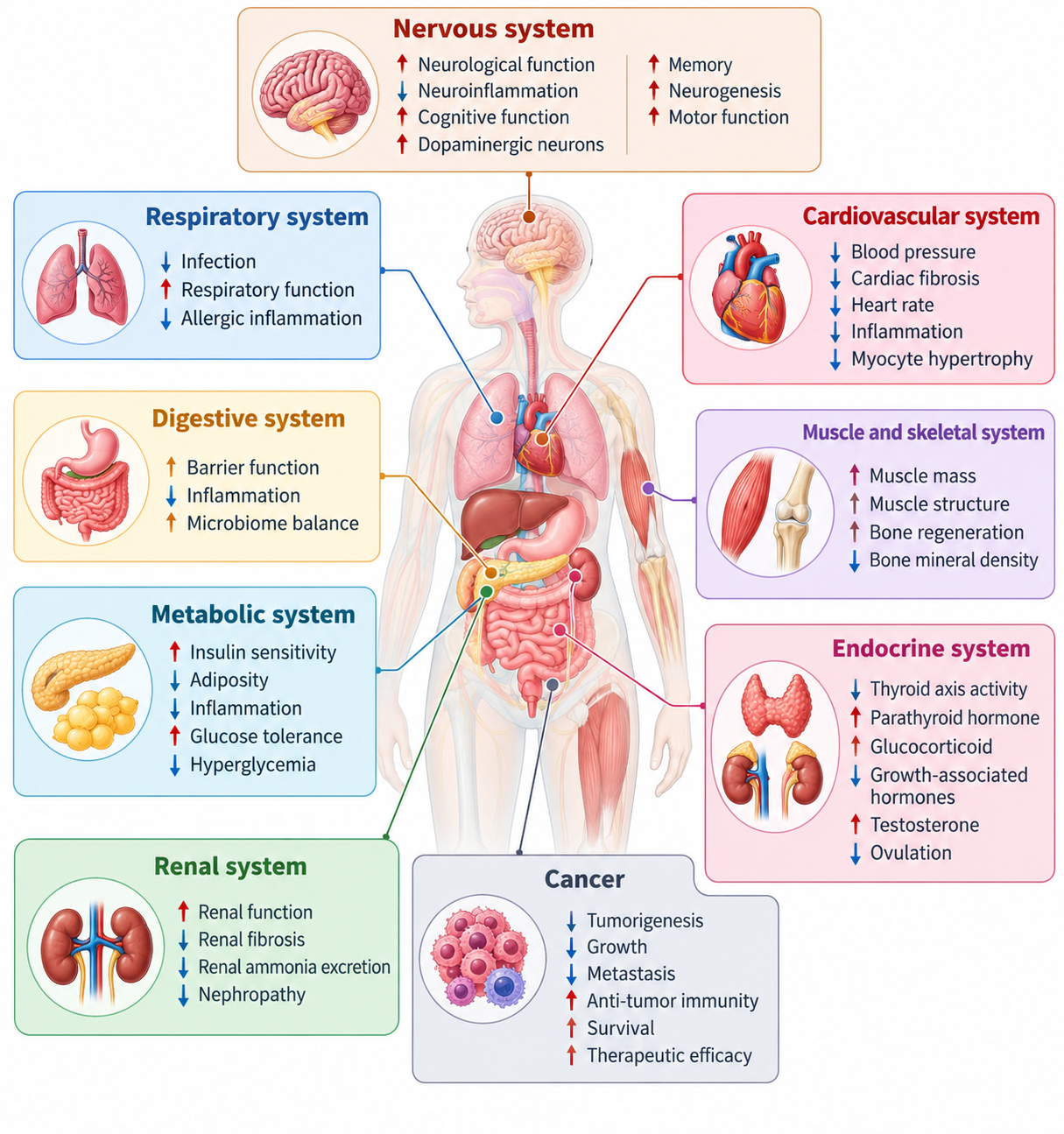
Functionality of dietary interventions on human tissues under health and diverse disease states. Dietary interventions exert beneficial effects across varying aspects, including nervous system, cardiovascular system, respiratory system, metabolic system, renal system, endocrine system, and digestive system as well as cancer.4
Ancient crops and the gut microbiome
A proposed link between ancient crops and the gut microbiome involves their dietary fiber content. Gut microorganisms can ferment dietary fibers into short-chain fatty acids (SCFAs), which influence intestinal and immune processes. These mechanisms provide a rationale for studying fiber-containing crops; however, they do not establish benefits unique to ancient grains.4
Fiber structure can influence microbial metabolism, and responses to dietary interventions vary. Wu and colleagues describe a human study in which increased fiber intake increased microbes’ capacity to break down complex carbohydrates without increasing microbial community diversity. This distinction shows why researchers should assess changes in microbial function and the variety of microorganisms separately.4
 Image Credit: Nguyen Van Thin3 / Shutterstock.com
Sustainability and climate resilience
Drought, salinity, and other environmental stresses can affect major staple food crops, including rice, wheat, and maize. In contrast, certain underutilized crops can grow under marginal or stressful conditions because they are adapted to them. Sorghum, for example, is considered drought-resistant, while other crops are categorized by the specific agroecological systems they tolerate. Climate resilience varies among NUCs and depends on the crop and production environment.1,2
Diversifying agriculture can reduce reliance on a narrow group of crops and potentially strengthen food-system resilience. Traditional and regional dietary patterns provide useful models for linking nutritional adequacy with local food resources and environmental considerations.
Environmental comparisons also need to account for nutrient bioavailability and the diet as a whole. The 2025 scoping review found no eligible studies that directly assess the association between dietary food biodiversity and environmental impact.1,2,3,5
Can ancient crops fit into modern diets?
Millets, sorghum, buckwheat, quinoa, and other grains can be incorporated into meals traditionally prepared with cereals. In contrast, lentils, mung beans, Bambara groundnut, and other legumes can contribute protein and dietary diversity.
The FAO report describes using millets in porridges and flatbreads, illustrating how familiar preparation methods can accommodate these crops. Roots, tubers, fruits, vegetables, and traditional foods can also contribute to regionally appropriate diets.2,3
Nutritionally adequate diets can draw on whole grains, millets, vegetables, fruits, nuts, seeds, legumes, and other nutrient-rich foods to meet nutritional needs. Practical adoption depends on affordability, availability, processing requirements, consumer familiarity, markets, and cultural preferences.2,3
The NUC review and FAO report identify limited awareness, weak market linkages, inadequate infrastructure, and postharvest challenges as barriers to the widespread use of NUCs. Increasing consumption requires that these crops are accessible, acceptable, and feasible within existing food systems.1,2
 Image Credit: New Africa / Shutterstock.com
Conclusions: Nutritional potential and evidence gaps
Forgotten and underutilized crops offer an opportunity to diversify modern diets by providing nutrients, fiber, and phytochemicals. Assess their value crop by crop, accounting for preparation, nutrient absorption, local growing conditions, and access. Long-term clinical benefits and comparative environmental effects require further study.1,2,3,5
References
- Ali, A., & Bhattacharjee, B. (2023). Nutrition security, constraints, and agro-diversification strategies of neglected and underutilized crops to fight global hidden hunger. Frontiers in Nutrition, 10. DOI: 10.3389/fnut.2023.1144439. https://www.frontiersin.org/journals/nutrition/articles/10.3389/fnut.2023.1144439/full
- Li, X., & Siddique, K. H. M. (2018). Future smart food: Rediscovering hidden treasures of neglected and underutilized species for Zero Hunger in Asia. Food and Agriculture Organization of the United Nations. https://ckan.ali-sea.org/dataset/f8694809-05ff-4e0e-ae41-0da427cbedbb/resource/5d0cd629-1aa8-4eb7-ade5-aebb0abbeb52/download/1541062974_smart-food_fao.pdf
- Dave, L. A., Hodgkinson, S. M., Roy, N. C., et al. (2023). The role of holistic nutritional properties of diets in the assessment of food system and dietary sustainability. Critical Reviews in Food Science and Nutrition, 63(21), 5117- 5137. DOI: 10.1080/10408398.2021.2012753. https://www.tandfonline.com/doi/full/10.1080/10408398.2021.2012753#d1e196
- Wu, Q., Gao, Z., Yu, X., & Wang, P. (2022). Dietary regulation in health and disease. Signal Transduction and Targeted Therapy, 7. DOI: 10.1038/s41392-022-01104-w. https://www.nature.com/articles/s41392-022-01104-w
- Baan Hofman, J. H., Bannenberg Cavero, C., Dötsch-Klerk, M., et al. (2025). Food biodiversity and its association with diet quality and health outcomes: A scoping review. Advances in Nutrition, 16(12). DOI: 10.1016/j.advnut.2025.100551. https://www.sciencedirect.com/science/article/pii/S2161831325001899?via%3Dihub
Further Reading
Last Updated: Oct 19, 2026