Sponsored Content by MGIReviewed by Olivia FrostApr 14 2026
Genomics is rapidly evolving, and it is having a significant impact on the biological sciences. Sequencing is now cheaper, faster, and more widely available, so researchers in a variety of biological domains are employing it more than ever before.
Image Credit: MGI
Since its inception, genome sequencing has become one of the most prominent techniques in the biological sciences. Now, with advances in next-generation sequencing (NSG), the previously acknowledged potential of sequencing technology is finally being realized across a wide range of disciplines.
Large, bulky equipment that is difficult to operate and sequence on a small scale are a thing of the past. The growth of high-throughput, large-scale sequencing techniques over the last decade has changed genomics, making it more inexpensive, user-friendly, and commercially viable worldwide.
Increased collaboration among ecosystem partners and clients has also played an important role in increasing access to such technology.
NGS has played a critical role in enabling cost-effective, high-throughput genome sequencing, as well as the study of transcriptomics, epigenomics, metagenomics, and other omics.1
Advancements in automation and amplification techniques, including the implementation of polymerase chain reaction (PCR) and fluorescent dyes, enable rapid sequencing of thousands of base pairs in hours rather than days.2
As MGI Tech approaches its 10th anniversary this year, it seems appropriate to examine the significant breakthroughs in genomics during the last decade, concentrating on scalability, cost, ease of use, and worldwide deployment.
2017: Powerful, compact desktop sequencers
In 2017, the G50 and G400 desktop genetic sequencers were introduced, providing powerful and compact options. These versatile bench-top machines provided high-performance, precision, and flexible day-to-day sequencing solutions for applications such as cancer detection and transcriptomics.3,4
2018: Ultra-high-throughput sequencing and the third wave
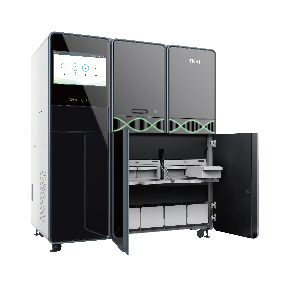
Following the second significant growth of high-throughput sequencing between 2009 and 2010, which was driven by the creation of HiSeq platforms, one of the world's most powerful ultra-high-throughput sequencers was born in 2018: the T7.5
This unique quad-flow cell device generates around 6 Tb of sequencing data each day, allowing for faster and more cost-effective completion of national-scale genome sequencing projects.
This technique has advanced national genome efforts such as the Genomics Thailand Initiative and the Brazilian Rare Genome Project.
The launch of the T7 platform marked a step toward industrial-scale sequencing globally, supporting other national genome efforts, such as South Africa's 110K Human Genome Program.6
T7
Image Credit: MGI
2022: Bringing flash-luminous sequencing and the fastest mid-to-low throughput sequencers to the market
In 2022, the NGS market saw a surge in new firms and instruments, including the introduction of the E25 pocket sequencer. This development bolstered ongoing investment in short-read sequencing, highlighting short-read, high-throughput technologies as a crucial driver of the broader commercial use of genomics.7
On a global scale, faster, higher-quality, mid- to low-throughput sequencers like the G99* improved targeted and small-genome sequencing even further.8
With G99's ability to run samples quickly, researchers can provide diagnostic guidance to hospitals promptly, potentially saving lives.
It has also proven its effectiveness by quickly detecting the first imported case of the monkeypox virus strain in Chongqing, China.8 Such advancements will maintain the level of mainstream sequencing technology for years to come.
Both platforms set a new standard for field-deployable sequencing by working under Mount Everest's harsh environmental conditions in 2024 while maintaining high-performance output.10
This achievement challenged the widely held belief that gene sequencing required highly controlled laboratory settings.
Durable, compact, portable, lightweight, and easy-to-use sequencers like these have transformed the application of genomic approaches in biodiversity, ecosystem, paleontology, paleoenvironmental, and population genetics research.
2023: The record-breaking $100 genome
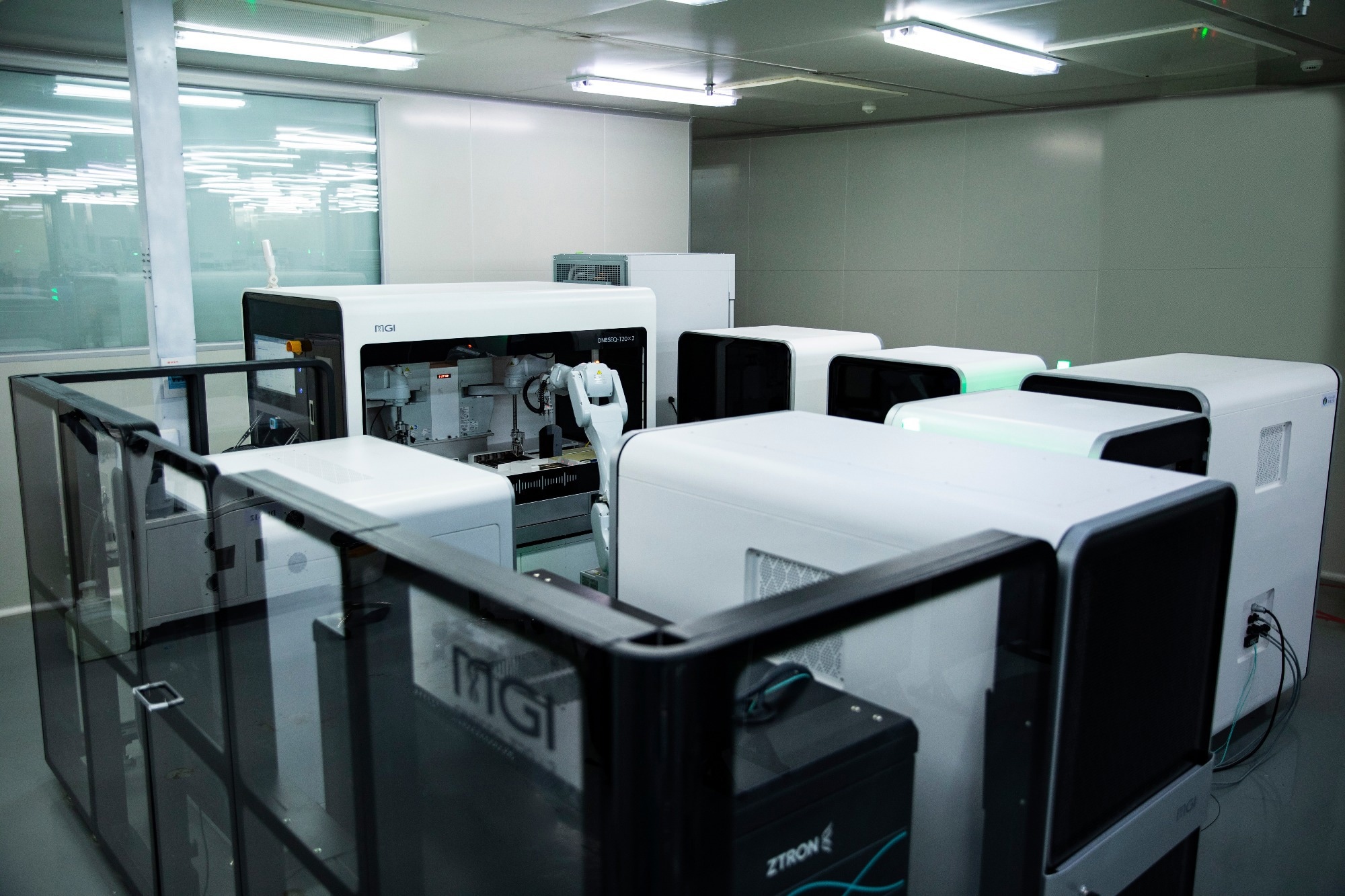
The commercialization of whole-genome sequencing (WGS) fueled the growth and expansion of genomics. The ability to create up to 50,000 WGS each year for less than $100 per human genome provided quick access to high-quality genome sequencing, allowing large-scale initiatives to begin without delay.11
The T20×2 is ideal for large-scale population-genome research due to its high speed and low throughput. It is also cost-effective. It can be extremely useful for large-scale population genomics sequencing and analysis, national genome sequencing efforts, and large-scale single-cell or spatial genomics studies.
Affordable WGS are critical to enabling the rapid and widespread use of precision medicine. With decreasing prices, doctors face fewer impediments to incorporating genetic testing into routine patient treatment.
T20
Image Credit: MGI
2025: Faster, smarter, and more scalable technology
We are now approaching an era of quicker, smarter, and more scalable technology that can operate at any throughput level. The T1+ all-in-one benchtop sequencer, for example, addresses the issue of extremely long turnaround times associated with mid-throughput sequencing devices.
The intelligently automated T7+ provides the speed, precision, and efficiency needed to power genomic data mining for even the most data-intensive projects.12,13
2026: AI in gene sequencing
AI automation is beginning to feel like a natural extension of genomics rather than something distinct from it. AI-assisted equipment, such as the G400RS FluoXpert Vision, provide simple prompts to researchers, allowing them to execute analyses with ease and precision.
At the same time, there is a growing recognition that genomics cannot remain confined to closed systems. The discipline requires greater flexibility, particularly if it is to properly assist fields such as infectious disease testing, oncology, and other therapeutic applications.
As Yang Meng, Ph.D., senior vice president at MGI Tech, puts it, by “leveraging decoupled modular technology, we can flexibly reconfigure systems to meet diverse clinical needs”.
We have seen this type of movement before. Clinical biochemistry transitioned from all-in-one analyzers to modular systems, which are now the foundation of current diagnostics. And genomics may be moving in the same direction.
Building on an open, standardized base could increase sequencing accessibility and help precision medicine become a part of everyday healthcare, rather than just specialist programs.
As sequencing platforms become more economical and available globally, there is genuine hope that the cost per genome may eventually fall to around $10. If that happens, the implications for research and health treatment could be significant.
MGI Tech announced the acquisition of STOmics and CycloneSeq in March, making it the world's only firm to offer short-read sequencing, long-read sequencing, and Stereo-seq spatial biology technologies.14
Short reads provide size and efficiency, but long reads provide structural knowledge and continuity, and spatial technologies add biological context. Each modality addresses different problems; hence, no single modality is completely sufficient.
The next phase will involve integrating all sequencing technologies into coherent, scalable platforms to create a one-stop shop approach.
References and further reading
- Levy, S.E. and Myers, R.M. (2016). Advancements in Next-Generation Sequencing. Annual Review of Genomics and Human Genetics, 17(1), pp.95–115. DOI: 10.1146/annurev-genom-083115-022413. https://www.annualreviews.org/content/journals/10.1146/annurev-genom-083115-022413.
- Olaitan Akintunde, Tucker, T. and Carabetta, V.J. (2024). The Evolution of Next-Generation Sequencing Technologies. Methods in molecular biology, pp.3–29. DOI: 10.1007/978-1-0716-4192-7_1. https://link.springer.com/protocol/10.1007/978-1-0716-4192-7_1.
- MGI Tech. (2019). G50 - MGI Tech. (online) Available at: https://global-mgitech.com/seqall/dnbseq-g50/.
- MGI Tech. (2026). DNBSEQ-G400, Your Day-to-Day Sequencing Solution. (online) Available at: https://mgi-tech.eu/sequencing-products/dnbseq-g400.
- MGI Tech. (2022). MGI Unveils MGISEQ-T7: The World’s Most Powerful Ultra-High-Throughput Sequencer. (online) Available at: https://global-mgitech.com/mgi-unveils-mgiseq-t7-the-worlds-most-powerful-ultra-high-throughput-sequencer/2022.
- MGI Tech News. (2025). 110K Genome Program launches with MGI and Africa’s First T7. (online) Available at: https://mgi-tech.eu/news/110k-genome-program-launches-with-mgi-and-africa-s-first-t7/?utm.
- LeMieux, J. (2023). Complete Genomics Arrives Stateside, the Company Announces at JPM. (online) GEN - Genetic Engineering and Biotechnology News. Available at: https://www.genengnews.com/topics/omics/complete-genomics-arrives-stateside-the-company-announces-at-jpm/.
- MGI Tech. (2022). MGI Unveils DNBSEQ-G99 Sequencer: High-Speed Performance with Mid-to-Low Throughput Capabilities* - MGI Tech. (online) Available at: https://global-mgitech.com/mgi-unveils-dnbseq-g99-sequencer-high-speed-performance-with-mid-to-low-throughput-capabilities/.
- Complete Genomics (2023). Complete Genomics Drops Genome Sequencing Price to Sub $100 at AGBT General Meeting. (online) PR Newswire. Available at: https://www.prnewswire.com/news-releases/complete-genomics-drops-genome-sequencing-price-to-sub-100-at-agbt-general-meeting-301740723.html.
- MGI Tech. (2024). MGI Tech’s DNBSEQ-E25 and G99 Platforms Set Record for Sequencing Applications at High Altitude - MGI Tech. (online) Available at: https://global-mgitech.com/mgi-techs-dnbseq-e25-and-g99-platforms-set-record-for-sequencing-applications-at-high-altitude/.
- Complete Genomics (2023). Complete Genomics Drops Genome Sequencing Price to Sub $100 at AGBT General Meeting. (online) PR Newswire. Available at: https://www.prnewswire.com/news-releases/complete-genomics-drops-genome-sequencing-price-to-sub-100-at-agbt-general-meeting-301740723.html.
- MGI Tech. (2025). T1+: All-in-One Benchtop Sequencer. MGI Tech. (online) Available at: https://global-mgitech.com/seqall/dnbseq-t1/.
- MGI Tech. (2025). MGI Tech Introduces DNBSEQ-T7+: A Next-Generation ‘Data Mining Machine’ for Genomics. (online) PR Newswire. Available at: https://www.prnewswire.com/news-releases/mgi-tech-introduces-dnbseq-t7-a-next-generation-data-mining-machine-for-genomics-302555971.html.
- GenomeWeb. (2026). MGI Tech to Acquire BGI’s Spatial, Nanopore Sequencing Subsidiaries for RMB 365.7M in Cash. (online) GenomeWeb. Available at: https://www.genomeweb.com/sequencing/mgi-tech-acquire-bgis-spatial-nanopore-sequencing-subsidiaries-rmb-3657m-cash.
About MGI
MGI Tech Co., Ltd. (or its subsidiaries, together referred to as MGI) is committed to building core tools and technologies that drive innovation in life science. Our focus lies in research & development, manufacturing, and sales of instruments, reagents, and related products in the field of life science and biotechnology. We provide real-time, multi-omics, and full spectrum of digital equipment and systems for precision medicine, agriculture, healthcare and various other industries.
Founded in 2016, MGI has grown into a leader in life science, serving customers across six continents and has established research, manufacturing, training, and after-sales service facilities globally. As one of the few companies capable of independently developing and mass-producing clinical-grade gene sequencers, MGl empowers global users with scalable sequencing capabilities ranging from Gb to Tb levels. MGl also stands out as one of the only providers of a full-stack product portfolio that spans three core segments: SEQ ALL (short-and long-read sequencing),GLI (Generative Lab Intelligence), and Multi-Omics.
Sponsored Content Policy: News-Medical.net publishes articles and related content that may be derived from sources where we have existing commercial relationships, provided such content adds value to the core editorial ethos of News-Medical.net, which is to educate and inform site visitors interested in medical research, science, medical devices and treatments.