The landscape of fatty liver disease has changed rapidly, and the terminology has changed with it. MASLD, previously known as NAFLD or NASH, is a metabolic dysfunction-associated steatotic liver disease.
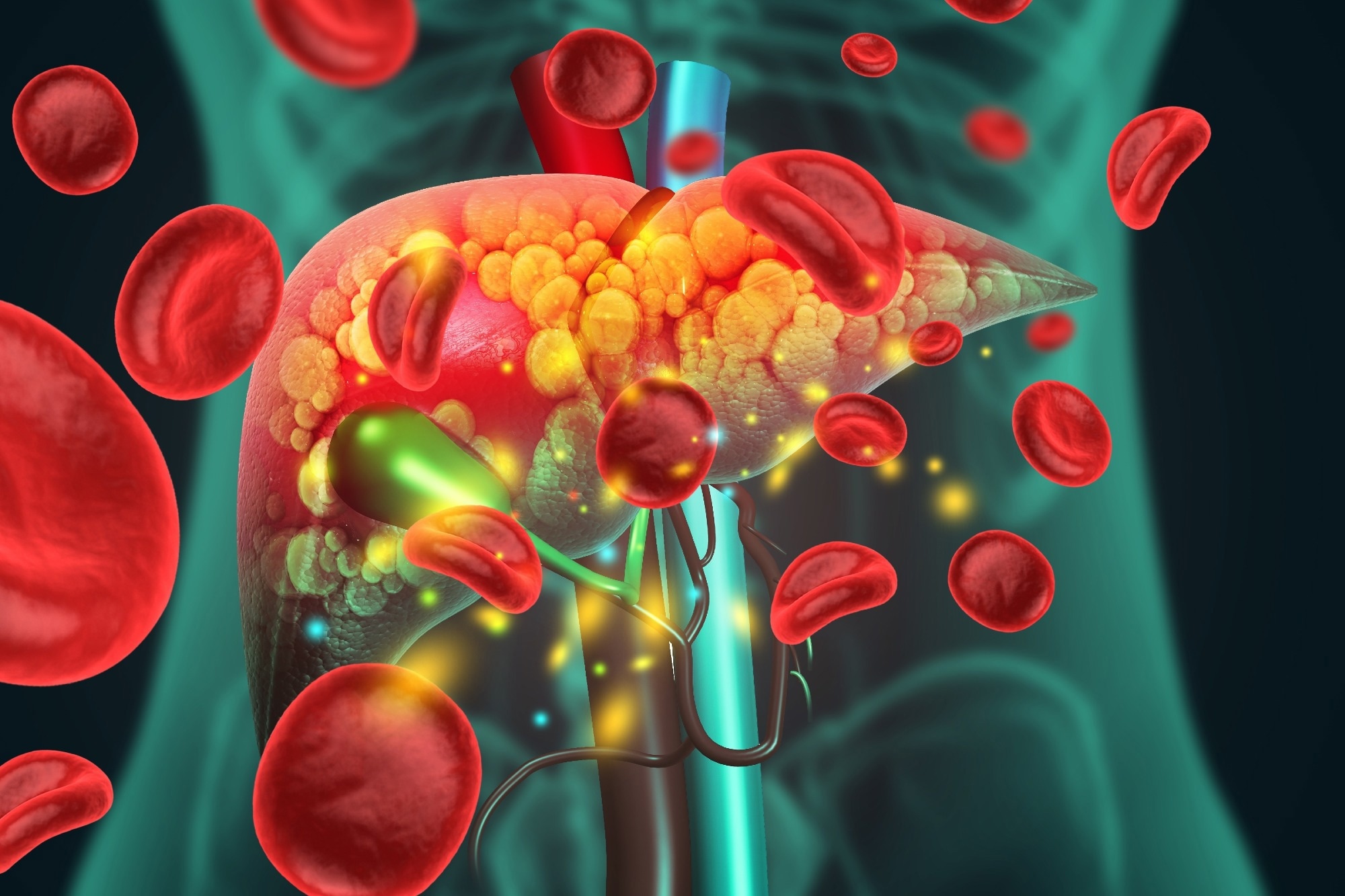 Image Credit: crystal light/Shutterstock.com
The new nomenclature reflects the fundamental point: this is a metabolic disease that is linked to obesity, diabetes, cardiovascular risk, and systemic inflammation.
For years, MASLD was under-recognized by clinicians and nearly invisible to patients. The majority of those who have it are unaware of their condition. Even among people with type 2 diabetes, which is quite common, awareness is still low.
The sickness has serious repercussions. It can proceed from simple steatosis to fibrosis, cirrhosis, and hepatocellular carcinoma, all of which raise cardiovascular risk. In fact, most people with MASLD die due to cardiovascular events rather than liver problems.
The combination of high prevalence, poor awareness, and considerable morbidity presents a unique challenge to medication developers. Early-phase clinical research has become increasingly vital and difficult.
A disease that is common, silent, and difficult to identify
One of the most significant problems in MASLD development is that the condition is both widespread and underdiagnosed. Traditional diagnostic methods are either insensitive or too invasive for widespread screening. Standard abdominal ultrasonography can detect fatty liver only after the disease has progressed.
MRI provides a far more accurate picture, although it is expensive and mainly used in research settings. While transient elastography technologies like FibroScan provide a non-invasive and sensitive alternative, they are expensive and not widely available.
Clinical risk scores such as FIB-4, Agile score, and MASLD Risk Score are useful for identifying individuals who require additional evaluation. These scores are affordable, readily available, and useful for triaging huge populations – but not ideal.
While they can identify high-risk patients, they cannot confirm disease stage or distinguish between steatosis and fibrosis without further imaging or elastography. As a result, sponsors continue to face a fragmented diagnostic landscape, with no single tool providing both scalability and diagnostic precision.
The diagnostic gap has significant consequences for early-phase trials. Identifying prospective volunteers entails more than just starting a study and waiting for referrals.
It requires a determined approach, knowledge of which techniques are appropriate for a particular stage of disease, and the operational competence to screen efficiently without overwhelming patients or sites.
Regulatory expectations are not evolving fast enough
Scientists have made tremendous progress in developing non-invasive ways to measure liver fat, inflammation, and fibrosis. MRI-based techniques, elastography, and sophisticated ultrasound procedures provide a more accurate and consistent image of the liver than standard biopsy. However, regulatory expectations have not entirely caught up.
Much MASLD research, particularly studies aimed at detecting changes in fibrosis, continues to require a biopsy.
This creates a significant obstacle. Biopsies are intrusive, uncomfortable, and have a low but genuine risk of consequences. Patients are understandably hesitant to undergo them repeatedly, and many physicians advise against using them except in cases of definite clinical necessity.
As a result, there is a contradiction between what science can measure and what authorities continue to require.
Sponsors may feel forced to construct biopsy-driven research, even when better technologies exist, which can make recruiting extremely difficult. Programs frequently struggle or stall because individuals are unwilling to endure repeated invasive procedures for research purposes.
Why early‑phase MASLD trials are uniquely challenging
MASLD occurs at the junction of several metabolic pathways, and the development varies greatly from person to person. This heterogeneity makes the early-phase design more susceptible. Developers must understand not only their drug's mechanism of action, but also how it interacts with the larger metabolic environment.
Early-phase studies should capture relevant, practical signals that coincide with the regulatory approach. That includes selecting the appropriate biomarkers, imaging modalities, and objectives that reflect both biological plausibility and operational realism.
It also means acknowledging that MASLD patients frequently have numerous comorbidities – diabetes, hypertension, and dyslipidemia – which influence both disease development and research outcomes.
Early-phase MASLD experiments might become challenging to execute or understand if not well planned. The purpose is not to recreate a Phase II trial in microcosm, but rather to provide early proof that a mechanism is working properly and warrants additional investment.
The value of integrated early‑phase expertise
Given the complexity of MASLD, early‑phase development benefits enormously from an integrated approach. The most effective environments are those that link preclinical discoveries with clinical strategy and clinical strategy to operational execution.
This integration enables teams to select the most relevant markers, anticipate feasibility issues, and design trials that produce valuable early signals without overwhelming patients or sites.
A strong early-phase metabolic unit includes experience with first-in-human and early patient studies, access to relevant populations, validated and refined investigations, and scientific expertise for interpreting early data in context.
This combination facilitates sponsors' transition from preclinical promise to clinical proof of concept with greater clarity and confidence. Smaller biotechs, many of which are driving innovation in MASLD, can benefit greatly from this support.
They often arrive with strong preclinical findings but little expertise in navigating the regulatory, operational, and scientific intricacies of metabolic liver disease. Early advice on study design, objectives, diagnostic tools, and feasibility can help you avoid costly mistakes and move forward faster.
A more realistic, more hopeful path forward
MASLD remains a difficult field of drug development, but it is also one of the most critical. As our understanding of the disease grows and diagnostic tools improve, there are more prospects for meaningful treatment impact. Early-phase development requires realism, scientific rigor, and flexibility to adapt to changing circumstances.
Sponsors may confidently move forward with early-phase studies that are grounded in biology, aligned with regulatory expectations, and designed for practical feasibility. The path is not simple, but it is navigable. With the correct skills, it can be both practicable and rewarding.
Acknowledgments
Produced from materials originally authored by Thomas Forst from hVIVO.