Biology and function of IL-2 and sIL-2R
Interleukin-2 (IL-2) is a central cytokine in the regulation of the immune system, primarily produced by activated T lymphocytes. It plays a crucial role in the proliferation, differentiation, and survival of T cells, as well as in the maintenance of immune tolerance and the prevention of autoimmunity.
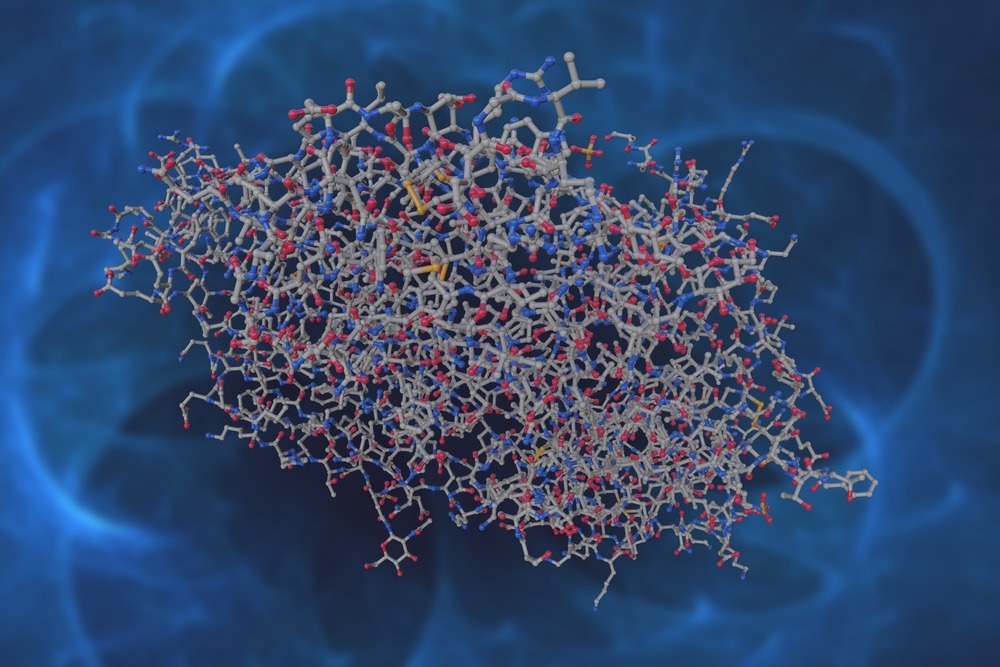
Human interleukin-2 in combination with interleukin-2 receptors. Image Credit: Maryna Olyak/Shutterstock.com
The IL-2 receptor (IL-2R) is a heterotrimeric complex composed of three subunits: alpha (CD25), beta (CD122), and gamma (CD132). The high-affinity receptor, which includes all three subunits, is predominantly expressed on activated T cells. Upon immune activation, the alpha chain (CD25) is upregulated and can be cleaved from the cell surface, resulting in the release of a soluble form known as soluble IL-2 receptor (sIL-2R or sCD25) into the circulation.
The presence of sIL-2R in serum reflects the degree of T-cell activation and immune system engagement. Elevated levels of sIL-2R are indicative of ongoing immune responses, whether due to infection, inflammation, autoimmunity, or malignancy. The measurement of sIL-2R has become a valuable tool in immunology, as it provides a window into the activation status of the immune system. It is important to note that sIL-2R is not disease-specific; instead, it serves as a general marker of immune activation.
The literature, including comprehensive reviews by Arenas-Ramirez et al. (2015) and Damoiseaux (2020), highlights the broad biological significance of IL-2 and its receptor system, as well as the clinical implications of measuring sIL-2R in various pathological conditions.
Clinical relevance of sIL-2R measurement
Sarcoidosis
Sarcoidosis is a multisystem granulomatous disease of unknown etiology, most commonly affecting the lungs, lymph nodes, eyes, and skin. Diagnosing sarcoidosis can be challenging, especially in cases with atypical presentations or when traditional laboratory markers such as angiotensin-converting enzyme (ACE) and lysozyme are within normal ranges. In this context, the measurement of soluble interleukin-2 receptor (sIL-2R) has gained significant clinical importance.
Numerous studies have demonstrated that sIL-2R is a sensitive marker for sarcoidosis. Elevated serum sIL-2R levels are found in a high proportion of patients, often exceeding the sensitivity of ACE, particularly in cases with extrapulmonary involvement such as ocular or neurological sarcoidosis. For example, research by Nguyen et al. (2017) and Gundlach et al. (2016) showed that sIL-2R outperforms ACE and lysozyme in sensitivity for the diagnosis of sarcoidosis and is especially useful in patients with uveitis or other organ involvement where ACE may be normal.
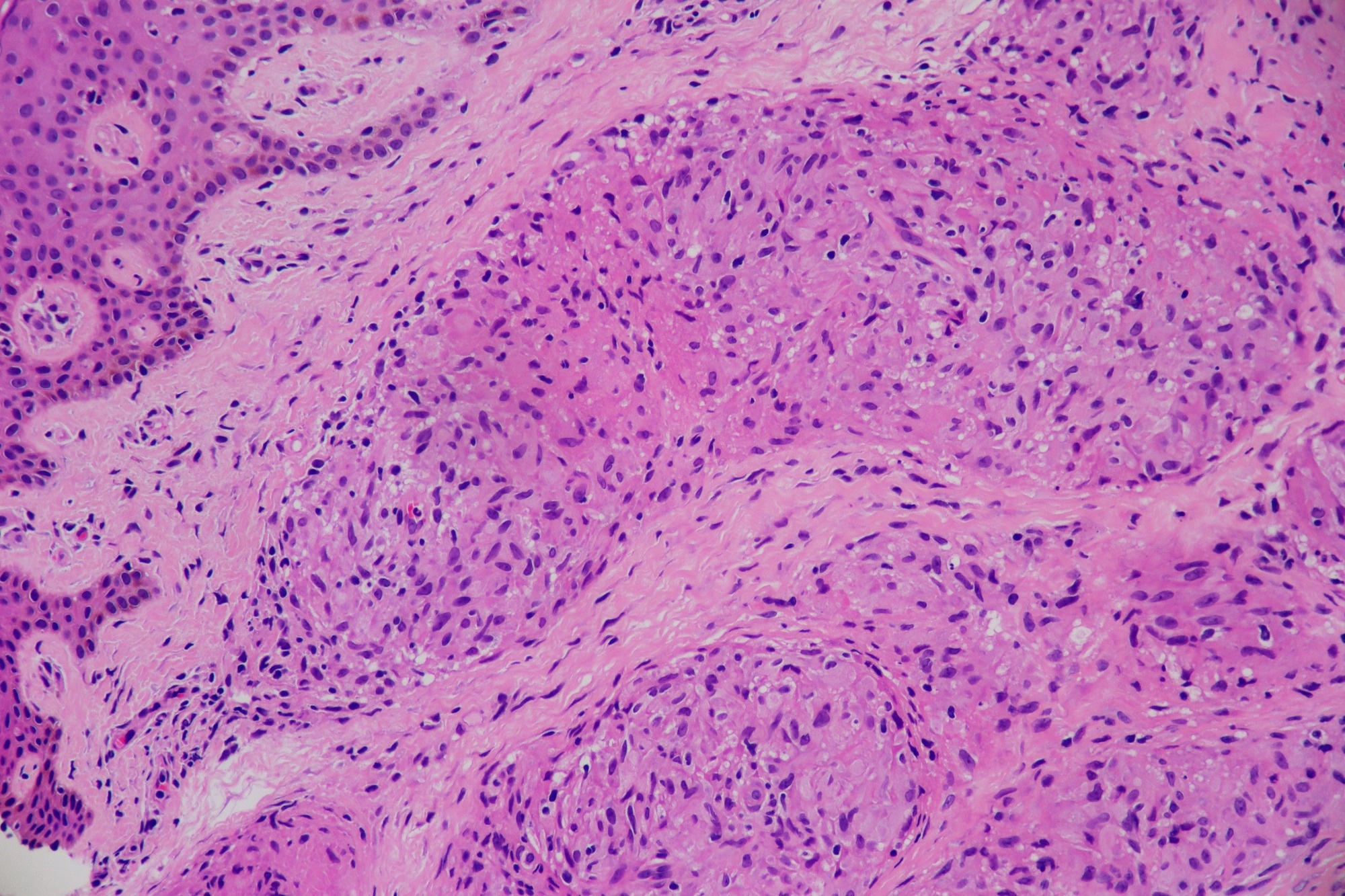
A case of sarcoidosis of the skin showing numerous confluent granulomas in the dermis. Image Credit: Lisa Culton/Shutterstock.com
Furthermore, sIL-2R levels correlate with disease activity, extent of organ involvement, and can be used to monitor response to therapy. Studies such as those by Vorselaars et al. (2015) and Schimmelpennink et al. (2020) have shown that decreasing sIL-2R levels are associated with clinical improvement, while persistently elevated or rising levels may indicate ongoing disease activity or relapse.
Despite its advantages, sIL-2R is not specific for sarcoidosis and can be elevated in other inflammatory or immune-mediated diseases. Therefore, its use is most valuable as part of a multimodal diagnostic approach, in conjunction with clinical, radiological, and histopathological findings. In summary, sIL-2R is a highly sensitive marker for sarcoidosis, particularly useful in challenging diagnostic scenarios and for monitoring disease activity.
Hemophagocytic lymphohistiocytosis (HLH)
Hemophagocytic lymphohistiocytosis (HLH) is a rare, life-threatening syndrome characterized by excessive immune activation and cytokine storm, leading to severe systemic inflammation and multi-organ dysfunction. The diagnosis of HLH is complex and relies on a combination of clinical, laboratory, and histopathological criteria. Among the laboratory markers, sIL-2R has emerged as a key diagnostic tool.
Elevated sIL-2R levels are a hallmark of HLH and are included in the HLH-2004 diagnostic criteria. The pathophysiology of HLH involves uncontrolled activation and proliferation of T lymphocytes and macrophages, resulting in massive release of cytokines, including IL-2 and its soluble receptor.
Studies such as those by Lin et al. (2017) and Hayden et al. (2017) have demonstrated that sIL-2R is a highly sensitive marker for HLH, often reaching levels several times higher than other inflammatory conditions. Measurement of sIL-2R is particularly useful in distinguishing HLH from other causes of fever and cytopenia, and serial measurements can be used to monitor response to therapy.
While sIL-2R is not specific for HLH and can be elevated in other conditions with immune activation, the degree of elevation in HLH is typically much higher. Therefore, sIL-2R is an essential component of the diagnostic workup for suspected HLH and is valuable for both diagnosis and disease monitoring.
Autoimmune and inflammatory diseases
sIL-2R is also elevated in a variety of autoimmune and inflammatory diseases, reflecting the underlying immune activation characteristic of these conditions. In diseases such as multiple sclerosis (MS), rheumatoid arthritis (RA), systemic lupus erythematosus (SLE), and IgG4-related disease, sIL-2R serves as a marker of disease activity and immune system engagement.
In multiple sclerosis, studies have shown that sIL-2R levels are elevated during active disease phases and may correlate with disease progression and response to immunomodulatory therapy (Maier et al., 2009; Peerlings et al., 2021). In rheumatoid arthritis and SLE, sIL-2R levels are associated with disease activity, joint inflammation, and systemic involvement (Beckham et al., 1992; Manoussakis et al., 1992).
Similarly, in IgG4-related disease, sIL-2R has been proposed as a marker for monitoring disease activity and response to treatment (Karim et al., 2018).
However, the lack of disease specificity limits the diagnostic utility of sIL-2R in these conditions. Its main value lies in disease monitoring and as a supplementary marker in complex cases where traditional markers are inconclusive. Elevated sIL-2R should always be assessed in the context of the patient’s clinical presentation and other laboratory findings.
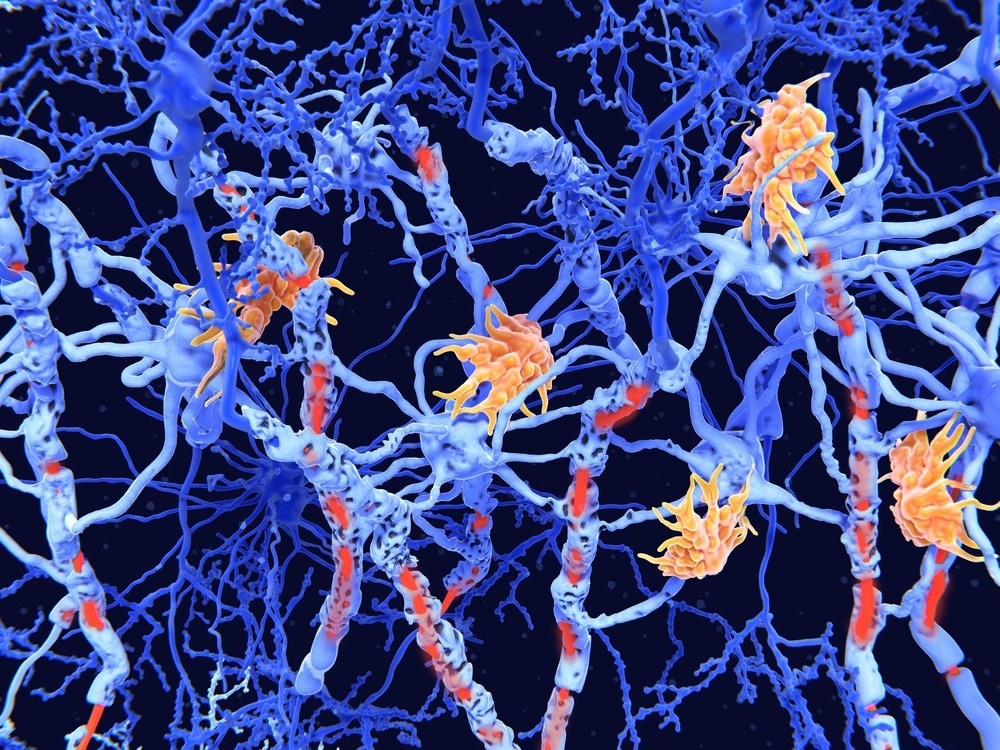
Multiple sclerosis microglia cells (orange) attack the oligodendrocytes (light blue) that form the myelin sheath around neuron axons. Image Credit: Juan Gaertner/Shutterstock.com
Malignancies and other conditions
Elevated sIL-2R levels are also observed in various hematological malignancies, particularly those involving T-cell activation or proliferation, such as lymphomas and myelofibrosis. In these settings, sIL-2R can serve as a marker of tumor burden, disease activity, and prognosis (Barabanshikova et al., 2017). Additionally, sIL-2R may be elevated in chronic infections, chronic liver diseases, and other inflammatory states, reflecting generalized immune activation (Seidler et al., 2012; Durda et al., 2015).
Reference values for sIL-2R can vary depending on age, renal function, and the specific assay used. Studies have established age-dependent reference ranges and highlighted the importance of considering pre-analytical factors when interpreting results (Sack et al., 1998; Rothkrantz-Kos et al., 2004).
In summary, while sIL-2R is a sensitive marker of immune activation across a wide range of diseases, its lack of specificity means that it should be used as part of a comprehensive diagnostic and monitoring strategy, always in conjunction with clinical and other laboratory data.
Summary of German clinical guidelines
sIL-2R is recommended as a laboratory marker in the diagnostic workup of uveitis and suspected ocular sarcoidosis, especially when ACE is inconclusive or normal, according to the Deutsche Ophthalmologische Gesellschaft (DOG/BVA). In neurology, the Deutsche Gesellschaft für Neurologie (DGN) mentions sIL-2R as a supportive marker in the differential diagnosis of neurosarcoidosis and other immune-mediated neuropathies.
The Deutsche Gesellschaft für Nephrologie (DGfN/DGKL) includes sIL-2R in the extended laboratory panel for the evaluation of systemic diseases with renal involvement, such as sarcoidosis or HLH.
Clinical relevance of sIL-2R in diagnostic laboratories
Advantages:
sIL-2R is a sensitive marker for T-cell activation and immune system activity. It's useful for supporting sarcoidosis diagnosis (especially extrapulmonary/ocular), HLH, and monitoring disease activity in various immune-mediated diseases. It is particularly valuable in cases with inconclusive standard markers, such as normal ACE in sarcoidosis.
Limitations:
The main limitation is its lack of specificity, as sIL-2R is elevated in many inflammatory, autoimmune, infectious, and neoplastic conditions. Interpretation requires clinical context and correlation with other laboratory and clinical findings.
Practical use:
sIL-2R should be used as part of a multimodal diagnostic approach. Reference ranges and pre-analytical factors (age, renal function, lifestyle, assay type) must be considered. Serial measurements can help monitor disease activity and response to therapy.
Conclusion
sIL-2R is a valuable laboratory marker for immune activation, with established roles in the diagnosis and monitoring of sarcoidosis (especially when ACE is normal or in extrapulmonary cases), HLH, and other immune-mediated diseases. Its use is supported by German and international guidelines, particularly in complex or ambiguous cases.
However, due to its lack of disease specificity, sIL-2R results should always be interpreted in the context of the overall clinical picture.
Readings and Further References:
- Arenas-Ramirez, N., Woytschak, J. and Boyman, O. (2015). Interleukin-2: Biology, Design and Application. Trends in Immunology, 36(12), pp.763–777. DOI: 10.1016/j.it.2015.10.003. https://www.cell.com/trends/immunology/abstract/S1471-4906(15)00248-3.
- Taniguchi, T. (1993). The IL-2/IL-2 receptor system: A current overview. Cell, 73(1), pp.5–8. DOI: 10.1016/0092-8674(93)90152-g. https://www.cell.com/cell/abstract/0092-8674(93)90152-G.
- Damoiseaux, J. (2020). The IL-2 – IL-2 receptor pathway in health and disease: The role of the soluble IL-2 receptor. Clinical Immunology, (online) 218, p.108515. DOI: 10.1016/j.clim.2020.108515. https://www.sciencedirect.com/science/article/pii/S1521661620303910?via%3Dihub.
- Rubin, L.A. (1990). The Soluble Interleukin-2 Receptor: Biology, Function, and Clinical Application. Annals of Internal Medicine, 113(8), p.619. DOI: 10.7326/0003-4819-113-8-619. https://www.acpjournals.org/doi/10.7326/0003-4819-113-8-619.
- Thomas, L. (2020). Web App Clinical Laboratory Diagnostics: Free of charge and ads. https://www.clinical-laboratory-diagnostics-2020.com
- Dik, W. A., & Heron, M. (2020). Clinical significance of soluble interleukin-2 receptor measurement in immune-mediated diseases. The Netherlands journal of medicine, 78(5), 220–231.
- Joachim Müller-Quernheim (1998). Sarcoidosis: immunopathogenetic concepts and their clinical application. The European respiratory journal, 12(3), pp.716–738. DOI: 10.1183/09031936.98.12030716. https://publications.ersnet.org/content/erj/12/3/716.
- Gundlach, E., et al. (2016). Interleukin-2 Receptor and Angiotensin-Converting Enzyme as Markers for Ocular Sarcoidosis. PLOS ONE, 11(1), p.e0147258. DOI: 10.1371/journal.pone.0147258. https://journals.plos.org/plosone/article?id=10.1371/journal.pone.0147258.
About IBL International GmbH, Part of Tecan Group

IBL International has nearly 30 years experience in development, production and sales of immunodiagnostic products, and is an expert in these fields. Our product portfolio contains enzyme-, radio- and luminescence immunoassays that covers over 1000 products in a broad range of in vitro diagnostics for research and routine. These products are designed for manual use, but can be easily adapted for open automated systems. We also have a large selection of “niche products” for special applications to complete our product line.
IBL International also focuses on special test systems outside of the standard routine diagnostic tests. For example, we carry immunoassays for the determination of Neurotransmitters or other biogenic amines, steroid hormones in saliva, HMGB1, Neopterin and assays for Alzheimer’s research. We are continuously refining our immunoassays to assure high quality and reliable products. IBL International has a widespread distribution network in over 90 countries. We support our national and international customers with our professional team of product managers and customer service professionals.
Sponsored Content Policy: News-Medical.net publishes articles and related content that may be derived from sources where we have existing commercial relationships, provided such content adds value to the core editorial ethos of News-Medical.net, which is to educate and inform site visitors interested in medical research, science, medical devices, and treatments.