Introduction
Diet, Gut Microbiota, and Joint Inflammation
Polyphenols & Cartilage Preservation
Omega-3 Polyunsaturated Fatty Acids & Lipid Mediators
Advanced Glycation End-products (AGEs) & Joint Stiffening
Dietary Patterns & Clinical Evidence
Conclusions & Future Research Directions
References
Further reading
From gut microbes to cartilage chemistry, researchers are investigating how dietary compounds influence joint inflammation and what these mechanisms could mean for arthritis care.
 Image Credit: ra2 studio / Shutterstock.com
Introduction
Diet may influence joint health by affecting inflammation, gut microbial activity, and cartilage breakdown. Researchers are studying plant-derived polyphenols and omega-3 fatty acids for their ability to regulate these pathways, while advanced glycation end-products (AGEs), which form in the body and during food processing, may contribute to cartilage stiffness and inflammatory signaling.
For people with osteoarthritis, some clinical trials suggest that selected polyphenol preparations and omega-3 supplements can modestly improve pain and joint function. Whether dietary changes can preserve cartilage or slow disease progression remains uncertain, making it important to distinguish symptom relief from lasting changes in joint structure
Diet, Gut Microbiota, and Joint Inflammation
While rheumatoid arthritis (RA) is an autoimmune condition that leads to synovial inflammation, osteoarthritis (OA) is a whole-joint disease involving cartilage, synovium, subchondral bone, and other joint structures. Mechanical loading and injury contribute to OA, alongside age-related, metabolic, and inflammatory processes.1,2,7
Advances in molecular research have increased interest in the gut-joint axis, which describes communication between intestinal microorganisms, their metabolites, systemic immunity, and joint tissues. Human studies report associations between gut microbiota and OA, while much of the mechanistic evidence comes from experimental models.1,2
Dysbiosis, characterized by alterations in gut microbial composition and function, can compromise the intestinal epithelial barrier, allowing bacterial components like lipopolysaccharides (LPS) to enter the systemic circulation.2 LPS activates Toll-like receptor 4 (TLR4) and its associated receptor proteins on synovial macrophages and chondrocytes (cartilage cells), thereby triggering inflammatory signaling and the production of pro-inflammatory cytokines and matrix-degrading enzymes.2
Microbial metabolites may also regulate these responses. In one study, researchers observed that microbial fermentation of dietary fibers yields short-chain fatty acids (SCFAs) like butyrate, which can support the intestinal barrier, promote the development of regulatory T-cells that help control immune responses, and modulate pathways affecting cartilage cells.1,2 These findings support investigation of diet, gut health, and joint outcomes. Animal experiments provide evidence of biological mechanisms, though human studies are needed to clarify whether modifying the microbiome produces sustained improvements in OA symptoms or progression.1,2
 Image Credit: New Africa / Shutterstock.com
Polyphenols & Cartilage Preservation
Polyphenols are plant-derived compounds studied for their antioxidant and anti-inflammatory properties. In the context of joint health, laboratory and animal studies suggest that certain polyphenols exert chondroprotective effects, meaning they protect cartilage by modulating the biochemical pathways responsible for cartilage degradation.3,5,6
Examples include epigallocatechin gallate (EGCG) from green tea, curcumin from turmeric, resveratrol from grapes, and quercetin from apples and onions. These food sources differ from the concentrated extracts and formulated products used in many experiments and clinical trials.3,5,6 Several studies have reported that certain polyphenols reduced activity in inflammatory signaling pathways, including nuclear factor-kappa B (NF-κB) and mitogen-activated protein kinase (MAPK) cascades.6
Mechanistic investigations describe compound-specific effects, including reduced NF-κB nuclear translocation and lower expression of inflammatory mediators or cartilage-degrading enzymes. These include cyclooxygenase-2 (COX-2), matrix metalloproteinases 1 (MMP-1) and MMP-13, as well as aggrecanases like ADAMTS-4 and ADAMTS-5.5,6 MMP-1 and MMP-13 cleave collagen, including type II collagen, while ADAMTS-4 and ADAMTS-5 degrade aggrecan; therefore, increased activity contributes to the loss of cartilage extracellular matrix.5,6
Some small clinical trials of polyphenol formulations report improvements in joint pain scores and functional capacity. Results vary by compound and preparation; selected curcuminoid products have shown short-term benefits, while a phase 3 trial of oral resveratrol did not show benefit over placebo for knee pain. That trial was underpowered, which limits the certainty of its negative finding.3,6
Research interest in these compounds has expanded, though publication trends do not measure treatment effectiveness. Clinical interpretation depends on trial quality, formulation, and outcomes, as changes in oxidative stress markers alone cannot demonstrate cartilage preservation or explain symptom improvements.3,4,6
Omega-3 polyunsaturated fatty acids (PUFAs), including eicosapentaenoic acid (EPA) and docosahexaenoic acid (DHA), can influence cell membrane composition and inflammatory lipid signaling within the joint microenvironment.7 These predominantly marine-derived fatty acids alter the availability and metabolism of omega-6 arachidonic acid (AA), which can reduce production of inflammatory eicosanoids such as prostaglandin E2 and leukotriene B4, in addition to their effects on cell signaling and the production of other lipid mediators.7
Experimental studies report that EPA and DHA can reduce inflammatory signaling involving tumor necrosis factor-alpha (TNF-α) and interleukin-1 beta (IL-1β). Importantly, clinical OA trials have not consistently demonstrated systemic cytokine reductions.7
EPA and DHA also provide precursors for specialized pro-resolving mediators (SPMs), including EPA-derived E-series resolvins and DHA-derived D-series resolvins, protectins, and maresins, which limit neutrophil recruitment and stimulate macrophage clearance of cellular debris. Selected mediators have also reduced inflammatory responses and chondrocyte apoptosis in OA models, though these findings do not establish equivalent effects from oral fish oil supplementation in patients.7,8
Across nine randomized trials involving 2,070 patients with OA, omega-3 supplementation produced small pooled improvements in pain and joint function. The preparations studied include fish oil, krill oil, green-lipped mussel extracts, and multicomponent supplements. Thus, these trials differed in formulation, dose, duration, and results, leaving the optimal treatment regimen uncertain.
Evidence for reduced morning stiffness and NSAID use in OA is less consistent. For example, a krill oil trial reported improved symptoms without a reduction in NSAID use.7
Structural preservation also remains unproven. An observational study linked higher intake of monounsaturated and polyunsaturated fats with less radiographic joint-space loss, or narrowing of the space between bones. However, this finding was not specific to erythrocyte omega-3 levels and cannot establish a treatment effect.7,9
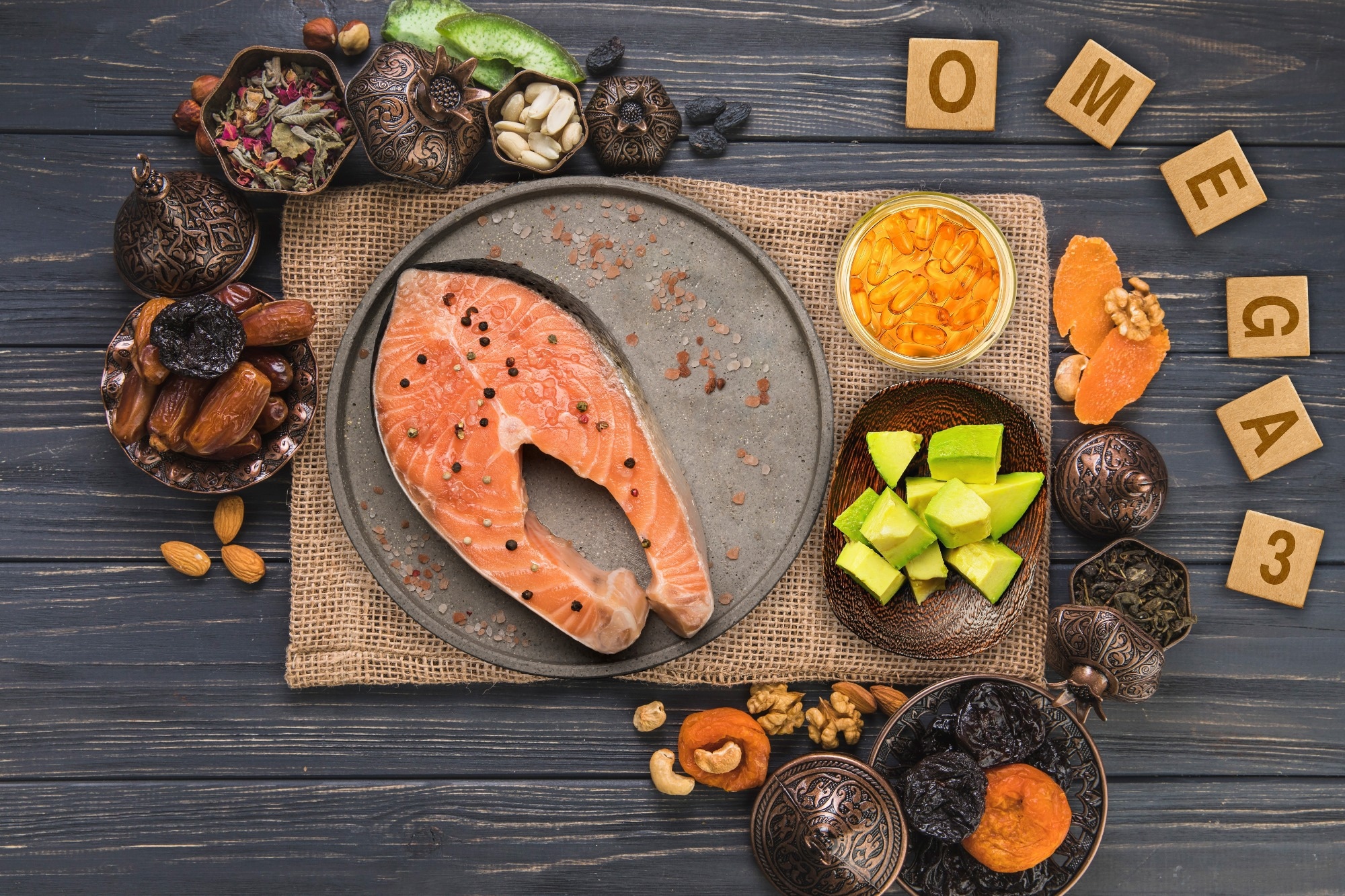 Image Credit: UmutcanKaratas / Shutterstock.com
Advanced Glycation End-products (AGEs) & Joint Stiffening
Advanced glycation end-products (AGEs) are a heterogeneous group of compounds implicated in tissue damage through protein modification and inflammatory signaling. AGEs form through non-enzymatic glycation reactions involving reducing sugars and proteins or lipids, both within the body and during food processing.10
Endogenous AGE formation increases with hyperglycemia and aging, while food and smoking provide additional exposure. High-heat, dry cooking methods such as grilling, frying, and roasting can increase food AGE content. Nevertheless, evidence linking tissue AGE accumulation to joint disease does not establish that dietary AGEs independently increase RA or OA incidence or accelerate progression.10
Mechanistically, some AGEs form cross-links in long-lived proteins, including collagen in cartilage, thereby reducing tissue elasticity. This accumulation can contribute to cartilage stiffness and altered mechanical properties, but dietary exposure likely does not account for all AGE accumulation in joints.10
AGE-related effects also involve the receptor for AGEs (RAGE). Experimental studies and analyses of joint tissues link AGE-RAGE signaling with reactive oxygen species (ROS), NF-κB activation, and pro-inflammatory cytokine production. Associations between AGE-related markers and arthritis severity support further investigation of this pathway as a therapeutic target.10
Cooking methods such as steaming, stewing, and boiling, along with acidic ingredients such as vinegar or lemon juice, can reduce AGE formation in food. These approaches lower dietary exposure, though their ability to prevent joint stiffening or improve arthritis outcomes requires direct clinical testing.10
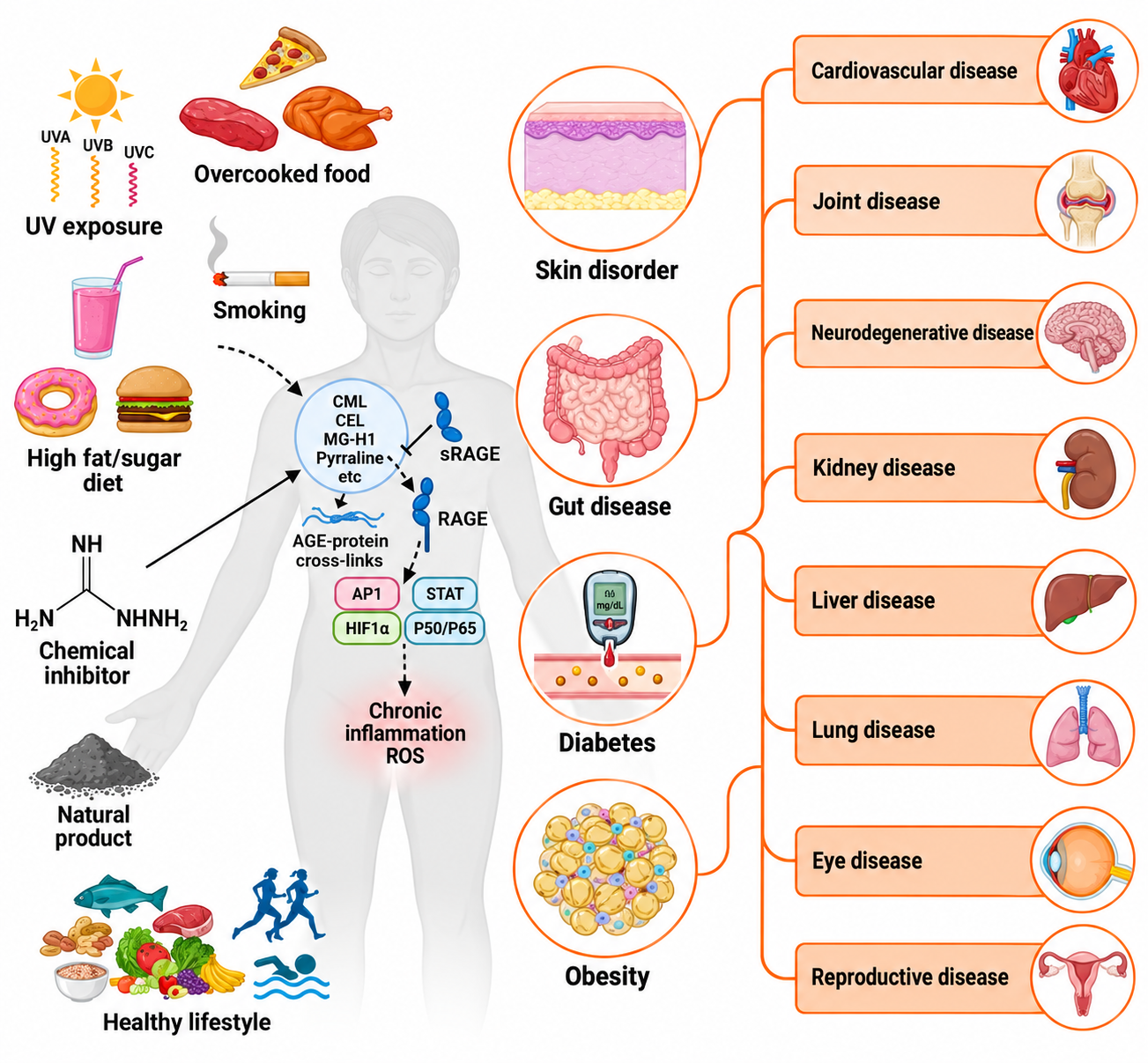
Image Credit: Zhang, Y., et al. (2025)10
Dietary Patterns & Clinical Evidence
The Mediterranean dietary pattern, which is plant-predominant and includes vegetables, fruits, whole grains, legumes, nuts, olive oil, and fish, supplies several nutrients studied in OA. Nevertheless, future clinical trials must determine whether adherence to the Mediterranean diet is associated with OA severity.1
Interpretation also requires attention to body weight. For people with overweight or obesity, weight reduction can affect joint loading and metabolic inflammation, making it difficult to separate these benefits from effects attributed to individual dietary components.1
Many polyphenols, including curcumin and resveratrol, have poor aqueous solubility and are rapidly metabolized. Formulation strategies may improve exposure, but improved absorption alone does not necessarily translate into better joint outcomes. Proposed combined effects between polyphenols also require formal testing, as it remains unclear how these interactions are measured and whether combinations provide benefits beyond their individual components.3,6
The available evidence does not establish an ideal dietary omega-6 to omega-3 ratio for OA or a validated dietary AGE threshold. Differences in fatty acid preparations and trial results prevent a universal supplement prescription.7,9,10
Eating polyphenol-containing foods cannot be assumed to reproduce the doses or effects of concentrated trial products. Equally, existing trials do not establish a routine need for supplementation when food intake falls below a defined therapeutic threshold. Safety and tolerability also depend on the compound, formulation, and dose.3,6,9
Researchers are investigating nanoparticles, liposomes, and other delivery systems to improve stability, bioavailability, and joint retention. Some approaches involve intra-articular administration. Findings from these platforms cannot be generalized to targeted delivery of ordinary oral supplements to synovial tissues.6
Mayo Clinic Minute: Fighting arthritis with food
Conclusions & Future Research Directions
Current evidence supports further evaluation of dietary approaches as adjuncts to OA management. Polyphenols and omega-3 PUFAs have biological plausibility and some evidence of symptom benefit, while AGE-related research identifies mechanisms that may contribute to tissue damage. Whether combining these approaches produces additional clinical benefits or slows joint degeneration remains unresolved.1,3,6,7,9,10
Current research is constrained by methodological limitations, including small sample sizes, short follow-up, differences in doses and formulations, and limited assessment of structural outcomes. Patient-reported pain and function remain clinically relevant, but cannot establish cartilage preservation.3,6,7,9 Longer randomized trials combining these outcomes with quantitative cartilage imaging, such as magnetic resonance imaging (MRI), would help determine whether symptom improvements accompany structural changes.1,6
Personalized nutrition based on metabolic, microbial, or synovial biomarkers remains a research objective. Clinical use will require validated markers and trials showing that biomarker-guided choices improve outcomes compared with standard dietary care.1,2
References
- Wang, Y., Cao, Z., Gao, Y., et al. (2025). Nutritional interventions for osteoarthritis: targeting the metabolism-inflammation-oxidative stress axis - clinical evidence and translational practice. Frontiers in Nutrition 12. DOI: 10.3389/fnut.2025.1661136. https://www.frontiersin.org/journals/nutrition/articles/10.3389/fnut.2025.1661136/full
- Plewa, P., Graczyk, P., Figiel, K., et al. (2026). Gut and Joint Microbiome and Dysbiosis: A New Perspective on the Pathogenesis and Treatment of Osteoarthritis. Pathogens 15(1); 62. DOI: 10.3390/pathogens15010062. https://www.mdpi.com/2076-0817/15/1/62
- Valsamidou, E., Gioxari, A., Amerikanou, C., et al. (2021). Dietary Interventions with Polyphenols in Osteoarthritis: A Systematic Review Directed from the Preclinical Data to Randomized Clinical Studies. Nutrients 13(5); 1420. DOI: 10.3390/nu13051420. https://www.mdpi.com/2072-6643/13/5/1420
- Sheng, W., Cao, S., Qin, H., et al. (2025). Mapping the Research Landscape of Polyphenols in Osteoarthritis: A Bibliometric Perspective. Journal of Multidisciplinary Healthcare 18; 5849-5864. DOI: 10.2147/jmdh.s547995. https://www.dovepress.com/mapping-the-research-landscape-of-polyphenols-in-osteoarthritis-a-bibl-peer-reviewed-fulltext-article-JMDH
- Sirše, M. (2022). Effect of Dietary Polyphenols on Osteoarthritis - Molecular Mechanisms. Life, 12(3), 436. DOI: 10.3390/life12030436. https://www.mdpi.com/2075-1729/12/3/436
- Vélez-Slimani, H., Hernández-Montelongo, J., & Salazar, L. A. (2025). Recent Developments in Osteoarthritis Research: Innovative Therapeutic Approaches and the Role of Polyphenols and Nanotechnology. International Journal of Molecular Sciences, 26(18), 8925. DOI: 10.3390/ijms26188925. https://www.mdpi.com/1422-0067/26/18/8925
- Cordingley, D. M., & Cornish, S. M. (2022). Omega-3 Fatty Acids for the Management of Osteoarthritis: A Narrative Review. Nutrients, 14(16), 3362. DOI: 10.3390/nu14163362. https://www.mdpi.com/2072-6643/14/16/3362
- Serhan, C. N., Dalli, J., Colas, R. A., et al. (2015). Protectins and maresins: New pro-resolving families of mediators in acute inflammation and resolution bioactive metabolome. Biochimica et Biophysica Acta (BBA) - Molecular and Cell Biology of Lipids 1851(4); 397–413. DOI: 10.1016/j.bbalip.2014.08.006. https://www.sciencedirect.com/science/article/abs/pii/S1388198114001619?via%3Dihub
- Deng, W., Yi, Z., Yin, E., et al. (2023). Effect of omega-3 polyunsaturated fatty acids supplementation for patients with osteoarthritis: a meta-analysis. Journal of Orthopaedic Surgery and Research, 18(1). DOI: 10.1186/s13018-023-03855-w. https://link.springer.com/article/10.1186/s13018-023-03855-w
- Zhang, Y., Zhang, Z., Tu, C., et al. (2025). Advanced Glycation End Products in Disease Development and Potential Interventions. Antioxidants 14(4); 492. DOI: 10.3390/antiox14040492. https://www.mdpi.com/2076-3921/14/4/492
Further Reading
Last Updated: Nov 11, 2026