In this interview, News Medical-Life Sciences speaks with Will Edwards, CEO of Astoriom, about the critical role of sample storage in drug discovery and development. He discusses the importance of biological sample management, stability storage, validation, and business continuity in protecting valuable research materials.
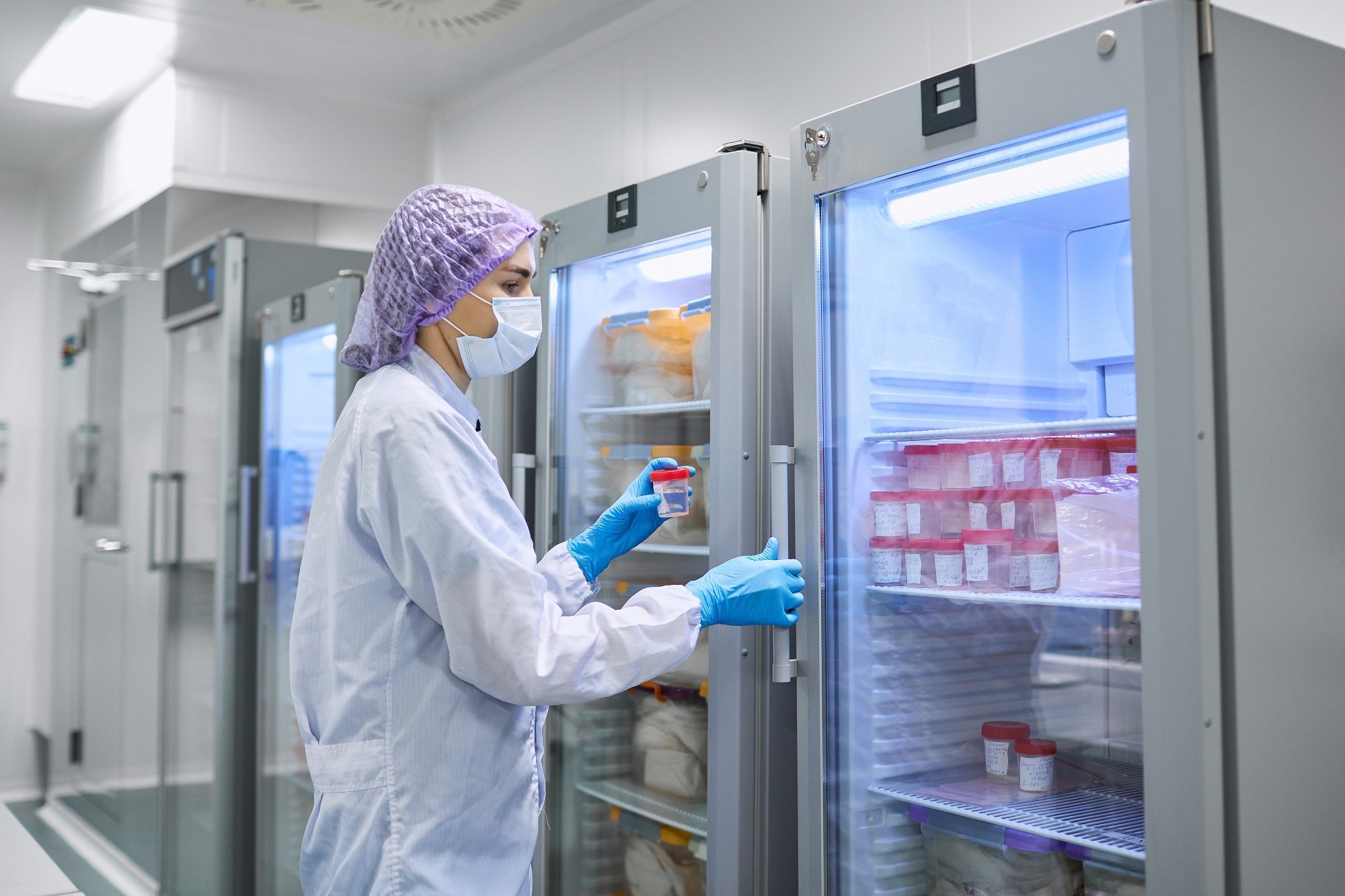 Image credit: Sergei Anishchenko/Shutterstock.com
To start, could you introduce yourself and your role at Astoriom, and explain where the company adds the most value within the drug discovery ecosystem?
In terms of drug discovery, what Astoriom provides is essentially the specialist infrastructure that enables scientists to focus on their discovery programs. Specifically, we provide sample storage, stability programs, and validation services that support our customers' research.
That might involve biological samples, tissues, cell banks, drug substances, or drug products. How we store those materials depends on what we're storing, and conditions can range from elevated temperature and humidity to ambient, refrigerated, frozen, ultra-low-temperature, and cryogenic storage.
Our role is to provide that specialist infrastructure and expertise so that researchers can concentrate on the science. We can support programs from the earliest stages of discovery, through development and scaling, all the way to clinical and commercial manufacturing.
For readers who may not be familiar, what exactly are sample storage, stability, and validation services, and why do they matter so much for drug discovery?
Sample storage is essentially the controlled protection and management of specific samples to support research. It involves maintaining and safeguarding samples under appropriate conditions, temperatures and storage environments depending on the material.
Stability storage focuses on maintaining specific environmental conditions so we can show how a sample or drug's quality changes over time. Samples might be removed periodically and tested to assess their quality, efficacy, and safety. Maintaining those defined conditions throughout the program is essential to generating reliable stability data. This evidence supports decisions about formulation, packaging, shelf life and, later in development, regulatory submissions.
Validation is another important part of what we do. It's about providing documented evidence that the equipment and systems supporting these programs are doing what they're supposed to be doing. Having a freezer or storage chamber isn't enough. You need to show that the equipment performs as expected and that storage conditions are consistently maintained.
Astoriom often has a behind-the-scenes role. What are the biggest misconceptions you encounter about sample storage and biorepositories in R&D programs?
One of the biggest misconceptions is that storage is simply about finding a freezer somewhere and putting something into it. Yes, physical storage matters, but our service is about much more than that. It's about the data, the reliability, the systems and processes, the quality management systems (QMS), and the disaster recovery and business continuity arrangements surrounding those samples. A sample might have required significant investment to produce, and in some cases, it might be impossible to replace. So it's much more than just finding a freezer.
Even with the best storage program in place, a failure will happen at some point. A freezer may breakdown, a site might experience a power disruption, or the people who understand a particular program might leave the organization. You need to think about what happens when those unexpected events arise and how you can minimize disruption. That's why a lot of what we do extends beyond outsourced storage. We also partner with customers and consult on what their broader storage program should look like, including validation, disaster recovery, and contingency planning.
It's about expecting the unexpected and ensuring that the right systems are in place to protect those samples.
You've recently expanded in the UK and US through acquisitions, including Sampled's UK storage and technical services operations and Precision Stability Storage. What new capabilities do these acquisitions unlock for biopharma and biotech teams?
These acquisitions enable three key things for us and our customers: additional capacity, specialist expertise, and broader geographic coverage.
Together, those capabilities mean we can support a customer from the very earliest stages of discovery, through scaling, and ultimately into clinical or commercial development. We can also do that closer to our customers because we now have a much broader network of sites.
The acquisition of Sampled's UK operations has added stability storage capacity and expertise in technical services and validation. In the US, the acquisition of Precision Stability Storage has given us three sites along the East Coast, complementing our existing West Coast operations.
Beyond the additional storage capacity, these acquisitions strengthen our technical expertise in areas such as servicing and validation. So we're not simply storing materials on behalf of customers. We can support them more broadly, with the specialist services and infrastructure they need as their research progresses.
Learn more about Astoriom's biorepository services
As drug discovery workflows become increasingly complex, what sample management and stability challenges are you hearing about most from research leaders, and how is Astoriom responding?
Things are certainly getting more complex. We're seeing increasingly specialized drug products that require very specific storage conditions. There's more complexity around what organizations are producing, where those materials need to be stored, how they're identified, and the data that needs to sit behind all of that.
There's also a growing focus on resilience. For us, resilience isn't simply about storing and safeguarding a sample under the right conditions. It's also about ensuring that, whatever happens, plans are in place to protect those materials and keep storage operations running. That's becoming increasingly important from a regulatory perspective as well. For FDA submissions, we're seeing greater emphasis on clearly defined plans to manage unexpected disruptions. It's not enough to show you have a good quality management system and the relevant data; you also need to show your program has resilience built in.
Our response is to look at the entire picture, not just the equipment or storage space. That means working with customers on their specific requirements, validating their systems, reviewing their disaster recovery arrangements, and defining the processes needed to maintain reliable storage conditions over time.
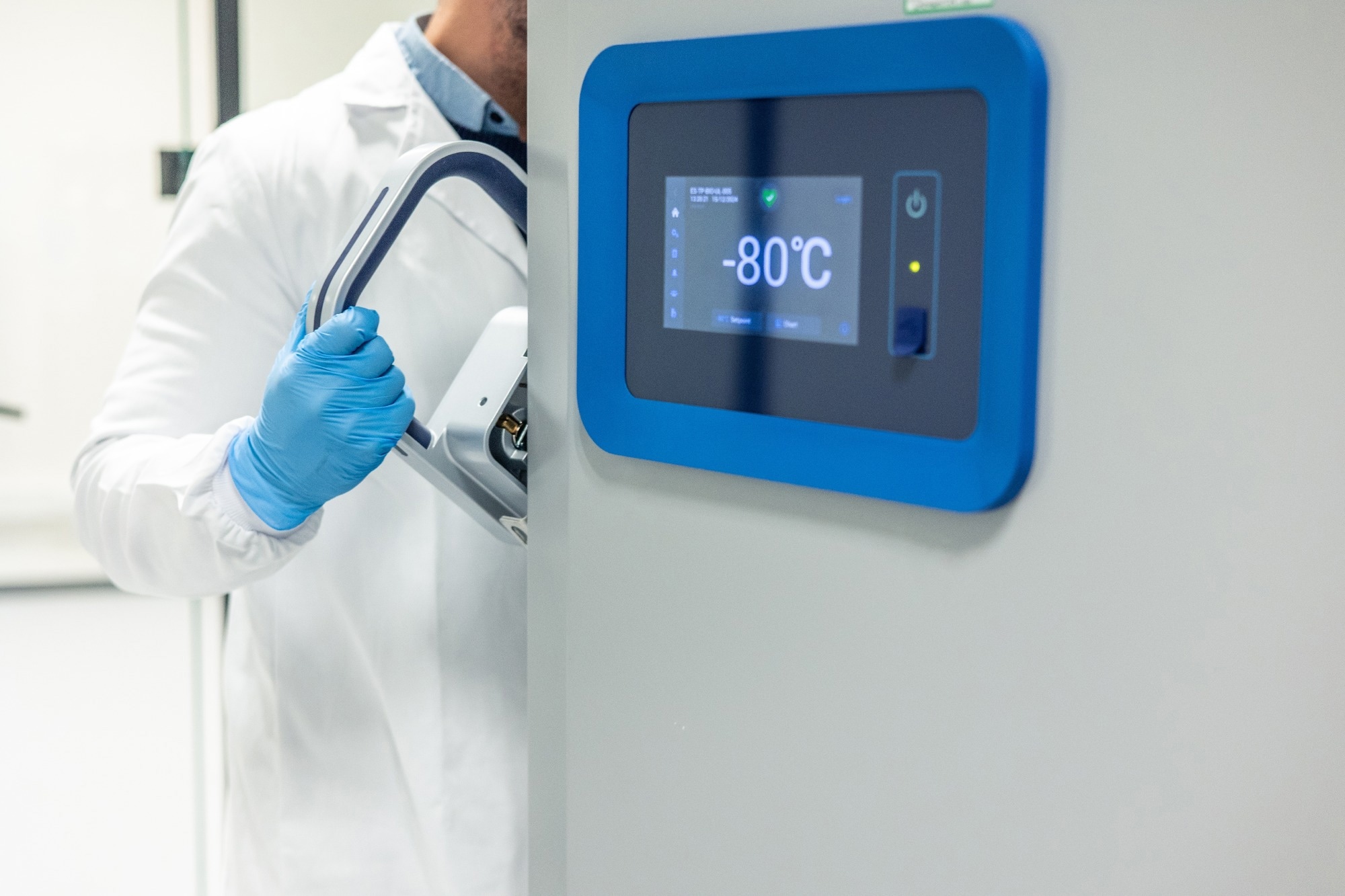 Image credit: Eder Paisan/Shutterstock.com
How does data-driven decision-making help Astoriom manage highly regulated environments, ensure compliance, and give customers confidence in the integrity of their samples?
For us, data is fundamentally about demonstrating that samples have been stored under the conditions our partners expect, and showing the consistency of those conditions over time. AI is important and is helping us move faster, but the fundamentals remain crucial. It's about making sure we're collecting the right information in the first place: What are we storing? Where is it being stored? How is it being stored? Who has accessed it? Where has it moved from and to? We also need consistent information around change control and the equipment itself. What's the maintenance history? Has the equipment been serviced and validated? All of that information is important.
From a technology perspective, it's not just about creating more data. It's about ensuring that the data we have drives insight. We want to think ahead and focus on prevention rather than recovery when it comes to maintaining samples. And beyond insight, it's about driving action. What information can we collect that gives our customers and us a better understanding of their programs, and what actions can we take as a result?
Even when we're speaking to somebody in the discovery phase, we're already thinking about what might be required when they eventually submit for FDA approval. Can they demonstrate where a sample has been stored at all times, the conditions under which it has been stored, and that the equipment has been appropriately serviced and validated? The level of detail required will vary depending on whether something is being used purely for research or is ultimately intended for the market, but maintaining a complete and traceable record of each sample's storage history is critical.
Astoriom collaborates with a number of strategic partners. How important are these strategic partnerships for the future of drug research?
Partnerships are incredibly important to us, no matter who we're working with. We focus on our area of specialism and expertise: storage. By working with strong partners, we can make the overall experience much more seamless for the end customer. Whether we're providing storage alone or working alongside partners involved in testing or other supporting processes, we need to make that experience as straightforward as possible. That means coordinating activities, minimizing customer touchpoints, and ensuring the different businesses are properly integrated.
I don't think any single partner necessarily needs to provide the full range of services end to end for biotechnology or pharmaceutical companies. Instead, with strong partnerships, each organization can bring expertise and focus that may go beyond what you'd get under one umbrella. We're happy to work with partners of all different sizes, and we have strong partnerships across the US, UK, and Ireland. It's about focusing on what you do best and partnering with others who excel in their specialist areas.
You've stepped into the CEO role during a period of significant growth for Astoriom. What are your priorities over the next 12 to 18 months, and how will these benefit drug discovery customers?
Our first priority right now is integration. Over the last few months, we've acquired several businesses. Those acquisitions have given us additional capacity, greater geographic reach, and more expertise in technical services and validation. But when you're bringing businesses together relatively quickly, it's important that customers have a consistent experience across the organization. We want customers to engage with us and receive the same level of service, work with the same systems and quality standards, and have consistent interactions regardless of which Astoriom site they use. So integrating those businesses is a primary focus for us.
Beyond that, it's about customer experience. We need to understand each customer's specific needs and requirements and build the services and ways of working that support them. With storage, there's a risk of thinking that there's a one-size-fits-all approach, but that's really not the case. Requirements vary significantly depending on the customer's stage of development, where they're located, whether their program is for research or commercial purposes, and whether they're looking to manage storage and biorepository internally or outsource it. We want to work more closely with our customers, understand their challenges, and ensure we develop services that genuinely support their programs.
Supporting life sciences organizations in R&D, even without directly conducting experiments, requires a particular mindset. What qualities are essential for companies like Astoriom to enable successful research?
First, you need a real appreciation for the samples we're storing. Our expertise is in biorepositories, stability storage, technical services and validation, but we also understand how much investment goes into producing those samples. An individual sample might be extremely expensive to produce, or it might be priceless because it simply cannot be replaced. It's about understanding things from the customer's perspective and thinking about how we can be better, more responsive partners.
In drug discovery, we're working with everyone from very early-stage biotechnology companies through to large commercial manufacturing organizations, and everything in between. An early-stage biotech might need to scale very quickly as its program develops.
We need to provide more than a solution for what that customer looks like today. We need to offer the flexibility to grow alongside them. Because we store materials at scale for many customers, we can support an organization from day one and keep working with them as their requirements evolve. Scientists want to focus on the science. Our job is to provide the infrastructure, expertise, and flexibility they need to do that.
Finally, what's the best piece of professional advice you've received, and what would you pass on to someone looking to lead in the life sciences services sector?
One piece of advice I've received is to aim to be answer-first in a business context. When you're looking for a solution to a problem, addressing a customer challenge, or figuring out where you want to take a business, it's important to know where you want to go and how you might get there. In some ways, it's applying the scientific process to business. You form a hypothesis and then quickly prove or disprove it.
The other important point is that if you want to move from A to Z, you still have to move to B. You can spend a lot of time planning and thinking about where you want to go, but ultimately, you have to take action.
Download your PDF copy by clicking here.
Where can readers find more information?
Readers can visit Astoriom's official website to learn more about the company's sample storage, stability storage, biorepository, and validation services.
Further information about Will Edwards' appointment is available in Astoriom's official announcement.
About Will Edwards
Will Edwards is Chief Executive Officer of Astoriom, a global provider of sample stability storage, biorepository, validation, and disaster recovery services for the life sciences and consumer products industries.
Appointed in January 2026, Edwards leads Astoriom's international expansion, focusing on operational excellence, regulatory compliance, and delivering reliable sample management solutions to pharmaceutical, biotechnology, and research organizations.
Edwards brings more than two decades of international leadership experience across the storage, logistics, and technology sectors. Before joining Astoriom, he served as CEO of Spectrum Storage Group, where he led storage operations and scaled service-led businesses.
He also held roles at Google and Bain & Company, where he developed expertise in data-driven decision-making, operational transformation, and business performance.
Edwards holds a Master of Business Administration (MBA) from INSEAD and a Master of Science (MS) from Stanford University.
At Astoriom, he focuses on strengthening the company's global infrastructure, integrating newly acquired businesses, and ensuring customers receive consistent, high-quality services across its international network. His leadership emphasizes resilience, customer partnerships, and the protection of the valuable scientific materials that underpin research and product development.
 New project receives $2.3 million to develop a database and AI model to identify therapeutic peptides