Introduction
Clinical trial evidence
FDA approval and regulatory developments
Cardiometabolic and secondary benefits
Future directions
References
What can treatments targeting weight and metabolism offer people with obstructive sleep apnea, and which questions must clinical trials still answer?
 Image Credit: Rawpixel.com / Shutterstock.com
Introduction
Obstructive sleep apnea (OSA) is characterized by recurrent collapse of the upper airway during sleep, causing repeated airflow obstruction and leading to loud snoring, frequent awakenings, and excessive daytime sleepiness. Over time, fragmented sleep and recurrent nocturnal awakenings contribute to chronic fatigue, reduced energy levels, and impaired quality of life.
Glucagon-like peptide-1 receptor agonists (GLP-1 RAs) are established treatments for type 2 diabetes, and certain agents, including liraglutide and semaglutide, are also used for weight management. Tirzepatide activates both GLP-1 and glucose-dependent insulinotropic polypeptide (GIP) receptors.
Individuals with OSA, a common comorbidity of those with obesity and diabetes, may also benefit from these incretin-based therapies. Weight loss may reduce fat deposition around the upper airway and its tendency to collapse, while effects on inflammation and metabolic regulation may also contribute. Nevertheless, the extent of any benefit independent of weight loss remains unclear.1,2,5
 Image Credit: Andrey_Popov / Shutterstock.com
Clinical trial evidence
The apnea-hypopnea index (AHI) is used to assess OSA severity by dividing the number of apnea and hypopnea events recorded during a polysomnography (PSG) sleep study by the total duration of sleep in hours. In SURMOUNT-OSA, tirzepatide was gradually increased to a maximum tolerated maintenance dose of 10 or 15 mg once weekly.
Over 52 weeks, treatment reduced AHI from baseline by approximately 25–29 events/hour, with average weight loss approaching 20%. The reductions relative to placebo were smaller than these changes from baseline.2,5
The SURMOUNT-OSA program comprised two randomized, placebo-controlled trials in adults with moderate-to-severe OSA and obesity. One enrolled people unable or unwilling to use positive airway pressure (PAP), whereas the other enrolled established PAP users.
This study excluded people with diabetes, limiting direct extrapolation to this population. PAP was suspended for seven days before sleep studies and selected patient-reported assessments in the latter trial.3,4
Tirzepatide reduced sleep-disordered breathing and hypoxic burden, meaning the cumulative burden of oxygen desaturation during sleep. Participants also reported improvements in sleep disturbances, sleep-related impairment, and several quality-of-life measures.2–4 Epworth Sleepiness Scale scores improved significantly relative to placebo only in the trial enrolling people who were not using PAP.3
Liraglutide has also shown benefits without continuous positive airway pressure (CPAP), a form of PAP therapy. For example, subcutaneous liraglutide 3 mg once daily has reduced AHI from baseline by about 12 events/hour and body weight by 5.7% over 32 weeks in adults with obesity and moderate-to-severe OSA. Its advantage over placebo was smaller than these treatment-group changes. Across separate trials, tirzepatide produced larger reductions in AHI and weight than liraglutide; however, direct comparative trials in OSA are needed.1,2,5
CPAP remains a first-line treatment for OSA, though discomfort and inconvenience can limit adherence. CPAP mechanically maintains upper airway patency, reducing obstructive events and improving oxygenation, daytime sleepiness, and fatigue. Evidence that CPAP consistently prevents cardiovascular events is less certain, and it does not directly address obesity.2,4,5
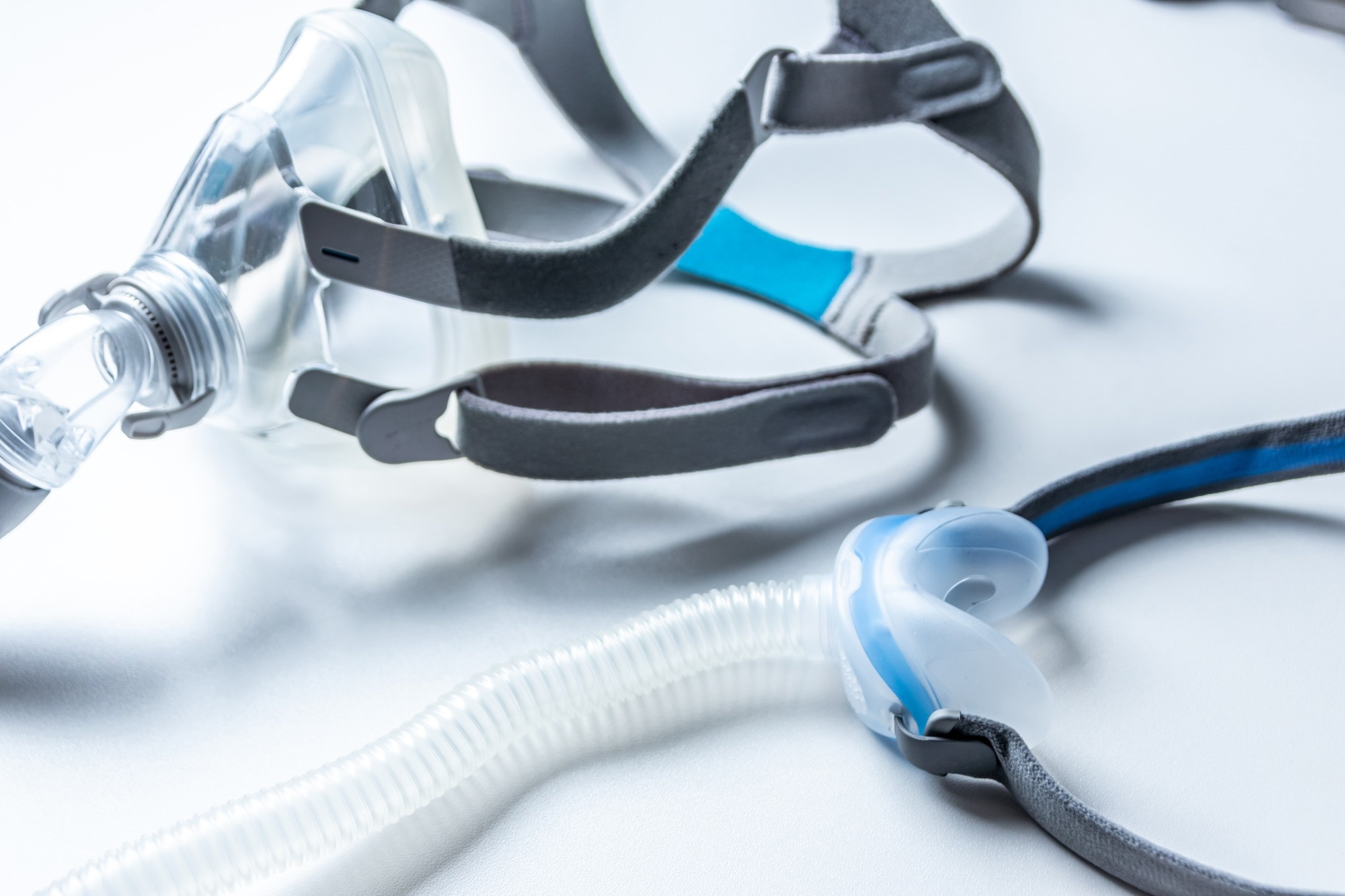 Image Credit: sunakri / Shutterstock.com
FDA approval and regulatory developments
Based on data obtained from the SURMOUNT-OSA phase III trials, the United States Food and Drug Administration (FDA) approved tirzepatide (Zepbound) on December 20, 2024, for the treatment of moderate to severe OSA among adults with obesity, in combination with a reduced-calorie diet and increased physical activity, making it the first FDA-approved medication to treat OSA. The approval applies to this defined population and does not establish an OSA indication for other GLP-1 RAs.3,5
GLP-1 Medications May Ease CPAP Dependence in Sleep Apnea
GLP-1 RAs appear to improve weight-related comorbidities such as hypertension and insulin resistance, with trial evidence suggesting reductions in OSA-associated cardiovascular and metabolic risk factors. In SURMOUNT-OSA, tirzepatide reduced systolic blood pressure, triglycerides, and high-sensitivity C-reactive protein (hsCRP), a marker of systemic inflammation, relative to placebo.4
Dual agonism can support obesity and type 2 diabetes (T2DM) management by reducing body weight and improving insulin sensitivity. GLP-1 receptor activation also stimulates glucose-dependent insulin secretion from pancreatic β-cells and suppresses glucagon secretion, a hormone that increases blood glucose levels. Together, these effects help regulate blood glucose levels, while weight loss can improve insulin sensitivity.1,5
Cardiometabolic issues like hypertension and insulin resistance are closely associated with OSA. OSA causes cyclic drops in blood oxygen, which may trigger inflammation and sympathetic nervous system activation, contributing to vascular dysfunction, elevated blood pressure, and impaired glucose regulation.
Weight loss may reduce fat deposits around the neck and tongue, helping maintain airway patency.1,2,4 Exploratory mediation analyses suggest that improvements in both body weight and OSA severity contribute to changes in some cardiometabolic measures, but they cannot definitively establish the biological pathways responsible.4
Future directions
The American Thoracic Society advises a weight loss goal of 7-11% for people with overweight or obesity and OSA. Achieving this level of weight reduction through lifestyle interventions may be challenging, while bariatric surgery, though beneficial, may not be appropriate for all patients.
In these cases, medication may provide an additional approach to managing obesity-related OSA.2 Treatment decisions must account for gastrointestinal adverse effects, including nausea, vomiting, and diarrhea, as well as barriers such as cost. Available studies differ in drug, duration, population, and accompanying treatment, limiting interpretation of pooled estimates. Evidence in mild OSA and people without obesity remains limited.1,2,5
The durability of OSA improvements after discontinuation requires further study. Further research is needed to determine whether these treatments can reduce cardiovascular events and improve overall health outcomes beyond those observed using device-based OSA therapies. Longer trials and studies in populations excluded from SURMOUNT-OSA would help define their clinical role.2,4
References
- Yang, R., Zhang, L., Guo, J. et al. (2025). Glucagon-like Peptide-1 receptor agonists for obstructive sleep apnea in patients with obesity and type 2 diabetes mellitus: a systematic review and meta-analysis. Journal of Translational Medicine 23; 389. DOI: 10.1186/s12967-025-06302-y. https://link.springer.com/article/10.1186/s12967-025-06302-y
- Bardóczi, A., Matics, Z. Z., Turan, C., et al. (2025). Efficacy of incretin-based therapies in obesity-related obstructive sleep apnea: A systematic review and meta-analysis of randomized controlled trials. Sleep Medicine Reviews 82. DOI: 10.1016/j.smrv.2025.102119. https://www.sciencedirect.com/science/article/pii/S1087079225000723
- Kanu, C., Shinde, S., Chakladar, S., et al. (2025). Effect of tirzepatide treatment on patient-reported outcomes among SURMOUNT-OSA participants with obstructive sleep apnea and obesity. Sleep Medicine 134. DOI: 10.1016/j.sleep.2025.106719. https://www.sciencedirect.com/science/article/pii/S1389945725003946
- Malhotra, A., Grunstein, R., Azarbarzin, A., et al. (2026). Tirzepatide on obstructive sleep apnea-related cardiometabolic risk: secondary outcomes of the SURMOUNT-OSA randomized trial. Nature Medicine 32; 653-659. DOI: 10.1038/s41591-025-04071-1. https://www.nature.com/articles/s41591-025-04071-1
- Dandamudi, M., Lucena, L., Gamarra-Valverde, N. N., et al. (2026). Efficacy of GLP-1 Receptor agonists in treating Obstructive sleep apnea: A systematic review and meta-analysis of cardiometabolic and respiratory outcomes. Sleep Breath 30; 138. DOI: 10.1007/s11325-026-03681-4. https://link.springer.com/article/10.1007/s11325-026-03681-4
Further Reading
Last Updated: Oct 18, 2026