Introduction
How self-heating food technology works
The chemistry of self-heating
Designing safer, smarter food containers
Where self-heating foods are making an impact
Challenges and limitations
The future of self-heating food systems
References
Further reading
From quicklime chemistry and flameless ration heaters to smart sensors and safer packaging materials, self-heating food systems are being redesigned to deliver portable warmth while confronting questions about food quality, chemical exposure, and waste.
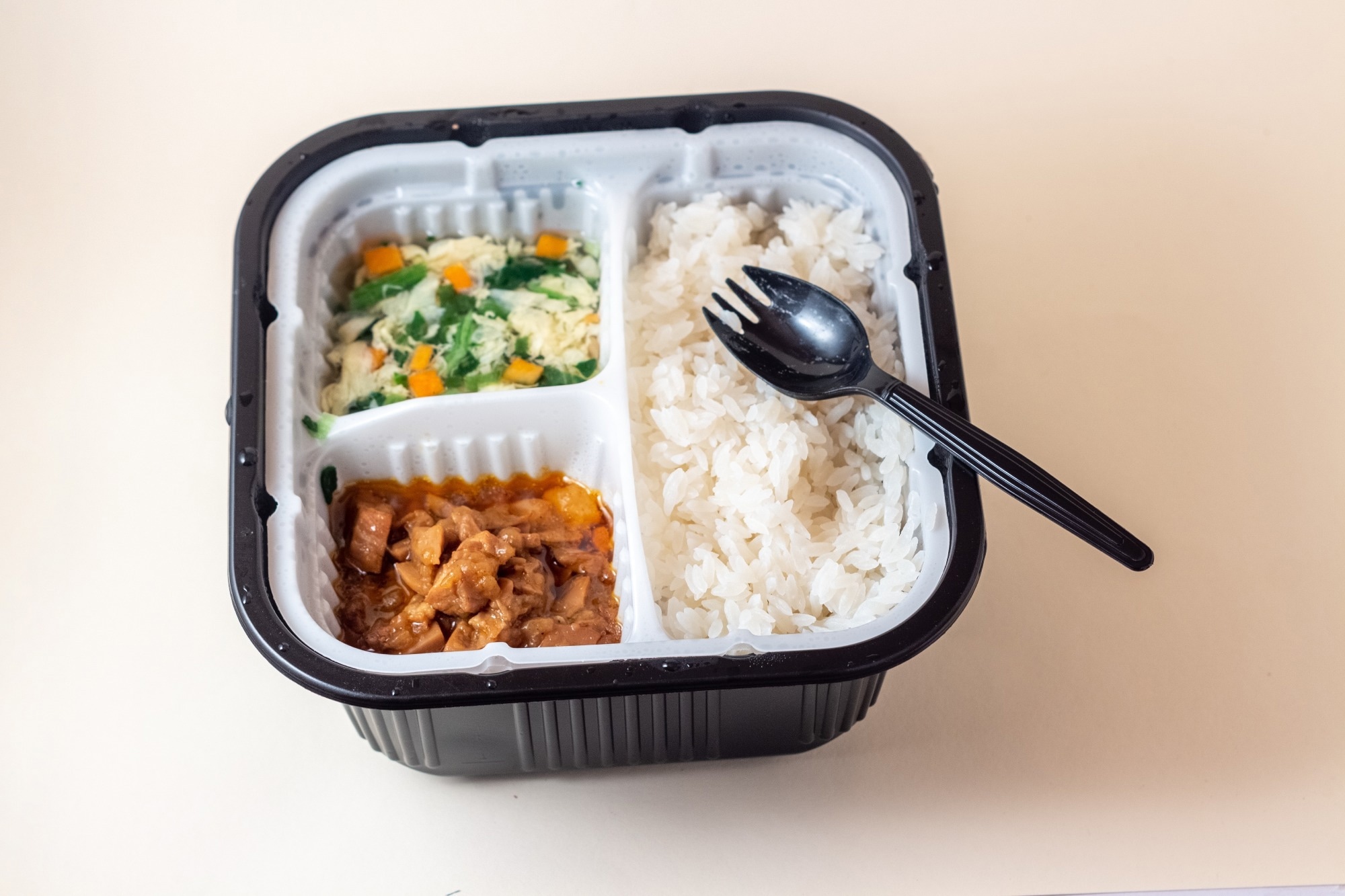 Image Credit: Ivan Bruno de M / Shutterstock.com
Introduction
Self-heating food applications are expanding beyond military rations into consumer markets, disaster relief operations, and other settings where conventional cooking infrastructure may be limited.1,2
How self-heating food technology works
Self-heating systems are active packaging technologies that autonomously generate heat through chemical reactions contained within the package. These packages operate by releasing thermal energy through exothermic reactions, typically triggered by adding water to a reactive chemical layer housed in a compartment separate from the food. The result is a self-contained, portable meal solution that requires no conventional heating infrastructure.1,2
Self-heating food packages have been widely used in flameless ration heaters to provide soldiers with hot meals in field conditions where cooking is impractical. The United States Army's "Meal, Ready-to-Eat" programs became a major late-20th-century application of exothermic food-heating technology.1
Civilian demand for the technology has also grown rapidly. The self-heating lunch box market in China alone exceeded $460 million in 2019, growing at an annual rate of over 20%, driven by more urban consumers seeking hot, portable, and nutritionally balanced meals without cooking facilities or electricity.3 Space-food systems face strict constraints on mass, shelf life, preparation, and packaging, but the available review of NASA food packaging describes rehydratable packaging and spacecraft galley systems rather than chemical self-heating packs as standard technology for astronaut meals.4
The chemistry of self-heating
The core of any self-heating food system is an exothermic chemical reaction that releases thermal energy into its surroundings. One widely used mechanism involves calcium oxide, commonly known as quicklime, reacting with water to produce calcium hydroxide and heat. This hydration reaction is rapid, generates substantial thermal output, and can raise the temperature of a commercial self-heating beverage by up to 42 °C within three minutes.1,2
Magnesium-based systems, typically involving a magnesium-iron alloy reacting with saltwater, are another established heating approach used in flameless ration-heater systems.1 Aluminum-magnesium-iron formulations activated by water in the presence of sodium chloride have also been investigated for ration heating, while aluminum-calcium oxide systems form another class of flameless heater.2
The amount of heat released in these reactions depends on the amount of water introduced and the type of chemical reaction involved, but controlling heat output remains a challenge. Without regulation, exothermic reactions can easily exceed target temperatures or generate heat at rates that pose safety risks.1,2 Metal-based systems may also generate hydrogen gas, making pressure management, venting, and control of the reactant-to-water ratio important safety measures.2
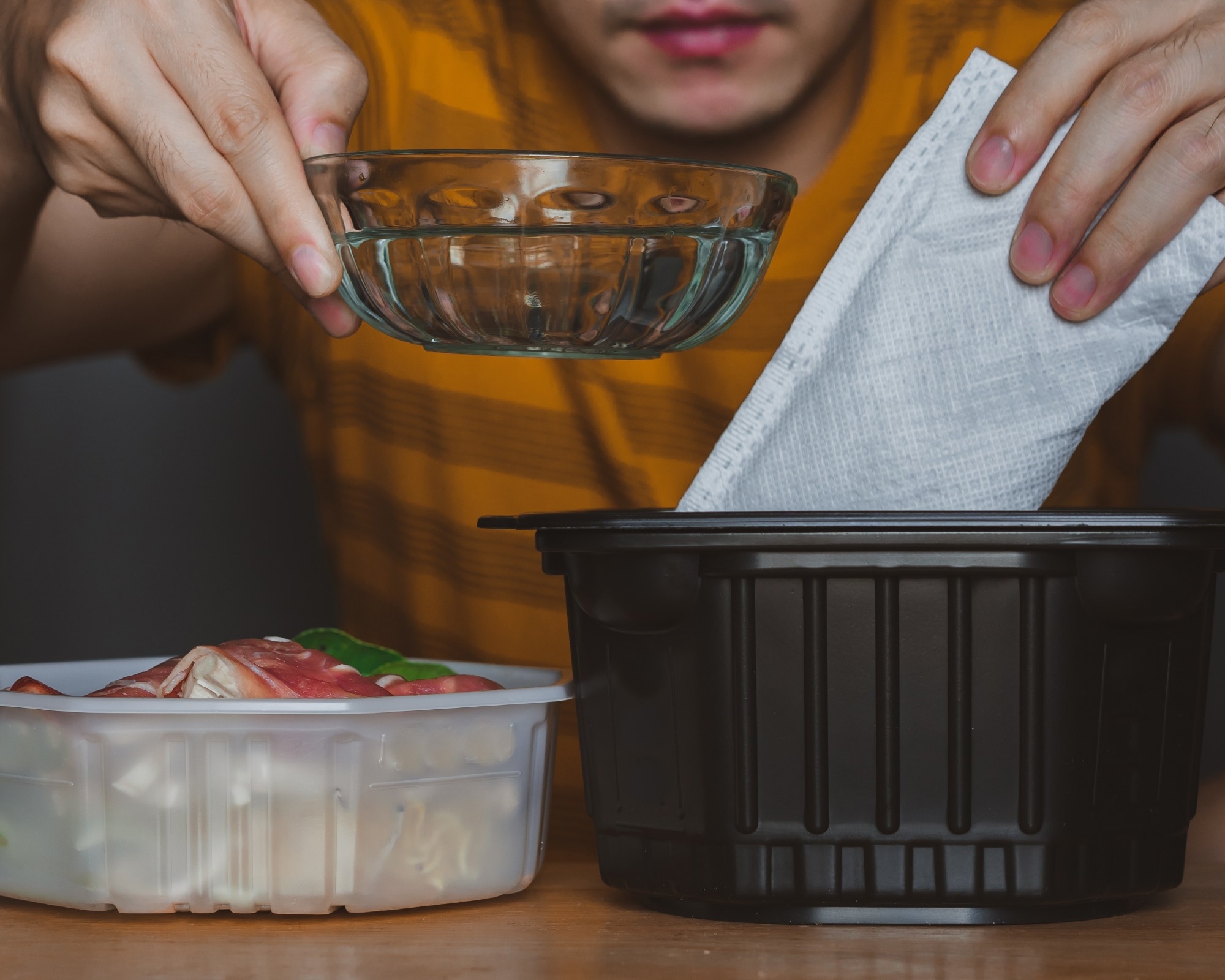 Image Credit: pixjets / Shutterstock.com
Phase change materials (PCMs) have emerged as a solution by absorbing excess heat during their solid-to-liquid transition. This latent heat is stored as the material changes phase, helping to stabilize the temperature within a defined range. The combination of an exothermic reaction with a microencapsulated PCM in a melamine-formaldehyde resin or silica capsule has been investigated as a thermal-buffering strategy to improve temperature stability and reduce localized overheating.1,2
Insulating materials and compartment geometry support energy efficiency within these systems by minimizing heat loss while maximizing heat transfer to the food compartment.2 A well-designed self-heating system balances rapid temperature rise, sustained heat maintenance, and the physical volume occupied by the heating mechanism, as reactive components reduce the availability of space for food itself.5
Safety design principles require that reactive components remain completely isolated from the food and can only be activated through user-controlled features, such as a button or adding water from a separate reservoir. Commercial self-heating beverage cans, for example, route the chemical reaction through a sealed inner chamber, so the reactants do not contact the consumable product.1
Designing safer, smarter food containers
The structural design of self-heating containers has evolved to address both effective heat transfer and the preservation of food quality. Integrated heating containers typically consist of an outer box that houses the reactive heating pack and an inner box or container holding the precooked food.3 Adding water to the outer chamber begins the exothermic reaction, with the generated heat conducted through the inner container wall to the food.1–3
Insulation is equally important for making integrated heating containers energy efficient. Current systems can incorporate insulating polymer layers, such as expanded polystyrene, to reduce heat loss and isolate hot components from the user.2 Heat distribution within the food itself depends on container geometry, thermal conductivity of the packaging material, and the water content and composition of the food.1
Most current heating elements rely on mineral-derived chemicals and single-use plastic components, raising sustainability concerns about waste management and environmental impact.2,6 Research into biobased and biodegradable food packaging indicates that production at commercial scale, cost, regulatory requirements, and consumer acceptance also need attention before alternative materials can achieve broad commercial use.6
Where self-heating foods are making an impact
In situations where electricity and cooking fuel are limited, such as earthquake or flood relief operations, humanitarian aid deployments, or civil emergencies, self-contained meal systems that require only a small amount of water for activation have been valuable for providing critical nutritional support.1,2 For example, the self-heating lunch box market in China experienced rapid growth during the coronavirus disease 2019 (COVID-19) pandemic.3
Military use remains one of the best-established applications of flameless ration heaters.1,2 Space missions present a separate set of demanding food-packaging requirements, but the reviewed space-food literature describes rehydration systems and onboard preparation rather than widespread use of chemical self-heating packs.4 Self-heating food containers are also appealing for outdoor enthusiasts, travelers, field workers, and individuals in remote professional settings. Self-heating technology is also being explored in molecular diagnostics, where exothermic reactions paired with PCMs have been adapted to power portable, electricity-free nucleic acid amplification devices for pathogen detection in resource-limited settings.1
Hotpack Self Heating Meals
Challenges and limitations
While commercially viable and useful, self-heating food technologies have several limitations. The additional materials required for the heating mechanism, including reactive chemicals, insulation layers, PCMs, and multi-compartment container architecture, can increase design and manufacturing complexity and contribute to higher development costs.1,2
Integrated heating containers pose potential environmental and safety concerns due to their reactive materials and disposal. For example, the exothermic reactions in these systems generate alkaline residues with pH values of approximately 9-11, which can leach into waterways, raise aquatic pH, and impair the physiological health of aquatic organisms.2
Elevated temperatures can accelerate the migration of some chemical contaminants from packaging materials into food. A study of commercial self-heating lunch boxes found higher organophosphate ester (OPE) concentrations in heated than unheated food and showed that increasing temperature, contact time, and oily food conditions promoted OPE migration from packaging.3
In broader food-packaging studies reviewed alongside self-heating systems, researchers have also reported temperature-dependent migration of heavy metals, plasticizers such as bisphenol A (BPA), oligomers, microplastics, and volatile compounds. These findings do not all come from direct measurements of commercial self-heating meals.2
Some studies suggest that self-heating food packaging can alter sensory and structural characteristics because products may undergo cooking, sterilization, and later reheating. In fried Spanish mackerel, decreasing moisture content increased shear force while hardness and chewiness decreased, and frying conditions affected color, microstructure, and volatile flavor profiles. The highest overall quality in that study occurred in samples fried at 160 °C with 65% moisture before sterilization and self-heating.7
The future of self-heating food systems
Intelligent packaging technologies could complement future self-heating systems with indicators or sensors that monitor temperature, freshness, gases, or other aspects of food condition.5,6 This connects self-heating technologies to the broader shift toward packaging that actively communicates the condition of food, including the presence of pathogens, toxins, and allergens.5
Future development will require a balance between heating performance, thermal control, chemical safety, cost, material stability, and environmental impact.1,2 To support lower-impact designs, researchers are actively exploring more sustainable packaging materials, composite reinforcements, and biobased or biodegradable options that could reduce reliance on conventional single-use systems.2,6
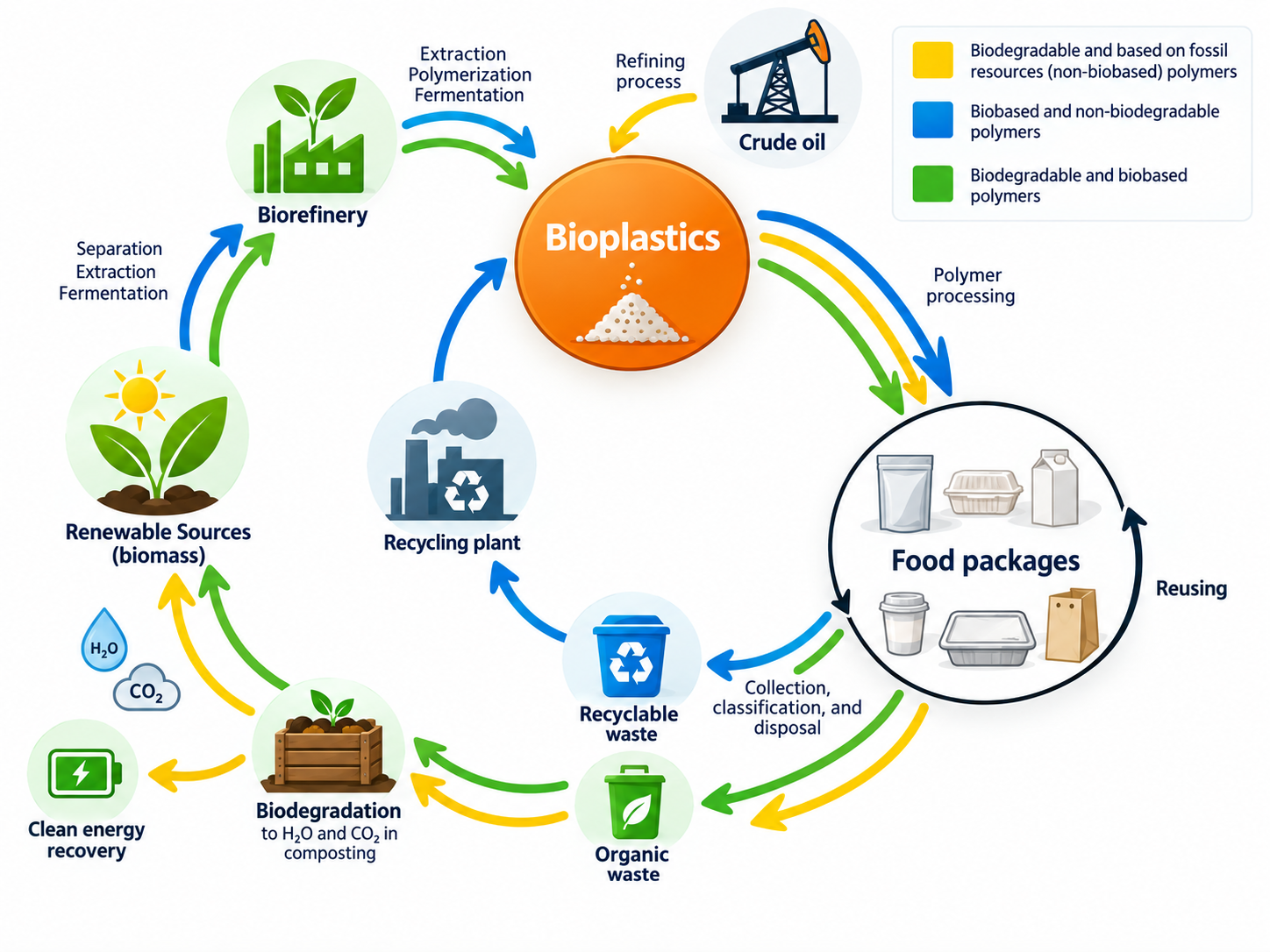
Life cycle assessment (LCA) of the three types of bioplastics: (■) biobased but non-biodegradable polymers; (■) plastics that are biodegradable and based on fossil resources; and (■) polymers that are both biobased and biodegradable.
References
- Hamidizadeh, M., Martins, R. F., & Bier, F. F. (2025). Point-of-care diagnostics using self-heating elements from smart food packaging: Moving towards instrument-free nucleic acid-based detection. Molecular Diagnosis & Therapy 29; 67-80. DOI: 10.1007/s40291-024-00753-7. https://link.springer.com/article/10.1007/s40291-024-00753-7.
- Nurhasanah, S., Dewi, N. P. W. S. S., Wulandari, E., et al. (2026). Self-heating packaging: A review on reaction kinetics, material optimization, and thermal safety. International Journal of Food Properties, 29(1). DOI: 10.1080/10942912.2026.2648255. https://www.tandfonline.com/doi/full/10.1080/10942912.2026.2648255.
- Li, X., Yin, Y., Zhou, W., et al. (2024). Convenient self-heating instant food causes significant increasing human exposure to organophosphate esters. Environment & Health 2, 52-61. DOI: 10.1021/envhealth.3c00150. https://pubs.acs.org/doi/10.1021/envhealth.3c00150.
- Evans, R. (2023). Space food packaging: A review of its past, present, and future materials and technologies. Packaging Technology and Science 36(8); 617-627. DOI: 10.1002/pts.2752. https://onlinelibrary.wiley.com/doi/full/10.1002/pts.2752.
- Majid, I., Nayik, G. A., Dar, S. M., & Nanda, V. (2018). Novel food packaging technologies: Innovations and future prospective. Journal of the Saudi Society of Agricultural Sciences 17; 454-462. DOI: 10.1016/j.sjsas.2016.11.003. https://www.sciencedirect.com/science/article/pii/S1658077X16300765.
- Salgado, P. R., Di Giorgio, L., Musso, Y. S., & Mauri, A. N. (2021). Recent developments in smart food packaging focused on biobased and biodegradable polymers. Frontiers in Sustainable Food Systems 5; 630393. DOI: 10.3389/fsufs.2021.630393. https://www.frontiersin.org/journals/sustainable-food-systems/articles/10.3389/fsufs.2021.630393/full.
- Chang, L., Lin, S., Zou, B., Zheng, X., Zhang, S., & Tang, Y. (2021). Effect of Frying Conditions on Self-Heating Fried Spanish Mackerel Quality Attributes and Flavor Characteristics. Foods 10(1); 98. DOI: 10.3390/foods10010098. https://www.mdpi.com/2304-8158/10/1/98.
Further Reading
Last Updated: Sep 29, 2026