This article is based on a poster originally authored by Robert A. Policastro, Stephano Spano Mello, Cicera Lazzarotto, Edward Salinas, David Goldfarb, Ashley Lester, Yanjie Qiu, Zachary Lemmon, and Huei - Mei Chen.
In recent years, significant milestones have been achieved in CRISPR therapies (Figure 1), including the first in vivo base-editing successes, the approval of CASGEVY, and late-stage clinical progress for in vivo gene editing.
Genomic safety has continued to be a critical requirement among these developments. Off-target editing has the potential to generate genomic variants that cause cell death, alter cell function, or promote oncogenic transformation (Figure 2A).
Genomic safety data must underpin the product lifecycle, from candidate selection and preclinical development through to regulatory filings, clinical trials, and quality control during manufacturing (Figure 2B).
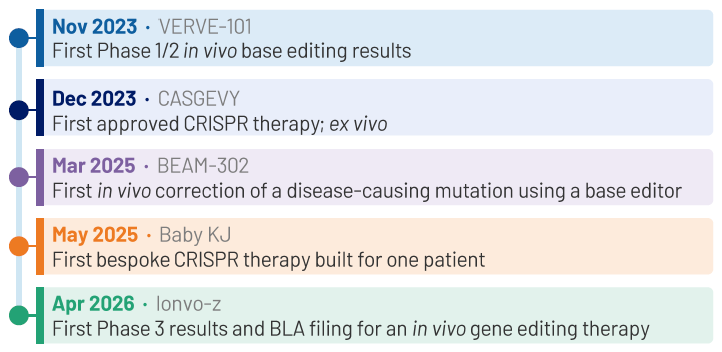
Figure 1. Recent historic milestones for CRISPR-based therapies, 2023–2026. Image Credit: MaxCyte, Inc.
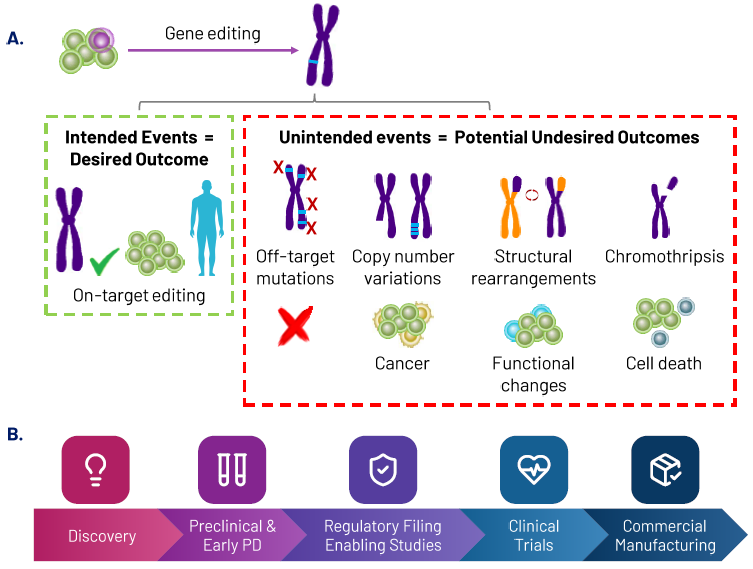
Figure 2. (A) Unintended off-target editing, both small and large variants, can lead to adverse outcomes such as functional changes, cell death, and oncogenic transformation. (B) Genomic safety data can help reduce these risks at every stage of product development. Image Credit: MaxCyte, Inc.
Regulatory-aligned genomic risk assessment
The FDA's Center for Biologics Evaluation and Research issued draft guidance earlier this year. This guidance is designed to help standardize sponsors’ assessment of off-target genomic risk using NGS in investigational and regulatory submissions (Figure 3A).
There has been a notable diversification of CRISPR-Cas systems across Cas proteins, featuring distinct PAM requirements and editing chemistries. Cas protein fusion has expanded the modality landscape further, enabling deaminases, reverse transcriptases, and methyltransferases.
Methods, thresholds, and reporting formats were primarily left to case-by-case FDA feedback and sponsor discretion before this guidance.
This new draft begins to codify advances in sample selection, sequencing strategy (Figure 3B), and depth; guidance on off-target nomination and confirmation (Figure 3B); advice on analysis parameters; and appropriate tabulated formats for submitting findings.
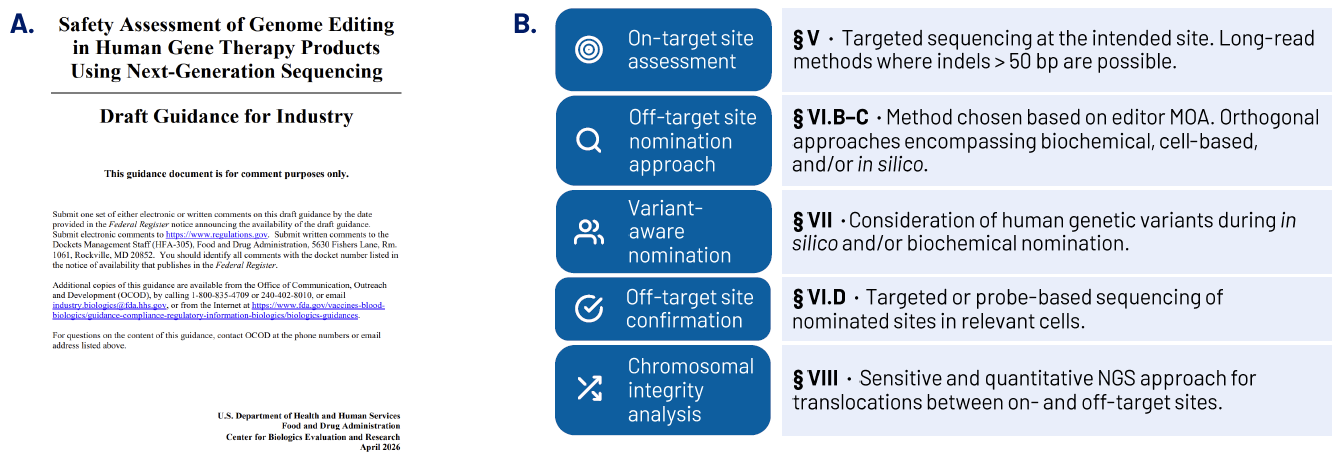
Figure 3. (A) April 2026 draft FDA guidance for NGS genomic safety assessment of gene editing therapies. (B) Outline of select analysis expectations in the guidance. Image Credit: MaxCyte, Inc.
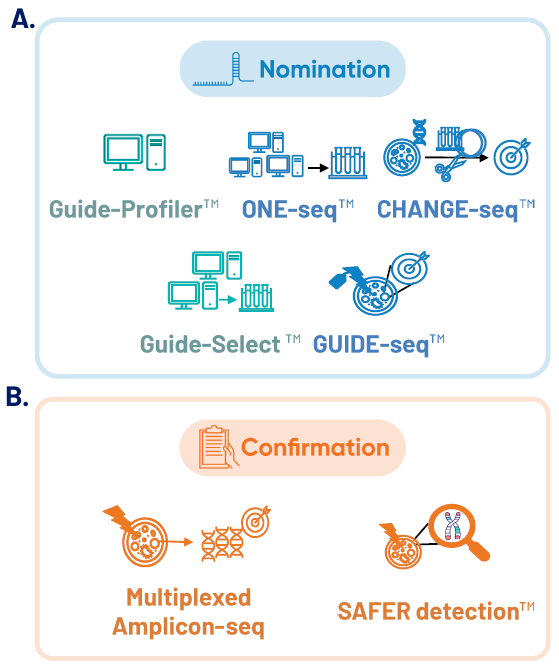
Figure 4. SeQure offers regulatory-aligned in silico, biochemical, and cell-based nomination assays for CRISPR base editors and nucleases (A), as well as high-sensitivity confirmation and translocation detection assays (B). Image Credit: MaxCyte, Inc.
SeQure's portfolio has been regulatory-aligned in terms of CRISPR nuclease and base-editing therapies.
Guide-Profiler™ performs variant-aware, in silico, homology-based site prediction for nomination, while Guide-Select™ couples this nomination with a biochemical screen.
ONE-seq™ enables variant-aware biochemical nomination, while CHANGE-seq™ facilitates unbiased biochemical nomination in purified genomic DNA and GUIDE-seq™ ensures nomination is performed with intact cellular context (Figure 4A).
Both ONE-seq™ and CHANGE-seq™ are available for nucleases and base editors.
Confirmation is enabled via sensitive, multiplexed amplicon sequencing, quantifying editing frequency across nominated sites. SAFER™ detection delivers the recommended high sensitivity, quantitative translocation analysis for chromosomal integrity (Figure 4B).
This powerful combination facilitates a complete genomic safety package suitable for both CRISPR nucleases and base editors.
Integrated off-target assessment for base editors
Figure 5 shows a hypothetical off-target strategy suitable for a CRISPR-based editor program. The orthogonality of the nomination method is ensured via variant-aware in silico nomination (Guide-Profiler™) used in conjunction with biochemical methods (ONE-seq™ and CHANGE-seq™).
Selecting two assays helps derisk guides by avoiding assay-specific blind spots, and both biochemical methods are base-editor compatible to adhere to FDA recommendations.
The requirement for a sensitive, quantitative method for detecting on- and off-target editing rates and translocation in relevant cells is met at the confirmation stage via Multiplexed Amplicon-seq and SAFER™, respectively.
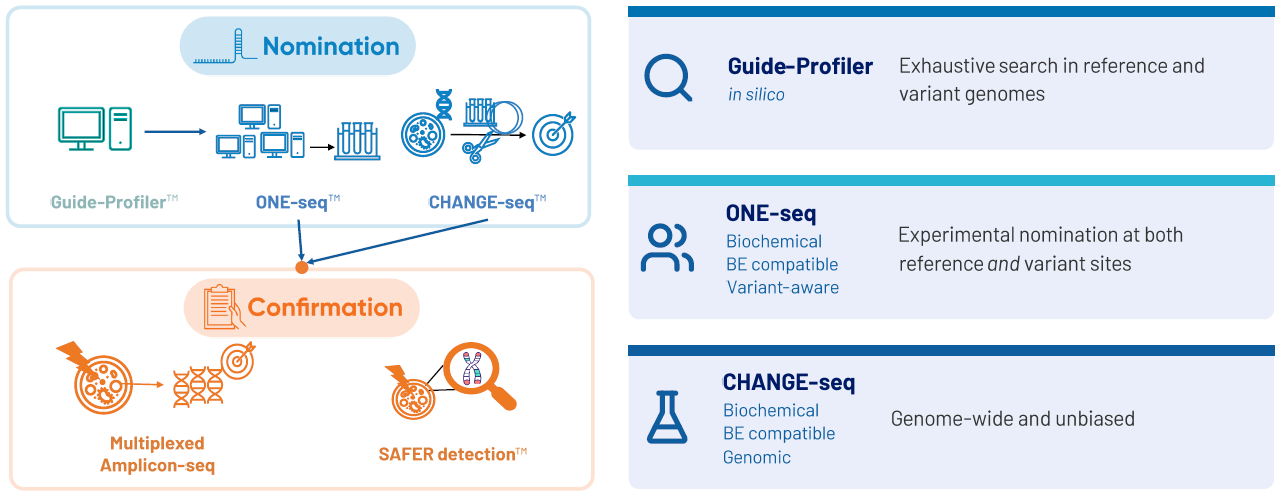
Figure 5. A hypothetical regulatory-aligned genetic safety strategy for a CRISPR-based editor therapy that includes variant-aware orthogonal in silico and biochemical nomination, as well as sensitive and quantitative editing confirmation and translocation detection. Image Credit: MaxCyte, Inc.
ONE-seq™ offers experimental, variant-aware off-target nomination
ONE-seq™ has been developed to overcome the limitations of previous methods, which only interrogated single genomes. Instead of genomic DNA, however, ONE-seq™ leverages a synthetic barcoded oligo library in which each member represents a candidate off-target site.
The substrate is synthesized, meaning that a single assay can successfully experimentally interrogate up to 250,000 sites spanning both population variants and the reference genome.
ONE-seq™ is one of the few commercially available methods able to deliver experimental variant-aware nomination, rather than purely in silico.
SeQure develops these libraries using an exhaustive homology search across approximately 3500 genomes drawn from the 1000 Genomes Project and the Human Genome Diversity Project (Figure 6). These genomes are employed alongside the hundreds of millions of variants cataloged in gnomAD.
This method also accommodates both editor classes. For example, nucleases cleave the library directly, while the deaminated intermediate is converted to a double-strand break for base editors. This is done using EndoV and USER for ABEs and CBEs, respectively.
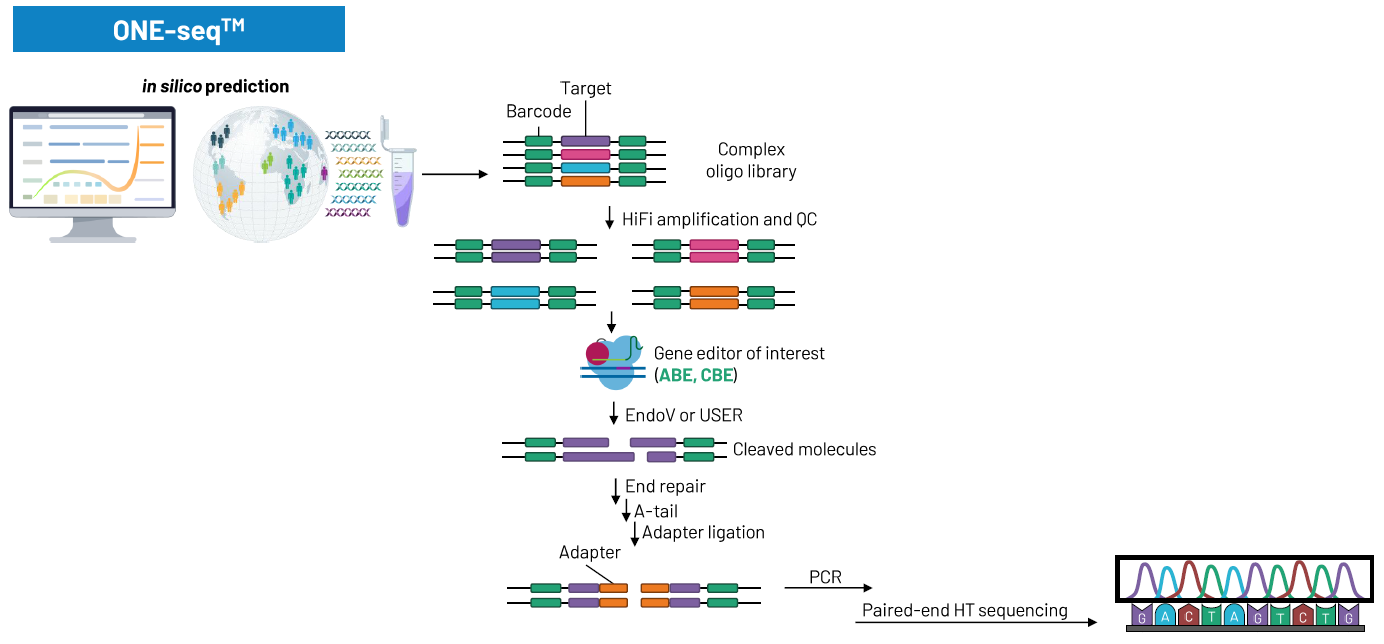
Figure 6. Schematic diagram of ONE-seq-BE. Synthetic oligos with off-target sites are synthesized and then treated with base editor RNP. Nicked and edited molecules are then cut using an endonuclease targeting the uracil or inosine intermediates (CBE or ABE, respectively), adapters are ligated to the linear products, and libraries are sequenced. Image Credit: MaxCyte, Inc.
CHANGE-seq™ enables sensitive, unbiased genome-wide off-target nomination
CHANGE-seq™ has been developed to provide an unbiased, sensitive, high-throughput biochemical nomination assay. This innovative approach is underpinned by a tagmentation-based workflow able to efficiently circularize genomic DNA.
This is then followed by stringent exonuclease selection, resulting in a population of covalently closed circles with virtually no free DNA ends. This means that when the editor RNP cleaves, only editor-modified molecules acquire the ends required for adapter ligation and sequencing (Figure 7).
The resulting nicked and deaminated circles can be linearized using an endonuclease strategy when treated with base editor RNPs. This approach is similar to the method employed by ONE-seq™ (EndoV and EndoQ for ABEs and CBEs, respectively).
CHANGE-seq™ offers greater sensitivity compared to CIRCLE-seq, its predecessor. For example, CHANGE-seq-BE recovered 53% more off-targets when applied to an ABE8e-NRCH guide targeting the sickle HBB allele, as well as delivering a 2.1-fold higher average enrichment ratio at validated sites (Lazzarotto, Katta, Tsai, et al. Nature Biotech, 2026).
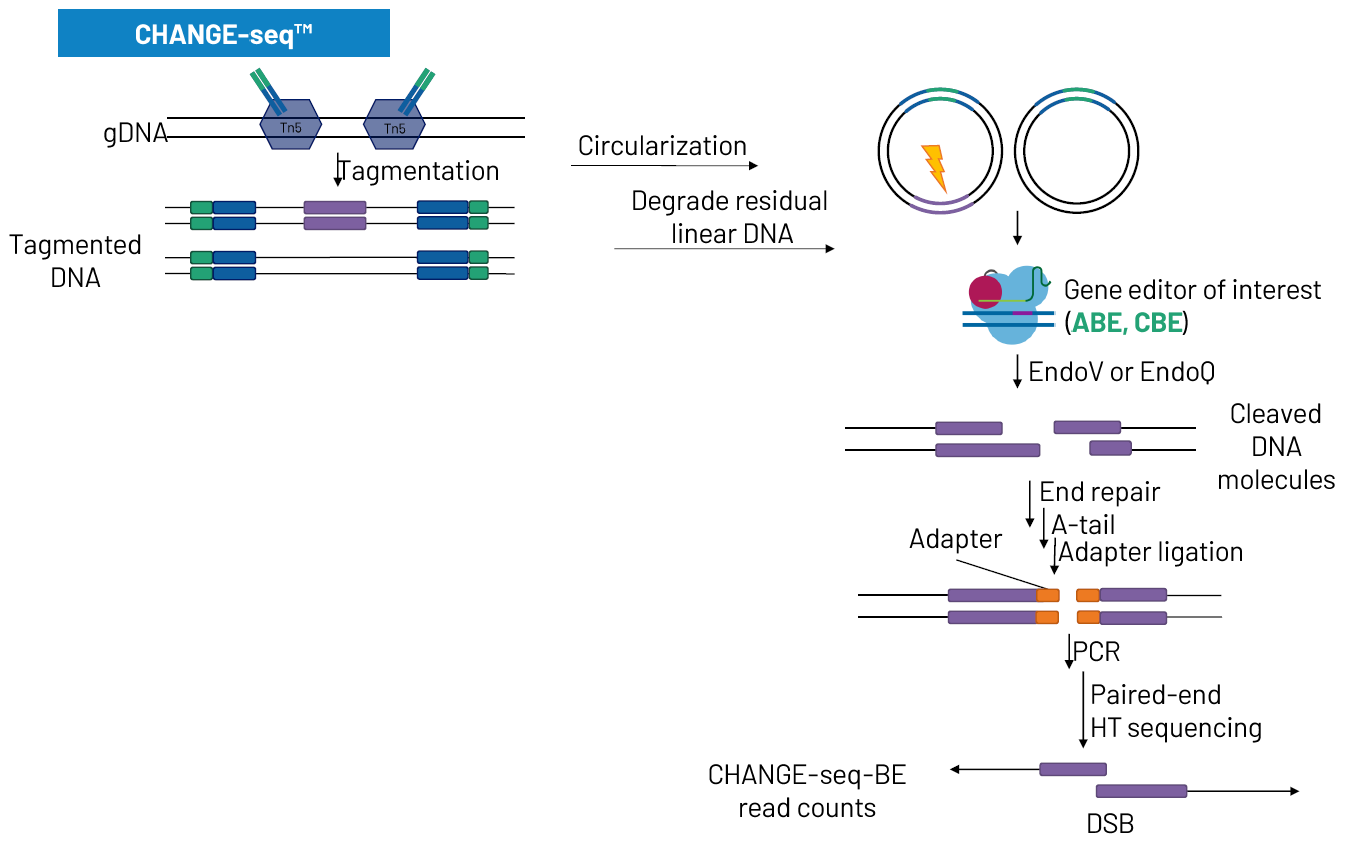
Figure 7. Schematic diagram of CHANGE-seq-BE. Purified gDNA is tagmented, circularized, and then treated with the base editor RNP. Nicked and edited circular molecules are then linearized using an endonuclease strategy similar to ONE-seq, adapters ligated to cut products, and then libraries sequenced. Image Credit: MaxCyte, Inc.
CHANGE-seq™ of FANCF CBE can successfully nominate hundreds of off-target sites. For example, 838 sites were nominated (Figure 9A), with each exhibiting a CHANGE-seq™ score over the minimal assay threshold.
CHANGE-seq™ scores calculations for each off-target site, representing the ratio of reads at those sites versus the on-target site. Sites are nominated only when their ratio is at least 0.1%.
Analyzing target sequences of top off-target sites by read counts reveals the canonical Cas9 NGG PAM preference. The majority of protospacer variation clustering was found to be distal to the PAM, outside the seed sequence (Figure 8A).
It was also noted that the top two off-target sites by read count fell within identical sequences of the RASA 4 and RASA 4B paralogous genes.
Figure 8B provides Manhattan plots of the read counts for off-target sites across the main chromosomes for illustrative purposes.
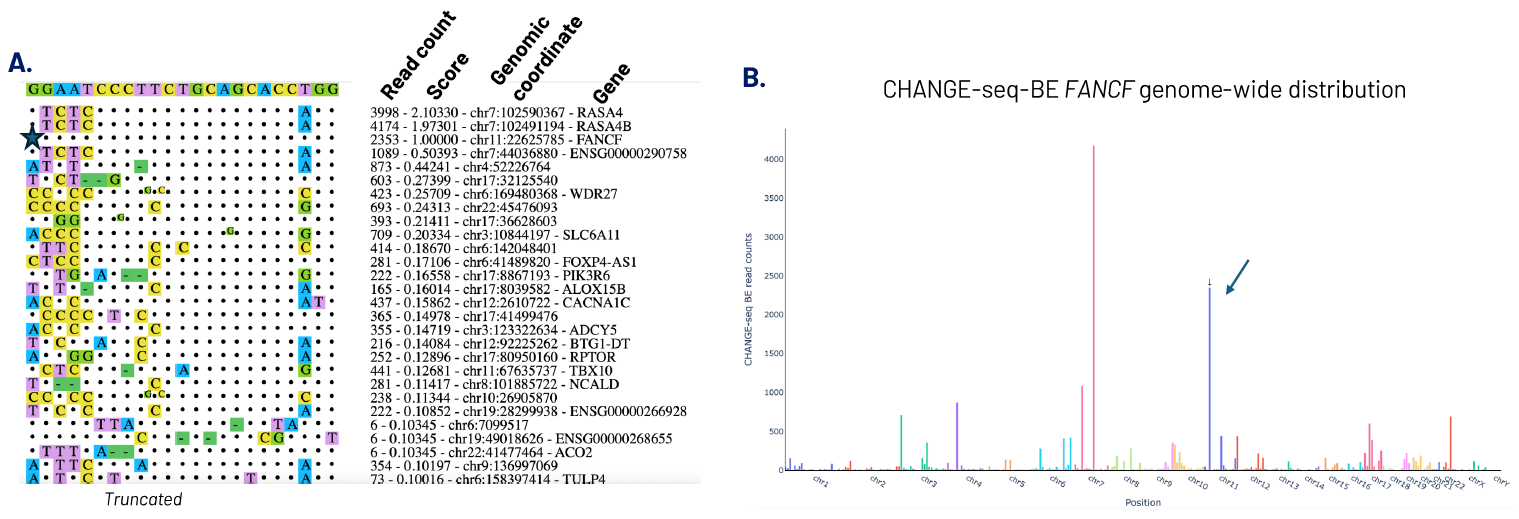
Figure 8. FANCF CBE CHANGE-seq on- and off-target site results. (A) Allele, read count, score (read count fraction relative to on-target), genomic coordinates, and gene annotations. (B) A Manhattan plot of read counts at each site. Image Credit: MaxCyte, Inc.
Orthogonal off-target nomination for a comprehensive risk profile
Orthogonal approaches capture a more comprehensive view of off-target sites. A total of 1060 unique off-target sites were captured, with 271 found by both, 222 uniquely found in ONE-seq™, and 567 uniquely found in CHANGE-seq™ (Figure 9A).
It was possible to categorize all sites into tiers based on their proximity to or impact on specific genes and functional genomic elements.
Tier 1 was considered the highest risk in this case. A total of 327 of the 1060 sites fell within the highest tiers (1 and 2a/b) (Figure 9B) following annotation, with these loci distributed across global populations and affected by population-specific genetic variation (Figure 9C).
A representative subset of these high-risk off-target sites was moved to confirmation, with Multiplexed Amplicon-seq performed to further analyze them. Strong on-target C >T editing (∼50%) was observed at the on-target site, while off-target editing was above background at two of the selected sites (Figure 9D).
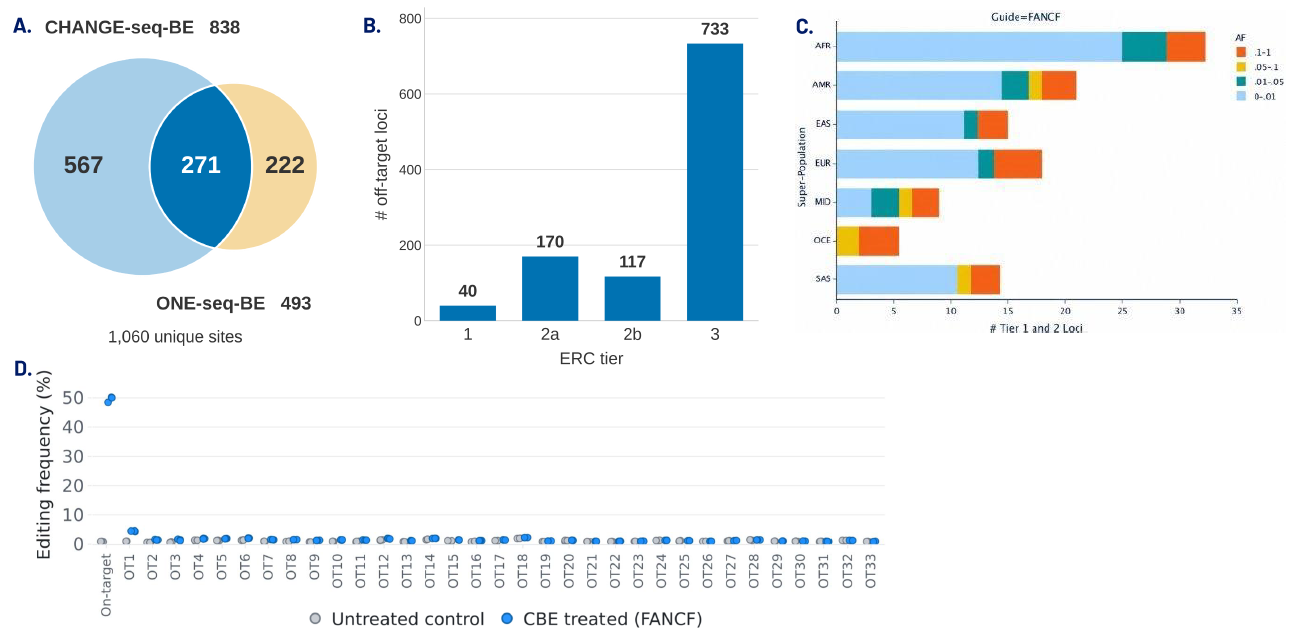
Figure 9. (A) Overlapping and unique FANCF CBE off-target sites in CHANGE-seq vs. ONE-seq. (B) The concern score of all nominated off-target sites. Concern score is a composite risk score assigned to off-target sites based on their proximity to, or effect on, certain genes and functional genomic elements. (C) Bar plots comparing allele frequencies (AFs) of off-targets by superpopulation. Bars are colored by AF for each superpopulation. (D) Multiplexed amplicon-seq results for select nominated FANCF CBE off-target sites. The x-axis is ordered by descending mean difference between control and treated. Image Credit: MaxCyte, Inc.
SAFER™ enables sensitive detection of structural rearrangements
SAFER™ is a sensitive, quantitative method suitable for the detection of structural rearrangements at sites of interest.
This involves amplifying tagmented genomic DNA via nested PCR from a primer anchored at the site of interest. A blocking oligonucleotide is then positioned downstream to suppress amplification of intact molecules.
This approach means that only fragments whose sequence has been displaced by a rearrangement can escape the block to be amplified (Figure 10A).
Recovered junctions are classified by likely origin. For example, whether the partner site corresponds to a nominated off-target, whether this falls within a region of homology to the target, or whether this reflects other mechanisms.
Figures 10B and 10C show output from the FANCF CBE experiment. These figures include a circos plot showing a small number of large structural rearrangements and a bar plot that resolves a few variants proximal to the on-target site.
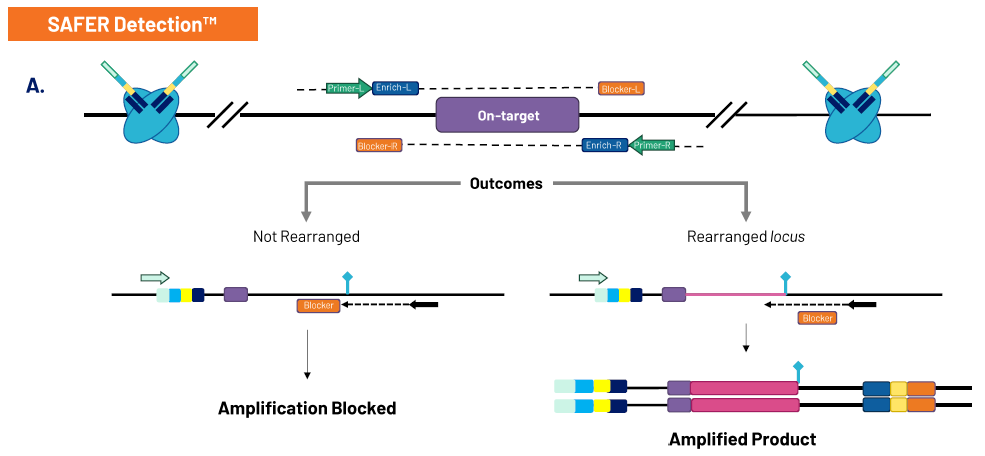
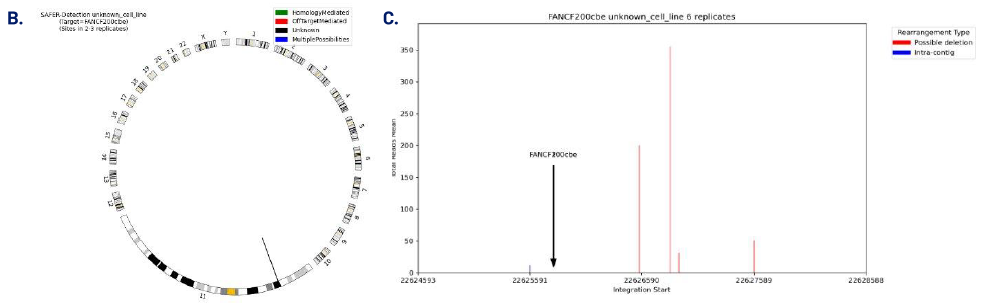
Figure 10. (A) Schematic diagram of SAFER. DNA is tagmented, and nested PCR is performed using a primer anchored to the site of interest. DNA fragments with translocations and other large structural variants are enriched by blocking the amplification of unaltered molecules. (B) A circos plot showing genome-wide rearrangement sites, and (C) a bar plot showing large variants proximal to the on-target site. Image Credit: MaxCyte, Inc.
Summary
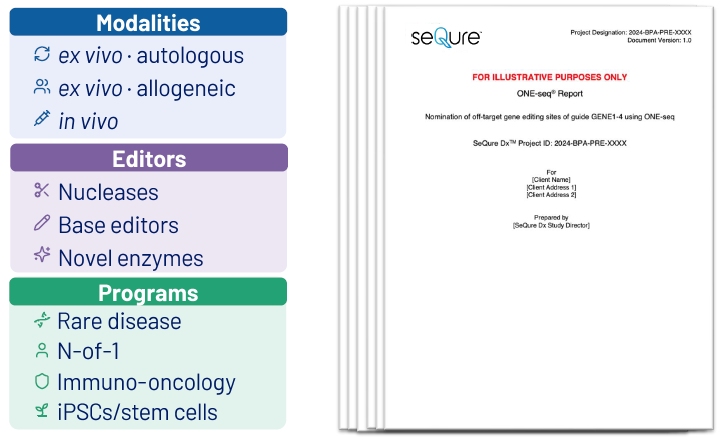
Image Credit: MaxCyte, Inc.
SeQure has supported dozens of clients, spanning a diverse array of in vivo and ex vivo therapies, different nuclease and base-editing modalities, and a wide range of programs. These programs include rare disease, N-of-1, iPSC, and stem cells.
Nomination and confirmation reports delivered by SeQure are consistently comprehensive, phase-appropriate GLP, and regulatory-aligned.
The benefits of this approach include:
- Comprehensive off-target nomination and/or confirmation
- A robust, regulatory-aligned results report
- Off-target risk characterization based on functional risk and genomic annotation context
- Phase-appropriate GLP, including transparent methodology, traceability, and reproducibility
Acknowledgments
Produced from materials originally authored by Robert A. Policastro, Stephano Spano Mello, Cicera Lazzarotto, Edward Salinas, David Goldfarb, Ashley Lester, Yanjie Qiu, Zachary Lemmon, and Huei - Mei Chen from MaxCyte, Inc.
About MaxCyte, Inc.

At MaxCyte, we pursue cell engineering excellence to maximize the potential of cells to improve patients’ lives. We have spent more than 20 years honing our expertise by building best-in-class platforms, perfecting the art of the transfection workflow, and venturing beyond today’s processes to innovate tomorrow’s solutions.
Our ExPERT™ platform, which is based on our Flow Electroporation® technology, has been designed to support the rapidly expanding cell therapy market and can be utilized across the continuum of the high-growth cell therapy sector, from discovery and development through commercialization of next-generation, cell-based medicines. The ExPERT family of products includes: four instruments, the ATx™, STx™, GTx™ and VLx ™; a portfolio of proprietary related processing assemblies or disposables; and software protocols, all supported by a robust worldwide intellectual property portfolio.
By providing our partners with the right technology, as well as technical and regulatory support, we aim to guide them on their journey to transform human health. Learn more at maxcyte.com and follow us on Twitter and LinkedIn.
Sponsored Content Policy: News-Medical.net publishes articles and related content that may be derived from sources where we have existing commercial relationships, provided such content adds value to the core editorial ethos of News-Medical.net, which is to educate and inform site visitors interested in medical research, science, medical devices and treatments.
Last Updated: Oct 27, 2026
 TG Therapeutics to use MaxCyte's Flow Electroporation® technology and ExPERT™ platform