Introduction
How melatonin may disrupt tumor growth
Melatonin and the immune response to cancer
Can melatonin improve cancer treatment?
Exploring melatonin as an adjunct to cancer therapy
What’s next for melatonin and cancer?
References
Further reading
Beyond regulating sleep, melatonin interacts with cellular processes that shape tumor growth, raising questions about its potential role alongside cancer treatment.
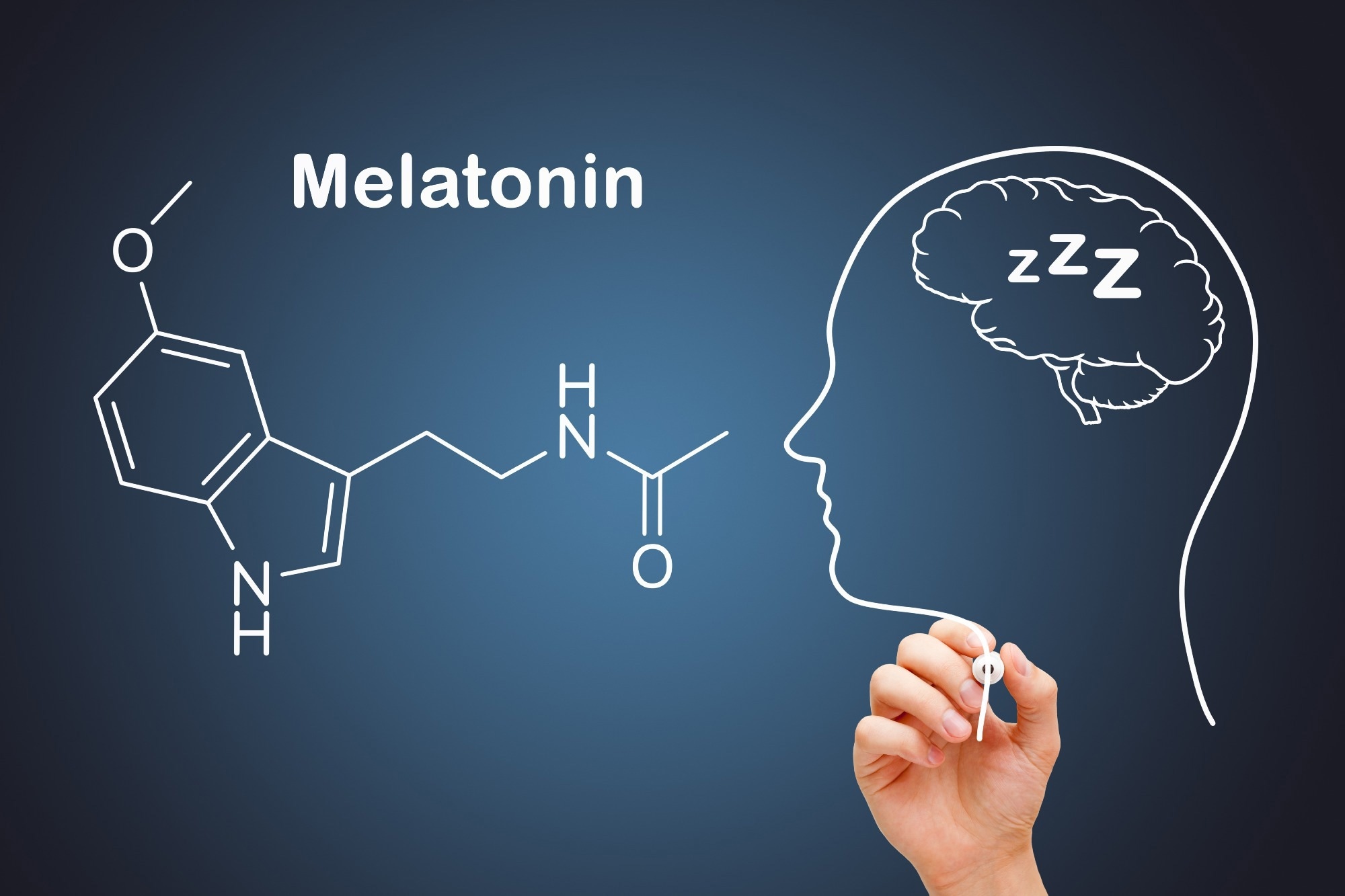 Image Credit: Ivelin Radkov / Shutterstock.com
Introduction
Melatonin is a hormone primarily produced by the pineal gland that regulates circadian rhythms and sleep-wake cycles. In addition to the pineal gland, the bone marrow, retina, and skin also produce melatonin.
Growing interest in melatonin's broader biological roles includes antioxidant, anti-inflammatory, immune-modulating, blood vessel-regulating, and potential anti-cancer effects. In vitro and in anticancer studies demonstrate that melatonin can reduce oxidative stress by scavenging and neutralizing free radicals and other reactive oxygen species (ROS).1,3
Sustained oxidative stress can contribute to cancer development through DNA damage and altered signaling that promotes cell proliferation. To mitigate oxidative stress, melatonin increases the activity of endogenous antioxidant enzymes such as catalase, superoxide dismutase (SOD), and glutathione peroxidase.1 These effects vary with concentration and cellular context: in some cancer models, melatonin increases ROS and promotes cancer cell death.1,3
Melatonin can also protect mitochondrial DNA, support mitochondrial function, regulate DNA repair pathways, as well as maintain cellular energy balance.
The inhibitory effect of melatonin on human prostate cancer
How melatonin may disrupt tumor growth
Melatonin acts through the membrane receptors MT1 and MT2 and receptor-independent mechanisms to influence signaling pathways that promote apoptosis and suppress angiogenesis. Melatonin's antioxidant activity may also limit oxidative DNA damage involved in cancer initiation.4,5
In preclinical models, melatonin influences tumor biology by interacting with the tumor microenvironment, which has critical functions in suppressing or promoting carcinogenesis. For example, melatonin has been shown to inhibit the infiltration of triple-negative breast cancer-associated fibroblasts (CAFs) by downregulating laminin beta-3 (LAMB3) and C-X-C chemokine ligand 2 (CXCL2) expression.3
Mechanistically, melatonin acts through epigenetic regulation, which changes gene activity without altering the DNA sequence, as well as metabolic reprogramming, which changes how cells obtain and use nutrients, and immune modulation. In mice with pancreatic cancer, melatonin supplementation inhibited tumor growth by up to 65%, while blocking endogenous melatonin accelerated tumor growth.3
In an immunodeficient mouse xenograft model of hepatocellular carcinoma, researchers reported smaller tumors after chronic treatment with 40 mg/kg of melatonin. Melatonin may also inhibit the Warburg effect, the reliance of many cancer cells on glycolysis even when oxygen is available, thereby disrupting cancer cell metabolism.3-5
Melatonin can regulate autophagy, a process that recycles cellular components. Autophagy can support cancer cell survival or contribute to cell death; thus, inducing its activity does not consistently suppress tumors. For example, blocking autophagy has increased sensitivity to melatonin-induced cell death in some liver cancer models.1
Melatonin has also reduced lipid accumulation in prostate cancer models. Separately, research in clear cell renal cell carcinoma has linked melatonin-induced autophagy and lipid depletion to reduced tumor growth.1,3
Melatonin affects autophagy-related proteins such as Beclin-1 and p62, as well as apoptosis-related proteins such as B-cell lymphoma 2 (BCL2) and BCL-2-associated X protein (BAX). These proteins help determine whether cells recycle damaged components, survive, or undergo programmed death.1
Depending on the model, melatonin suppresses telomerase activity, which helps cancer cells maintain their capacity to divide, induces G2/M cell-cycle arrest, and regulates growth-related signaling and microRNAs (miRNAs) involved in proliferation and invasion.1,3,4
Other experimental effects include suppression of nuclear factor kappa B (NF-κB), phosphoinositide 3-kinase/protein kinase B (PI3K/Akt), and mechanistic target of rapamycin (mTOR) signaling. These pathways connect inflammation, nutrient sensing, and cell survival.1,3,4
Melatonin can suppress tumor angiogenesis by reducing hypoxia-inducible factor 1 alpha (HIF-1α) and vascular endothelial growth factor (VEGF) signaling, limiting new blood vessel formation in experimental tumor tissues. Melatonin also decreases endothelin-1 (ET-1) messenger RNA (mRNA) expression and secretion in colon cancer cells, providing another possible mechanism for limiting tumor growth.1

Melatonin affects carcinogenesis by directly inhibiting tumors. Melatonin interacts with its surface receptors to activate intracellular signaling cascades. The size of the arrows reflects the importance of the receptor subtype. Intracellular signaling activates transcription factors that alter DNA in ways that promote apoptosis in cancer/pre-cancer cells and reduce angiogenesis, which is necessary for tumor growth and metastasis. 5
Melatonin and the immune response to cancer
Preclinical studies highlight the potential anticancer effects of melatonin against cancer-related tumor types, including skin, lung, gastrointestinal, gynecological, and hematological malignancies, and glioma. Melatonin may strengthen immune responses by increasing the number and activity of natural killer (NK) cells, which recognize and destroy abnormal cells, and by promoting interleukin-2 (IL-2) release.2,3
Animal studies also suggest that melatonin may reduce regulatory T cell infiltration, which can suppress immune responses against tumors. In experimental cancer models, melatonin modulates the Janus kinase 2/signal transducer and activator of transcription (JAK2/STAT3) pathway to regulate inflammatory signaling linked to tumor progression.3,4 These findings describe possible immune mechanisms, though a consistent clinical benefit against cancer remains unproven.3
 Image Credit: Anusorn Nakdee / Shutterstock.com
Can melatonin improve cancer treatment?
Melatonin exhibits anti-inflammatory and antioxidant properties that may improve the efficacy of standard treatment regimens while reducing treatment toxicity, but clinical findings remain inconsistent. For example, a randomized trial of melatonin alongside cisplatin did not demonstrate a statistically significant reduction in acute kidney injury or urinary magnesium and potassium loss.3
In a randomized trial, the administration of melatonin before and during the first cycle of adjuvant breast cancer chemotherapy improved measures of cognitive function, sleep quality, and depressive symptoms. Other trials have reported no significant improvement in fatigue or sleep disturbance.3 Benefits for symptoms or quality of life should be assessed separately from effects on tumor control and survival.3
Melatonin supplementation did not improve the primary outcome of two-year disease-free survival (DFS) overall in a trial following non-small cell lung cancer surgery. A secondary analysis suggested improved five-year DFS in the subgroup with stage III or IV disease, a finding that requires confirmation.3
Melatonin may sensitize tumor cells to chemotherapy and radiation by modulating inflammation and oxidative stress. In preclinical studies, melatonin supplementation has increased the effectiveness of cisplatin and radiotherapy in head and neck squamous cell carcinoma models through mitochondrial activation and autophagy induction. Effects on ET-1 signaling and STAT3 phosphorylation have also been linked to reduced proliferation, invasion, or metastatic behavior in experimental cancer models; however, its anti-metastatic effects in patients remain unestablished.1,3,5
Exploring melatonin as an adjunct to cancer therapy
Preclinical and clinical studies support investigating melatonin as an adjunct to chemotherapy or radiation therapy. Translating these findings into clinical practice requires defined treatment schedules and evidence that benefits outweigh risks.3,5
The timing of melatonin administration may influence its clinical effects, and further research must clarify appropriate doses and schedules. The supplied papers do not establish that 0.3-0.5 mg daily produces better cancer outcomes than higher doses.Significant variability in dosing, timing, and formulations across studies limits comparisons and supports standardized research protocols.3,5
Low oral bioavailability, rapid metabolism, individual differences in exposure, and possible drug interactions also complicate clinical use. Many laboratory studies use concentrations substantially above physiological levels, which limits direct interpretation for oral supplementation.3,5
Controlled-release formulations and targeted delivery systems are being investigated to address these limitations. However, their experimental performance does not establish clinical efficacy.3
 Image Credit: Belhadef.nabil / Shutterstock.com
What’s next for melatonin and cancer?
Current evidence is insufficient to establish melatonin as a cancer prevention or treatment intervention.1-5 Nevertheless, its reported tolerability in clinical studies, low cost, and widespread availability make melatonin a candidate for further investigation as a potential adjunct in cancer prevention and treatment.
The contribution of individual molecular targets remains incompletely understood, and larger clinical trials with longer follow-up are needed to establish benefits and risks.3,5 Future trials should distinguish symptom relief from effects on recurrence and survival, while testing defined doses, administration times, and formulations. Confirming which patients, cancer types, and treatment combinations benefit would provide a firmer basis for clinical decisions.3,5
References
- Mehrzadi, S., Pourhanifeh, M. H., Mirzaei, A. et al. (2021). An updated review of mechanistic potentials of melatonin against cancer: pivotal roles in angiogenesis, apoptosis, autophagy, endoplasmic reticulum stress and oxidative stress. Cancer Cell International 21(188). DOI: 10.1186/s12935-021-01892-1, https://link.springer.com/article/10.1186/s12935-021-01892-1
- Talib, W. H. (2018). Melatonin and Cancer Hallmarks. Molecules: A Journal of Synthetic Chemistry and Natural Product Chemistry 23(3); 518. DOI: 10.3390/molecules23030518, https://www.mdpi.com/1420-3049/23/3/518
- Cao, Y., Zhang, H., Chen, X., et al. (2025). Melatonin: A natural guardian in cancer treatment. Frontiers in Pharmacology 16; 1617508. DOI: 10.3389/fphar.2025.1617508, https://www.frontiersin.org/journals/pharmacology/articles/10.3389/fphar.2025.1617508/full
- Mihanfar, A., Yousefi, B., Azizzadeh, B., et al. (2022). Interactions of melatonin with various signaling pathways: implications for cancer therapy. Cancer Cell International 22,420. DOI: 10.1186/s12935-022-02825-2. https://link.springer.com/article/10.1186/s12935-022-02825-2
- Bondy, S. C., & Campbell, A. (2018). Mechanisms Underlying Tumor Suppressive Properties of Melatonin. International Journal of Molecular Sciences 19(8); 2205. DOI: 10.3390/ijms19082205. https://www.mdpi.com/1422-0067/19/8/2205
Further Reading
Last Updated: Oct 26, 2026