Introduction
Extraction Techniques and Bioactive Profile
Antioxidant Capacity and Action Mechanisms
Potential Health Applications
Commercial Challenges and Future Direction
References
Further reading
From polysaccharides to phenolic compounds, what can extraction methods and laboratory experiments reveal about the potential uses of porcini mushrooms?
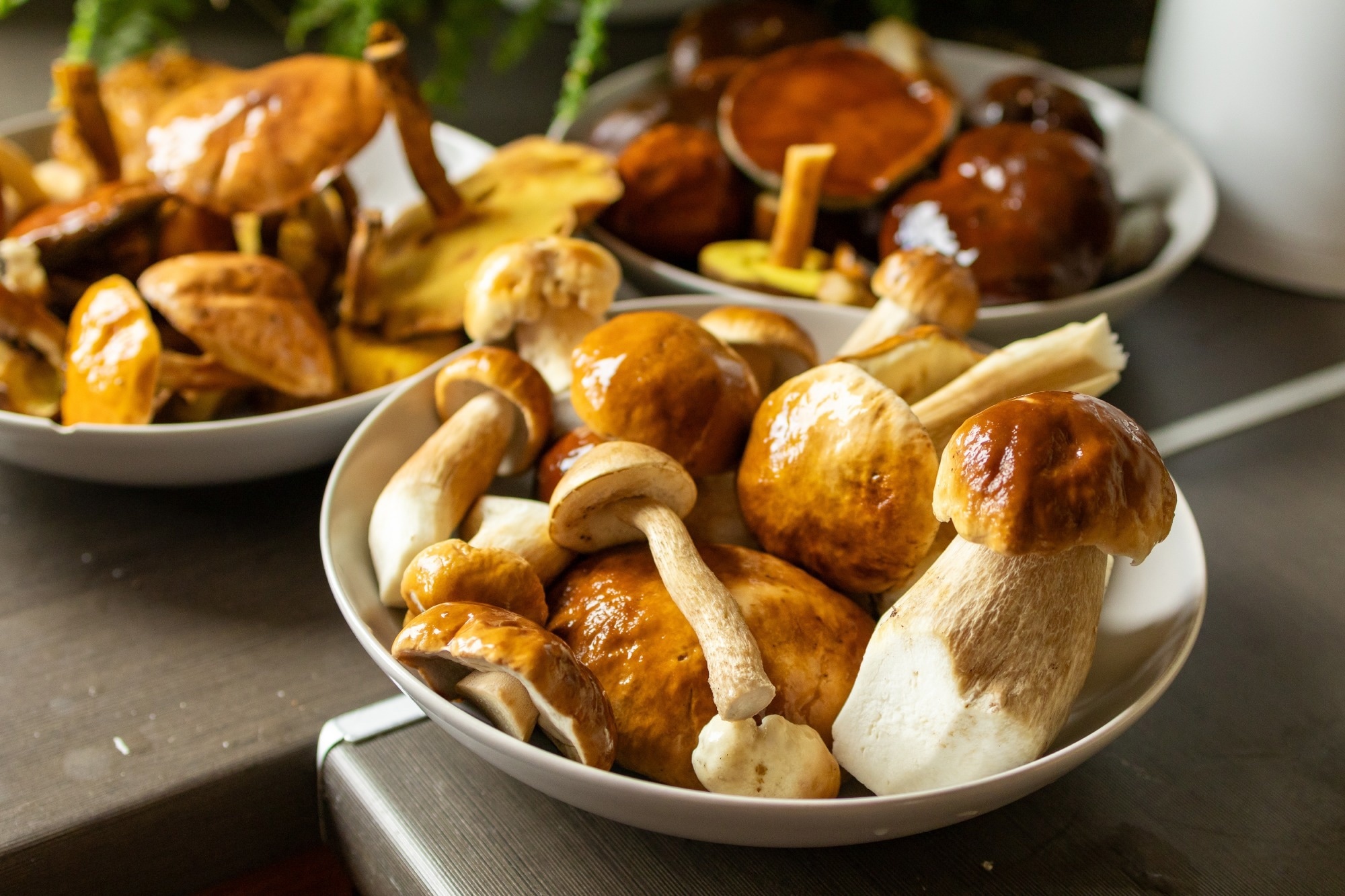 Image Credit: Ina Silence / Shutterstock.com
Introduction
Commonly known as porcini or the king bolete, Boletus edulis is an ectomycorrhizal mushroom that forms symbiotic associations with the roots of oak, pine, and other host trees across temperate forests in North America, Europe, and Asia.4,5
Its symbiotic association with host tree roots also makes cultivation difficult, with commercial supplies dependent on wild collection, rather than the cultivation methods used for button or oyster mushrooms. This constraint has made porcini one of the more commercially valuable edible fungi worldwide.6
The nutritional profile of B. edulis includes substantial protein and carbohydrate content on a dry-weight basis. Studies report that the protein content of porcini mushrooms is close to 22 grams per 100 grams of dried mushroom, while the carbohydrate content is about 59 grams per 100 grams and the reported fat content is as low as 2.6 grams per 100 grams.4
Porcini mushrooms also contain minerals such as phosphorus, magnesium, selenium, zinc, potassium, and calcium, along with vitamins and dietary fiber. Nutrient concentrations vary with mushroom material and preparation.1,4,7 A major component of porcini’s sterol profile is ergosterol, which is a precursor of vitamin D2, with one study measuring 225 milligrams of ergosterol per 100 grams in a hydroethanolic extract.4
Research on B. edulis extracts examines compounds with antioxidant and anti-inflammatory properties for possible food and nutraceutical applications.5,7 The studies reviewed here primarily consist of chemical assays, cell experiments, and animal studies. To date, clinical benefits from consuming porcini extracts remain unconfirmed.1,3,4,7,8
 Image Credit: Valentyn Volkov / Shutterstock.com
Extraction Techniques and Bioactive Profile
Solvent choice affects nearly every downstream result reported for B. edulis extracts. Traditional approaches rely on water or ethanol via simple solid-liquid extraction, while published methods include ultrasound-assisted, microwave-assisted, and pressurized liquid extraction to improve compound recovery and processing efficiency.5 One protocol used ohmic heating, in which an electric current heats the extraction medium, to obtain hydroethanolic extracts rich in sugars, phenolics, and minerals.1
Ultrasonic-assisted enzymatic extraction of polysaccharides from Boletus aereus has also been reported, with the resulting fractions exhibiting greater antioxidant activity than conventional hot-water extraction; antioxidant capacity was optimal with 80% ethanol precipitation.7 Aqueous extraction remains common as well, particularly in studies targeting antimicrobial outcomes.3,8
Differences in extraction conditions also mean that the resulting mixtures contain different proportions of sugars, polysaccharides, and phenolic compounds.1,3,4,7 The polysaccharide fraction can include α- and β-glucans and structurally diverse heteropolysaccharides. Studies suggest that structural features such as branching degree and glycosidic bond type can influence bioactivity; however, findings from different bolete species and purified fractions cannot be uniformly applied to crude B. edulis extracts.2,7
Porcini mushrooms also have a variable phenolic profile. Studies using high-performance liquid chromatography and mass spectrometry analyses have tentatively identified epigallocatechin-3-gallate and caffeoyl tryptophan as the two principal compounds detected in one hydroethanolic extract.4 Ohmic-heating extraction also recovered rutin, taxifolin, and ellagic acid in B. edulis extracts.1
In one study, researchers isolated 17 individual polyphenolic compounds, including quercetin derivatives and the flavan-3-ols catechin and epicatechin. Comparatively, one aqueous extract contained protocatechuic acid, gallic acid, and pyrogallol.3 Trehalose was reported as a major sugar constituent in one extract.1
Antioxidant Capacity and Action Mechanisms
Assessing antioxidant behavior in B. edulis extracts has relied on standard assays, including 2,2-diphenyl-1-picrylhydrazyl (DPPH) and 2,2′-azino-bis(3-ethylbenzothiazoline-6-sulfonic acid) (ABTS) radical scavenging assays, ferric reducing antioxidant power (FRAP), and cell-based measures of reactive oxygen species. These tests measure different aspects of antioxidant activity; therefore, interpret percentages, reducing capacity, and cellular responses within each assay rather than comparing them as interchangeable measures.1,3,4,8
In one aqueous extract, DPPH scavenging reached about 45% inhibition. In contrast, ABTS activity reached about 64%, which was higher than that of three other wild mushroom species tested under identical conditions, even though its total phenolic content was lower than that of two of those species. This disconnect between the phenolic quantity and scavenging activity suggests that total phenolic concentration alone does not explain the measured activity; however, subsequent experiments did not isolate their respective effects.8
In another study, an ohmic-heating extract produced FRAP values near 103 micromoles Fe2+ per gram of dry extract, with DPPH and ABTS values of approximately 17 and 52 micromoles Trolox equivalents per gram of dry extract, respectively.1 Separate cell-based work using human hepatocellular carcinoma cells found that a 1 mg/mL extract concentration reduced hydrogen peroxide-induced intracellular reactive oxygen species (ROS) production from over 400% relative to the initial untreated control down to roughly 280%.4
The broader bolete literature discusses antioxidant mechanisms including direct free radical scavenging through hydrogen or electron donation, metal ion chelation, inhibition of lipid peroxidation, and changes in endogenous antioxidant defenses and gene expression. Experimental confirmation is needed to determine how strongly each mechanism operates in a particular B. edulis extract.7
The hydroethanolic ohmic-heating extract reduced hydrogen peroxide-induced ROS accumulation in differentiated intestinal cell models.1 The same extract increased ROS in undifferentiated Caco-2 cancer cells, alongside reduced thioredoxin reductase activity and cell death. Its effects on cellular redox balance were dependent on the experimental cell state.1
Potential Health Applications
Immune and inflammatory pathways are proposed targets of B. edulis extracts. In colon carcinoma cell models, porcini extracts reduced the overexpression of inducible nitric oxide synthase (iNOS) and cyclooxygenase-2 (COX-2), pro-inflammatory markers tied to nitric oxide overproduction and prostaglandin synthesis, respectively, in inflamed tissue. The reduction was observed at the messenger ribonucleic acid (mRNA) level for both markers and at the protein level for COX-2.1.
Cytokine changes have also been observed following treatment with B. edulis polysaccharides in an asthma mouse model. The direction and significance of these immune responses need to be interpreted within each disease model, with the species and preparation clearly identified.7
Researchers have also examined cardiometabolic effects, mainly through enzyme inhibition assays. One study reported inhibition of α-glucosidase with no meaningful inhibition of α-amylase, suggesting selective, rather than broad-spectrum activity. The same extract produced pancreatic lipase inhibition in a cell-free assay, without directly testing lipid absorption.4
The concentrations needed for 50% inhibition were approximately 13 mg/mL for α-glucosidase and 25 mg/mL for lipase, indicating relatively weak activity compared with the reference inhibitors.4 In rodent models, polysaccharide administration has been associated with reduced fasting glucose and triglyceride levels.7
Other experiments have investigated the antimicrobial properties of B. edulis extracts. Aqueous extracts produced inhibition zones against Staphylococcus aureus, Escherichia coli, and Pseudomonas aeruginosa.3,8
In one agar diffusion study, the larger tested volume of porcini extract produced greater inhibition than the ampicillin control against E. coli and P. aeruginosa. Nevertheless, differences in preparation, dose, and diffusion prevent this observation from establishing equivalent antibiotic potency or clinical efficacy.8 Another study found activity against multidrug-resistant wound isolates and reductions in bacterial adhesion or biofilm biomass.3
Cell viability findings also varied with the extract and model. In one study, human foreskin fibroblasts showed approximately 90% survival after 24 hours of exposure to the tested extracts.3 In the separate hepatocellular carcinoma study, viability approached 70% at the highest concentration and longest exposure period.4 These measurements describe cellular tolerance within each experiment and provide limited information about oral supplementation.3,4
The ohmic-heating extract inhibited proliferation of undifferentiated colon carcinoma cells and induced G0/G1 cell cycle arrest, apoptosis, and autophagy. Differentiated Caco-2 cells were less sensitive and acquired enterocyte-like characteristics, making them useful as an intestinal barrier model. Both cell states retain their origin in the same cancer cell line, limiting conclusions about selective toxicity toward tumors in patients.1
Commercial Challenges and Future Direction
Standardization remains a major limitation in translating the experimental properties of B. edulis extract into commercial products. Studies have documented compositional variability linked to geographic origin, soil composition, harvest timing, and microclimate.
For example, mushrooms obtained from different Polish forest regions exhibit measurable differences in bioactive compound profiles. Nevertheless, these observational comparisons do not establish soil pH or organic matter as the cause of individual differences.2
DNA barcoding of nine commercial dried porcini products identified B. edulis in only three, with other porcini species and some non-porcini fungi also detected. Since the commercial term “porcini” covers several species, product identity must be established before attributing a preparation’s composition or effects to B. edulis.6
Heavy metal uptake is another concern, as porcini mushrooms show consistent cadmium bioaccumulation. In one study, bioconcentration factors exceeded one at both sampling locations, whereas those for nickel and lead remained below one.2 Exposure assessment must account for consumption amounts, background dietary exposure, and contaminant concentrations in the finished extract.2
Further gaps remain in understanding how the bioactive compounds in porcini mushrooms are metabolized after ingestion. Most antioxidant and enzyme-inhibition data come from in vitro assays, and the concentrations cannot be directly translated into dietary doses; factors such as digestive stability and oral bioavailability have not been explored extensively.4
Some in vivo validation has been published for certain preparations and outcomes, such as glucose regulation in diabetic rodents. However, the available literature does not include randomized controlled human trials establishing the efficacy, effective dose, or long-term safety of B. edulis extracts as nutraceuticals.4,7
The proposed uses of B. edulis as a natural food preservative and source of functional food ingredients warrant further testing.2,5,7 Food applications require evidence of performance in the intended product, while health applications require standardized preparations, exposure and safety assessment, and human intervention studies.4,5,7
References
- Quero, J., Paesa, M., Morales, C., et al. (2024). Biological Properties of Boletus edulis Extract on Caco-2 Cells: Antioxidant, Anticancer, and Anti-Inflammatory Effects. Antioxidants 13(8), 908. DOI: 10.3390/antiox13080908. https://www.mdpi.com/2076-3921/13/8/908.
- Sotek, Z., Malinowska, K., Stasińska, M., & Ochmian, I. (2025). Bioactive Compounds and Antioxidant Activity of Boletus edulis, Imleria badia, Leccinum scabrum in the Context of Environmental Conditions and Heavy Metals Bioaccumulation. Molecules 30(15), 3277. DOI: 10.3390/molecules30153277. https://www.mdpi.com/1420-3049/30/15/3277
- Garcia, J., Rodrigues, F., Castro, F., et al. (2022). Antimicrobial, Antibiofilm, and Antioxidant Properties of Boletus edulis and Neoboletus luridiformis Against Multidrug-Resistant ESKAPE Pathogens. Frontiers in Nutrition, 8, 773346. DOI: 10.3389/fnut.2021.773346. https://www.frontiersin.org/journals/nutrition/articles/10.3389/fnut.2021.773346/full
- Casado-Hidalgo, G., Cebollada, P., Cano-Lou, J., et al. (2025). Boletus edulis as a healthy and prized edible mushroom: Analysis of bioactive compounds and in vitro functional properties. Applied Food Research 5(2), 101342. DOI: 10.1016/j.afres.2025.101342. https://www.sciencedirect.com/science/article/pii/S277250222500647X?via%3Dihub
- Vamanu, E. (2024). Novel extracts from boletus edulis for functional product development. AgroLife Scientific Journal, 13(2), 291–299. DOI: 10.17930/agl2024226. https://agrolifejournal.usamv.ro/index.php/agrolife/article/view/926
- Rivas-Ferreiro, M., Otero, A., & Morán, P. (2023). It’s what’s inside that counts: DNA-barcoding of porcini (Boletus sp., Basidiomycota) commercial products reveals product mislabelling. Food Control 144; 109346. DOI: 10.1016/j.foodcont.2022.109346. https://www.sciencedirect.com/science/article/pii/S0956713522005394
- Li, Y., Ma, Y., Zhu, T., et al. (2026). Exploring the medicinal value of Boletus from the dual perspectives of modern pharmacology and Traditional Chinese medicine theory. Frontiers in Pharmacology 17. DOI: 10.3389/fphar.2026.1792398. https://www.frontiersin.org/journals/pharmacology/articles/10.3389/fphar.2026.1792398/full
- Puia, A., Pandrea, S., Cruceru, J., et al. (2025). Phenolic Compounds with Antimicrobial Properties in Mushrooms Frequently Encountered in Temperate Deciduous Forests. Life 15(11); 1653. DOI: 10.3390/life15111653. https://www.mdpi.com/2075-1729/15/11/1653
Further Reading
Last Updated: Nov 15, 2026