Sponsored Content by PittconDec 15 2015
Why have electrochemical methods to provide low cost and direct biomarker read-outs failed to provide clinically-relevant sensitivity to date?
Electrochemical methods are appealing because simple and inexpensive instrumentation can be used to make highly sensitive measurements. However, it has been quite difficult to realize clinically-relevant levels of sensitivity using electrochemistry in highly complex, real-world samples.
Sensors at the Nanoscale
Sensors at the Nanoscale from AZoNetwork on Vimeo.
The challenge relates to having a small population of a target biomarker bind to a sensor and give off a specific signal. Usually the small number of molecules of interest are outnumbered by the billions of other molecules present in a sample.
Can you explain how you have exploited controlled nanostructuring of electrode surfaces to solve this long-standing problem?
We have created three-dimensional, large surface area electrochemical sensors that are able to sample much larger volumes of solution, so they have a much higher probability of finding low levels of a target molecule.
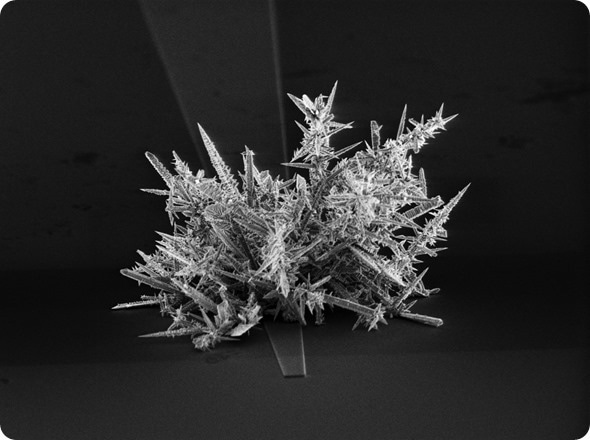
We’ve found that these sensors are much more effective if we create a layer of nanostructures on their surfaces.
It appears that the nanostructuring allows the probe molecules that we use for specific capture to be displayed in a more favorable and active conformation, which means that if a target molecule collides with the sensor, it has a much higher probability of binding.
How did you show that the nanoscale morphologies of electrode surfaces control their sensitivities?
We created sensors with similar surface areas, but with varied levels of nanostructuring.
We compared sensors that were essentially flat at the nanoscale/molecular length scale with others that had 20 nm features on their surfaces. These sensors with the nanotexturing displayed much higher levels of sensitivity.
Can you please outline your upcoming talk at Pittcon 2016?
I’ll describe the development of these sensors, our studies of how controlled surface nanostructuring influences detection sensitivity, and the applications we have pursued using these sensors to look at biological targets that are important for oncology, infectious disease management, and transplant medicine.
What Pittcon Can do for You
What Pittcon Can do for You from AZoNetwork on Vimeo.
What tests do you hope will be developed from using these components to detect markers in clinical samples?
The first area where we think these sensors will make an impact is in infectious disease testing. Our approach provides rapid turnaround, with a test result returned within 20 minutes.
This is an important time frame for infectious disease management, as it allows physicians to test-and-treat within a single office visit.
Do you think this will impact transplant medicine?
Definitely. It turns out that rapid testing of target biomarkers is also important for the assessment of donated organs.
Looking at donated tissue at the molecular level can give transplant surgeons a more accurate assessment of whether the organ will do well in a recipient, but there is typically a window of only a few hours where this type of information can be used to guide decision making. So having a rapid method for biomarker analysis could also make a significant impact in this area.
What do you think the future holds for using nanostructured microelectrodes to analyze biomarkers?
We think that the application of these sensors to unmet needs in medicine will be very powerful. The number of proof-of-concept studies that we’ve been able to do with this one sensor platform indicates that it is broadly applicable and has the potential to be used in many different areas of medicine.
Where can readers find more information?
- www.kelleylaboratory.com
- "Disease Detectors." S.O. Kelley, Scientific American, 2015, 313, 49-51. link
- “Advancing the Speed, Sensitivity and Accuracy of Biomolecular Detection with Multi-Length Scale Engineering.” S.O. Kelley, C.A. Mirkin, D.R. Walt, R.F. Ismagilov, M. Toner, E.H. Sargent, Nature Nanotechnol., 2014, 9, 969-980. link
- "Ultrasensitive Electrochemical Biomolecular Detection using Nanostructured Microelectrodes." A.T. Sage, J.D. Besant, B. Lam, E.H. Sargent, S.O. Kelley, Acc. Chem. Res., 2014, 47, 2417-2425. link
- "Programming the Detection Limits of Biosensors through Controlled Nanostructuring. " L. Soleymani, Z. Fang, E.H. Sargent, S.O. Kelley, Nature Nanotechnol., 2009, 4, 844.link
About Dr Shana Kelley
Dr. Shana Kelley is a Distinguished Professor of Pharmaceutical Sciences, Chemistry, Biochemistry, and Biomedical Engineering at the University of Toronto. Dr. Kelley received her Ph.D. from the California Institute of Technology and was a NIH postdoctoral fellow at the Scripps Research Institute.
The Kelley research group works in a variety of areas spanning bioanalytical chemistry, chemical biology and nanotechnology. Shana’s group has developed novel electrochemical sensors that enable ultrasensitive nucleic acids detection for clinical diagnostics, and has also investigated a new set of chemical probes that interact with intracellular nucleic acids. The Kelley labs also use nucleic acids as building blocks for complex nanomaterials assembly.
Dr. Kelley’s work has been recognized with a variety of distinctions, including being named one of “Canada’s Top 40 under 40”, a NSERC E.W.R. Steacie Fellow, and the 2011 Steacie Prize. She has also been recognized with the Pittsburgh Conference Achievement Award, an Alfred P. Sloan Research Fellowship, a Camille Dreyfus Teacher-Scholar award, a NSF CAREER Award, a Dreyfus New Faculty Award, and was also named a “Top 100 Innovator” by MIT’s Technology Review. She is a founder of two molecular diagnostics companies, GeneOhm Sciences (acquired by Becton Dickinson in 2005) and Xagenic Inc.
About Pittcon
Pittcon is North America’s largest conference and exposition in laboratory science, attracting thousands of industry, academia, and government attendees and exhibitors from around the world in. Pittcon goes beyond the typical conference; it's a global community dedicated to advancing science through education, collaboration, and philanthropy. By bringing together scientists, researchers, educators, students, and industry leaders, Pittcon creates opportunities to learn, connect, and inspire innovation. Beyond the event itself, more than 90% of Pittcon's net proceeds support science education and outreach initiatives locally and globally, funding scholarships, grants, STEM programs, laboratory improvements, and other efforts that strengthen communities and expand access to science.
Pittcon delivers world-class educational and professional development opportunities through its Technical Program, Short Courses, and Networking Workshops and Roundtables. Attendees can explore the latest scientific research through symposia, oral and poster presentations, enhance their skills with expert-led deep-dive courses, and connect with peers through interactive workshops and networking experiences designed to foster collaboration and career growth.
The Pittcon Expo brings the scientific community together in an immersive environment where attendees can discover the latest laboratory technologies, meet with leading instrument and service providers, and experience science in action. Beyond the exhibit booths, the Expo Floor features engaging attractions, educational experiences, demonstrations, and networking spaces, while receptions, parties, and social events create opportunities to build lasting connections with colleagues from around the world.
 How agentic AI is reshaping laboratory workflows