Sponsored Content by TTP plcReviewed by Maria OsipovaJun 19 2026Revised
In this interview, industry experts Jon Wingfield and Wenshu Xu from TTP discuss the technologies and strategies transforming modern drug discovery. Drawing on decades of experience across pharmaceuticals, automation, and innovation, they explore how artificial intelligence, advanced data analytics, and increasingly autonomous laboratory systems are reshaping the design-make-test-analyze (DMTA) cycle.
Can you both introduce your current roles at TTP and how your experience has shaped the way you look at the future of drug discovery?
Jon Wingfield: I work in business development within TTP's Drug Discovery and Preclinical Tools team. My background includes many years in the pharmaceutical industry, which gives me a perspective that bridges the needs of scientists, technology developers, and engineering teams.
Much of my career has focused on design-make-test-analyze (DMTA) workflows and generating data quickly, reproducibly, and accurately so that better decisions can be made faster.
Wenshu Xu: I lead TTP's Drug Discovery Tools team, where our mission is to accelerate the DMTA cycle through innovation. We work closely with organizations developing bespoke systems for synthesis, screening, automation, and autonomous laboratories.
My focus is on the physical side of AI-driven drug discovery, ensuring that virtual predictions can be validated efficiently in the wet lab. Ultimately, success depends on accelerating, improving efficiency, and reducing costs in drug discovery through the integration of automation and experimental data generation.
Jon Wingfield & Wenshu Xu (TTP) on the Future of Drug Discovery | SLAS Europe 2026
Jon, drawing on your experience as a senior pharma executive and former SLAS President, how have you seen the drug discovery landscape evolve over the past decade?
Jon Wingfield: Over the past three decades, automation has evolved from simply moving liquids into microplates toward a much broader concept of automated processes. Early efforts focused primarily on increasing assay throughput, moving from 96-well formats to 384-well and beyond. Today, the focus is far more holistic.
Modern drug discovery increasingly considers how samples move through workflows, how data is captured and processed, and how decisions are fed back into the discovery cycle.
Automation no longer involves simply running experiments. Rather, it is about creating connected systems that enable rapid, data-driven decision-making across the entire discovery process. The ability to generate high-quality data quickly and use it effectively has become a major competitive advantage.
When you look across drug discovery today, what are the biggest pressures or opportunities driving change for pharma, biotech, and technology partners?
Jon Wingfield: One of the industry's biggest challenges is inefficiency. The time and cost required to move a molecule from discovery into the clinic remain extraordinarily high; there is tremendous pressure to shorten timelines and make better decisions earlier.
Organizations are increasingly adopting automation, advanced analytics, and data-driven approaches to identify promising programs sooner and terminate weaker projects earlier.
Wenshu Xu: AI has become a major driver of change, but its success depends on access to high-quality experimental data. There is often debate about whether AI will reduce the need for testing.
In reality, I believe the opposite is true, especially during the early stages. Building robust foundation models requires large, reliable datasets that include not only experimental results but also metadata about the experimental environment.
This need is pushing the industry toward new methods of generating data at scale. Traditional manual workflows are unlikely to provide the volume and quality of information required. Technologies such as microarrays, microfluidics, and ultra-high-throughput screening will play a critical role in generating the datasets needed to fully realize AI's potential.
DMTA has become a central concept in improving discovery workflows. How would you describe the evolution of design-make-test-analyze from where it started to where it is today?
Jon Wingfield: Historically, DMTA was often viewed as a linear process beginning with design. Today, there is growing recognition that analysis may actually be the starting point. Advances in AI-enabled target identification, protein structure prediction, molecular docking, and binding analysis provide valuable insights before molecules are even designed.
Another important evolution is the industry's growing appreciation for failed experiments. Many AI models rely heavily on published literature, yet unsuccessful experiments are rarely reported. Some of the most valuable learning comes from understanding why molecules failed, whether due to synthesis challenges, purification issues, biological inactivity, or toxicity concerns.
As a result, more organizations are investing in generating their own comprehensive datasets, including both successful and unsuccessful outcomes. This richer understanding is helping create more informed design cycles and improving the quality of downstream decision-making.
At the same time, advances in automation are enabling researchers to generate larger volumes of experimental data that continuously refine and strengthen DMTA workflows.
Looking ahead, what do you think the next generation of DMTA workflows will need to deliver to make drug discovery faster, smarter, and more effective?
Jon Wingfield: Future DMTA workflows will need to eliminate many of the barriers that currently separate chemistry and biology. Historically, chemistry and biology have often operated as distinct functions, sometimes separated geographically as organizations optimized for cost. Today, speed has become far more important than cost alone.
Bringing chemistry closer to biology will enable compounds to move directly from synthesis into biological testing, dramatically reducing turnaround times. Future laboratories may evolve into integrated DMTA environments rather than separate chemistry and biology facilities.
Alongside this physical integration, advanced analytics will become increasingly important. New image analysis capabilities and complex cellular models are producing richer datasets than ever before. Organizations that can effectively extract insights from these data streams will be able to make better decisions, reduce cycle times, and improve the probability of success.
From a technical perspective, where do you see AI having the greatest impact in drug discovery, and where does it still need to mature?
Wenshu Xu: One area where AI has already demonstrated significant value is image analysis. The ability to process and interpret large, complex datasets is changing how researchers extract insights from biological experiments.
However, AI still has limitations. It cannot reliably replace scientific reasoning and domain expertise. Without sufficient context, constraints, and mechanistic understanding, AI systems can generate misleading conclusions. That is why combining AI with physics-based and biology-based models remains so important.
Beyond early discovery, AI is beginning to influence clinical development as well. Applications such as patient stratification, recruitment optimization, and analysis of organoid-derived datasets could significantly improve clinical success rates.
Better understanding of toxicity, ADME, PK/PD, and efficacy using more human-relevant models may ultimately reduce costs and improve outcomes across the development pipeline.
How is automation changing the way discovery teams operate, particularly when it comes to integrating data, experiments, and decision-making?
Wenshu Xu: Automation is evolving from simple task execution toward autonomy. Much like the progression from cruise control to self-driving vehicles, laboratories are moving beyond systems that merely perform repetitive tasks toward systems that can diagnose issues, adapt, and potentially self-correct.
A major challenge remains cultural rather than technical. Scientists often intervene when workflows encounter problems because manual intervention appears faster in the short term. However, truly autonomous laboratories require robust systems that can monitor themselves, preserve valuable samples, recover from errors, and continue operating with minimal human involvement.
At the same time, automation is increasingly viewed as an end-to-end process rather than a collection of individual instruments. Modern systems integrate logistics, experimentation, data capture, analytics, and decision-making into a continuous workflow. This enables teams to focus more on scientific strategy and less on repetitive operational tasks.
As you connect DMTA, AI, automation, and new discovery tools, what role do you see TTP playing in helping the industry move toward more efficient and innovative drug discovery?
Jon Wingfield: TTP's role is to help bridge gaps among disciplines, technologies, and workflows. One of the industry's biggest challenges is integrating chemistry, biology, automation, and data science into a seamless discovery engine.
Many organizations have strong capabilities in individual areas but struggle to connect them effectively. This often requires bespoke instrumentation, custom automation, and specialized workflow design. TTP helps address these challenges by developing tailored solutions that connect previously separate processes and enable more efficient DMTA cycles.
Wenshu Xu: This also extends to enabling the physical infrastructure behind AI-driven drug discovery. While AI can generate predictions, those predictions must be validated experimentally. TTP's expertise in high-throughput experimentation and autonomous laboratory systems helps create the physical AI ecosystem needed to generate high-quality data and continuously improve discovery outcomes.
Together, these capabilities position TTP to support a future where drug discovery is faster, more data-driven, and increasingly autonomous.
About Jon Wingfield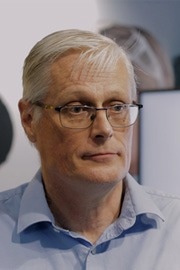
Jon Wingfield is a senior business development leader within TTP's Drug Discovery and Preclinical Tools team, where he works closely with pharmaceutical, biotechnology, and life sciences organizations to accelerate innovation across the drug discovery pipeline.
With nearly 30 years of experience in pharmaceutical research and development, Jon has developed deep expertise in laboratory automation, high-throughput screening, and design-make-test-analyze (DMTA) workflows. Throughout his career, he has played a key role in helping organizations implement technologies that improve efficiency, data quality, and decision-making in drug discovery.
Jon is also a former President of the Society for Laboratory Automation and Screening (SLAS), reflecting his long-standing leadership within the laboratory automation community. His experience spans both scientific and commercial roles, giving him a unique perspective on how engineering, automation, and data-driven approaches can be combined to accelerate the development of new medicines and improve patient outcomes worldwide.
About Wenshu Xu
Wenshu Xu is Head of Drug Discovery Tools at TTP, where she leads the development of innovative technologies designed to accelerate drug discovery through advanced automation, high-throughput experimentation, and autonomous laboratory systems.
Her work focuses on enabling faster, more efficient DMTA workflows by bridging artificial intelligence and experimental science. Wenshu has extensive experience in developing bespoke instrumentation, microfluidics, automation platforms, and next-generation screening technologies that support pharmaceutical and biotechnology innovation.
She is particularly interested in the concept of "physical AI," where computational predictions are rapidly validated through automated wet-lab experimentation. Her expertise spans drug discovery technologies, workflow optimization, and laboratory automation, helping organizations generate high-quality experimental data at scale.
Through her work at TTP, Wenshu is helping to shape the future of autonomous drug discovery, in which AI, automation, and advanced analytics work together to accelerate the development of new therapies.
About TTP plc
At TTP, we work with start-ups through to global corporates across Defense, Energy & Industrials, MedTech, Life Sciences, Satellite and Space, solving complex challenges rooted in technology.
By combining passion and flexibility with deep expertise in science, engineering, and design, we help our clients unlock opportunities that make brilliant things happen. We’re independent, free-thinking, and agile to the core, and for nearly 40 years that’s helped us find better solutions, faster - time and time again. Our multidisciplinary teams are shaped around the needs of each project, enabling us to tackle problems holistically from the outset. We work alongside you as one team, committed to your success as much as you are.
 TTP introduces Cellular Origins, a TTP Company focussed on delivering scalable manufacture of cell and gene therapies