Adding carob strengthened gluten-free pasta, boosted fiber and antioxidant activity, and reduced starch digestibility, with a 20% formulation emerging as the strongest all-round performer.
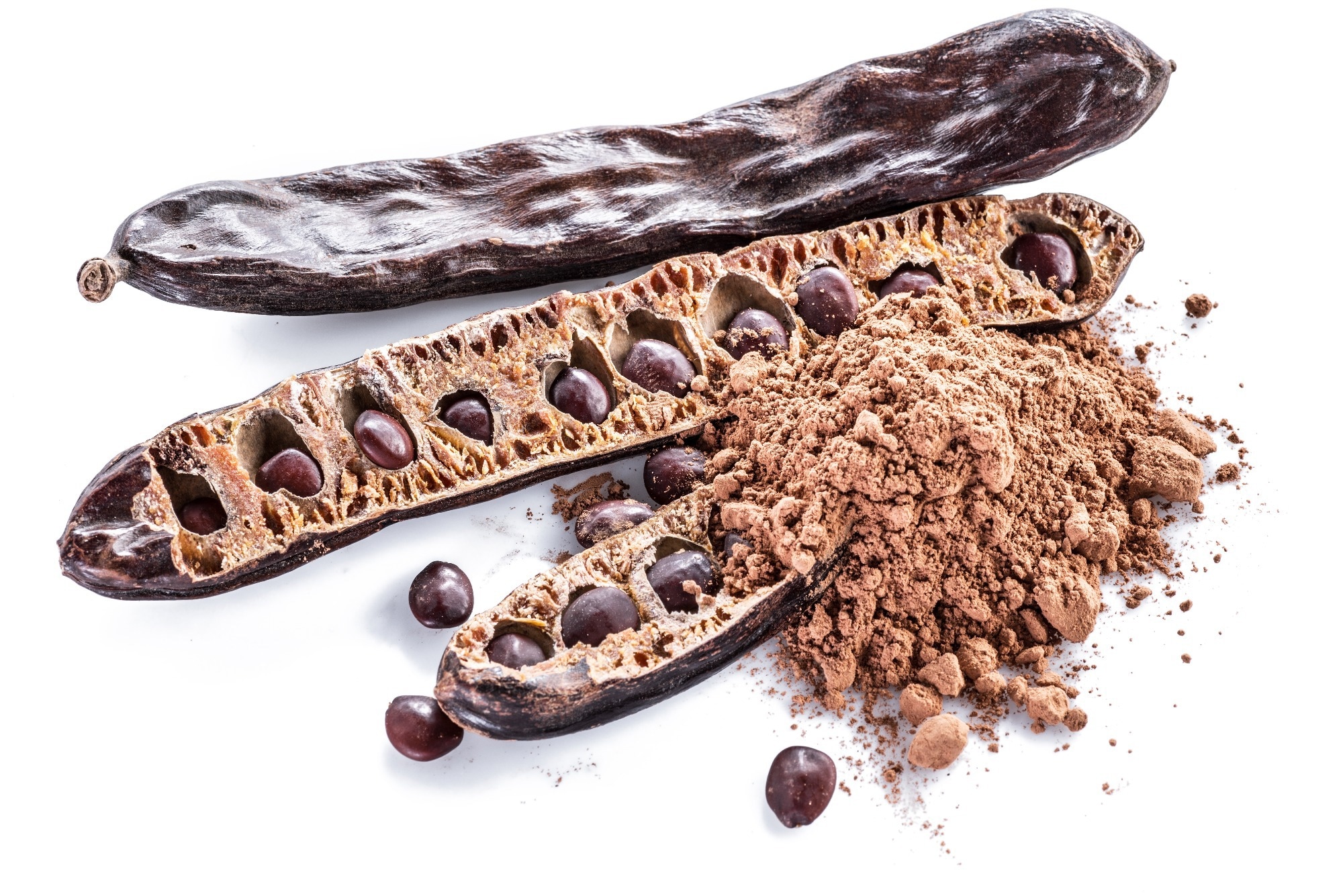
Study: Carob-enriched gluten-free pasta: a sustainable approach for enhancing nutritional, functional, and sensory properties. Image Credit: Valentyn Volkov / Shutterstock
In a recent study published in the journal Frontiers in Nutrition, food scientists describe the development and nutritional, technological, and functional properties of a novel, nutritionally enhanced gluten-free pasta made by enriching a chickpea-teff base with carob (Ceratonia siliqua L.) flour.
The study showed that substituting 10% to 30% of the chickpea-teff formulation with carob flour significantly increased the pasta's dietary fiber content, along with increased antioxidant capacity, greater suppression of interleukin-6 (IL-6) in an intestinal cell model, and reduced starch digestibility.
Most notably, this novel carob-enhanced formulation was observed to reinforce the pasta's microstructure, thereby augmenting post-cooking firmness and reducing bolus adhesiveness, while moderate carob substitution, particularly 20%, improved acceptance relative to the carob-free control among non-celiac consumers.
Background
An estimated 1% of the global human population lives with celiac disease, a chronic autoimmune condition characterized by gluten-associated immune-mediated damage to the small intestine’s lining, which can impair nutrient absorption. Approximately 6% of people in Europe and the United States are estimated to experience non-celiac gluten sensitivity, together highlighting the clinical necessity of gluten-free products in these populations.
While conventional commercial gluten-free products, predominantly made from refined rice and corn flours, do exist, they are often criticized for significant nutritional shortcomings and technological limitations, which exacerbate the absence of a gluten network and lead to excessive stickiness, adhesiveness, and poor post-cooking firmness. Previous reports suggest that these properties reduce consumer acceptance, prompting researchers to investigate alternative approaches.
Emerging research indicates that carob (Ceratonia siliqua L.) flour may represent a sustainable, polyphenol-rich Mediterranean ingredient containing structural (‘caroubin’) proteins and bioactive cyclitols (e.g., D-pinitol).
However, despite growing interest in this ingredient, its effects in gluten-free pasta systems remain comparatively underexplored.
About the study
The present study aimed to develop and evaluate the nutritional, physicochemical, microstructural, and sensory properties of fresh ‘tagliatelle’ (a type of flat ribbon pasta native to the Italian regions of Emilia-Romagna and Marche) enriched with carob flour.
The study initially established a base formulation (F0) comprising chickpea and teff flours in equal proportions, together with xanthan gum and water. The experimental manipulations comprised carob flour, incorporated by substituting the chickpea-teff blend at: 1. 10% (F10), 2. 20% (F20), 3. 25% (F25), and 4. 30% (F30) (all w/w).
The evaluations were divided into: 1. Nutritional profiling (macronutrients, dietary fiber, simple sugars, and starch content), 2. Physical quality assessments (color stability, post-cooking firmness, water absorption index (WAI), swelling index (SI), and internal matrix architecture), and 3. In vivo mastication tests (to investigate bolus texture dynamics).
Phenolic compounds, 2,2-diphenyl-1-picrylhydrazyl (DPPH) and Oxygen Radical Absorbance Capacity (ORAC) antioxidant activity, D-pinitol concentrations, and starch hydrolysis rates were subsequently estimated. Anti-inflammatory activity was tested using a 2D Caco-2:HT-29 intestinal co-culture model.
Finally, the study evaluated sensory acceptance in a human cohort comprising 70 non-celiac and 20 celiac consumers, with F30 excluded from the second sensory session involving the celiac group.
Study findings
The study’s nutritional analyses revealed that carob enrichment increased total dietary fiber by 51% (204 g/kg in F30 versus 135 g/kg in F0) and reduced starch content by 23% (p < 0.05). At the same time, protein and fat declined by approximately 20% and 37%, respectively, while simple sugars increased by about 183%, highlighting a nutritional trade-off.
Evaluations of pasta made with these formulations showed dose-dependent increases in bioactive compounds, as observed for total polyphenols (67%), flavonoids (223%), and condensed tannins (219%) (all comparisons are between F30 and F0).
Antioxidant assays identified similar increases in DPPH radical-scavenging activity (496%). While not as dramatic, ORAC (63% at F30) also increased in a dose-dependent pattern. Furthermore, D-pinitol increased in a dose-dependent manner, reaching 36.2 mg/kg in F30.
In vitro starch digestibility computations found that the metric dropped by 28% in F30 compared to F0 (and was 42% lower than traditional white bread). In LPS-stimulated intestinal co-cultures, IL-6 suppression increased from approximately 20% with F0 to approximately 30% with F30, while TNF-α suppression did not differ significantly among formulations.
Internal matrix architecture scanning using Cryo-Field Emission Scanning Electron Microscopy (CryoFESEM) revealed that carob fiber promoted a dense, cohesive protein-starch matrix with virtually no structural voids. Cooked firmness increased significantly in F20–F30 formulations (4.32–4.83 N versus 3.08 N in F0; p < 0.05), alongside higher WAI and SI. Mastication trials in five healthy adults showed a 56% increase in chew counts and a significant reduction in bolus adhesiveness, potentially addressing the stickiness commonly associated with gluten-free pasta.
Sensory analysis identified F20 (20% substitution) as the optimal formulation. Among celiac consumers, the selected formulations received good acceptance scores of 5.8–6.3 out of 9 when served plain, rising to 6.7–7.1 with tomato sauce. The sauce effectively masked the darker color and intense flavor associated with carob enrichment.
Conclusions
The present study indicates that a 20% substitution with carob flour provides an optimal balance of structural performance, reduced starch digestibility, potential glycemic-modulating properties, enhanced antioxidant capacity, and consumer acceptability.
While future in vivo studies are necessary to establish the bioavailability and physiological relevance of these bioactive compounds, the human component of this study assessed oral processing and sensory acceptance rather than metabolic or anti-inflammatory health outcomes. These findings indicate that carob flour represents a sustainable, functional ingredient for developing functional gluten-free products tailored to celiac and health-conscious populations.
 Study identifies key immune cell changes in the lungs of people with sarcoidosis