The ability to precisely control microbial growth is crucial in bioprocess development, continuous manufacturing, and microbial physiology studies. Using a turbidostat helps ensure cultures maintain a constant cell density, as it can react to turbidity feedback in real time and adjust the inflow of fresh medium, enabling exceptionally stable and reproducible culture conditions.
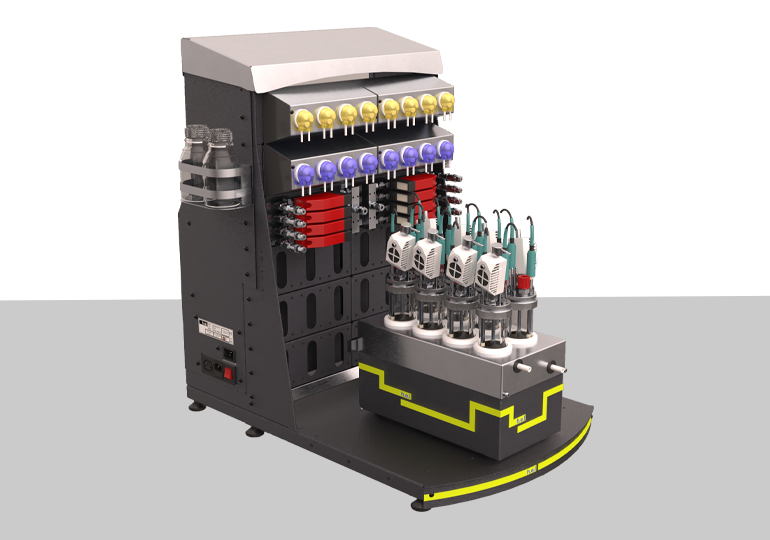
Figure 1. H.E.L BioXplorer 100, bench-top parallel 8 bioreactor platform. Image Credit: H.E.L Group
The BioXplorer 100 (Figure 1) delivers turbidostat capabilities through its integrated BioVIS probe (Figure 2) and WinISO software-controlled pumping system. This article discusses how to optimize high-density Escherichia coli cultivation using this parallel bioreactor system.
To establish an accurate correlation between probe output and cell density at high biomass, where optical scattering effects cause non-linearity, a non-linear calibration curve was formulated to facilitate the process.
Once calibrated accordingly, the BioXplorer 100 can successfully maintain a stable E. coli cell concentration at a specified point under continuous growth conditions. This offers better control, consistency, and productivity across experimental evolution, process development, and physiological states.
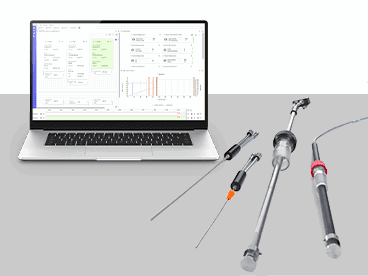
Figure 2. BioVIS probe for online monitoring of total cell growth and biomass within a bioreactor. Image Credit: H.E.L Group
Key benefits
- Consistent cell physiology for long-duration or comparative experiments
- Parallel cultivation capability for screening and optimization workflows
- Automated dilution control for stable high-density operation
- No need for external optical monitoring equipment
Using the BioXplorer 100 as a turbidostat
- Initial growth phase (circa 0–155 minutes): From the moment of inoculation, the culture enters the growth phase (∼55 mins). After a lag phase, an increase in OD is observed alongside a decrease in DO as cells consume oxygen.
- Exponential phase (circa 155–300 min): A rapid increase in biomass with continued DO decline reflects high metabolic activity. At around 275 mins, the DO exhibits a sharp increase, likely due to media exhaustion.
- Turbidostat control activated (∼300 min): Once the OD setpoint is reached, the system automatically enters the dilution phases.
- Fresh medium is added as the feed pump flow increases
- OD stabilizes at the set target.
- Steady-state metabolic response: By introducing fresh medium, the cell concentration is diluted to the setpoint level. This causes DO to spike before returning to a steady level.
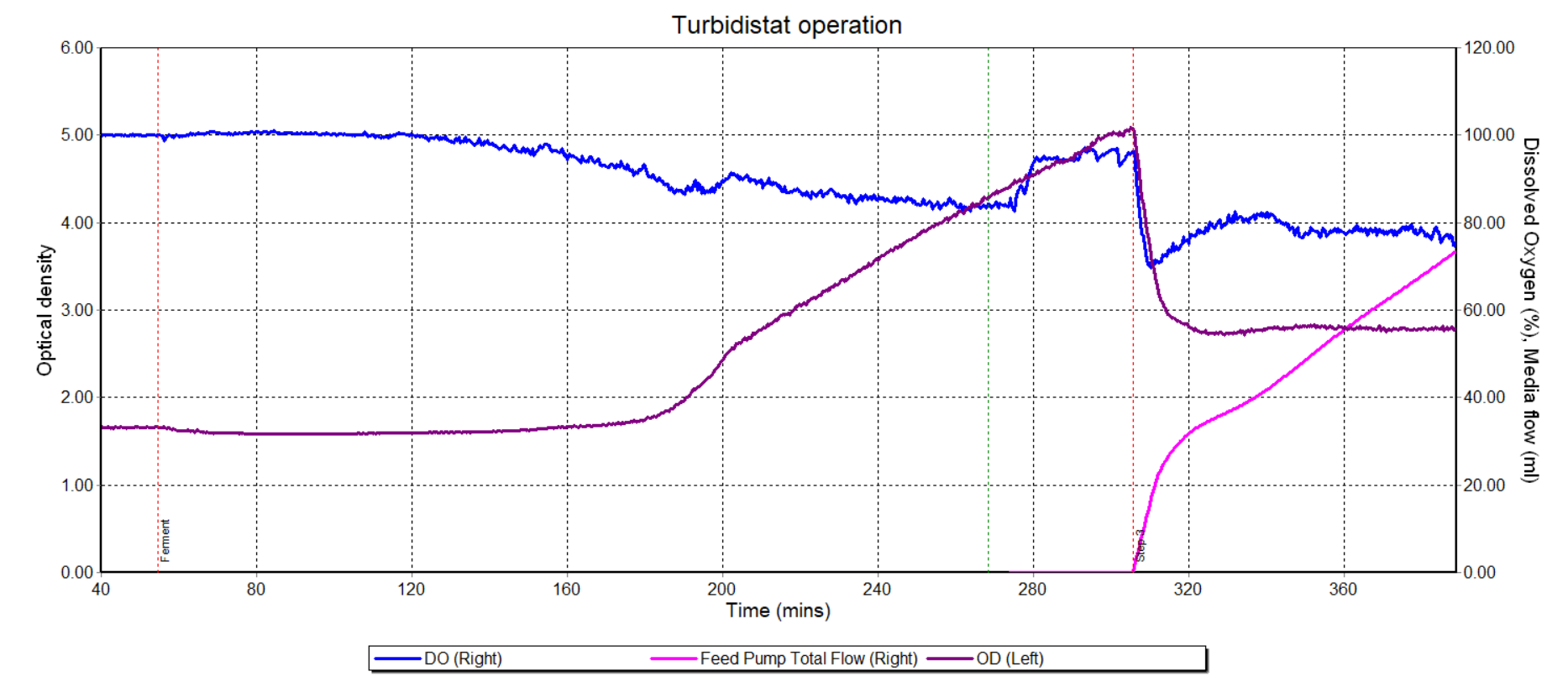
Figure 3. Turbidostat control profile of BioXplorer 100. Image Credit: H.E.L Group
Controlling microbial growth in liquid cultures is a requirement across biotechnology research and industrial bioprocessing. Conventional batch cultures are less suited to processes that require consistency and reproducibility, as they typically exhibit dynamic shifts in nutrient availability and metabolic state.
Turbidostats counter this by offering continuous cultivation under steady, controlled growth conditions. This is achieved by automatically diluting the culture when turbidity exceeds a predetermined threshold, thereby maintaining a constant biomass. This enables:
- Improved productivity for biosynthesis and protein expression
- Increased reproducibility between experiments
- Long cultivation times without manual intervention
- Microbial physiology and strain development research promotion
- Steady-state physiology and metabolism
As a parallel, small-scale bioreactor system, the BioXplorer 100 is well-suited for developing dynamic bioprocesses. Its built-in BioVIS probe delivers a constant, in situ optical attenuation measurement with real-time automated growth regulation capabilities that can be configured using WinISO to return calibrated OD-equivalent values as needed.
However, ensuring accuracy during turbidostat operation is paramount, and this requires careful calibration of the probe signal to optical density (OD600), especially at high cell densities, where turbidity and OD are not linearly correlated.
Materials and methods
Microbial culture growth conditions
- Organism: Escherichia coli
- Culture volume: 50 mL in BioXplorer 100 vessel*
- Temperature: 37 °C
- Agitation: 200 and 400 rpm
- Biomass Set Point: 2.75 g/L
- Control software: WinISO
Equipped with the BioVIS probe, the BioXplorer 100 was inoculated with an E. coli culture, which was allowed to grow until a predetermined biomass setpoint was reached. Upon reaching the setpoint, WinISO automatically activated dilution control, introducing a fresh medium and flushing out effluent to maintain a constant culture volume and biomass.
*50–150 mL culture volume can be used with the BioXplorer 100 and 120-400 mL culture volume with the BioXplorer 400.
Turbidity was continuously monitored, and the system adjusted the medium feed in real time. This maintains target cell density without manual interference.
For each vessel, the surplus culture volume was automatically drawn out through a dip tube, controlled by an independent peristaltic pump, under the guidance of the WinISO software.
Results and discussion
Calibration performance
Dilution is typically conducted when preparing offline samples for OD600 measurement by UV–Vis spectrophotometry. It cannot be achieved when using an in situ optical probe. Therefore, to ensure an accurate correlation between the BioVIS attenuation signal and true cell density at high biomass, a non-linear calibration model was required.
This calibration makes the BioVIS signal reliable when used as a feedback input to maintain steady, constant control over the culture.
Non-linear calibration of BioVIS probe
To generate a calibration curve, samples were collected at incremental culture densities and measured offline at OD600 using a spectrophotometer. These OD values were compared against the raw probe signal (transmitted light intensity).
The resulting calibration curve (Figure 1) exhibits the relationship between the BioVIS probe output and the offline-measured OD600 of the E. coli culture. The absorbance signal and OD600 are approximately proportional at low cell densities, indicating that the BioVIS output can be taken when OD600 is below ∼1.0.
The probe response at low OD600 was nearly linear. Increased light scattering at higher densities (OD600 of 1.5) led to nonlinearity, indicating a non-linear calibration model is required for accurate biomass interpretation.
With increasing cell density, a non-linear relationship is observed. Above ∼OD600 ≈ 1.5, there is a slower increase in the BioVIS signal when compared to the true OD600. This appears to occur as the dense cultures induce multiple scattering, limiting the fraction of transmitted light detected and breaking the simple proportionality assumed by the Beer-Lambert law in dilute solutions.
By applying a non-linear calibration model, the BioXplorer 100 can accurately determine biomass across the entire operating range. This enhances turbidostat control at high cell densities.
Conclusion
The BioXplorer 100 offers excellent turbidostat capabilities when supported by a non-linear turbidity calibration, providing controlled, stable, and reproducible high-density cultivation.
The system facilitates reproducible steady-state operation with minimal manual intervention by maintaining a high-density E. coli culture in continuous growth conditions.
The BioXplorer 100 combines real-time biomass monitoring, automated dilution control, and dynamic parallel bioreactor configuration, making it the ideal solution for applications such as adaptive evolution studies, strain development, process optimization, and high-value biomolecule production.
For researchers and process developers seeking a reliable solution, the BioXplorer 100 offers a scalable platform capable of delivering robust continuous microbial cultivation.
The system’s performance enables long-duration, reproducible continuous culture, supporting process optimization, strain development, and high-value biomolecule production with minimal manual intervention, thereby boosting experimental confidence.
Summary
H.E.L’s BioXplorer 100 and BioXplorer 400 parallel bioreactor systems can operate as robust turbidostat systems, enabling real-time control of culture density across diverse media and high-density microbial applications.
Both platforms can maintain a stable biomass setpoint under continuous cultivation when paired with the in situ BioVIS optical attenuation probe and WinISO-controlled automated dilution, making them ideal for long-running, steady-state processes.
Overall, the BioXplorer platform delivers consistent cell physiology, reliable operations over long durations, and true parallel cultivation. When it comes to process development, strain optimization, screening studies, and high-value biomolecule production, this system is second to none.
The BioXplorer 400P extends the range by offering another robust, scalable option for advanced pressurized bioprocessing applications. Together, the BioXplorer family can be considered a complete solution for continuous microbial cultivation with built-in optical monitoring and dynamic control strategies.
About H.E.L Group
H.E.L develops and manufactures innovative scientific instruments and software designed to optimize the efficiency, safety, and productivity of key processes in chemistry and biology applications.
The H.E.L team of 70 includes highly skilled process and software engineers, based at their extensive research and manufacturing facilities in the UK, as well as sales and support offices around the world.
H.E.L has a long history of solving complex challenges for customers. Since 1987, the Company has worked with businesses and laboratories globally, providing proprietary automated solutions for the pharma, biotechnology, chemical, battery, and petrochemical sectors.
We continue to expand the reach of our products and services to further support and enable R&D and process optimization across Europe, the US, China, and India.
H.E.L is accredited with ISO 9001: 2015
Our mission
To help create a healthier, more sustainable, safer world for everyone.
Our vision
We equip scientists with the right tools and knowledge to develop safe, efficient new processes and molecules that benefit the world and its population.
Our values
Insightful through experience. With over 30 years of in-house expertise and experience, we know how to overcome a challenge
Collaborative by design. Dedicated to listening, learning, and working closely with industry experts, we empower others to fulfill potential
Tenacious in spirit. Always looking for new and innovative solutions, we don’t stand still; instead, we are focused on reaching the next success
Proud of progress. Fueled by our ability to make a real difference, while celebrating the achievements of others
Sponsored Content Policy: News-Medical.net publishes articles and related content that may be derived from sources where we have existing commercial relationships, provided such content adds value to the core editorial ethos of News-Medical.net, which is to educate and inform site visitors interested in medical research, science, medical devices, and treatments.