Sponsored Content by EvotecReviewed by Ify IsiborAug 25 2026
Biomarkers are measurable features of normal pharmacological responses to therapeutics or disease states and play a critical role in pharmaceutical development by providing insight into the effects of therapeutics on the human body.
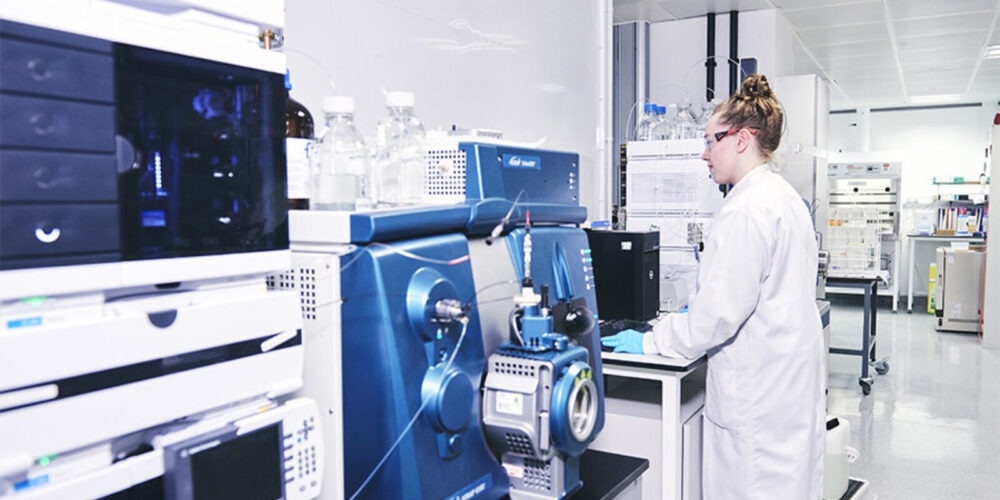
Image Credit: Evotec
Biomarkers can be measured and assessed in biological matrices such as blood and plasma. Colorimetric assays have previously been used for the analysis of small-molecule biomarkers; however, LC-MS is increasingly used due to its high-throughput capabilities, as well as improved selectivity and sensitivity.
The endogenous nature of biomarkers can jeopardize assay precision and accuracy, making their bioanalysis challenging. Accordingly, this interference must be addressed for an effective biomarker assay. In addition, the presence of closely related endogenous analogs or isomers may cause interference due to their structural similarity.
An additional limitation may be the dynamic range of the LC-MS for specific compounds depending on the natural variance and the degree of up/down regulation that may occur. Biomarker stability can also cause multiple biomarker-specific problems: among these are size and polarity issues. Methods for addressing these challenges are detailed below.
Urea quantification
Urea quantification in biological matrices with LC-MS/MS presents multiple problems due to its low molecular weight, polar properties, and endogenous nature in most species.
Due to urea’s hydrophilic nature, it is unretained on a standard reverse-phase liquid chromatography (LC) system. Moreover, it cannot be separated using ion-pairing reagents due to its lack of charge at usable pHs.
HILIC chromatography offers sufficient retention. However, problems are encountered when acetonitrile is used as the mobile phase for urea evaluation. Acetonitrile contributes significantly to the background noise of the urea MRM, causing interference with the urea quantification.
Finally, calibration lines and quality control samples cannot be prepared by spiking urea into a blank matrix due to the endogenous levels, necessitating an alternative.
View the case study
About Evotec
Evotec is a life science company that is pioneering the future of drug discovery and development. By integrating breakthrough science with AI-driven innovation and advanced technologies, we accelerate the journey from concept to cure – faster, smarter, and with greater precision. Our expertise spans small molecules, biologics, cell therapies and associated modalities, supported by proprietary platforms such as Molecular Patient Databases, PanOmics and iPSC-based disease modeling.
With flexible partnering models tailored to our customers’ needs, we work with all Top 20 Pharma companies, over 800 biotechs, academic institutions, and healthcare stakeholders. Our offerings range from standalone services to fully integrated R&D programs and long-term strategic partnerships, combining scientific excellence with operational agility.
Through Just – Evotec Biologics, we redefine biologics development and manufacturing to improve accessibility and affordability. With a strong portfolio of over 100 proprietary R&D assets, most of them being co-owned, we focus on key therapeutic areas including oncology, cardiovascular and metabolic diseases, neurology, and immunology.
Evotec’s global team of more than 4,500 experts operates from sites in Europe and the U.S., offering complementary technologies and services as synergistic centers of excellence. Learn more at www.evotec.com and follow us LinkedIn and X/Twitter @Evotec.
Sponsored Content Policy: News-Medical.net publishes articles and related content that may be derived from sources where we have existing commercial relationships, provided such content adds value to the core editorial ethos of News-Medical.net, which is to educate and inform site visitors interested in medical research, science, medical devices and treatments.