Sponsored Content by EvotecReviewed by Ify IsiborAug 3 2026
The fields of metabolomics and lipidomics involve the detailed and broad analysis of metabolites and lipids in biological samples such as tissues, blood, or cells.
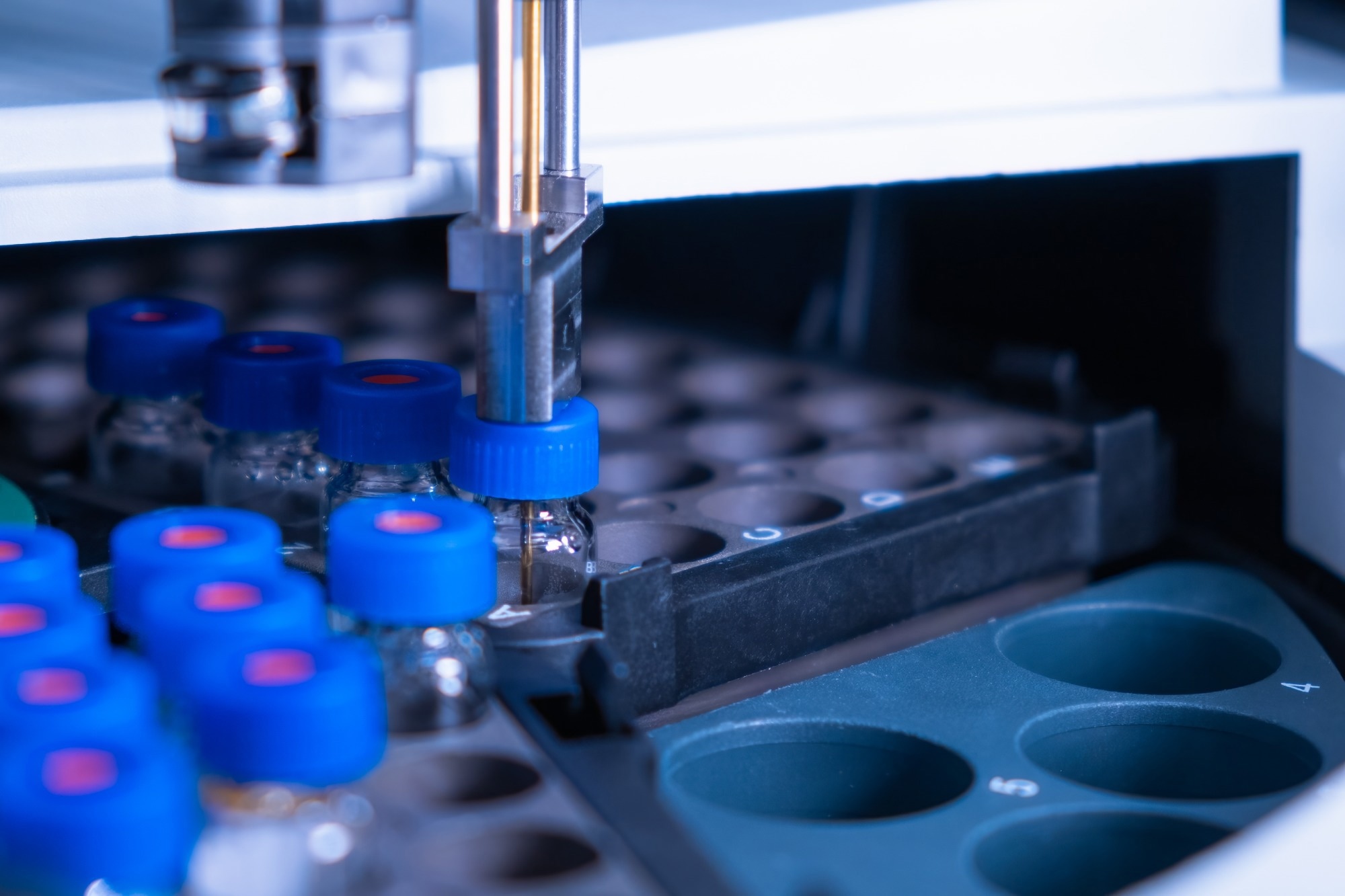 Image Credit: Shutterstock.com/ Vladimka production
These molecules offer a direct, highly integrated snapshot of biological function because they are the downstream products of cellular processes.
Metabolomics and lipidomics are powerful tools for understanding disease, health, and therapeutic response. While other omics technologies work by measuring biological potential, metabolomics and lipidomics uncover a biological system’s current physiological state by capturing ongoing biochemical activity.
Untargeted metabolomics and lipidomics versus targeted approaches
Targeted approaches are generally used when specific molecules or pathways are already known to be important, working by focusing on a predefined list of compounds.
Untargeted metabolomics and lipidomics seek to detect and measure as many metabolites and lipids as possible during a single experiment, as opposed to looking for a selected set of compounds.
Such an approach is especially powerful because it is unbiased, making it ideal for discovery research. Untargeted methods allow researchers to uncover previously unknown pathways, identify unexpected molecular changes, and generate entirely new biological hypotheses without prior assumptions that could impose constraints.
The importance of untargeted metabolomics and lipidomics in biomedical research
Metabolites are the downstream products of cellular activity, meaning they offer a highly integrated snapshot of biological function that reflects the combined impact of diet, environmental exposures, microbiome composition, genetics, and therapeutic interventions.
Untargeted metabolomics and lipidomics produce system-wide molecular insights that offer in-depth insight into health, treatment response, and disease progression.
Metabolic changes typically precede clinical symptoms, meaning that these technologies are also effective tools for mechanism-of-action studies, patient stratification, biomarker discovery, toxicology, drug development, nutrition research, and precision medicine.
Key challenges in untargeted metabolomics
Untargeted metabolomics continues to be analytically challenging, despite its enormous potential.
An average biological sample includes thousands of metabolites and lipids covering a diverse array of chemical concentrations and properties. Researchers must also contend with technical variability, biological variability, and environmental influences that can adversely impact data quality and interpretation.
Many metabolites feature identical molecular masses or similar structures, making it especially challenging to confidently identify them. Metabolite annotation continues to be one of the field's most significant bottlenecks due to the sheer number of unknown compounds detected and the prevalence of incomplete spectral databases.
It is also important to note that metabolomics datasets’ high degree of dimensionality further complicates data processing, biological interpretation, and statistical analysis. Mitigating this issue requires the implementation of robust bioinformatics and computational approaches to extract meaningful biological insights.
Addressing these challenges using modern platforms
Productive untargeted metabolomics applications are dependent on a combination of advanced instrumentation, comprehensive annotation resources, and sophisticated bioinformatics.
Leveraging high-resolution mass spectrometry alongside optimized chromatographic separation enables the accurate and sensitive detection of metabolites across a wide dynamic range. Automated sample preparation further enhances throughput and reproducibility.
Comprehensive reference libraries and spectral databases support metabolite annotation across a range of confidence levels from tentative structural assignments to confirmed identification via authentic standards.
Bioinformatics transforms raw analytical signals into biologically meaningful information via a combination of data processing, feature detection, alignment, annotation, quality control, and statistical analysis.
The strength of modern metabolomics platforms lies in their seamless integration of analytical, computational, and biological components into a single, unified workflow.
The importance of metabolite annotation
Signal detection is just the first step in untargeted studies. The true value lies in understanding what the detected signal biologically represents.
Metabolite annotation is key to linking analytical features to tangible chemical entities, allowing researchers to connect observed molecular changes with biological processes, disease mechanisms, biochemical pathways, and therapeutic responses.
It also underpins cross-study comparisons, biomarker discovery, and the translation of metabolomics findings into actionable insights. The extent and quality of annotation can, therefore, directly depend on what usable biological knowledge can be extracted from a dataset.
Ensuring data quality in large-scale metabolomics studies
Consistent and reliable metabolomics data depends on implementing stringent quality control throughout the entire analytical workflow.
Contemporary workflows combine thorough experimental design, standardized protocols, automated preparation, consistent sample handling, and the routine analysis of quality control (QC) samples to continuously monitor analytical performance.
Parameters such as mass accuracy, retention-time stability, and signal intensity are tracked across hundreds or potentially even thousands of reference ions.
Extensive post-processing is performed following acquisition, including normalization, correction of systematic variation, filtering of low-quality features, and treatment of missing values.
These steps ensure minimal technical variability, helping to guarantee that observed differences primarily reflect underlying biological variation.
Key steps following data generation
Emphasis pivots to biological interpretation following the completion of processing and quality control.
Researchers generally start with exploratory approaches such as hierarchical clustering and principal component analysis (PCA) to identify patterns within the dataset and visualize data structure.
Statistical analyses are then employed to identify metabolites and lipids linked to specific biological conditions. Machine-learning methods can also be implemented to further classify samples, uncover predictive signatures, and prioritize biomarker candidates.
Results are then interpreted in their biological context by integrating with other omics datasets, conducting pathway analysis, and correlating with experimental or clinical metadata. This final step is key to linking molecular changes with underlying cellular processes and biological mechanisms.
The role of metabolomics in the era of multi-omics
Of all the omics sciences, metabolomics offers the closest molecular representation of a phenotype. Transcriptomics, genomics, and proteomics can describe biological regulation and potential, but metabolomics has the capacity to capture these processes’ functional outcome and their interactions with different environmental factors.
Metabolomics functions as a critical bridge between molecular mechanisms and observable biological traits. The integration of metabolomics and other omics provides a more in-depth and wide-ranging understanding of biological systems, supporting patient stratification, biomarker discovery, mechanism-of-action studies, and the ongoing development of precision medicine.
Beneficiaries of developments in untargeted metabolomics and lipidomics
Untargeted metabolomics and lipidomics offer value for organizations looking to gain deeper insights into disease mechanisms, complex biological systems, host–microbiome interactions, therapeutic responses, and the biology of aging.
Common applications range from patient stratification and biomarker discovery to drug development and translational research. These technologies are widely employed by healthcare organizations, biotechnology and pharmaceutical companies, academic institutions, and public research centers.
Evotec works with clients across the entire spectrum of drug discovery and development, supporting studies in mechanism-of-action research, biomarker discovery, patient stratification, toxicology, translational science, and precision medicine.
The company’s clients are increasingly looking for more than just analytical measurements. Instead, there is a growing need for integrated solutions able to transform complicated, in-depth molecular data into actionable biological insights.
This work typically requires the implementation of metabolomics and lipidomics with transcriptomics, proteomics, advanced bioinformatics, and clinical data to gain a holistic understanding of disease biology and accelerate therapeutic and biomarker discovery.
The future of untargeted metabolomics and lipidomics
The field of untargeted metabolomics and lipidomics is rapidly evolving, with the future of the techniques lying in greater scale, depth, integration, and automation.
Ongoing developments in chromatography, ion mobility, mass spectrometry, and AI-driven data analysis will continue to enhance metabolome sensitivity, coverage, and annotation confidence.
Expanding community-driven resources and spectral databases will also be key to addressing current identification bottlenecks.
Untargeted metabolomics and lipidomics are expected to play an increasingly important role in patient stratification, drug development, biomarker discovery, and precision medicine as these related technologies continue to mature.
These approaches are revolutionizing the field’s potential to explore biology without preconceived assumptions. Researchers attaining an unbiased view of molecular activity can better uncover hidden biology, accelerate scientific discovery, and generate new hypotheses.
Acknowledgments
Produced from materials originally authored by Michaël Méret, Senior Research Scientist in Metabolomics at Evotec.
About Evotec
Evotec is a life science company that is pioneering the future of drug discovery and development. By integrating breakthrough science with AI-driven innovation and advanced technologies, we accelerate the journey from concept to cure – faster, smarter, and with greater precision. Our expertise spans small molecules, biologics, cell therapies and associated modalities, supported by proprietary platforms such as Molecular Patient Databases, PanOmics and iPSC-based disease modeling.
With flexible partnering models tailored to our customers’ needs, we work with all Top 20 Pharma companies, over 800 biotechs, academic institutions, and healthcare stakeholders. Our offerings range from standalone services to fully integrated R&D programs and long-term strategic partnerships, combining scientific excellence with operational agility.
Through Just – Evotec Biologics, we redefine biologics development and manufacturing to improve accessibility and affordability. With a strong portfolio of over 100 proprietary R&D assets, most of them being co-owned, we focus on key therapeutic areas including oncology, cardiovascular and metabolic diseases, neurology, and immunology.
Evotec’s global team of more than 4,500 experts operates from sites in Europe and the U.S., offering complementary technologies and services as synergistic centers of excellence. Learn more at www.evotec.com and follow us LinkedIn and X/Twitter @Evotec.
Sponsored Content Policy: News-Medical.net publishes articles and related content that may be derived from sources where we have existing commercial relationships, provided such content adds value to the core editorial ethos of News-Medical.net, which is to educate and inform site visitors interested in medical research, science, medical devices and treatments.