Sponsored Content by EvotecReviewed by Ify IsiborSep 18 2026
Autologous chimeric antigen receptor (CAR) T cell therapies are now a part of standard treatment protocol for hematological malignancies. Despite this, they are deeply constrained by elevated costs and delayed access for patients.
Allogeneic donor-derived CAR T cells make off-the-shelf availability possible, but their efficacy is still modest, especially in solid tumors. This largely comes as a result of allorejection, insufficient tumor infiltration, and functional exhaustion inside the hostile tumor microenvironment (TME).
Upcoming in vivo CAR T strategies aim to eliminate the need for ex vivo manufacturing, although they necessitate validation of efficacy, safety, and therapeutic control.
Allogeneic induced pluripotent stem cell (iPSC)-derived CAR T cells represent a promising alternative, as they enable unlimited, homogeneous, and cost-effective read-to-use products with a predefined genotype and phenotype.
The possibility of using them for extensive genetic engineering enables rational customization for disease-specific problems, such as superior tumor trafficking and resistance to TME-mediated suppression. Hepatocellular carcinoma (HCC), the third largest cause of cancer-related mortality around the world, is considered largely incurable once it has reached advanced stages.
To meet this clinical need, Evotec built a scalable, xeno-free bioprocessing platform to create immune-shielded, TME-resistant iPSC-derived CAR γδ T cells (CAR iγδ T cells). By integrating the intrinsic tissue infiltration and favorable safety profile of γδ T cells with a proprietary HCC-targeting CAR with their immune-shielding strategy, this platform makes a safe, effective, and cost-competitive CAR T cell therapy for HCC possible.
| Final product |
Allogeneic iPSC-derived CAR T cells
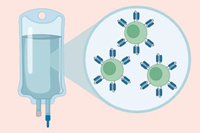
Off-the-shelf CAR T cells |
In vivo CAR T cells
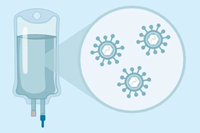
Off-the-shelf CAR vectors |
Allogeneic donor-derived CAR T cells
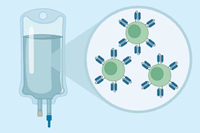
Off-the-shelf CAR T cells |
| Availability |
 |
|
|
| Scalability |
|
|
|
| COGS |
|
|
|
Gene editing
capacity & clonality |
|
|
|
In-depth QC &
therapy control |
|
|
|
Figure 1. Allogeneic iPSC-derived CAR T cells are available off-the-shelf and can be manufactured as a clonal drug product at large scale and lower cost compared with allogeneic donor-derived and in vivo-generated CAR T cells. They enable complex and precise genetic engineering that is not feasible in primary T cells, whether sourced from patients (in vivo CAR T) or healthy donors (donor-derived CAR T). Importantly, iPSC-derived CAR T cells provide a fully controlled therapeutic product, allowing extensive screening for genetic integrity and defined cellular phenotype. COGS: Cost of goods sold. Image Credit: Evotec
This article provides a brief overview of the approach. Download the full poster to explore the complete scientific rationale, technology platform, and development strategy.
About Evotec
Evotec is a life science company that is pioneering the future of drug discovery and development. By integrating breakthrough science with AI-driven innovation and advanced technologies, we accelerate the journey from concept to cure – faster, smarter, and with greater precision. Our expertise spans small molecules, biologics, cell therapies and associated modalities, supported by proprietary platforms such as Molecular Patient Databases, PanOmics and iPSC-based disease modeling.
With flexible partnering models tailored to our customers’ needs, we work with all Top 20 Pharma companies, over 800 biotechs, academic institutions, and healthcare stakeholders. Our offerings range from standalone services to fully integrated R&D programs and long-term strategic partnerships, combining scientific excellence with operational agility.
Through Just – Evotec Biologics, we redefine biologics development and manufacturing to improve accessibility and affordability. With a strong portfolio of over 100 proprietary R&D assets, most of them being co-owned, we focus on key therapeutic areas including oncology, cardiovascular and metabolic diseases, neurology, and immunology.
Evotec’s global team of more than 4,500 experts operates from sites in Europe and the U.S., offering complementary technologies and services as synergistic centers of excellence. Learn more at www.evotec.com and follow us LinkedIn and X/Twitter @Evotec.
Sponsored Content Policy: News-Medical.net publishes articles and related content that may be derived from sources where we have existing commercial relationships, provided such content adds value to the core editorial ethos of News-Medical.net, which is to educate and inform site visitors interested in medical research, science, medical devices and treatments.