Cell line development (CLD) timelines are extended when growth insights arrive after the decision window, particularly when screening large clone panels from milliliter‑scale cultures.
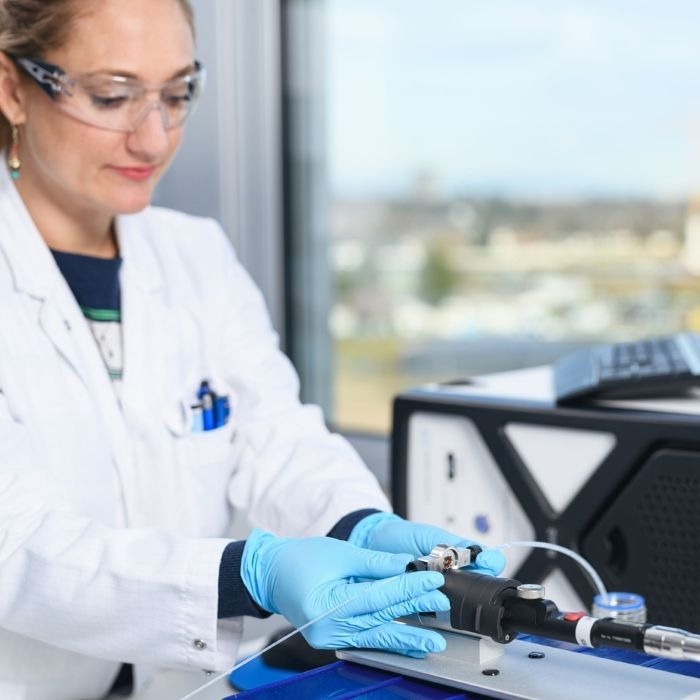
Image Credit: Endress+Hauser
To address this, implementing inline Raman spectroscopy alongside a micro-volume flow setup allows viable cell concentration (VCC)/viability trends to be transformed into an operational signal that can be leveraged for early detection during screening.
This allows users to rank sooner, retest less, and preserve culture volume while ensuring that workflows remain compatible with future automation.
The clone screening process should be understood as a throughput issue disguised as an analytics issue.
Cells can be measured, but it is not possible to measure them consistently enough, fast enough, and without consuming precious early cultures. Late-landing VCC increases time and cost across the program because teams must delay down‑selection, repeat confirmatory runs, and extend the screening–passaging loop.
An actionable VCC trend
Raman spectroscopy facilitates the non-invasive, online trending of viability signals and cell concentration across multiple cultures.
Teams can differentiate relative VCC trends among Chinese hamster ovary (CHO) clones using chemometric models built over a broad VCC range, thereby reducing dependence on reagent‑based counting cycles.
Raman spectroscopy can be used to illustrate:
- Early VCC separation between clone candidates (ranking signal)
- Growth trajectory during screening and passaging (trend as opposed to a snapshot)
- Comparable signals across CHO lines and expressed proteins (screening consistency)
This key capability has been demonstrated in peer‑reviewed studies, highlighting Raman spectroscopy’s ability to enable reliable cell growth modeling, metabolic profiles, and analysis of viable cell concentration in CHO cell cultures across a wide range of conditions.
Designed for milliliter cultures and high throughput
A Raman flow-based system is deployed in a small-volume configuration to accommodate early-stage constraints. This system supports reliable spectral acquisition from minimal sample volumes, with consumption minimized and spectral quality maintained thanks to the microflow cell. The cell’s architecture also supports future integration into automated handling concepts.
This engineered workflow aligns with CLD requirements, including:
- Small sample volumes
- High screening throughput
- Reproducible measurements across a large number of cultures
- Future integration into automated cultivation platforms
Faster clone ranking with reduced retesting requirements
Decisions can be made earlier when VCC trends are available with minimal sampling burden. Not having to wait for slow assay turnaround allows teams to stabilize passaging decisions, triage under‑performers sooner, and converge faster on robust, productive clones.
The outcome is not inherently ‘more data,’ but it is better timing. Obtaining quicker results means that decisions can be made while the clone set is still wide and a broader range of options is still open.
Operational gains measurable in CLD
CLD teams can document a range of parameters by reducing reliance on consumable‑heavy counting cycles. These include:
- Faster down‑selection and shorter screening cycles
- Reduced use of reagents and consumables
- Lower consumption of culture volume in early development
- More consistent comparability across large clone sets
- Analytics that scale toward automation as opposed to isolated manual steps
Case study: CLD screening workflow at KBI Biopharma
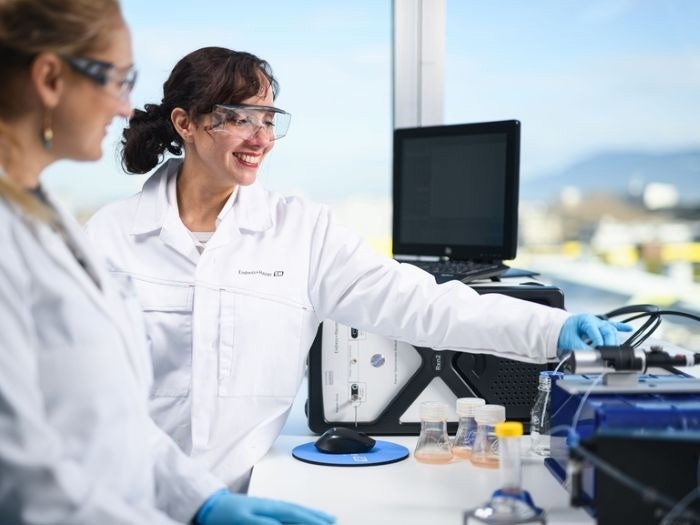
Image Credit: Endress+Hauser
Raman spectroscopy supported predictive modeling in a documented CLD application, enabling cell concentration monitoring across multiple CHO cell lines expressing various recombinant proteins. This approach minimized sample volume while enabling simple differentiation across a wide VCC range.
Beyond feasibility, the deployment also highlights how Raman spectroscopy trending can fit naturally into CLD workflows, from experimental design through to model building. It also showcases this technology’s ability to support a longer‑term path to automated upstream monitoring.
Séverine Fagète, PhD, Vice President at KBI Biopharma, summarized these benefits: "From the initial feasibility tests to the successful rollout of the Raman spectroscopy solution, the Endress+Hauser team proved to be an invaluable partner in addressing our application needs."
About Endress+Hauser
Endress+Hauser Optical Analysis is the global leader in Raman spectroscopic instrumentation for laboratory, process, and manufacturing environments. Our Raman analyzer systems, powered by Endress+Hauser Raman technology, harness the powerful analytical information of Raman spectroscopy to help our customers understand, measure, and control their chemistries.
A trusted partner in Raman for over 30 years, including GMP manufacturing, we have a long history of supporting customer production settings with many proven successes. Companies throughout the life science, chemical, oil & gas, waste/wastewater and food & beverage industries depend on our Raman products to improve product quality, ensure safety, optimize process efficiency, and drive lab-to-process scalability. Our customers also benefit from a vast network of global sales centers, local support offices, and automation expertise. Our Endress+Hauser Optical Analysis is headquartered in Ann Arbor, Michigan USA where our Raman spectroscopic instruments are developed and manufactured.
Sponsored Content Policy: News-Medical.net publishes articles and related content that may be derived from sources where we have existing commercial relationships, provided such content adds value to the core editorial ethos of News-Medical.net, which is to educate and inform site visitors interested in medical research, science, medical devices and treatments.