This article is based on a poster originally authored by Linlin Ma, Di Shi, Tianfu Zhang, Zhicheng Dong, Spencer Chiang and Yuehchun Hsieh.
Monitoring ADC internalization requires highly sensitive and specific methods for distinguishing surface-bound from internalized compounds.
ACROBiosystems’ pH-sensitive fluorescent dye-based endocytosis detection reagents enable real-time monitoring of key dynamic properties, including initiation speed, uptake length, drug metabolism, and total internalization in target cells.
This approach not only aids in identifying superior ADCs characterized by "fast initiation, prolonged uptake, and high total internalization," but also provides critical data for studying ADC endocytosis mechanisms, optimizing therapeutic dosing, and fine-tuning administration schedules.
Method and materials
Following the preparation of 4X (mass concentration) antibody and 4X Internalization Detection reagent (Cat. No. IGG-PZF2001 working solutions in cell culture medium, the solutions were combined and incubated for 10 minutes at room temperature.
For suspension cells, 50 µL of cell suspension (1x10⁶ cells/mL) was placed in a 96-well plate and mixed with 50 µL of the prepared labeling complex. For attached cells, after plating 5,000-10,000 cells per well and allowing attachment, the medium was substituted with 50 µL of fresh medium before adding 50 µL of the working solution.
The cells were then treated with the labeling compound for 0.5-24 hours before being analyzed using flow cytometry or high-content analysis at specific time intervals.
Results
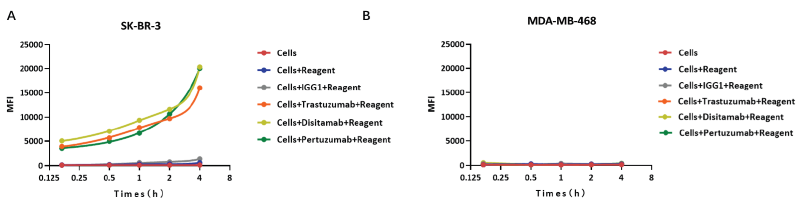
Figure 1. The internalization signal of the anti-HER2 mAbs gradually increase along with incubation time. Image Credit: ACROBiosystems
SK-BR-3(HER2+) cells were treated with various anti-HER2 mAbs and the ACROBiosystems Internalization Detection Reagent.
The results showed that ACROBiosystems Internalization Detection Reagent provides reliable and consistent detection across a variety of primary antibodies. Furthermore, the signal intensity grew significantly over time (Fig. 1A).
In contrast, no positive signal was obtained in the control cell line MDA-MB-468(HER2-), demonstrating the ACROBiosystems reagent's great specificity (Figure 1B).
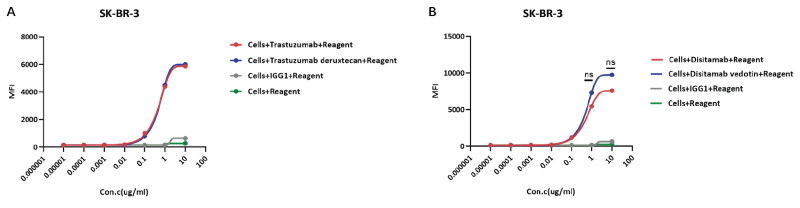
Figure 2. The internalization signal of ADC drugs increases as the concentration of the reagent increases. Image Credit: ACROBiosystems
SK-BR-3(HER2+) cells were treated with Anti-HER2 mAbs or matching ADC medicines, as well as the ACROBiosystems Internalization Detection Reagent.
The findings suggest that the intensity of the internalization detection signal increases with reagent dosage; also, the detection results of mAbs and their matching ADCs are consistent.
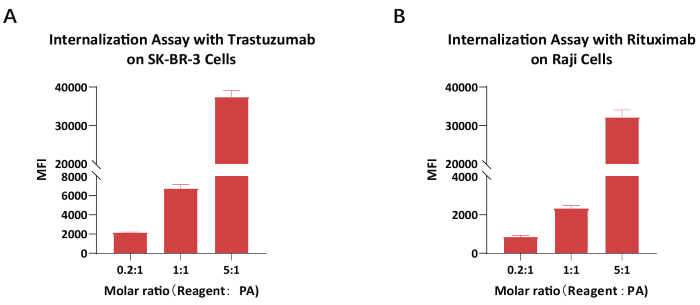
Figure 3. The internalization signal is directly proportional to the molar ratio of the ACROBiosystems Internalization Detection Reagent to the primary antibody (PA). Image Credit: ACROBiosystems
SK-BR-3(HER2+) cells were treated with the ACROBiosystems Internalization Detection Reagent and an anti-HER2 antibody (Trastuzumab).
The results demonstrated a similar rise in signal intensity with increasing molar ratios (Fig. 3A). Similarly, when Raji (CD20+) cells were treated with the ACROBiosystems Internalization Detection Reagent and Anti-CD20 antibody (Rituximab), a dose-dependent increase in signal was seen (Figure 3B).
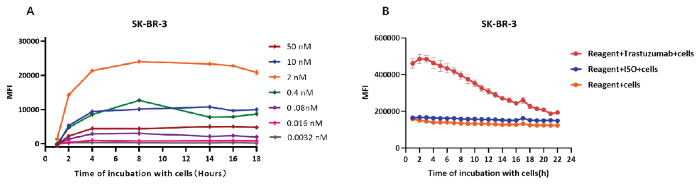
Figure 4. The kinetic changes of the internalization detection signal of anti-HER2 antibody in SK-BR-3 cells. Image Credit: ACROBiosystems
The findings indicate that the primary antibody concentration of 2 nM produces the greatest detection signal. The signal intensity steadily increases over the first seven hours, then plateaus and remains steady for up to 18 hours (Figure 4A).
After removing the Internalization Detection Reagent and antibody mixture at seven hours, monitoring shows that the internalization signal in the 2 nM Anti-HER2 antibody group steadily declines over 24 hours (Figure 4B).
Conclusion
- The ACROBiosystems Internalization Detection Reagent accurately detects the kinetic variations of internalization signals from various antibodies over time.
- The ACROBiosystems Internalization Detection Reagent tests both monoclonal antibodies (mAbs) and ADC medicines, with consistent results.
- The ACROBiosystems Internalization Detection Reagent detects antibody internalization in cells with distinct targets (HER2/CD20) in a dose-dependent manner.
References
- Riedl, T., et al. (2015). High-Throughput Screening for Internalizing Antibodies by Homogeneous Fluorescence Imaging of a pH-Activated Probe. Journal of Biomolecular Screening, 21(1), pp.12–23. DOI: 10.1177/1087057115613270. https://pubmed.ncbi.nlm.nih.gov/26518032/.
- Fu, Z., et al. (2022). Antibody drug conjugate: the ‘biological missile’ for targeted cancer therapy. Signal Transduction and Targeted Therapy, (online) 7(1). DOI: 10.1038/s41392-022-00947-7. https://www.nature.com/articles/s41392-022-00947-7.
About ACROBiosystems
ACROBiosystems is a cornerstone enterprise of the pharmaceutical and biotechnology industries. Their mission is to help overcome challenges with innovative tools and solutions from discovery to the clinic. They supply life science tools designed to be used in discovery research and scalable to the clinical phase and beyond. By consistently adapting to new regulatory challenges and guidelines, ACROBiosystems delivers solutions, whether it comes through recombinant proteins, antibodies, assay kits, GMP-grade reagents, or custom services. ACROBiosystems empowers scientists and engineers dedicated to innovation to simplify and accelerate the development of new, better, and more affordable medicine.
Sponsored Content Policy: News-Medical.net publishes articles and related content that may be derived from sources where we have existing commercial relationships, provided such content adds value to the core editorial ethos of News-Medical.net, which is to educate and inform site visitors interested in medical research, science, medical devices, and treatments.
Last Updated: Jan 20, 2026
 ACROBiosystems was titled 2022 CiteAb Awards protein supplier winner, gaining global scientific approval