Introduction
Evolution and modern disease risk
Ancient DNA and human adaptation
Evolutionary mismatch and chronic disease
Immune and metabolic legacy effects
References
Further reading
From Neanderthal immune genes to metabolic adaptations, researchers are examining what our evolutionary past can tell us about today's vulnerability to disease.
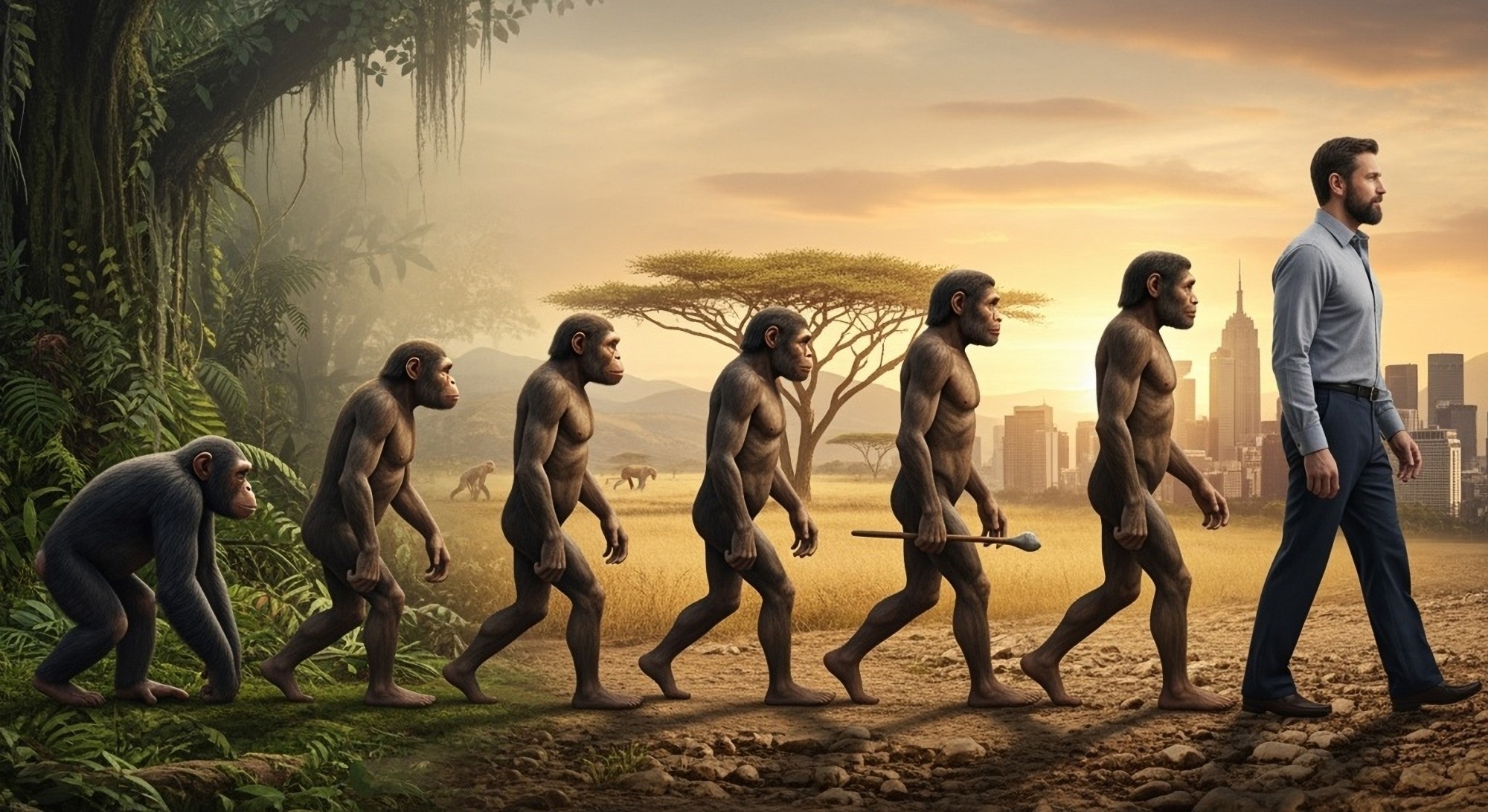 Image Credit: Shutterstock AI / Shutterstock.com
Introduction
Ancient human traits that once supported survival and reproduction may be poorly suited to today’s industrialized world. The evolutionary mismatch hypothesis proposes that these differences contribute to rising rates of chronic non-communicable diseases like obesity and type 2 diabetes (T2D) throughout the world.2,6
Research on ancient DNA and evolutionary theory helps explain how inherited genetic variation interacts with environmental exposures to influence modern disease susceptibility.1,2
Evolution and modern disease risk
Conventional clinical studies investigate the immediate causes and mechanisms of disease, while evolutionary medicine investigates why human biology remains vulnerable to disease. One explanation is that natural selection favors traits that improve reproductive success, which can trade off against late-life health or longevity.1,2
Selection weakens with age, allowing variants with harmful late-life effects to persist. Some also confer earlier-life benefits, a trade-off known as antagonistic pleiotropy.2,9
Throughout human history, food availability and pathogen exposure have shaped metabolic and immune functions.2 Today, some inherited traits may increase susceptibility to chronic conditions as diets, activity levels, and pathogen exposures change.
For example, human metabolism evolved to store energy. Energy-dense diets combined with low physical activity can contribute to obesity. The proposal that widespread selection for resistance explains modern obesity remains a hypothesis requiring direct testing.2,6
Modern advances in high-throughput sequencing technologies have allowed researchers to identify inherited genetic variants that influence metabolic and immune functions today. Comparing ancient and present-day genomes helps reconstruct the history of these variants. Disease susceptibility reflects this history together with environmental, demographic, and social factors; natural selection selected biological compromises, rather than a genome perfectly suited to any single environment.1,2
Ancient DNA and human adaptation
Ancient genome comparisons show that when humans migrated out of Africa, they encountered and interbred with archaic hominins like Neanderthals and Denisovans. This led to the transfer of archaic genetic variants into the ancestors of present-day populations, a process called introgression.1–3
Selection removed much of the introgressed DNA, while some retained variants show evidence of adaptive benefits involving immunity, skin and hair traits, as well as responses to local environmental conditions.1–3 The health effects of these archaic variants can vary with diet, other exposures, and pathogens.2,3
A documented example is the modern human immune response to coronavirus disease 2019 (COVID-19). Researchers have identified a Neanderthal-derived haplotype, a group of genetic variants commonly inherited together, on chromosome 3 as a significant genetic risk factor for severe COVID-19 and respiratory failure following SARS-CoV-2 infection.4
A separate Neanderthal-inherited haplotype on chromosome 12 overlaps the 2′–5′ oligoadenylate synthetase (OAS) gene cluster. OAS enzymes produce molecules that activate ribonuclease L, which degrades intracellular ribonucleic acid (RNA) and contributes to antiviral defense. This haplotype is associated with lower odds of requiring intensive care for COVID-19; however, the study did not establish which linked variant or variants explain that association.5
These findings show that different regions of introgressed archaic DNA can have opposing associations with the severity of the same infection.4,5 They do not establish that either haplotype has the same effect against every pathogen.5
The diseases that changed humanity forever - Dan Kwartler
Evolutionary mismatch and chronic disease
Ancient DNA documents the history of inherited variants, while evolutionary medicine examines how diet and lifestyle changes affect biological traits.1,2 The human evolutionary mismatch hypothesis proposes that some increases in chronic, non-communicable diseases reflect rapid cultural and technological shifts that outpace the rate of human genetic adaptation.6
For most of human evolutionary history, survival largely depended on gathering wild plants and hunting animals. This lifestyle generally required substantial physical activity, though diets varied with geography, season, and available resources.7
The agricultural and industrial revolutions changed food production and consumption, with industrialization increasing access to highly processed, energy-dense foods alongside increasingly sedentary lifestyles.7 These changes can contribute to metabolic dysfunction, including impaired lipid metabolism and glycemic control.6,7
Conditions like obesity, T2D, and cardiovascular disease (CVD) reflect interactions among genetic susceptibility, environmental exposures, and other risk factors. Establishing evolutionary mismatch requires evidence that a trait was beneficial in an earlier environment and becomes harmful under changed conditions.2,6
Modern medical advances and longer lifespans also allow more time for chronic, age-related conditions to develop.9 Growth and reproductive pathways that are beneficial early in life may contribute to aging and disease when their activity persists or becomes poorly regulated in adulthood.9 Mismatch can also occur during development or through physiological responses: for example, nutritional conditions before birth may influence later metabolic risk when the adult environment differs.8
 Image Credit: vtphacc / Shutterstock.com
Ancient immune systems evolved under different patterns of pathogen and microbial exposure. The hygiene hypothesis proposes that reduced exposure to some of these stimuli in modern environments can alter immune regulation and contribute to autoimmune and allergic disorders. Genetic susceptibility and other environmental factors also influence these conditions.1,2
The hyperfunction theory of aging postulates that growth-promoting pathways can remain active beyond their developmental roles and contribute to age-related pathology. The mechanistic target of rapamycin (mTOR) signaling pathway, which drives anabolic growth and cellular proliferation during caloric abundance, is one proposed mechanism.
Persistent mTOR activity, particularly through mTOR complex 1, can suppress autophagy, the breakdown and recycling of cellular components, and other maintenance processes. Caloric excess and sedentary lifestyles may aggravate this imbalance.9
Metabolic variants can be associated differently with body size and glucose regulation. The CREBRF missense variant (rs373863828), for example, is common in several Pacific Islander populations and is associated with increased body mass index (BMI) but lower odds of T2D.10
In 421 Samoan adults, the minor A allele was associated with greater lean mass in both sexes, with no detected association with percentage body fat, visceral adiposity, or fat distribution. The study's analysis suggested that the fat- or fat-free-mass pathways examined did not explain the association with lower fasting glucose. These findings distinguish higher BMI from greater adiposity and leave the diabetes-protective mechanism unresolved.10
References
- Dolgova, O., & Lao, O. (2018). Medicine in the Light of Evolution. Genes 10(1), 3. DOI: 10.3390/genes10010003. https://www.mdpi.com/2073-4425/10/1/3
- Benton, M. L., Abraham, A., LaBella, A. L., et al. (2021). The influence of evolutionary history on human health and disease. Nature Reviews Genetics 22(5), 269- 283. DOI: 10.1038/s41576-020-00305-9. https://www.researchgate.net/publication/348282037_The_influence_of_evolutionary_history_on_human_health_and_disease
- McArthur, E., Rinker, D. C., & Capra, J. A. (2021). Quantifying the contribution of Neanderthal introgression to the heritability of complex traits. Nature Communications 12(1). DOI: 10.1038/s41467-021-24582-y. https://www.nature.com/articles/s41467-021-24582-y
- Zeberg, H. & Pääbo, S. (2020). The major genetic risk factor for severe COVID-19 is inherited from Neanderthals. Nature 587(7835), 610- 612. DOI: 10.1038/s41586-020-2818-3. https://www.nature.com/articles/s41586-020-2818-3
- Zeberg, H., & Pääbo, S. (2021). A genomic region associated with protection against severe COVID-19 is inherited from Neandertals. Proceedings of the National Academy of Sciences,s 118(9). DOI: 10.1073/pnas.2026309118. https://www.pnas.org/doi/full/10.1073/pnas.2026309118
- Lea, A. J., Clark, A. G., Dahl, A. W., et al. (2023). Applying an evolutionary mismatch framework to understand disease susceptibility. PLOS Biology, 21(9), e3002311. DOI: 10.1371/journal.pbio.3002311. https://journals.plos.org/plosbiology/article?id=10.1371/journal.pbio.3002311
- Alt, K. W., Al-Ahmad, A., & Woelber, J. P. (2022). Nutrition and Health in Human Evolution–Past to Present. Nutrients 14(17); 3594. DOI: 10.3390/nu14173594. https://www.mdpi.com/2072-6643/14/17/3594
- Griffiths, P. E. & Bourrat, P. (2023). Integrating evolutionary, developmental and physiological mismatch. Evolution, Medicine, and Public Health 11(1); 277-286. DOI: 10.1093/emph/eoad023. https://academic.oup.com/emph/article/11/1/277/7237855
- Aronoff, J. E., & Trumble, B. C. (2025). An evolutionary medicine and life history perspective on aging and disease: Trade-offs, hyperfunction, and mismatch. Evolution, Medicine, and Public Health 13(1), 111- 124. DOI: 10.1093/emph/eoaf010. https://academic.oup.com/emph/article/13/1/111/8132776
- Hawley, N. L., Duckham, R. L., Carlson, J. C., et al. (2022). The protective effect of rs373863828 on type 2 diabetes does not operate through a body composition pathway in adult Samoans. Obesity, 30(12), 2468–2476. DOI: 10.1002/oby.23559. https://onlinelibrary.wiley.com/doi/10.1002/oby.23559
Further Reading
Last Updated: Oct 27, 2026
 PARP1 remodels nucleosomes to help cells repair damaged DNA