Introduction
Chemical Profile: Key Bioactive Terpenes & Compounds
Pharmacological Mechanisms of Action
Investigational Therapeutic Applications
Formulation Challenges & Modern Drug Delivery
Future Perspectives & Conclusions
References
Further reading
Pine oils and bark contain chemically distinct compounds, raising interest in how their biological activity could inform treatment development.
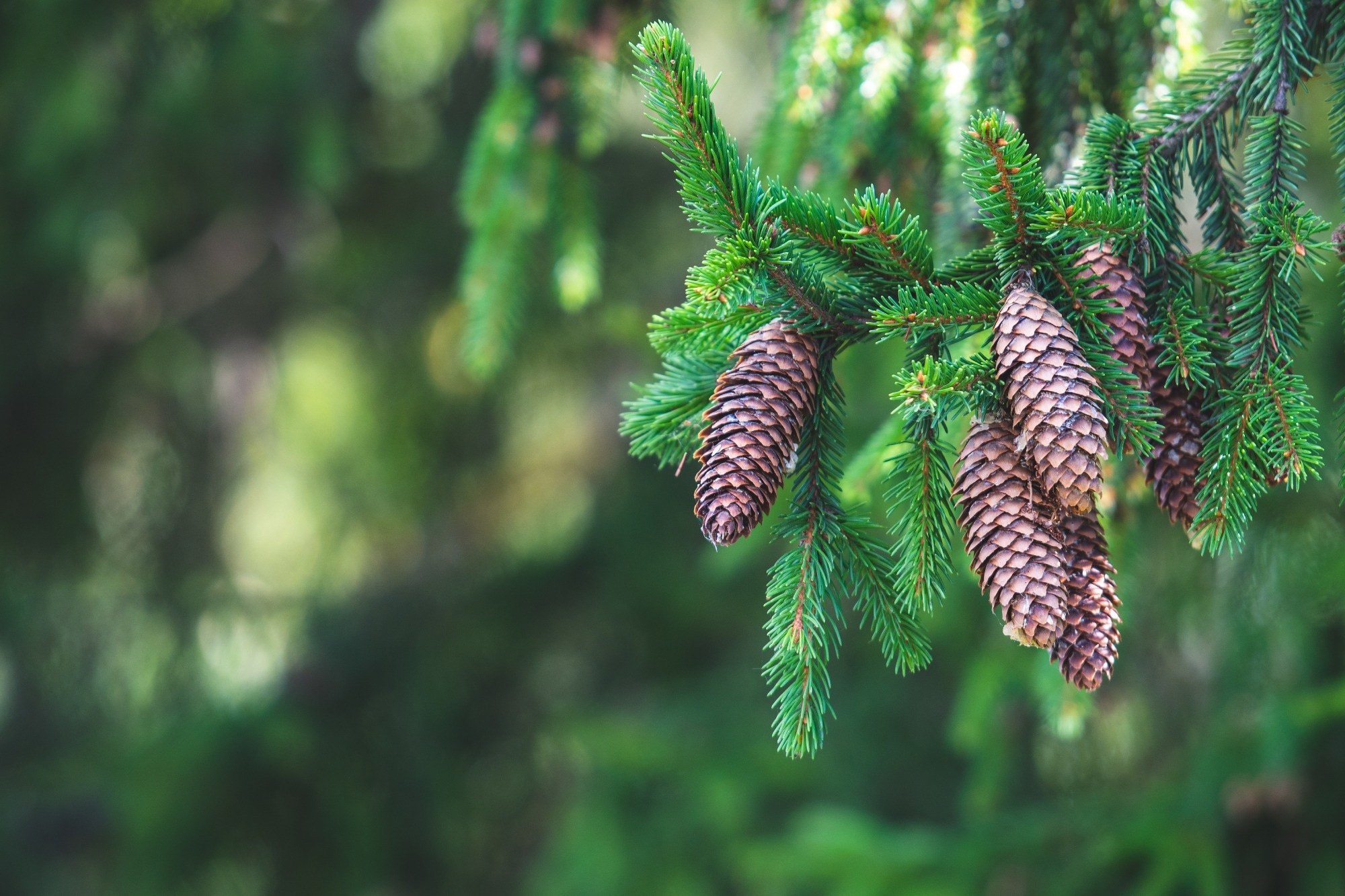 Image Credit: Michele Ursi / Shutterstock.com
Introduction
Botanical Context
Pines are coniferous trees and shrubs belonging to the genus Pinus, the sole genus in the subfamily Pinoideae (family Pinaceae).4 These plants are predominantly native to the Northern Hemisphere and occupy varied habitats. Pines are evergreen trees with modified, slender, needle-like leaves and woody, seed-bearing cones (pinecones).1
Historical records indicate that these plants have long been used in traditional medicine systems globally. Pine tissues contain secondary metabolites with protective functions, including terpenes and polyphenols, that are being investigated for their pharmacological activity.1,4
Modern advances in analytical methods support the isolation and characterization of these compounds, though their detection or activity in laboratory assays does not establish therapeutic efficacy in humans.1,4
Core Premise
Several studies have reported promising clinical potential for bioactive pine derivatives, including isolated terpenes and standardized bark extracts. Importantly, many preparations used in these studies differ in their composition, metabolism, and the extent of available human research.1,3,4
Volatile oils contain monoterpenes like pinenes, whereas pine bark extracts contain non-volatile polyphenols. This distinction guides the interpretation of their mechanisms, proposed applications, and delivery requirements.1,4
 Image Credit: Nanda Kurniawan Nugroho / Shutterstock.com
Chemical Profile: Key Bioactive Terpenes & Compounds
Primary Monoterpenes
The bicyclic monoterpenes α-pinene and β-pinene are structural isomers present in pine oils and many other plants. Each also has two enantiomers, mirror-image molecular forms whose biological activities can differ. The lipophilicity of these compounds affects membrane interactions and distribution, though it does not establish a common mechanism or clinical effect.1
Secondary Constituents
Pine oils may also contain limonene, myrcene, and other terpenes, with their composition varying by species and preparation. Interactions between constituents may affect biological activity, though claims that combinations improve pinene efficacy require testing of each mixture.1,2
Pycnogenol® is a proprietary, standardized extract of French maritime pine (Pinus pinaster) bark, rather than a generic name for all pine bark extracts. This product contains 65-75% procyanidins and smaller constituents like catechin, caffeic acid, ferulic acid, and taxifolin.3,4
Extraction & Isolation
Extraction methods must match the intended chemical fraction. Hydrodistillation is used to obtain volatile oils; however, it involves heating and should not be described as free from thermal degradation. Polyphenol-rich bark extracts require different extraction procedures, and their composition varies with the pine species, solvent, and processing conditions.4,8
Standardization requires characterization of the source material, extraction procedure, and resulting composition. Enantiomeric composition can affect pinene activity, making its measurement relevant when comparing experimental preparations. For bark extracts, consistent polyphenol composition supports comparisons between pharmacological and clinical studies.1,4
Pharmacological Mechanisms of Action
A growing number of preclinical studies indicate that pine-derived bioactives can influence inflammatory signaling and oxidative stress. These effects depend on the compound, concentration, and experimental model.5–7
Anti-Inflammatory Pathways
In one study, the researchers used chemical profiling and computational analyses to identify candidate compounds and pathways, then tested the extract in cultured mouse microglial cells, which model aspects of the brain's immune response. Pycnogenol treatment reduced expression of the inflammatory cytokines IL-6 and IL-1β, supporting an anti-inflammatory effect in this model. The computationally predicted involvement of IL-17 and TNF pathways still requires direct confirmation.5
Studies of isolated terpenes offer a more focused view of how inflammatory signaling may be interrupted. For example, limonene has been shown to inhibit NF-κB activation, a transcription factor that switches on inflammatory genes. Thus, preventing NF-κB activation can limit inflammation.6
Likewise, α-pinene also appears to reduce NF-κB and mitogen-activated protein kinase (MAPK) signaling, pathways cells use to respond to inflammatory stimuli and stress. Together, these findings suggest that bark extracts and isolated terpenes can affect related inflammatory processes.2,5
Antioxidant Activity
Oxidative stress provides another possible target for pine-derived compounds. When reactive oxygen species exceed cellular antioxidant defenses, they can damage tissues and contribute to inflammatory responses.
Experimental research suggests that selected terpenes and pine bark polyphenols may help limit this imbalance.2,7 Pycnogenol treatment in mice and cultured human airway epithelial cells exposed to titanium dioxide nanoparticles, for example, reduced markers of oxidative injury and restored glutathione, an antioxidant, in mouse lungs. In cultured cells, it also increased expression of genes encoding antioxidant enzymes.7
These changes were accompanied by reduced expression of thioredoxin-interacting protein (TXNIP), which regulates the antioxidant protein thioredoxin, suggesting that Pycnogenol may influence cellular antioxidant defenses, alongside its effects on inflammation. Whether this response extends to lung injury from other causes remains uncertain, as the study tested nanoparticle exposure.7
 Image Credit: Vera Prokhorova / Shutterstock.com
Antimicrobial & Antifungal Activity
Interactions between pinenes and microbial membranes may contribute to antibacterial and antifungal activity, with results varying by organism, concentration, and molecular form tested.¹ For example, one study compared Bursera morelensis oil with purified α-pinene and γ-terpinene against Candida albicans.
Herein, α-Pinene killed the tested fungal strains at a minimum fungicidal concentration of 4.0 mg/mL. Although the research focused on a plant outside the pine genus, it provides evidence for α-pinene, a compound also found in pine oils.8
These results support further investigation of α-pinene as an antifungal candidate. Establishing therapeutic usefulness would require testing whether an appropriate formulation can produce antifungal effects at concentrations that are safe for human tissues.8
Investigational Therapeutic Applications
Respiratory Health
In respiratory applications, researchers have described reduced inflammatory responses in an ovalbumin-induced mouse model of allergic rhinitis following oral administration. Human trials using a multicomponent preparation containing α-pinene, limonene, and 1,8-cineole have reported enhanced mucociliary clearance, the removal of mucus by airway cilia.
These studies cannot isolate α-pinene's contribution; therefore, any results involving other terpenes, including limonene and 1,8-cineole, must be distinguished from evidence for α-pinene. Together, the studies support further respiratory research but leave questions about compound-specific efficacy, dose, and route of administration.1,2
Dermatological & Wound Healing
Researchers have investigated α-pinene and α-phellandrene in cell assays and mouse wounds, wherein topical treatment promoted wound contraction, early collagen deposition, and mechanically resistant scars. These were preclinical findings associated with compounds investigated in the context of Bursera morelensis oil.9
Notably, these compounds did not stimulate fibroblast proliferation in vitro. Proliferation and migration are separate cellular processes. Therefore, these results should not be interpreted as demonstrating increased fibroblast migration.9
Neuroprotective Potential
Experimental studies describe α-pinene's effects on oxidative injury and inflammatory signaling in neural cells and animal models. These findings support further research on neuroprotection, but lipophilicity alone does not establish efficient delivery across the human blood-brain barrier. A central translational question is whether tolerable doses produce brain concentrations sufficient to reproduce the experimental effects.1,2
Pycnogenol® French maritime pine bark extract for Cognitive Function
Bioavailability Constraints
Terpene formulation must account for physicochemical constraints such as volatility, low aqueous solubility, and chemical instability. Their practical importance varies with the compound and route of administration.6,10
Pharmacokinetic studies indicate that pine bark polyphenols differ in how they are absorbed, distributed, metabolized, and eliminated. Human results show that smaller Pycnogenol constituents are absorbed from the small intestine, while gut microbes break down larger procyanidins into absorbable metabolites. Constituents and metabolites have been detected in blood cells and synovial fluid, but distribution alone does not demonstrate clinical efficacy.4
Advanced Carriers
To address formulation constraints, researchers are investigating nanocarrier systems to improve terpene stability, solubilization, and delivery.6,10 Encapsulation may protect compounds from environmental degradation and volatilization, while carrier composition influences release and skin penetration.6,10
Although lipid-based and other delivery systems have been investigated for selected terpenes, most of these studies have focused on topical administration, including systems intended to improve skin delivery and control release. Therefore, systemic or brain delivery requires separate evaluation of relevant measurements such as the amount released, concentrations reached at the intended site, and the safety of both the compound and carrier.6,10
Safety & Toxicology
Safety must be assessed separately for standardized bark extracts, volatile oils, isolated terpenes, and their formulations. Isolated terpenes in high concentrations have been observed to induce dose-dependent cytotoxicity, and experimental tolerability cannot define a safe therapeutic dose in humans.1,9,10
Although most studies report favorable tolerability, these findings do not extend to concentrated pine oils or isolated pinenes. For topical terpene formulations, irritation and local tolerability also require assessment.3,10
Future Perspectives & Conclusions
Translational Pipeline
Further development of pine-derived treatments requires preparation-specific evidence. For isolated terpenes and new delivery systems, priorities include human pharmacokinetics, dose selection, and safety. Standardized Pycnogenol already has human pharmacokinetic and clinical research; however, researchers must assess the quality and relevance of that evidence for each proposed indication.1,3,4,10
Small sample sizes, differences in dosing and treatment duration, and variation across study populations complicate interpretation of some clinical findings. Trials should connect a characterized preparation and defined exposure with clinically meaningful outcomes.3
Conclusions
Pine-derived terpenes and standardized bark extracts have distinct chemical and pharmacological profiles. Their anti-inflammatory, antioxidant, and wound-healing effects provide experimental grounds for further study, while human evidence is more developed for some standardized bark preparations. Progress toward clinical application requires linking these biological effects to reproducible patient benefits, using preparations with adequately characterized composition, dosing, and safety.
References
- Salehi, B., Upadhyay, S., Orhan, I. E., et al. (2019). Therapeutic Potential of α- and β-Pinene: A Miracle Gift of Nature. Biomolecules, 9(11), 738. DOI: 10.3390/biom9110738. https://www.mdpi.com/2218-273x/9/11/738
- Kim, T., Song, B., Cho, K. S., & Lee, I.-S. (2020). Therapeutic Potential of Volatile Terpenes and Terpenoids from Forests for Inflammatory Diseases. International Journal of Molecular Sciences, 21(6), 2187. DOI: 10.3390/ijms21062187. https://www.mdpi.com/1422-0067/21/6/2187
- Kayesh, M. E. H., Kohara, M., & Tsukiyama-Kohara, K. (2026). Therapeutic potential of pycnogenol: antioxidant, anti-inflammatory, immunomodulatory, antiviral, and anticancer effects. Frontiers in Pharmacology, 17. DOI: 10.3389/fphar.2026.1755175. https://www.frontiersin.org/journals/pharmacology/articles/10.3389/fphar.2026.1755175/full
- Bayer, J., & Högger, P. (2024). Review of the pharmacokinetics of French maritime pine bark extract (Pycnogenol®) in humans. Frontiers in Nutrition, 11. DOI: 10.3389/fnut.2024.1389422. https://www.frontiersin.org/journals/nutrition/articles/10.3389/fnut.2024.1389422/full
- Liu, H., Shi, J., Liu, F., & Zhang, L. (2024). Integrating network pharmacology and experimental verification to reveal the anti-inflammatory ingredients and molecular mechanism of pycnogenol. Frontiers in Pharmacology, 15. DOI: 10.3389/fphar.2024.1408304. https://www.frontiersin.org/journals/pharmacology/articles/10.3389/fphar.2024.1408304/full
- Del Prado-Audelo, M. L., et al. (2021). Therapeutic Applications of Terpenes on Inflammatory Diseases. Frontiers in Pharmacology, 12. DOI: 10.3389/fphar.2021.704197. https://www.frontiersin.org/journals/pharmacology/articles/10.3389/fphar.2021.704197/full
- Lim, J., Kim, W., Pak, S., et al. (2024). Pycnogenol-Assisted Alleviation of Titanium Dioxide Nanoparticle-Induced Lung Inflammation via Thioredoxin-Interacting Protein Downregulation. Antioxidants, 13(8), 972. DOI: 10.3390/antiox13080972. https://www.mdpi.com/2076-3921/13/8/972
- Rivera-Yañez, C., Terrazas, L. I., Jimenez-Estrada, M., et al. (2017). Anti-Candida Activity of Bursera morelensis Ramirez Essential Oil and Two Compounds, α-Pinene and γ-Terpinene - An In Vitro Study. Molecules, 22(12), 2095. DOI: 10.3390/molecules22122095. https://www.mdpi.com/1420-3049/22/12/2095
- Salas-Oropeza, J., Jimenez-Estrada, M., Perez-Torres, A., et al. (2021). Wound Healing Activity of α-Pinene and α-Phellandrene. Molecules, 26(9), 2488. DOI: 10.3390/molecules26092488. https://www.mdpi.com/1420-3049/26/9/2488
- Lasoń, E. (2020). Topical Administration of Terpenes Encapsulated in Nanostructured Lipid-Based Systems. Molecules, 25(23), 5758. DOI: 10.3390/molecules25235758. https://www.mdpi.com/1420-3049/25/23/5758
Further Reading
Last Updated: Nov 11, 2026