Device-based monitoring throughout pregnancy suggests that greater standing, light movement, and daily steps may be associated with healthier outcomes for mothers and babies.
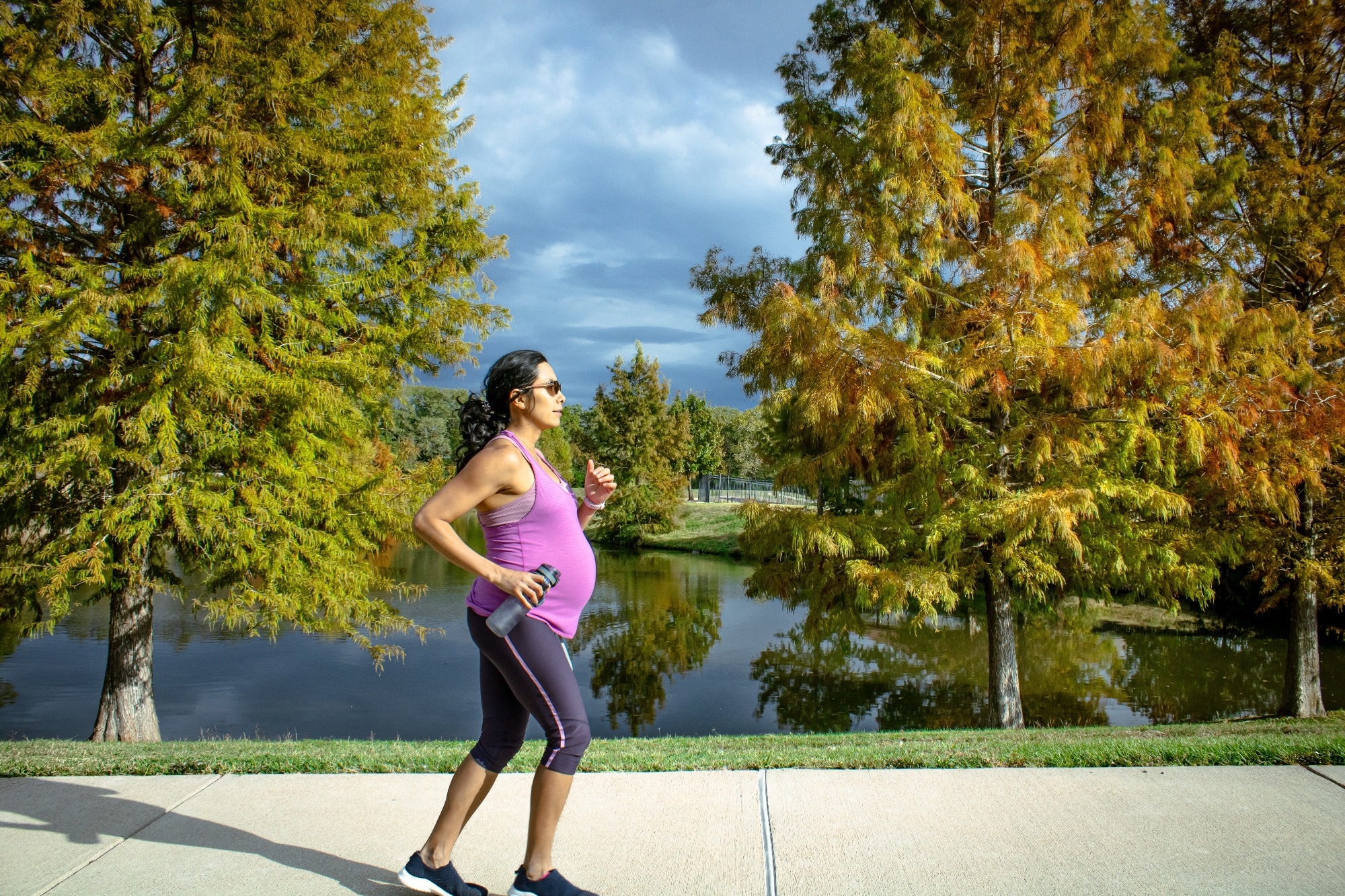
Study: Adverse Pregnancy Outcomes and Sedentary Behavior, Light-Intensity Physical Activity, and Daily Steps. Image Credit: Esteban Alejandro / Shutterstock
Pregnant women with patterns of less sitting and more light-intensity physical activity across pregnancy had a significantly lower risk of adverse pregnancy outcomes, according to a new study published in JAMA.
Background
Adverse pregnancy outcomes, including hypertensive disorders of pregnancy, gestational diabetes, preterm birth, and small for gestational age, are associated with immediate as well as long-term health complications in both mothers and infants. The adverse outcomes affect about one in five pregnancies.
Sufficient moderate-to-vigorous physical activity is an evidence-based strategy for preventing hypertensive disorders of pregnancy and gestational diabetes. However, due to pregnancy-related fatigue and misconceptions about activity safety, as few as one in four pregnant women meet physical activity guidelines.
Physical activity guidelines recommend 150 to 300 minutes of moderate-to-vigorous-intensity physical activity per week. Recent guidelines have added a recommendation to “sit less and move more” during the rest of the day for health benefits, which can be achieved by replacing sedentary behavior with light-intensity physical activity. However, studies investigating the impact of a “sit less and move more” pattern on adverse pregnancy outcomes are largely lacking.
The current study aimed to bridge this gap in the literature by exploring the association of sedentary behavior, light-intensity physical activity, and daily steps with adverse pregnancy outcomes.
Study Design
The study included 470 pregnant women at less than 13 weeks of gestation, during the first trimester. Participants were followed throughout the pregnancy.
Thigh-worn accelerometer-based assessments of sedentary behavior, light-intensity physical activity, and daily steps were conducted each trimester. Participants were separated into groups based on their activity patterns across pregnancy, derived from repeated measurements each trimester.
Participants’ medical records were reviewed to obtain information on adverse pregnancy outcomes, including hypertensive disorders of pregnancy, gestational diabetes, preterm birth, and infants who were small for gestational age. The information was adjudicated by the study physicians.
Key Findings
About 37% of study participants had an adverse pregnancy outcome, and the prevalence was highest for hypertensive disorders of pregnancy, at 18%.
Across trimesters, participants spent the majority of their time in sedentary behavior, averaging 10 hours of sitting per day, 4.6 hours of light-intensity physical activity per day, and 6,783 daily steps. Moderate-to-vigorous-intensity physical activity was performed for a median of 152.6 minutes per week.
Compared with a pattern averaging 7.3 hours of sitting per day, patterns averaging 10.4 or 11.8 hours of sitting per day were associated with more than twice the risk of adverse pregnancy outcomes. Similarly, compared with three hours of light-intensity physical activity per day, seven hours per day were associated with half the risk of adverse pregnancy outcomes.
Compared with low daily step patterns (approximately 4,000 daily steps), moderate patterns (around 6,000 daily steps), and high patterns (around 8,500 daily steps), were associated with a lower risk of adverse pregnancy outcomes. The very high pattern, averaging approximately 11,863 daily steps, had a lower estimated risk, but this association was not statistically significant.
Study Significance
The study suggests that patterns of sitting less and being more active through light-intensity physical activity and daily steps during pregnancy were associated with a significantly lower risk of adverse outcomes. Associations were also observed for hypertensive disorders of pregnancy, although their magnitude varied by activity type.
The major strengths of the study include measurements of light-intensity physical activity during each trimester using thigh-worn accelerometry. This allows precise separation of sedentary behavior from standing light-intensity activity. Unlike thigh-worn accelerometers, wrist- or waist-worn devices cannot distinguish between seated and standing stationary behavior. This separation is therefore a critical methodological advantage.
For hypertensive disorders of pregnancy, associations with lower risk were stronger for standing light-intensity activity than for ambulatory light-intensity activity, which was not significantly associated with adverse pregnancy outcomes.
Minimal exclusion criteria, inclusion of participants from three distinct sites, and variation in participants’ socioeconomic status and rurality support the external validity of the study findings, although generalizability remains limited by the cohort’s racial and ethnic composition.
Most previous studies investigating the effect of physical activity on pregnancy outcomes have used self-reported sedentary behavior, which is prone to measurement error. Other device-based studies have typically included smaller samples and methodological limitations.
The current study, with a larger sample than the authors’ earlier pilot study and several methodological advantages, supports pregnancy-specific testing of a sit-less, move-more activity pattern. This could include breaking up prolonged sitting and increasing low-intensity standing, which may be associated with a lower risk of adverse pregnancy outcomes.
The study, however, could not determine the direction of causality of the observed associations due to its observational design. Moreover, the participants tended to be healthy volunteers with limited racial and ethnic diversity. Future studies should include larger samples with greater representation of other racial and ethnic groups, as well as higher-risk pregnancies, to allow for a more conclusive interpretation.
The study population included a few cases of gestational diabetes, preterm birth, and small for gestational age. Therefore, the effects of lower sedentary behavior and higher light-intensity activity on these complications could not be assessed individually.
Overall, these findings highlight the need for rigorous testing and refinement of light-intensity physical activity patterns during pregnancy as a potential strategy for improving pregnancy health outcomes.
 Maternal opioid use in pregnancy linked to childhood hospitalizations