Sponsored Content by AbselionReviewed by Olivia FrostApr 2 2026
Reliable protein quantification is essential across bioprocess development workflows, from early-stage screening through to process optimization. In these settings, analytical methods must deliver consistent and repeatable measurements while remaining straightforward to implement within routine laboratory workflows.
Image Credit: Vink Fan/Shutterstock.com
The Amperia™ protein quantification platform is designed to support rapid, practical measurement of protein samples using a simple, integrated workflow. To assess system performance, an internal evaluation was conducted using monoclonal antibody samples under representative experimental conditions.
Experimental overview
An internal study was performed to evaluate system performance under repeat measurement conditions.
- Calibration curves were generated across a defined concentration range
- Replicate measurements were performed at each calibration level
- Samples of known concentration were analyzed to assess quantitative performance
The study focused on measurement repeatability, calibration consistency, and overall performance across repeated measurements and assay runs.
Consistent calibration behavior
Calibration responses showed a high degree of consistency across repeated measurements (Figure 1).
- Signal response profiles were closely aligned across experiments, with consistent signal response observed at each calibration level.
- Replicate variability across the calibration range remained low overall, with variability generally within the low single-digit range, supporting consistent and reproducible signal generation.
- Curve shape and dynamic range were maintained throughout.
This consistent calibration behavior supports reliable quantification as part of routine workflows.
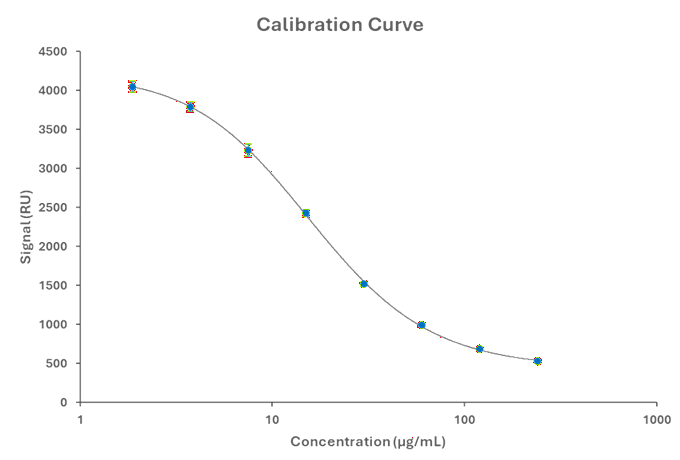
Figure 1. Calibration curve showing mean signal with variability (±SD) across repeated measurements. Image Credit: Abselion
Repeatable measurement performance
Across repeated measurements, the system demonstrated low variability and consistent quantitative behavior across independent experiments, based on > 300 individual measurements across the tested concentration range.
- Replicated measurements showed low variation across the tested range, with CV values in the low single-digit range.
- Quantified results followed expected concentration trends across the tested range, with an average absolute error of approximately 3.7 % across measurements.
Performance was consistent across independent measurements, with similar behavior observed across assay runs.
Measurement variability across the concentration range remained low, with CV values of approximately 2.7–2.9 % (Table 1).
Table 1. Measurement variability (CV %) across the tested concentration range. Source: Abselion
| Concentration (µg/mL) |
CV (%) |
| 10 |
2.86 |
| 40 |
2.86 |
| 80 |
2.76 |
These results indicate that the system provides repeatable and reliable measurement output, supporting routine protein quantification workflows.
Reproducible performance across measurements
The evaluation further demonstrated reproducible performance across repeated experimental conditions.
- Results remained closely aligned across repeated measurements, supporting consistent performance across assay runs
- Calibration-supported quantification enabled consistent measurement output
- Measurement behavior was maintained across repeated use
Together, these results highlight the robustness of the platform when applied in standard laboratory workflows.
Conclusion
The Amperia™ protein quantification platform demonstrates:
- Consistent calibration performance
- Low measurement variability
- Repeatable and reproducible measurement output
These characteristics support its use as a practical tool for protein quantification, particularly in workflows where consistency, ease of use, and rapid measurement are important.
The data shown here is from internal evaluation studies using monoclonal antibody samples under representative assay conditions.
About Abselion
Abselion started in 2018, at that time under the name HexagonFab, in a small corner of a laboratory at the University of Cambridge.
We set out with the humble goal to make protein research simpler. Scientists should be able to pursue their passion for discovery and innovation, rather than spend their valuable time with tedious, manual tasks. With RED we had access to the ideal technology to create this product. A product that is so compact that it could fit on every bench, and so affordable that it is accessible to everyone. Over the years we have designed, built and tested our first product Amperia and we’re proud to introduce it to the world.
Sponsored Content Policy: News-Medical.net publishes articles and related content that may be derived from sources where we have existing commercial relationships, provided such content adds value to the core editorial ethos of News-Medical.Net which is to educate and inform site visitors interested in medical research, science, medical devices and treatments.