Selecting the appropriate equipment for liposome preparation, specifically between a high-pressure homogenizer and a liposome homogenizer, can present a challenge. Both apparatuses can process liposomes, yet each offers distinct benefits that can guide selection based on specific needs.
The NanoGenizer, a high-pressure homogenizer, operates with a simple electrical power source and requires only a connection to a standard wall outlet. It offers superior processing speed, delivering a higher flow rate than a liposome extruder.
In terms of operational reliability, the NanoGenizer is designed to run without jamming, unlike a liposome extruder, which can occasionally experience blockages.
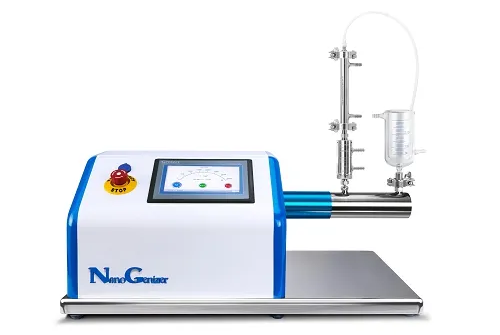
Image Credit: Genizer
Liposome extruder
Jacketed liposome extruders provide greater accuracy, yielding liposomes with a more refined size distribution after processing. They also offer high tunability, as the membrane pore size can be adjusted to control the liposomes' final diameter.
From a cost perspective, liposome extruders are generally more economical than high-pressure homogenizers. However, they require a gas-powered energy source to operate.
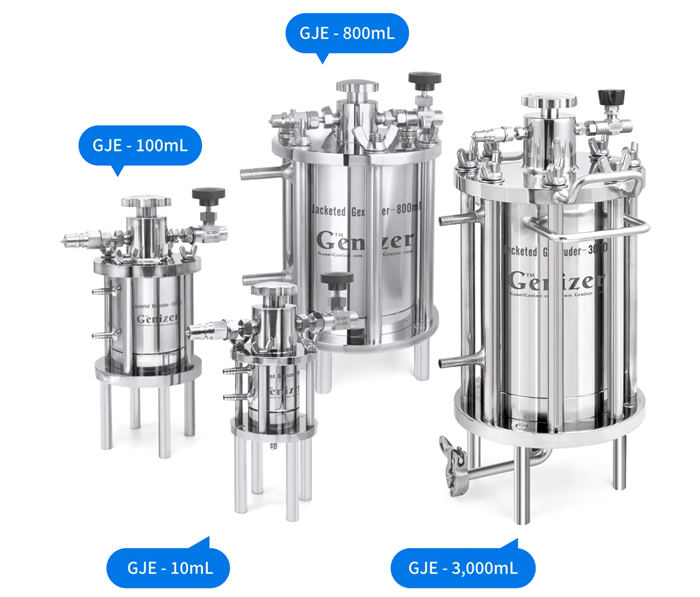
Image Credit: Genizer
Combining the two
Combining a liposome extruder with a high-pressure homogenizer enables you to gain the advantages of both technologies. This integrated approach results in rapid processing, enhanced precision, reduced likelihood of operational interruptions, controlled pore size, and exclusive reliance on electrical power.
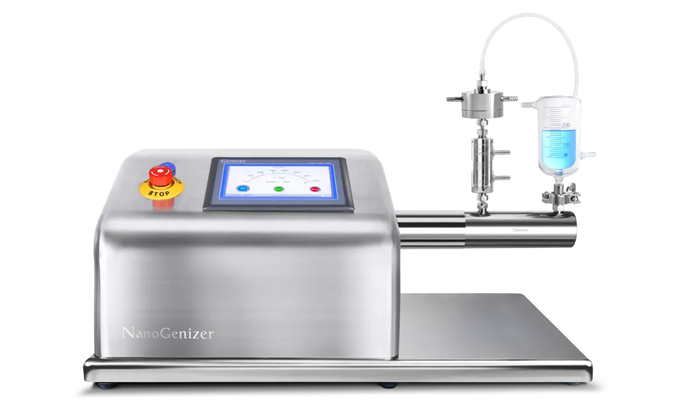
Image Credit: Genizer
About Genizer
Genizer™, located in Technology Link in Greater Los Angeles, is dedicated to advancing homogenizer nanotechnology.
The company provides high-pressure homogenizers, liposome extruders, sanitary heat exchangers, diamond interaction chambers, and high-pressure gauges compatible with other brands of high-pressure homogenizers, pumps, and microfluidizers.
Sponsored Content Policy: News-Medical.net publishes articles and related content that may be derived from sources where we have existing commercial relationships, provided such content adds value to the core editorial ethos of News-Medical.net, which is to educate and inform site visitors interested in medical research, science, medical devices and treatments.