Liposome extruders are predominantly used for liposome formulation and generating uniform size distributions. They are ideal instruments for producing nanoscale liposome formulations, as well as preparing exosomes and artificial cell membranes.
Through the application of tracked-etched filter membranes, liposome extruders have the capacity to capture large particles, precipitation, and achieve sterile filtration.
Their key areas of application lie in research and development for liposomal drug delivery systems, vaccines, gene delivery, and cosmetics.
Working principles
Liposomes are composed of phospholipid bilayers and take the form of spherical vesicles. These phospholipid bilayers are vital in the construction of cell membranes, with hydrophilic and hydrophobic properties. In an aqueous solution, the hydrophobic ends typically bind to one another and organically form small spherical liposomes.
The easy-to-use liposome extruder was developed to prepare liposomes for analysis. This instrument has precise particle size control capabilities with narrow distributions and satisfactory repeatability. To date, it has been used extensively in applications that require the preparation of complex injectable liposome products.
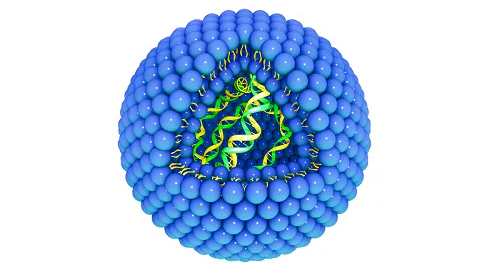
Figure 1. Gene delivery liposome with phospholipid bilayers. Image Credit: Genizer
Liposome extrusion technology leverages the structural and performance benefits of liposomal phospholipid bilayers. When the operating temperature exceeds the phase transition temperature of phospholipids, large liposomal vesicles will attempt to pass through the specific pore sizes of polycarbonate membranes under an external extrusion force.
The shear forces of the membrane pores will rupture the large liposomes or multicompartmented liposomes, which will then undergo rapid repolymerization as they are transformed into smaller liposomes.
Polycarbonate membranes typically have a fixed pore size (e.g., 50 nm, 100 nm, 200 nm, 400 nm, 1 um, etc.), and the polycarbonate extrusion membrane exhibits a vertical and uniform nanopore distribution across the membrane surface.
This means that when large vesicles pass through a membrane with a specific nanopore size several times, the sample is extruded to a uniform size determined by the pore.
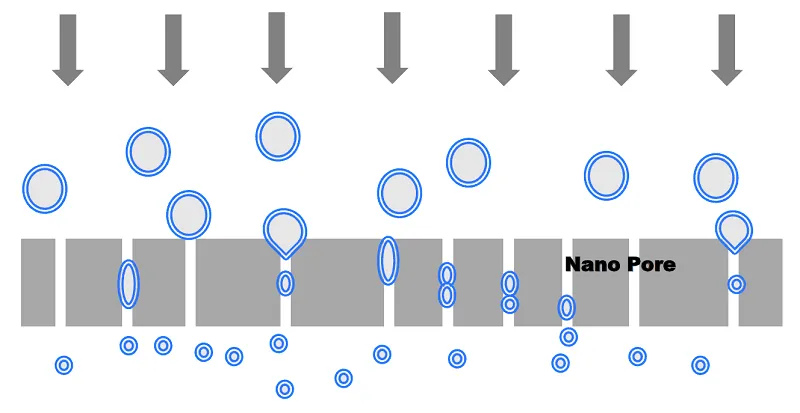
Figure 2. Schematic diagram depicting the liposome extrusion. Image Credit: Genizer
Common types of liposome extruders
Liposome extruders can be grouped into three categories: hand-driven, jacketed, and online. These categories are delineated by their power sources.
Hand-driven liposome extruders
Hand-driven liposome extruders are capable of processing sample volumes ranging from 0.25 mL to 2.5 mL, making them well-suited for small-scale sample volume applications during the experimental phase. These extruders are manually operated by simply pushing the plunger.
Hand-driven extruders are available in two types: ambient-temperature extruders and extruders with a cooling jacket. The hand-driven liposome extruders with a cooling jacket have been developed for extrusion conditions that require sample temperature to be controlled.
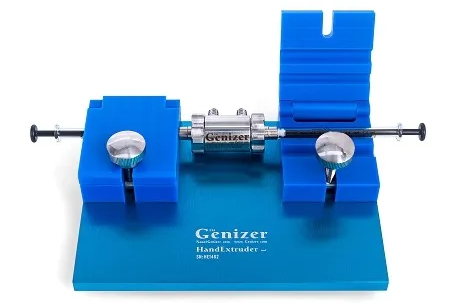
Figure 3. Hand-Driven Liposome Extruders. Image Credit: Genizer
Jacketed liposome extruders are equipped to accommodate a wide range of processing capacities, with sample volumes ranging from 2 mL to 3 L, depending on the model. Suitable for lab-scale and pilot-scale applications, this type of extruder is driven by a compressed nitrogen cylinder. Most jacketed liposome extruders provide sample temperature control because they are designed with a jacketed barrel.
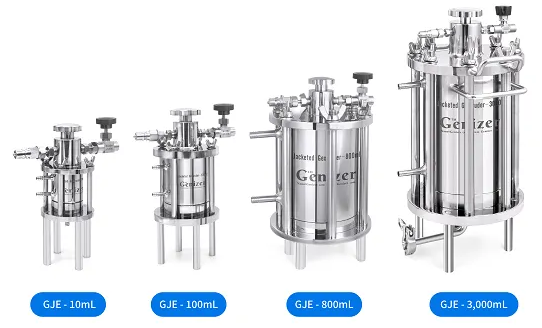
Figure 4. Jacketed Liposome Extruders. Image Credit: Genizer
Depending on the model, online liposome extruders have processing capacities ranging from 2 mL to 20 L. These extruders are better suited for pilot-scale applications. They can be powered by a high-pressure pump unit or other production equipment.
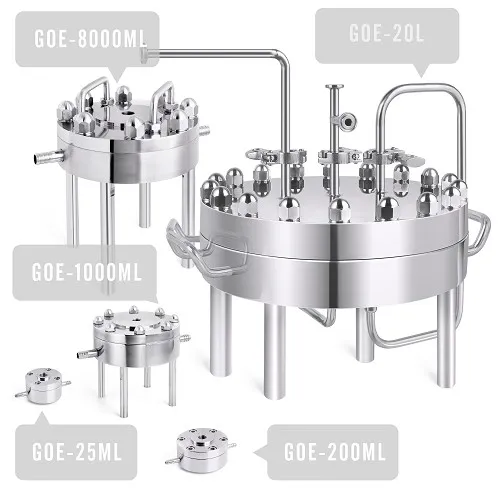
Figure 5. Online Liposome Extruders. Image Credit: Genizer
Multiple liposome extruders system
The multiple-liposome-extruder system can process the broadest range of volumes from 1 L to 200 L. Featuring both temperature and pressure sensors in the product line, this system is equipped with a control panel that offers the ability to control liposome production.
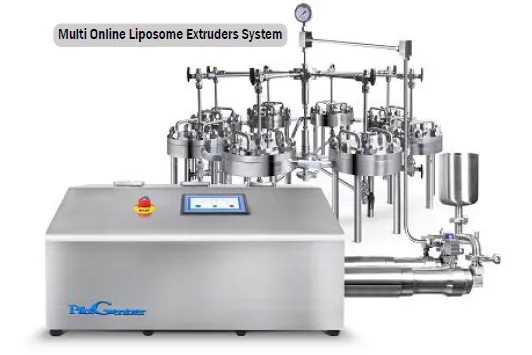
Figure 6. Multiple Liposome Extruders systems with a liposome extruding control panel. Image Credit: Genizer
Track-etched polycarbonate extrusion membranes
The functionality of liposome extruders requires stringent protocols for the extrusion membranes. The nucleus track-etched polycarbonate membranes must exhibit uniform distributions across all filter pores.
Ideally, all nanopores should be the same size in the membrane. Moreover, a vertical pore distribution across the extrusion membrane is more beneficial when preparing for liposome extrusion.
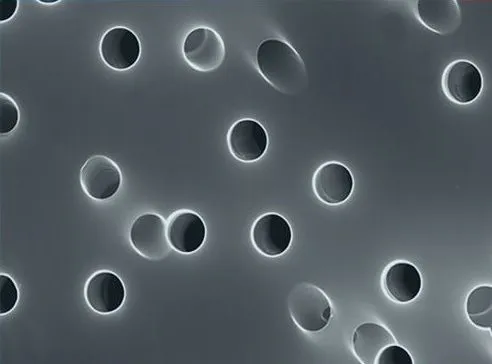
Figure 7. Microscopic Representation for Track-Etched Polycarbonate Membranes. Image Credit: Genizer
Generally, selecting the correct size of polycarbonate membrane will ensure successful extrusion. It is highly recommended to understand the sizes of the initial particles in the processing sample prior to extrusion.
Another key point to consider when selecting the membrane is the target particle size of the end product. For instance, if the target is to achieve a particle size below 100 nm when the initial particle size of the sample is 1 μm, there are three options available:
1. Extrusion multiple times via the target pore size membranes
Users can extrude the sample through a 100 nm polycarbonate membrane several times using a liposome extruder. However, there are potential drawbacks:
1) Complications during the extrusion process
2) Large vesicles may impede the surface of the polycarbonate membrane, leading to the need for a replacement membrane, etc.
2. Extrusion via the different pore size membranes
This procedure uses pore-size membranes that differ in size to perform step-by-step extrusion. For example, the sample is firstly extruded through a 400 nm polycarbonate membrane, and the extrusion process is observed.
If there is difficulty when extruding the sample, the 400 nm membrane should be replaced with a larger pore size, such as an 800 nm membrane for extrusion three to five times. It can be optimized during the process.
After the first-round extrusion, a smaller pore size polycarbonate membrane can be introduced, such as 100 nm or 80 nm, before extruding again. 200 nm polycarbonate membranes can be deployed as a transition if there are difficulties when extruding through the 100 nm membranes.
3. High-pressure homogenization-extrusion method
First, apply high-pressure homogenization protocols to the sample, and then extrude through a 100nm or 80nm polycarbonate membrane post-homogenization (See Figure 8).
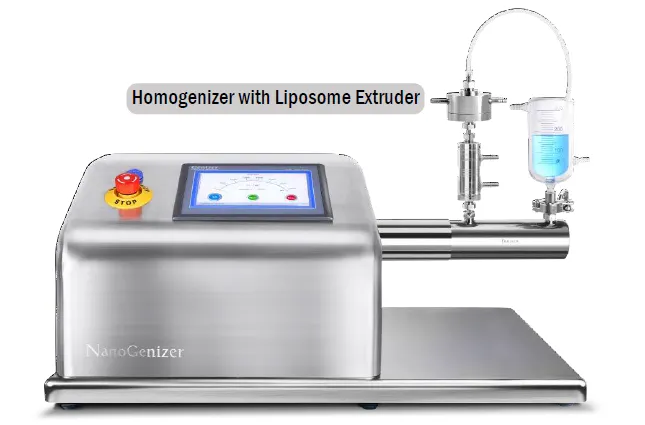
Figure 8. The high-pressure homogenizer is combined with an online liposome extruder. Image Credit: Genizer
About Genizer
Genizer™, located at Technology Link in Greater Los Angeles, is dedicated to advancing nanotechnology for homogenizers.
The company provides high-pressure homogenizers, liposome extruders, sanitary heat exchangers, diamond interaction chambers, and high-pressure gauges compatible with other brands of high-pressure homogenizers, pumps, and microfluidizers.
Sponsored Content Policy: News-Medical.net publishes articles and related content that may be derived from sources where we have existing commercial relationships, provided such content adds value to the core editorial ethos of News-Medical.net, which is to educate and inform site visitors interested in medical research, science, medical devices, and treatments.