Sponsored Content by SCIEXReviewed by Maria OsipovaAug 5 2026
This article presents a sensitive technique for quantifying empagliflozin in human blood using the SCIEX 7500+ system. A lower limit of quantitation (LLOQ) of 1 ng/mL (0.12 pg on column) was achieved using a 10 µL dry blood spot (DBS) from an LC-MRM evaluation with a six-minute runtime (Figure 1).
Empagliflozin is a C‑glycosyl compound used for the management of type 2 diabetes mellitus.1 Its therapeutic impact is achieved through selective inhibition of the sodium–glucose co‑transporter 2 (SGLT2) in the proximal renal tubules, thus minimizing renal glucose reabsorption and promoting glucosuria.2
Along with enhancing glycemic control, empagliflozin has been linked to reductions in both body weight and blood pressure. Its potential therapeutic use in other conditions, such as pediatric cardiomyopathy, is currently under investigation.3
To support such investigations, highly sensitive bioanalytical techniques that require low sample volumes are crucial for empagliflozin quantification at low concentrations. Such methods ensure rigorous evaluation of efficacy and safety by adequately characterizing the drug’s pharmacokinetic profile.
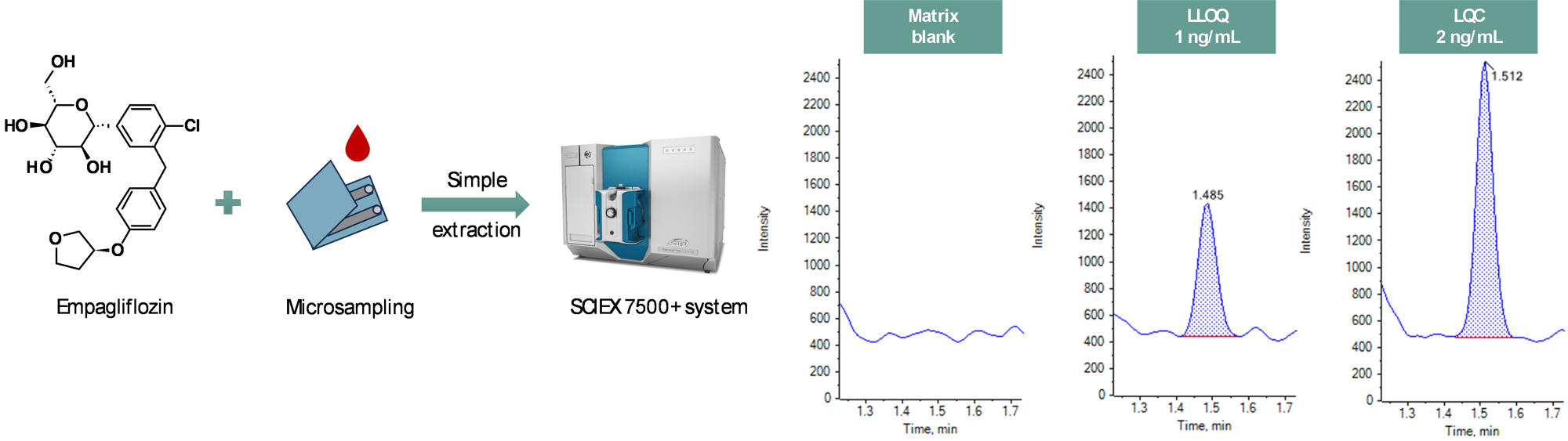
Figure 1. Simple microsampling workflow for quantitation of empagliflozin in human blood using the SCIEX 7500+ system. Representative extracted ion chromatograms (XICs) for empagliflozin in extracted human blood at matrix blank, 1 ng/mL (LLOQ), and 2 ng/mL (low quality control, LQC) are displayed. No interference was observed in the matrix blank at the retention time of empagliflozin. Image Credit: SCIEX
The key advantages of microsampling assays for empagliflozin quantitation via the SCIEX 7500+ system include:
- Empagliflozin quantitation: Achieve an LLOQ of 1 ng/mL for quantitating empagliflozin in human blood with an on-column amount of 0.12 pg
- Enable true microsampling efficiency: Carry out sensitive quantitation using just 10 µL DBS with a clean, minimal extraction workflow
- Rigorous analytical performance: Achieve precise quantitative performance with %CV < 8 at all concentration levels across a linear dynamic range (LDR) spanning four orders of magnitude
- Streamlined data management: Simplify data collection and processing through SCIEX OS software, a 21 CFR Part 11-compliant platform
Introduction
In June 2023, the FDA approved empagliflozin to improve glycemic control in pediatric patients aged ≥10 years, based on evidence from Phase 3 clinical trials.4 The approved oral tablet dosages are 10 mg and 25 mg and may be administered without regard to meals.
Pharmacokinetic assessments in this population exhibited an average Cmax of roughly 148.8003 ng/mL and a Tmax ranging from 0.7 to two hours.5 Current research aims to analyze the use of empagliflozin for cardiomyopathy treatment in children aged six to 18 years.6
However, routine therapeutic drug monitoring in this setting poses logistical hurdles, as current assays demand rapid plasma isolation after blood collection, followed by immediate freezing and transport on dry ice to specialized research labs.
These requirements may reduce practicality for both clinicians and patients. DBS-based assays could provide a much simpler alternative, as DBS samples are minimally invasive, easier to collect (including potential self-collection), and exhibit greater stability during storage and transport.3
Empagliflozin evaluation in DBS with low volume requires a sensitive technique with minimal sample preparation to quantify at low concentrations and analyze its safety and efficacy in humans.
Methods
Standard preparation: Empagliflozin was obtained from Medchem Express, and 1 mg of stock was precisely weighed and dissolved in methanol to acquire a 1 mg/mL concentration. The spiking solution was prepared using water and acetonitrile at a 75:25 (v/v) ratio as the diluent.
Sample preparation: Human blood was spiked with empagliflozin at concentrations ranging from 1 to 10,000 ng/mL, and 10 µL of blood was spotted onto the Capitainer® B10 sampling cards and allowed to dry for two minutes prior to extraction.
The DBS was moved to a vial, and 200 µL of acetonitrile was added before vortexing for five minutes. Following centrifugation at 1204 rcf for five minutes, 100 µL of supernatant was collected, diluted with 300 µL of water, vortexed, and transferred to an autosampler vial for evaluation.
Chromatography: Analytical separation was performed on the ExionLC system (SCIEX) using a Phenomenex Kinetex C18 column (50 x 2.1 mm, 2.6 µm) at a flow rate of 0.35 mL/minute. Mobile A consisted of 0.2% formic acid in water, while mobile phase B consisted of 0.2% formic acid in acetonitrile.
The column temperature was maintained at 40 °C, and the autosampler temperature was set to 15 °C. Table 1 summarizes the gradient conditions. A 10 µL sample was employed for the LC-MS/MS evaluation.
Mass spectrometry: MS data was obtained with the SCIEX 7500+ system. Table 2 outlines the optimized source and gas parameters used in the evaluation, while Table 3 includes the MRM parameters.
Table 1. LC gradient for empagliflozin analysis. Source: SCIEX
| Time (min) |
Mobile phase A (%) |
Mobile phase B (%) |
| 0 |
75 |
25 |
| 3.5 |
10 |
90 |
| 4.5 |
10 |
90 |
| 4.6 |
75 |
25 |
| 6 |
75 |
25 |
Table 2. Source and gas parameters. Source: SCIEX
| Parameter |
Value |
| Polarity |
Positive |
| Ionization mode |
ESI |
| Ion source gas 1 |
70 psi |
| Ion source gas 2 |
70 psi |
| Curtain gas |
40 psi |
| Source temperature |
400 °C |
| Spray voltage |
2300 V |
| CAD gas |
5 |
Table 3. MRM parameters used for quantitation on SCIEX 7500+ system. Source: SCIEX
| ID |
Precursor ion (m/z) |
Fragment ion (m/z) |
CE (V) |
CXP (V) |
QoD (V) |
| Empa-01* |
451.16 |
355.01 |
15 |
12 |
0 |
| Empa-02 |
451.16 |
71.01 |
45 |
12 |
0 |
Note: *Transition used for quantitation.
Data processing: Data acquisition and evaluation were carried out via SCIEX OS software, version 4.0. Peaks were integrated using the MQ4 algorithm, and a 1/x2 weighting factor was used for empagliflozin quantitation.
Quantitative performance on the SCIEX 7500+ system
A triplicate injection was conducted across concentrations ranging from 1 ng/mL to 10,000 ng/mL (Figure 1). An LDR of four orders of magnitude was achieved. A 1/x2 weighting factor was employed, with a coefficient of determination (r2) > 0.995, demonstrating exceptional linearity across a broad calibration range (Figure 2).
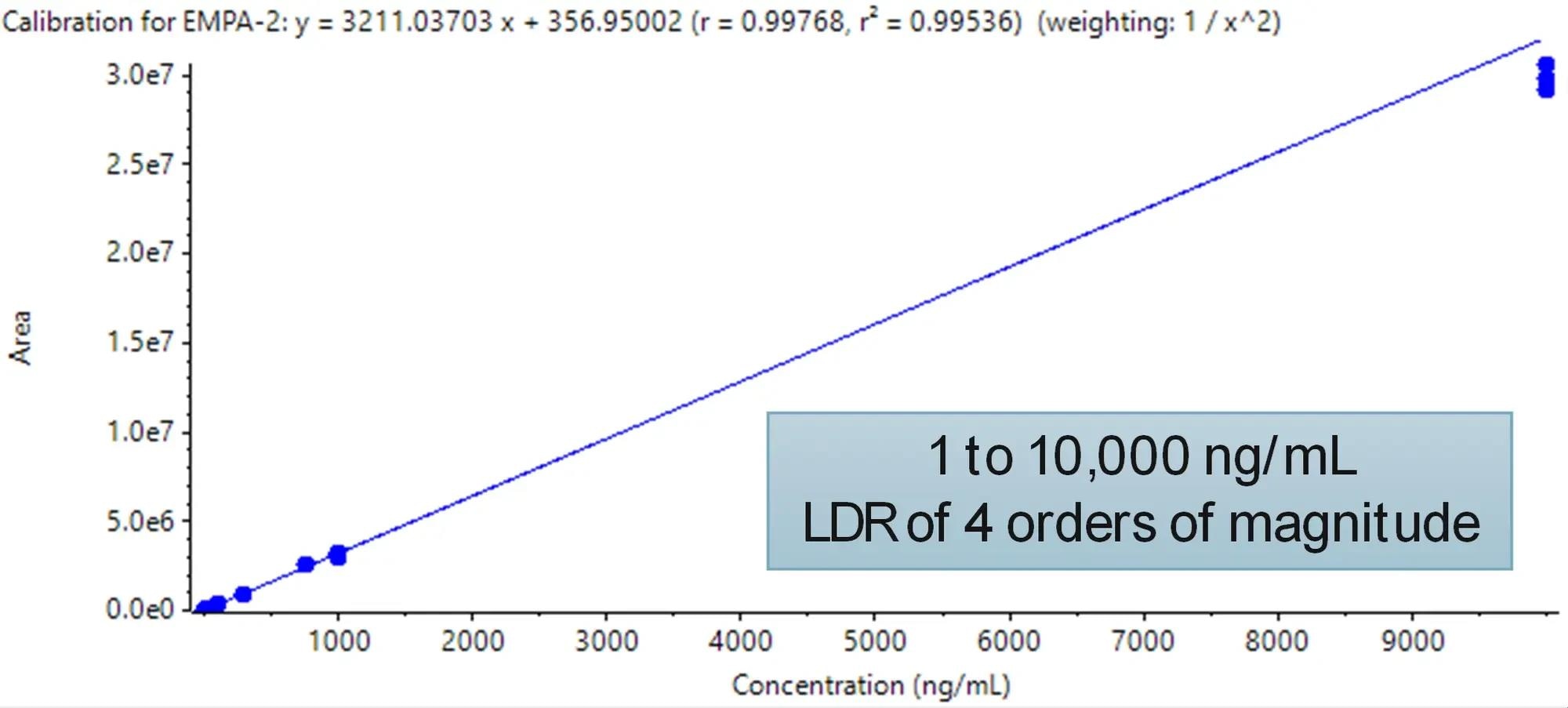
Figure 2. Calibration curve for quantitation of empagliflozin (451.1→355.1). The calibration curve was generated using a weighing factor of 1/x2. Image Credit: SCIEX
Analytical performance was assessed according to the requirement that the calculated mean be between 80 and 120% at the LLOQ, and between 85 and 115% at higher concentrations. The %CV was to be below 20% at the LLOQ, and below 15% at higher concentrations.7
|
Row |
Component name |
Actual concentration |
Num. values |
Mean |
Standard deviation |
Percent CV |
Average accuracy across replicates |
| ▶ |
1 |
EMPA-2 |
1.000 |
3 of 3 |
0.968 |
0.071 |
7.28 |
96.8 |
| |
2 |
EMPA-2 |
2.000 |
3 of 3 |
2.110 |
0.123 |
5.81 |
105 |
| |
3 |
EMPA-2 |
5.000 |
3 of 3 |
5.096 |
0.346 |
6.79 |
102 |
| |
4 |
EMPA-2 |
25.000 |
3 of 3 |
25.664 |
1.103 |
4.30 |
103 |
| |
5 |
EMPA-2 |
50.000 |
3 of 3 |
46.850 |
0.266 |
0.568 |
93.7 |
| |
6 |
EMPA-2 |
100.000 |
3 of 3 |
106.597 |
2.497 |
2.34 |
107 |
| |
7 |
EMPA-2 |
300.000 |
3 of 3 |
292.805 |
12.407 |
4.24 |
97.6 |
| |
8 |
EMPA-2 |
750.000 |
3 of 3 |
790.195 |
1.782 |
0.225 |
105 |
| |
9 |
EMPA-2 |
1000.000 |
3 of 3 |
967.281 |
23.032 |
2.38 |
96.7 |
| |
10 |
EMPA-2 |
10000.000 |
3 of 3 |
9311.782 |
212.297 |
2.28 |
93.1 |
Figure 3. Quantitative performance for empagliflozin (455.1→355.1) analysis. Reproducibility and accuracy results were determined from the calibration curve standards across three replicates at each concentration. Statistical results were summarized using the Analytics module in SCIEX OS software. Image Credit: SCIEX
Table 4. Recovery was evaluated using 1 ng/mL and 300 ng/mL of empagliflozin. Each concentration was evaluated in triplicate injections. Source: SCIEX
| Recovery |
Level
(ng/mL) |
Avg. area neat
samples (n=3) |
Avg. area in post-
spiked samples (n=3) |
%CV |
%Recovery |
| 1 |
5228 ± 408.3 |
3466 ± 184.8 |
5.33 |
68.9 |
| 300 |
1103821 ± 22021.9 |
940565 ± 32527.9 |
3.46 |
79.9 |
| |
Average |
4.39 |
74.4 |
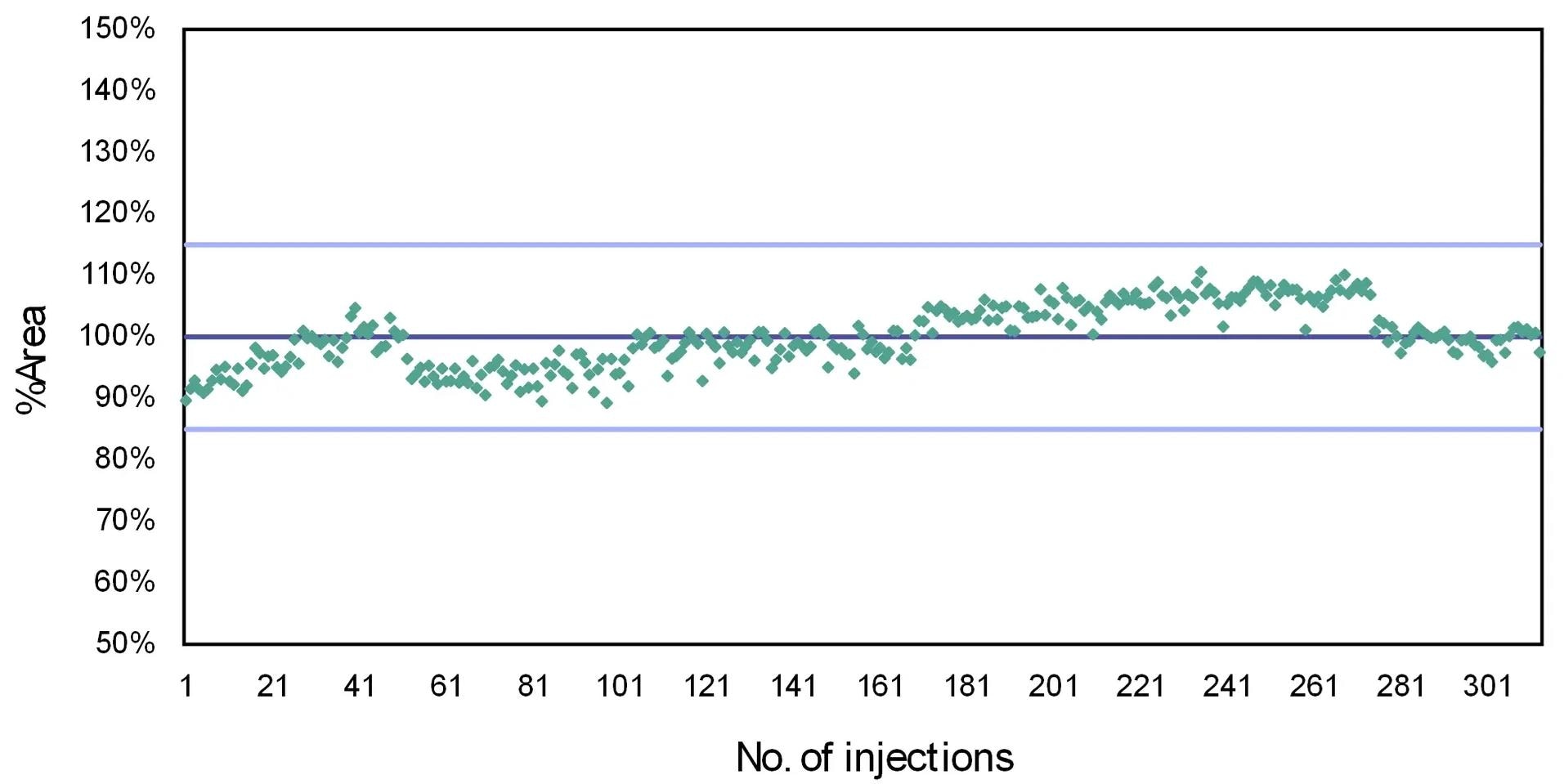
Figure 4. Stability over an extended sample run. Over 300 injections of 1000 ng/mL were performed, indicating a stable response throughout, with a mean response within ± 15%. Image Credit: SCIEX
The accuracy was within ±7% of the nominal concentration, and the %CV was <8 for the empagliflozin quantitation in human blood (Figure 3). Both the computed %accuracy and %CV values met the acceptance requirements across all concentration levels.
Recovery was analyzed for empagliflozin at two distinct concentrations (1 and 300 ng/mL). A triplicate injection of the blood-extracted sample was compared against the neat standard samples. A mean recovery of 74.4% was achieved with an average %CV of <5 (Table 4).
Column and method stability were analyzed by conducting more than 300 injections at 1000 ng/mL (MQC level), with the average peak region within ±15%, as illustrated in Figure 4.
The data exhibits the consistent stability of the Phenomenex Kinetex C18 column and the method across extended batches, verifying a rapid, low‑prep microsampling approach for empagliflozin evaluation.
Compliance-ready SCIEX OS software
Equivalent SCIEX OS software capabilities for regulated bioanalysis can be carried out on the SCIEX 7500+ system, ensuring high fidelity during method transfer while maintaining essential compliance characteristics.
SCIEX OS software is a closed system, requiring electronic record and signature storage in adherence to 21 CFR Part 11. This software can access raw data files from any visible storage location within a closed network through designated processing workstations.
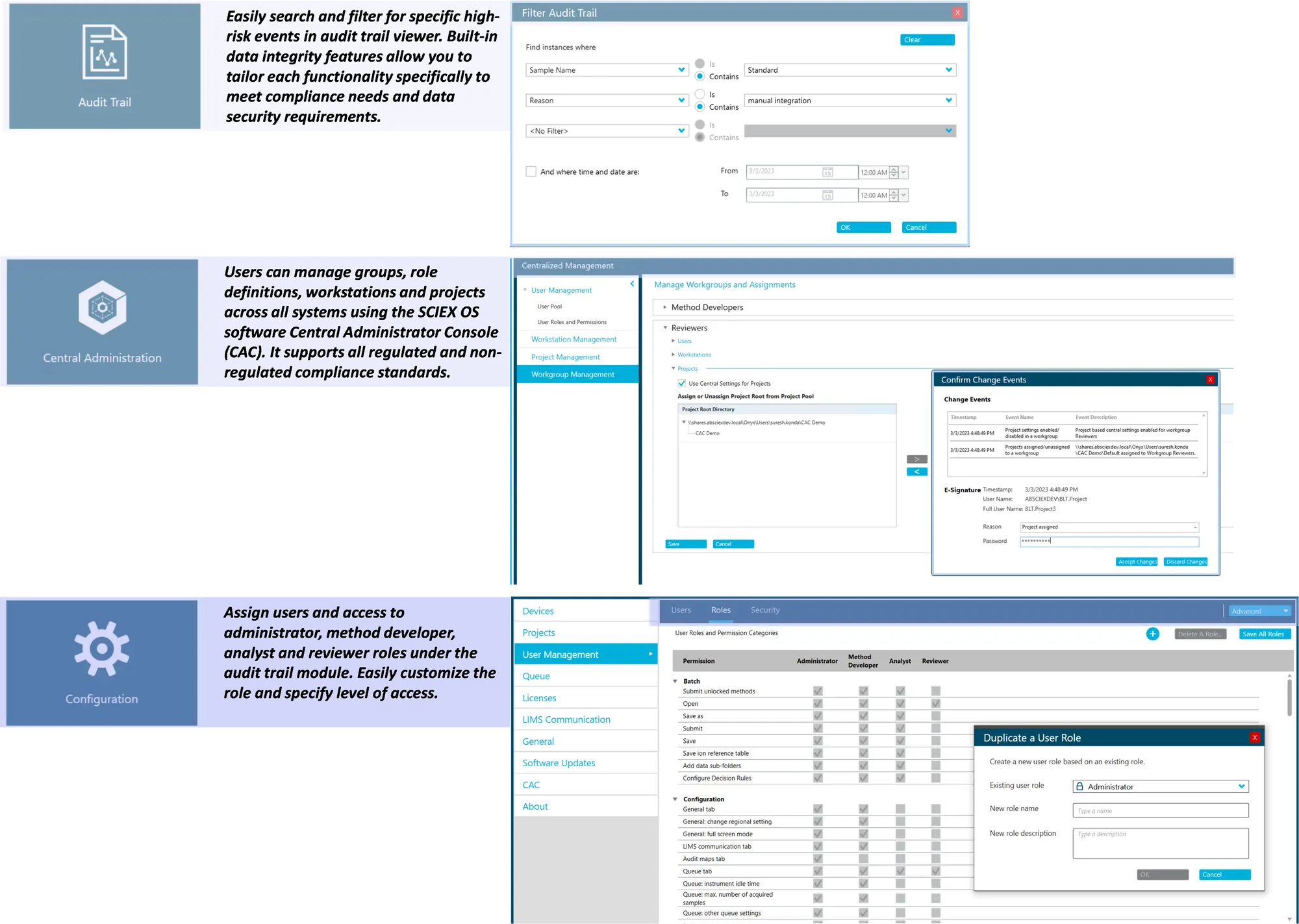
Figure 5. Features of SCIEX OS software for monitoring user access and evaluating the audit trail. The audit trail view allows users to easily filter high-risk events and enables data integrity features to meet compliance requirements. The software features a central administrator console (CAC) to manage users and groups, role definitions, workstations, and projects across all systems. The CAC feature supports both regulated and non-regulated compliance standards. The configuration module enables users to quickly set up roles and access levels for the administrator, method developer, analyst, and reviewer. Image Credit: SCIEX
Figure 5 depicts the SCIEX OS software features used for audit trail monitoring, data acquisition and processing, and user access configuration. The audit trail feature enables auditing of crucial user actions while ensuring data integrity.
The central administrator console (CAC) feature centralizes acquisition and processing within a single platform, maximizing efficiency for multi-instrument labs regardless of compliance criteria. Through the configuration module, users can assign roles and access as the administrator, method developer, analyst, and reviewer.
Conclusions
Empagliflozin quantitation
- A LOQ of 1 ng/mL (on-column concentration of 0.12 pg/mL) was achieved for empagliflozin quantitation.
- Excellent quantitative performance was exhibited on the SCIEX 7500+ system, with precise and highly reproducible outcomes (%CV <8).
- Linearity was achieved across a concentration range of 1 ng/mL to 10,000 ng/mL with an r2>0.995 for empagliflozin, with an LDR of four orders of magnitude.
Low-prep microsampling approach
- A simple sample extraction process was implemented using a 10 µL minimal sample volume.
- The method and analytical column remained stable with more than 300 injections of the extended batch in a complex matrix.
- A mean recovery of 74.4% was achieved with an average %CV of <5 for the blood-extracted samples compared against the neat samples.
Software compliance
- Maintain data management and compliance-readiness (21 CFR Part 11) characteristics with SCIEX OS software to support bioanalysis on the SCIEX 7500+ system.
References and further reading
- Li, C., et al. (2024). Synthesis, crystal structure, DFT calculation and confirmation of absolute configuration of empagliflozin. Journal of Molecular Structure, 1301, p.137331. DOI:10.1016/j.molstruc.2023.137331. https://www.sciencedirect.com/science/article/abs/pii/S0022286023024195?via%3Dihub.
- van der Aart-van der Beek, A.B., et al. (2020). Simple, fast and robust LC-MS/MS method for the simultaneous quantification of canagliflozin, dapagliflozin and empagliflozin in human plasma and urine. Journal of Chromatography B, 1152, p.122257. DOI:10.1016/j.jchromb.2020.122257. https://www.sciencedirect.com/science/article/pii/S1570023220302762?via%3Dihub.
- Dewulf, J.P., et al. (2023). DBS are suitable for 1,5-anhydroglucitol monitoring in GSD1b and G6PC3-deficient patients taking SGLT2 inhibitors to treat neutropenia. Molecular Genetics and Metabolism, 140(3), p.107712. DOI:10.1016/j.ymgme.2023.107712. https://www.sciencedirect.com/science/article/pii/S1096719223003426?via%3Dihub.
- FDA (2023). FDA Approves New Class of Medicines to Treat Pediatric Type 2 Diabetes. FDA. Available at: https://www.fda.gov/news-events/press-announcements/fda-approves-new-class-medicines-treat-pediatric-type-2-diabetes.
- Macha, S., et al. (2015). Pharmacokinetics and Pharmacodynamics of Twice Daily and Once Daily Regimens of Empagliflozin in Healthy Subjects. Clinical Therapeutics, 37(8), pp.1789–1796. DOI:10.1016/j.clinthera.2015.06.003. https://www.clinicaltherapeutics.com/article/S0149-2918(15)00850-4/abstract.
- ClinicalTrials.gov. Repurposing Empagliflozin for DMD-associated Cardiomyopathy in Children 6-18 Years of Age (REDMeD) Sebastiano Lava, Centre Hospitalier Universitaire Vaudois, 2025. ClinicalTrials.gov. Available at: https://clinicaltrials.gov/study/nct06643442.
- FDA (2018). Bioanalytical Method Validation Guidance for Industry. FDA. Available at: https://www.fda.gov/files/drugs/published/Bioanalytical-Method-Validation-Guidance-for-Industry.pdf.
Acknowledgments
Produced from materials originally authored by Lakshmanan Deenadayalan and Sashank Pillai, from SCIEX, India, and Eshani Galermo and Rahul Baghla from SCIEX, USA.
About SCIEX
SCIEX mission is to deliver solutions for the precision detection and quantification of molecules, empowering its customers to protect and advance the wellness and safety of all.
SCIEX has led the field of mass spectrometry for 50 years. From the moment it launched the first ever commercially successful triple quad in 1981, SCIEX has developed groundbreaking technologies and solutions that influence life-changing research and outcomes.
Today, as part of the Danaher family of global life science and technology innovators, it continues to pioneer robust solutions in mass spectrometry and capillary electrophoresis. But SCIEX doesn’t just develop products. It is what the company does together with its customers that sets it apart. That’s why thousands of life science experts around the world choose SCIEX to get the answers they can trust to better inform critical decisions. Decisions that positively impact lives.
SCIEX stands proudly by its tagline: The Power of Precision.
Sponsored Content Policy: News-Medical.net publishes articles and related content that may be derived from sources where we have existing commercial relationships, provided such content adds value to the core editorial ethos of News-Medical.net, which is to educate and inform site visitors interested in medical research, science, medical devices and treatments.