The Aunty model offers the world's most efficient protein stability analysis by integrating full-spectrum DSF with light scattering techniques (SLS and DLS).
This allows users to observe protein unfolding and aggregation as temperature increases, compare stability at different concentrations, or monitor long-term structural integrity under stable conditions. Aunty’s 96-well quartz plate, 8 µL samples, and fast read speeds demonstrate the protein’s durability.
- Tm & Tonset: Full-spectrum DSF identifies melting behavior to compare stability among contenders and formulations.
- Tagg & Tsize: SLS and DLS reveal when aggregation begins and how size alters when the protein is heated up: this is key for formulation robustness.
- kD, B22, & G22: Light scattering exposes molecular interactions that determine stability and formulation behavior.
- Isothermal stability: Monitoring protein behavior under constant conditions over time confirms real-world stability.
- Viral vector stability: Aunty monitors the viral vector capsid and its payload, as a stable but empty vector is ineffective.
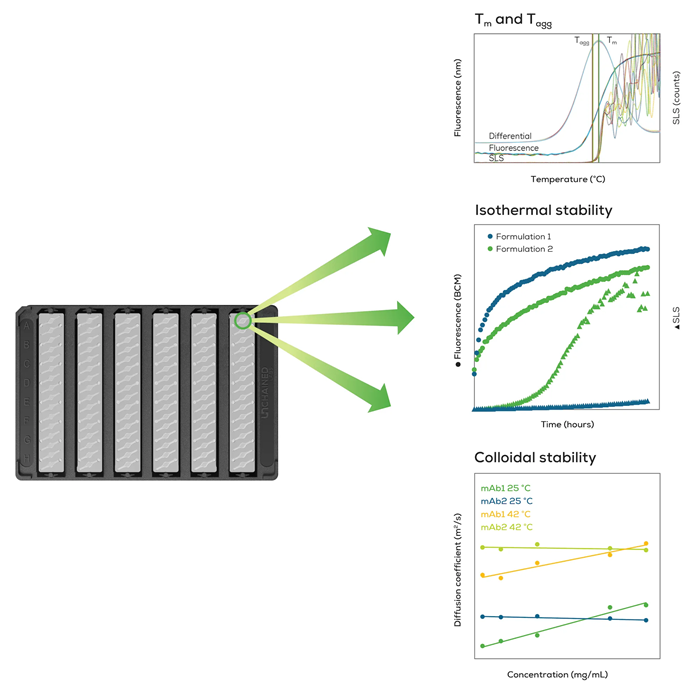
Image Credit: Unchained Labs
Capabilities
Plate them up
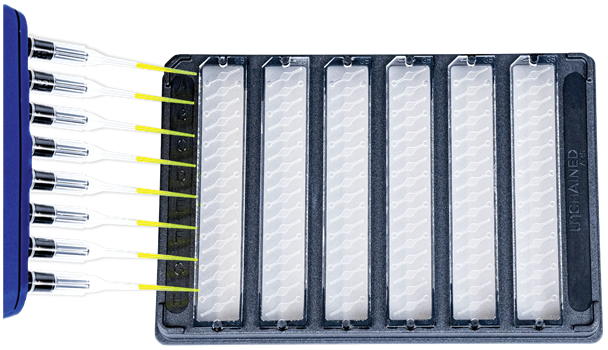
Image Credit: Unchained Labs
The Aunty plate is the first 96-well quartz-glass consumable for stability characterization, offering exceptional optical performance and chemical compatibility with nearly any sample.
Load up a plate in less than one minute and complete stacks of stability experiments with ease. Each well holds 8 μL and can be tightly sealed to prevent contaminants from entering.
The benchmark for data analysis
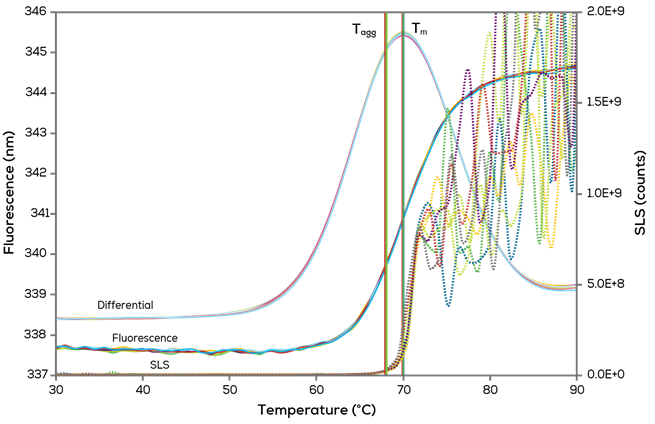
Image Credit: Unchained Labs
Aunty establishes the benchmark for speed and quality in protein stability data acquisition. The instrument's full-spectrum fluorescence capability determines protein melting temperatures by leveraging either intrinsic fluorescence or reporter dyes, accommodating diverse protein characteristics. Incorporating best-in-class light scattering data provides a comprehensive view of protein behavior.
Aunty's dynamic and static light-scattering features monitor aggregation with exceptional sensitivity, enabling detection of aggregation events as they occur and their correlation with protein unfolding. Data can be collected from each measurement mode individually or simultaneously, positioning Aunty as the ultimate solution for comprehending protein stability.
Get eyes on aggregation
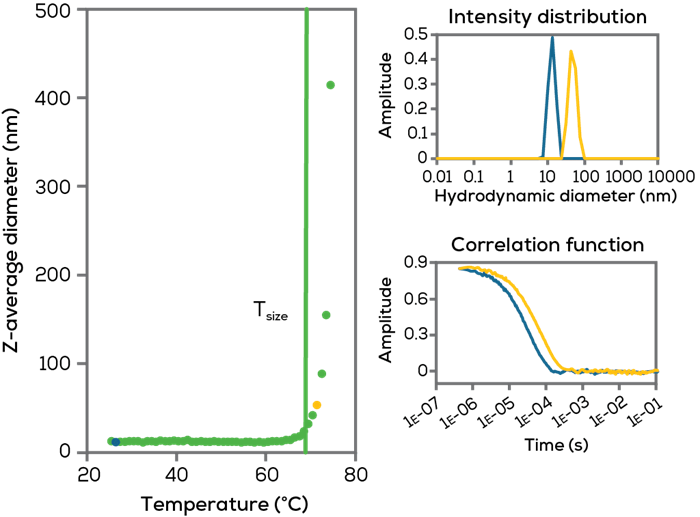
Image Credit: Unchained Labs
Aunty's light-scattering technology ensures that aggregation in a sample is never missed. Its standout SLS (static light scattering) provides highly sensitive, early detection of forming aggregates. Simultaneously, ISO-compliant DLS monitors the hydrodynamic size of even minimal aggregate quantities.
The equipment tracks both parameters concurrently, allowing for the determination of whether aggregation is present in the preparation or occurs during a thermal ramp experiment.
Rip through colloidal stability
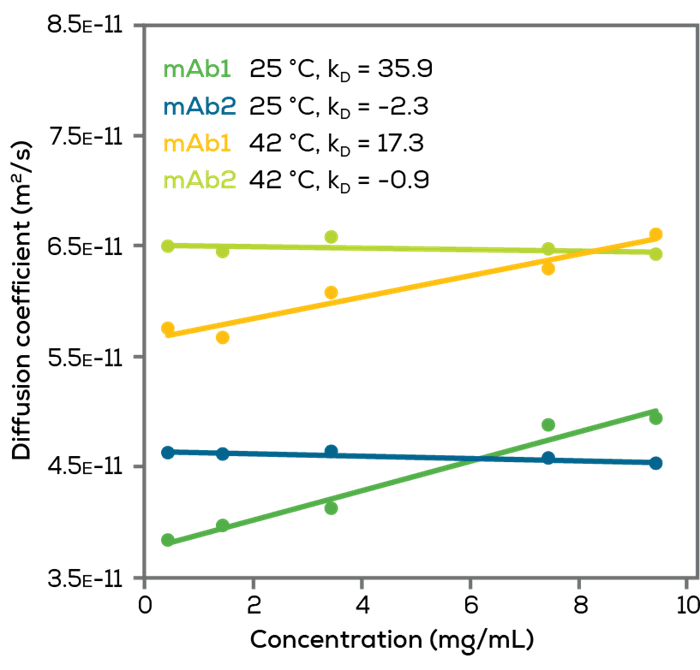
Image Credit: Unchained Labs
Determine immediately whether a protein is compatible with its formulation or likely to aggregate. Configure the colloidal stability experiment using Aunty, capturing kD, B22, and G22 data simultaneously. Use the 96-well format to test multiple conditions. After completing the initial experiment, repeat it at a different temperature to observe any shifts in trends.
Speed up long-term stability
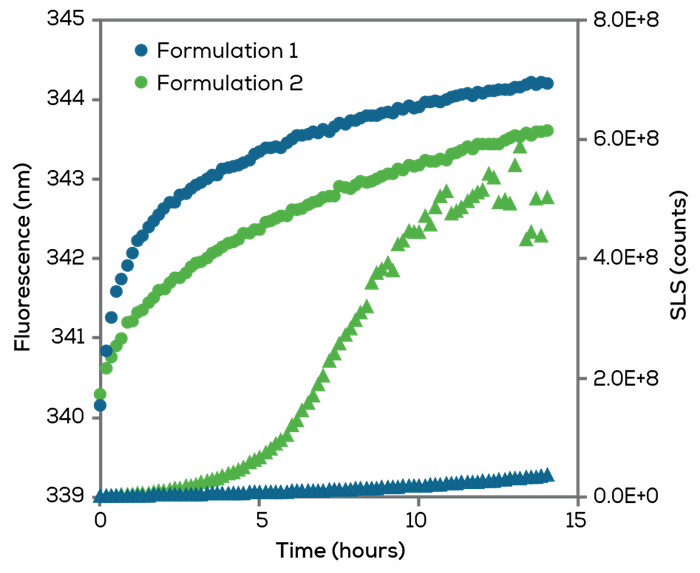
Image Credit: Unchained Labs
Traditional long-term stability testing is cumbersome and often postponed. Aunty enables assessment of protein longevity, allowing for the selection of superior candidates. Aunty's applications facilitate sample monitoring for extended periods while the instrument is in use. Alternatively, samples can be incubated externally; in either scenario, samples remain secure within an Aunty plate.
Don’t get left empty-handed
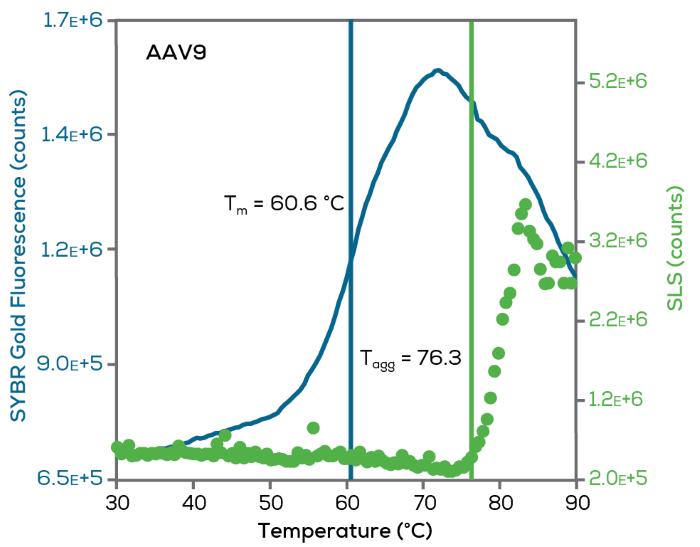
Image Credit: Unchained Labs
Viral vectors are ineffective without their payload. This essential cargo can be released, compromising vector optimization efforts. Aunty's full-spectrum fluorescence uniquely tracks genome release and capsid stability, indicating vector integrity or payload loss.
Coast through data analysis
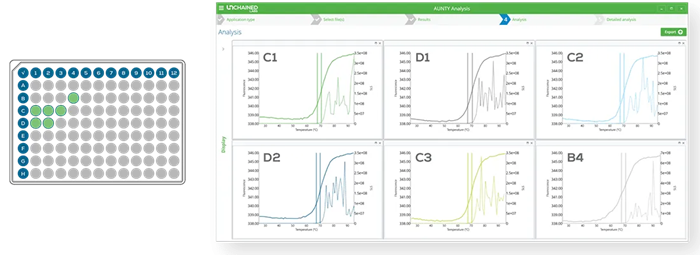
Image Credit: Unchained Labs
Skip the experimental setup and get to the important stuff: actionable findings. With just a few clicks, select an application, load a sample list, and let Aunty configure the parameters.
For specialized experiments, users can manually control all settings; simply initiate the process and observe live results. Aunty's software enables users to focus on individual samples, groups, or entire plates across multiple experiments and days, and to generate overlay graphs for comparison, quickly identify trends, and reach accurate conclusions.
21 CFR Part 11
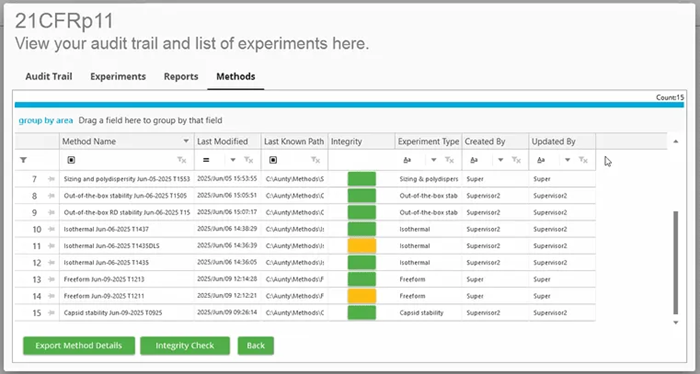
Image Credit: Unchained Labs
In regulated environments, controlling data access and ensuring data integrity are essential. Aunty offers 21 CFR Part 11 compliance software tools designed to secure data.
Automate stability testing
Aunty is fully prepared for integration with lab automation. The software's SBS-format 96-well plate is compatible with liquid handlers for loading and movement, and an API is available for data retrieval.
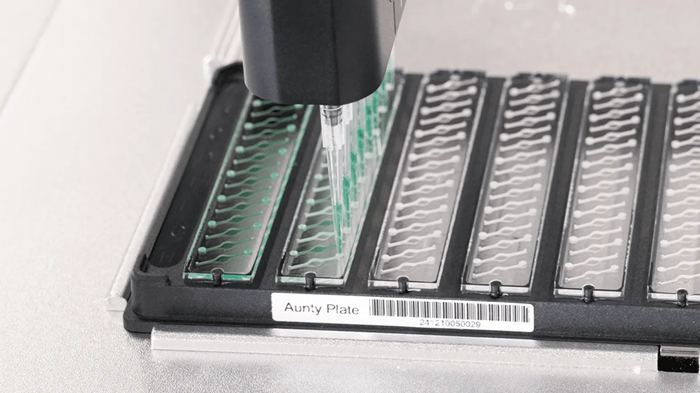
Image Credit: Unchained Labs
Technology
Full-spectrum DSF
What it does
Differential scanning fluorimetry monitors protein unfolding as temperature rises, indicating the protein's melting temperature and conformational stability.
Why it matters
This technique aids researchers in comparing candidates and formulation conditions, identifying structural weaknesses and the stabilizing influence of buffers and excipients.
Static light scattering (SLS)
What it does
Static light scattering measures light re-emitted by particles in solution, with intensity increasing as particle size grows.
Why it matters
Monitoring static light scattering enables sensitive detection of aggregation at its onset, whether during a thermal ramp or when assessing the impact of concentration on colloidal stability.
Dynamic light scattering (DLS)
What it does
Dynamic light scattering measures the diffusion speed of particles in solution to determine particle sizes and size distributions in a sample.
Why it matters
Dynamic light scattering helps biologics researchers rapidly measure particle size and aggregation, providing crucial information on protein stability and sample quality.
Specifications
Source: Unchained Labs
| Instrument |
|
| Sample volume |
8 µL |
| Simultaneous samples per experiment |
96 |
| Time to read a 96-well sample plate |
One minute |
| Temperature range |
15–95 °C |
| Heating rate |
0.1–10 °C/min |
| Temperature accuracy |
±0.1 °C |
| Physical |
43 cm W x 59 cm D x 39 cm H; 32 kg |
| Electrical |
Auto-switching power supply, 110–240 V AC, 50–60 Hz, single phase; fuse rating (F)5AH, 250 V; max. power 400 W |
| Laser classification |
Class 1 |
| Regulatory compliance |
Software has 21 CFR Part 11 mode |
| Fluorescence |
|
| Parameters determined |
Tm, Tonset, Tm of vector payload ejection, rate of isothermal unfolding |
| Excitation |
280 nm (UV) LED, 470 nm (blue) LED |
| Detection |
Spectrometer at full 250–750 nm spectral range |
| Compatibility |
Protein intrinsic fluorescence
Reporter fluorescence (DSF, nucleotide dye, membrane protein dye) |
| Sample precision |
<1% CV (tm) |
| Protein sample concentration |
0.025–300 mg/mL IgG (protein dependent) |
| AAV genome concentration |
≥5 x 10¹¹ vg/mL |
| Light scattering |
|
| Parameters determined |
Tagg, Tsize, rate of isothermal aggregation
Z-average diameter, size distributions, polydispersity
Colloidal stability: kD, B22, G22 |
| Excitation |
660 nm (red) laser |
| Detection |
Avalanche photodiode |
| SLS resolution |
≥15 kDa change of mean MW |
| DLS hydrodynamic diameter range |
0.3–1000 nm |
| DLS Size accuracy |
±2% |
| Molecular weight range |
192 Da–25 MDa |
| Minimum sample concentration |
SLS: 0.05–300 mg/mL IgG (protein dependent)
DLS: ≥0.1 mg/mL lysozyme |